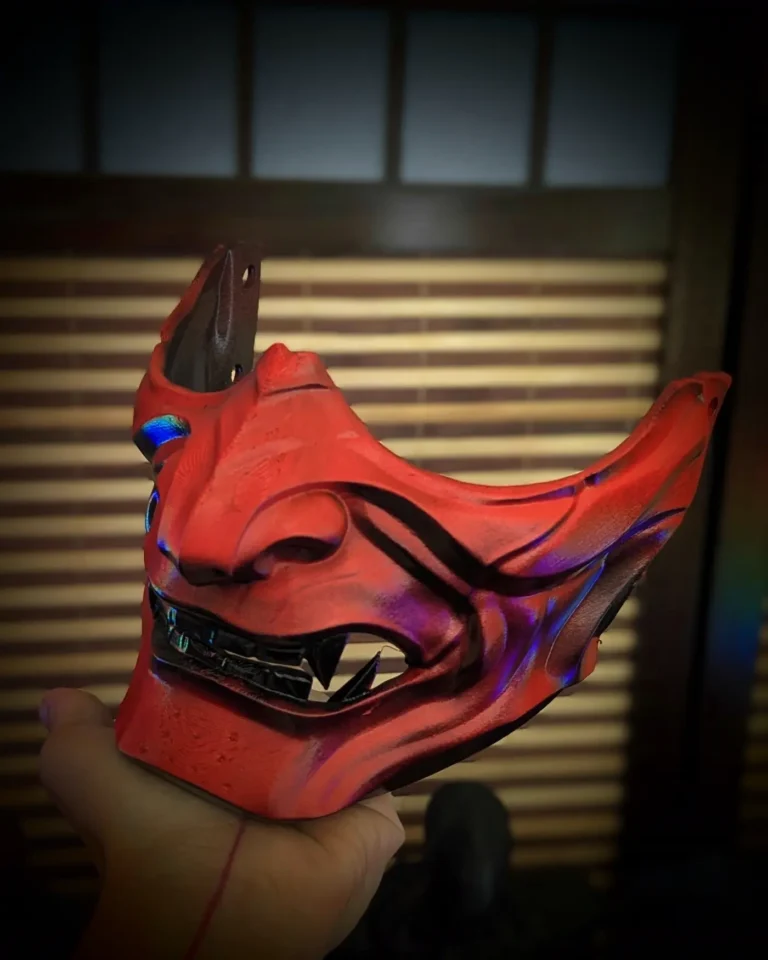
Everyone says "mempo" for samurai masks, but it's shorthand. The generic term is mengu (面具), "face equipment," meaning any facial armour. The mempo (面頬) is its most common type: a half-mask covering nose to chin. Every mempo is a mengu, but not every mengu is a mempo. These masks had a double purpose, to protect the face and to terrify the enemy, and their demon grimaces were no accident.
Read the article about Oni masks · See Oni masks
The five types of mengu
Japanese armourers developed five levels of facial protection. The hanbō covers only the chin and jaw, for minimal protection and free breathing. The mempo, nose to chin, is the standard, the best compromise between protection and intimidation, and the most used from the 15th to the 17th century. The sōmen is a full mask, maximum protection but limited vision and heat. The happuri covers the forehead and cheeks, without nose or chin, mostly for cavalry. And a throat guard completes the set against thrusts. The mempo dominated because sword cuts often aimed at the neck and jaw, and it left the eyes free and breathing open.
The Katchu-shi, armourer-artists
Making a mengu wasn't bending metal, it was engineering and art, and the Katchu-shi (甲冑師) who shaped them were as respected as katana smiths. They combined forged iron for impact zones, chin and nose, with lacquered leather (nerigawa) for flex zones like the cheeks, the inside lined with cloth to absorb shock and sweat. The details are fascinating: horsehair moustaches fixed to the lip, teeth lacquered in gold or silver, a sometimes removable nose, and drainage holes under the chin (ase nagashi, "sweat flow") to clear perspiration during combat.
The mask as a psychological weapon
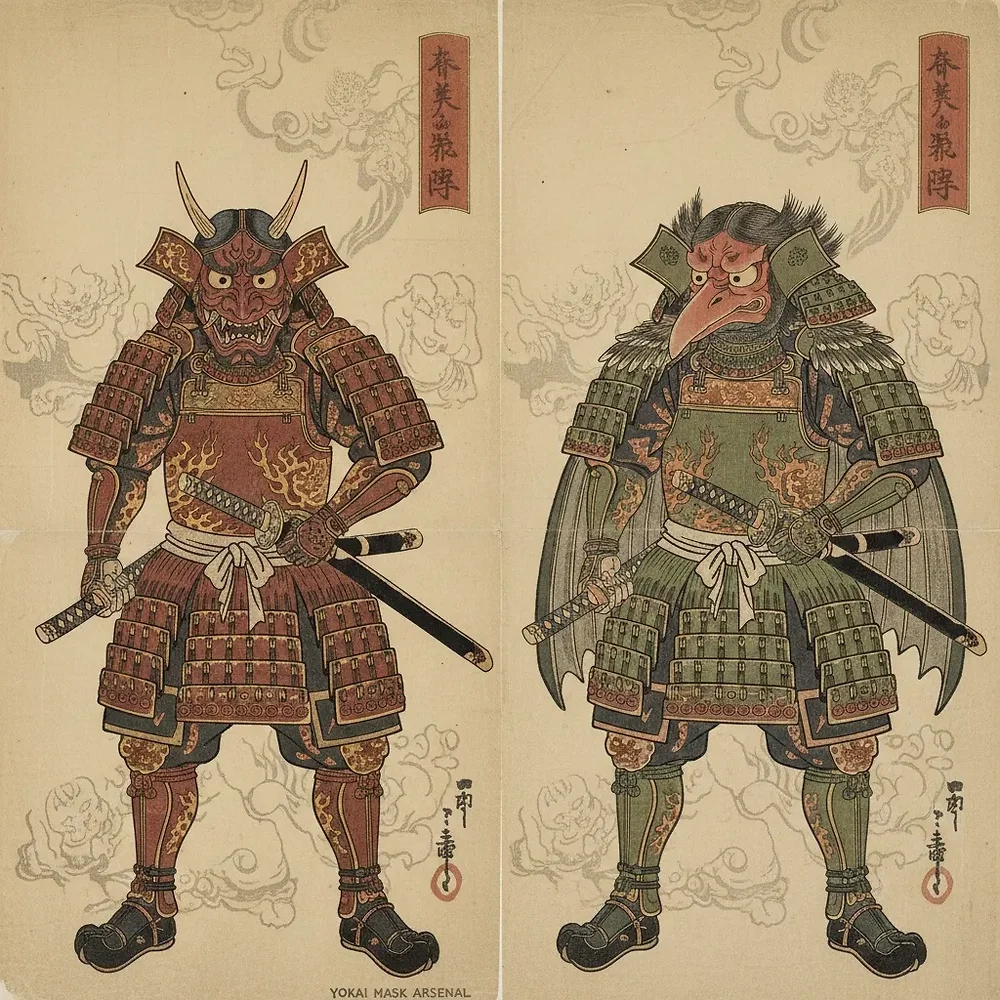
The mengu wasn't only armour, it was a psychological weapon. On a 16th-century battlefield, in dust and smoke, foot soldiers couldn't see faces, only silhouettes wearing demon faces. Mengu expressions are always the same, rage, scorn, ferocity, never fear or neutrality. The samurai wearing an Oni-faced mempo was saying, in effect: I am no longer a man, I am the thing that kills you. The inspiration came straight from folklore: the grimaces are modelled on Noh masks (Hannya, Oni) and on the Niō, the guardians of Buddhist temples. Warriors literally wore the faces of Japanese demons into battle.
FAQ
What is the difference between mengu and mempo?
Mengu (面具) is the generic term for any samurai facial armour. Mempo (面頬) is the most common type, a half-mask from nose to chin. Every mempo is a mengu, but there's also the sōmen (full), the hanbō (chin only) and the happuri (forehead and cheeks).
Why do samurai masks have demon faces?
To terrify the enemy. On a smoke-filled battlefield, only demon-faced silhouettes could be seen. The grimaces are modelled on Noh masks and the Niō temple guardians: psychological warfare.
What were historical mempo made of?
Forged iron for impact zones (chin, nose), lacquered leather (nerigawa) for flex zones (cheeks), a cloth-lined interior. Typical details: horsehair moustaches, lacquered teeth, sweat-drainage holes under the chin.
Why is the mempo so popular for decor and cosplay?
The half-mask fits more easily than a full mask, leaves the eyes and forehead free, and lets you breathe and talk. It's the most comfortable format to wear all day at a convention.