

Fujin Mask: The Story of the Japanese Wind God (Ultimate Guide)
- DAI YOKAI
- Jan 1
- 3 min read

Updated: Jan 2
The wind is an invisible force. We cannot see it, but we see the trees bend in its path. In Japanese folklore, this force has a face: that of Fūjin (風神).
Often overshadowed by the Oni or the Tengu , Fujin is nevertheless one of the oldest and most respected deities of Shintoism. He is the one who chases away the clouds to let the sun through, but also the one who unleashes typhoons.
Why choose a Fujin Mask for your decor? What's the difference between it and a classic demon mask? At Daiyokai , we've sculpted the wind itself. Here's everything you need to know about this celestial guardian.
Who is Fujin (Fūjin)?
His name is composed of two kanji: "Wind" (Fū) and "God" (Jin). Unlike Yokai, which are earthly spirits or monsters, Fujin is a Kami (God) in his own right.
According to the Kojiki (the book of ancient myths), he was born from Izanami. His iconic representation—a green-skinned demon carrying a large bag over his shoulders—comes from Buddhist art. This "Wind Bag" is his main attribute: he opens it to release gentle breezes or devastating hurricanes.


The Eternal Duo: Fujin & Raijin
It's impossible to talk about Fujin without mentioning his brother and eternal rival: Raijin (the God of Thunder). In Japanese art, they are always depicted together.
Fujin on the left (Master of the Wind).
Raijin on the right (Master of Lightning and Drums).
Workshop Note:
"The Wind always precedes the Lightning." Currently, only the Fujin Mask is available in our collection. It's the essential first piece to begin your Elemental Mural. The Raijin Mask is being created in the secrecy of our workshop... Subscribe so you don't miss the reunion of the two brothers.
Symbolism: Why adopt the God of the Wind?
Having a Fujin mask at home means invoking very specific energies:
Movement and Freedom: The wind knows no boundaries. It is the symbol of free spirits, travelers, and those who refuse to stagnate.
The "Cloud-Chaser" Protection: Fujin is a protector. It is said that he protected Japan from Mongol invasions by blowing a "Divine Wind" (Kamikaze) that destroyed the enemy fleet. In your home, he symbolically "blows" negative energies out of the room.
Aesthetic Tattoo (Irezumi): This is a major motif in traditional Japanese tattooing, often covering the entire back or shoulders to symbolize the power of nature.
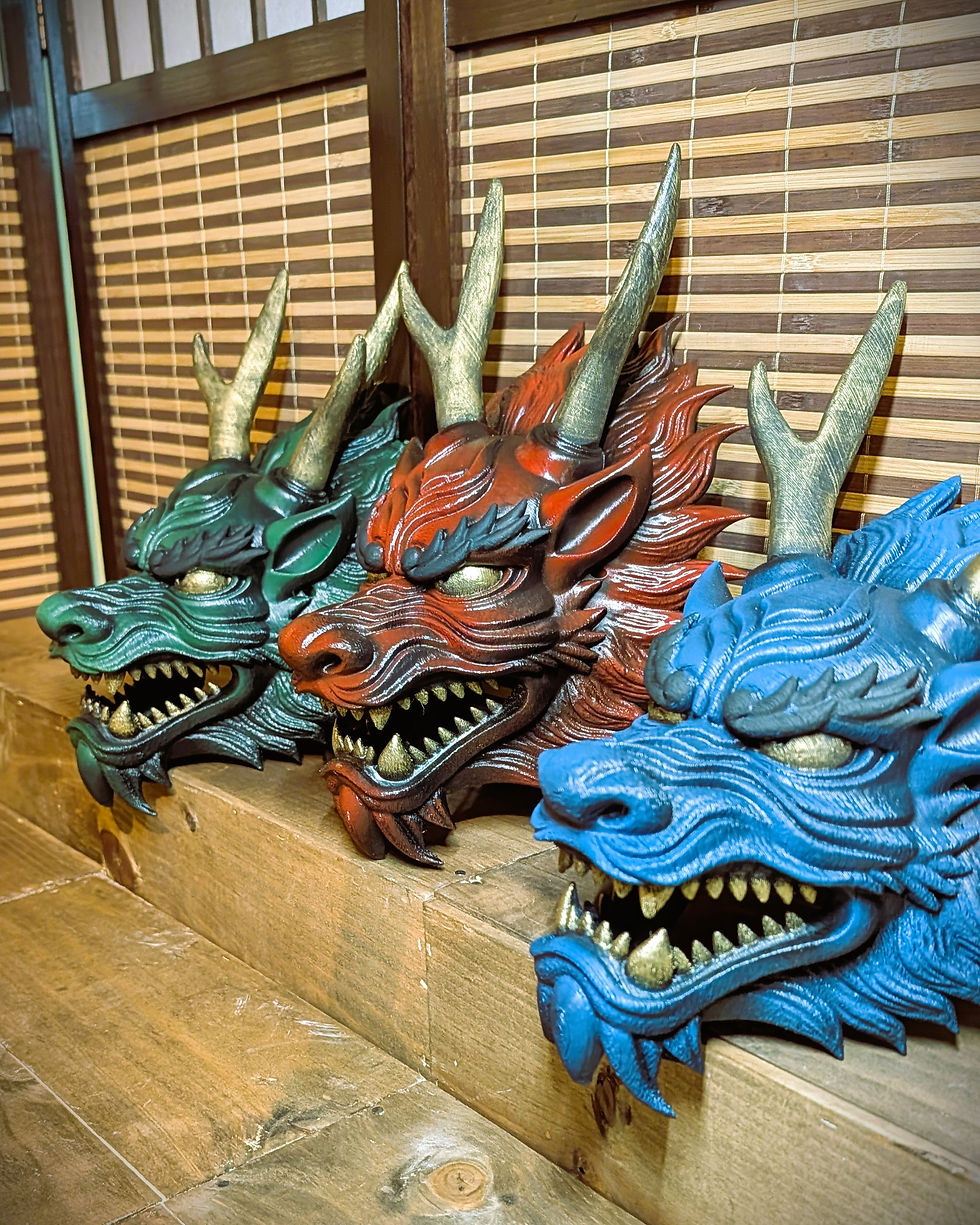
What does the Fujin Daiyokai Mask look like?
We wanted to capture the precise moment when the god takes a deep breath before unleashing the storm.
The Expression: Unlike the Hannya Whether he is sad or enraged, Fujin has an expression of concentrated power . His eyes are bulging with effort, his mouth is open or grimacing, ready to exhale.
The Colours: Traditionally represented with a green skin, we offer modern variations (Stone, Bronze, Blood Red) to suit contemporary interiors.
Fujin in Pop Culture
You already know him, perhaps without realizing it:
Mortal Kombat: The character of Fujin is directly inspired by the god, using tornadoes as weapons.
Naruto: The "Fūton" (Wind Release) technique uses the kanji of the god.
The Legend of Zelda: In Wind Waker , the god Cyclos on his cloud is a "kawaii" version of Fujin.
Where to place your Wind God?
In Feng Shui and interior design, the place of the wind is in a high position .
Above a window or door: To symbolize the passage of air.
On a "Sky" wall: Ideally on the upper part of a wall, dominating the room as if floating on a cloud.
Alone (for now): He is sufficient on his own as a centerpiece, while awaiting the arrival of his dazzling brother.


Comments