Craft
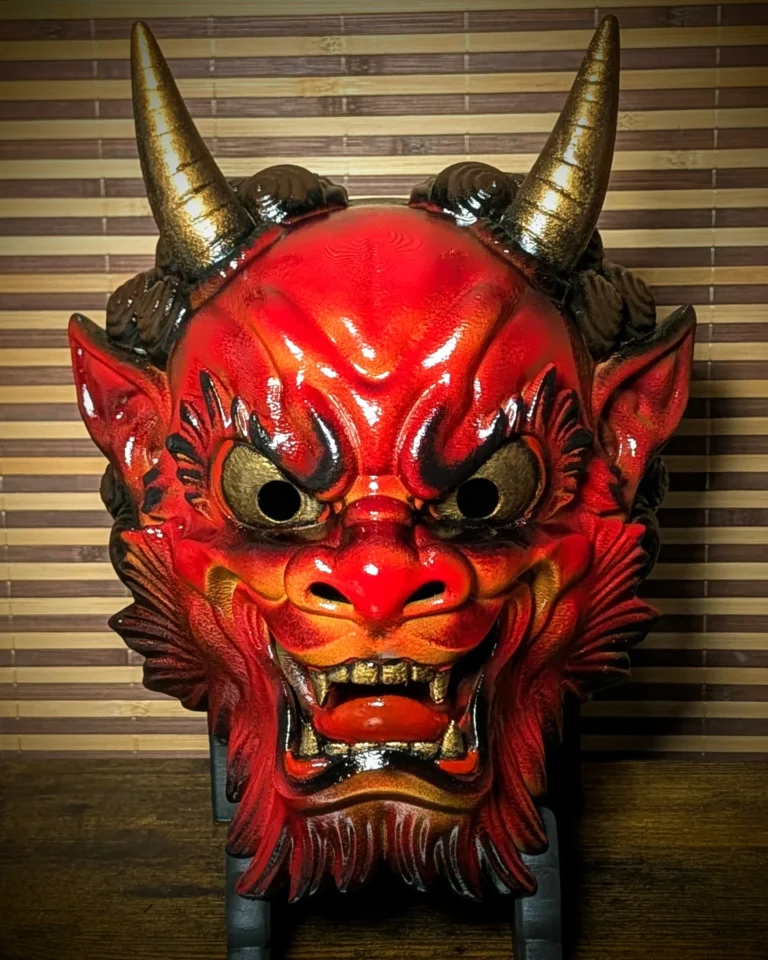
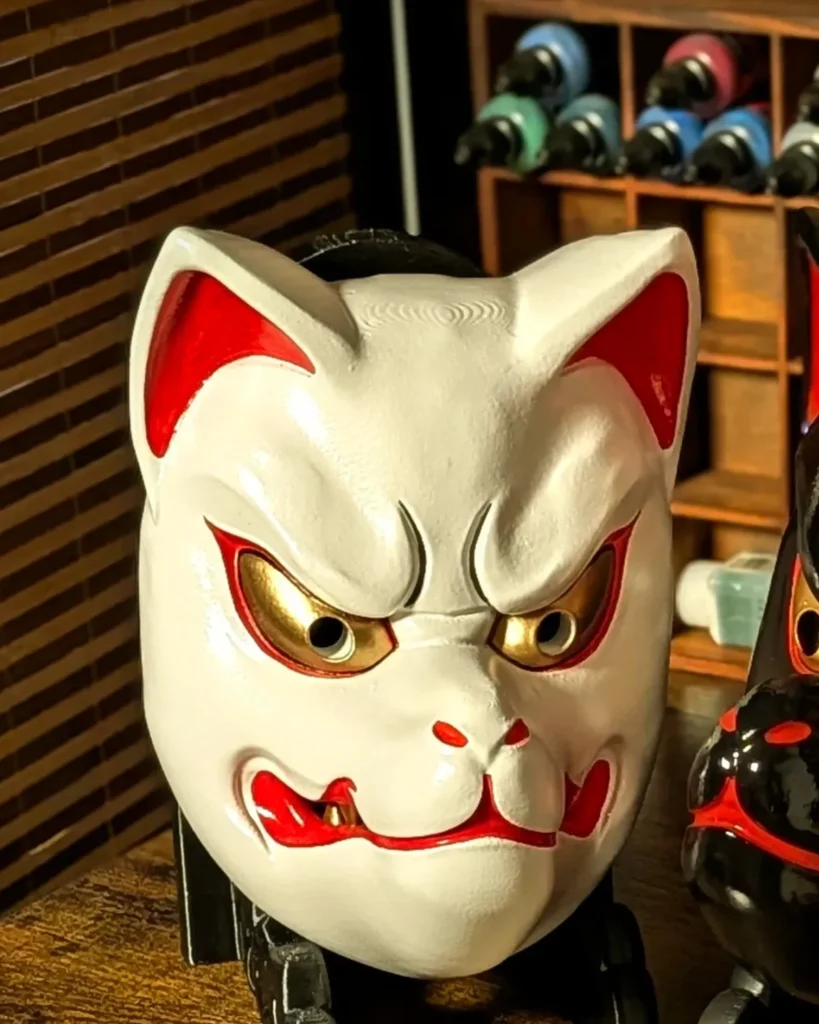
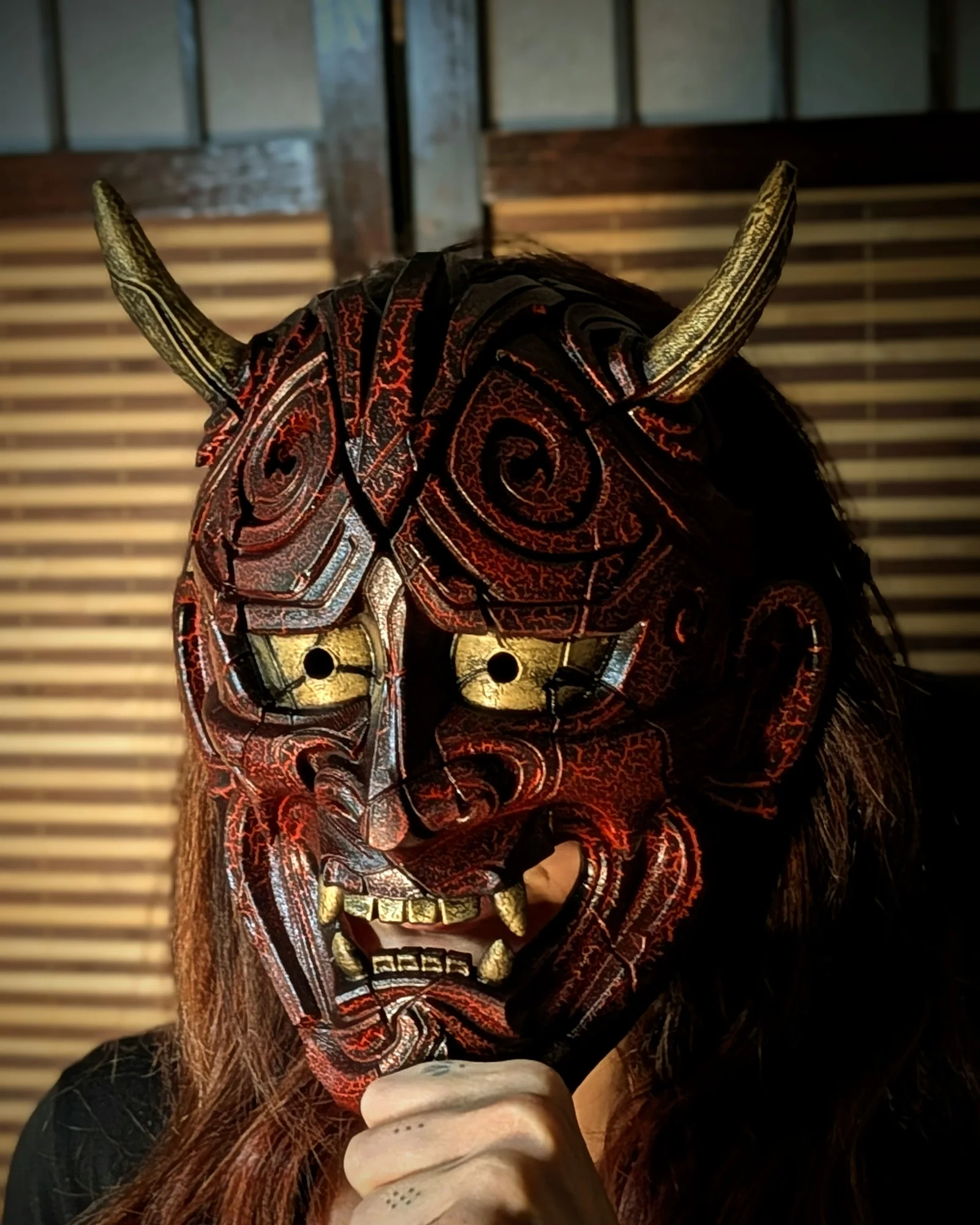
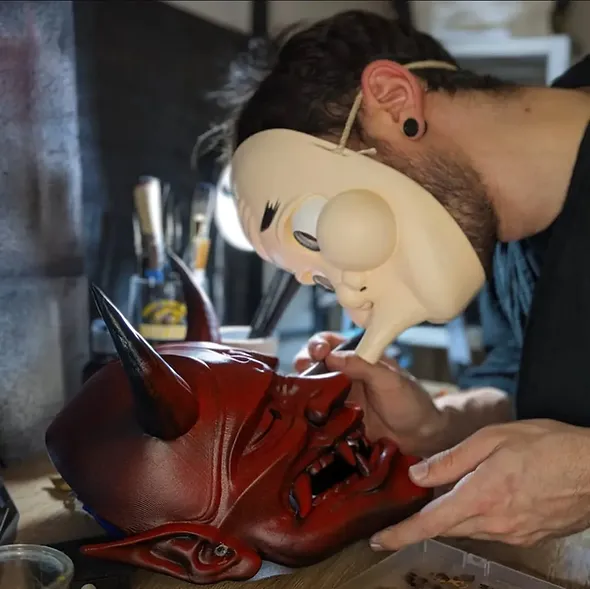
Masks and half-masks start from a PETG-printed base. Then come sanding, priming, painting and varnishing. The final result depends on the hand, not just the machine.
Dai Yokai Workshop
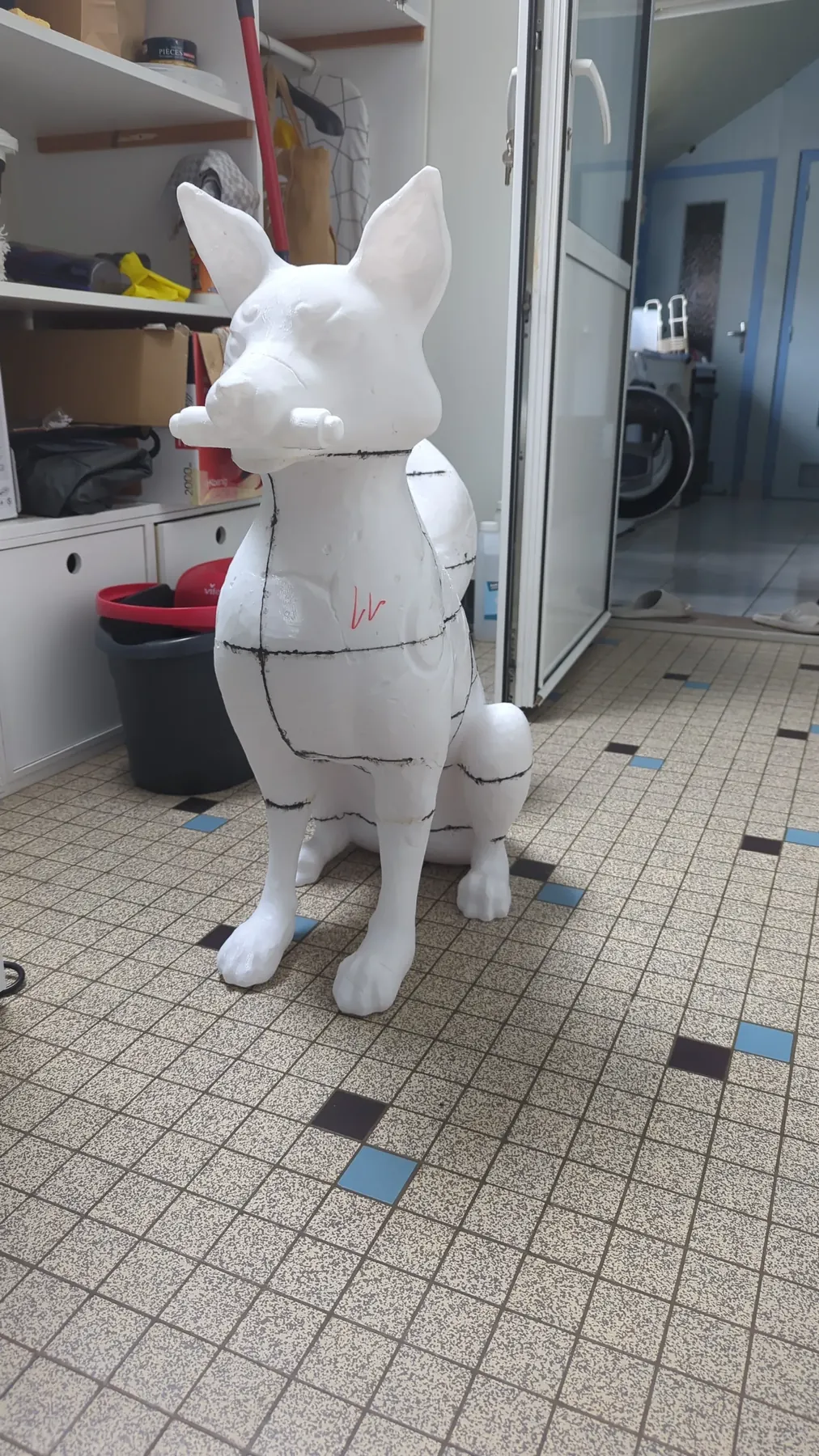
I'm Jérémy, creator of Dai Yokai. I make Japanese masks, half-masks, figures and accessories in small batches. 3D printing gives me the base, then each piece goes through sanding, painting, finishing and hand-packing.
Origin
At the start, I just wanted a Hannya mask that didn't look like a plastic toy. Real wooden masks were too expensive (fair, given the craft involved), and cheaper copies had no texture or presence. So I ended up trying to make one myself.
3D printing gives the base, but everything else is done by hand: fixing small flaws, sanding, priming, painting, patinating, varnishing, then packing the piece properly. That slower part is what takes it from a printed object to something that feels like a workshop piece.
Masks and half-masks start from a PETG-printed base. Then come sanding, priming, painting and varnishing. The final result depends on the hand, not just the machine.
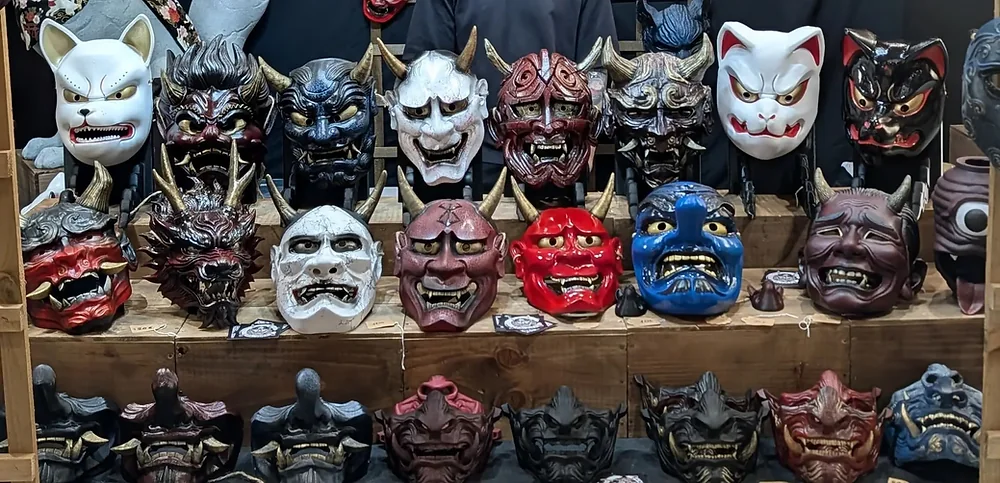
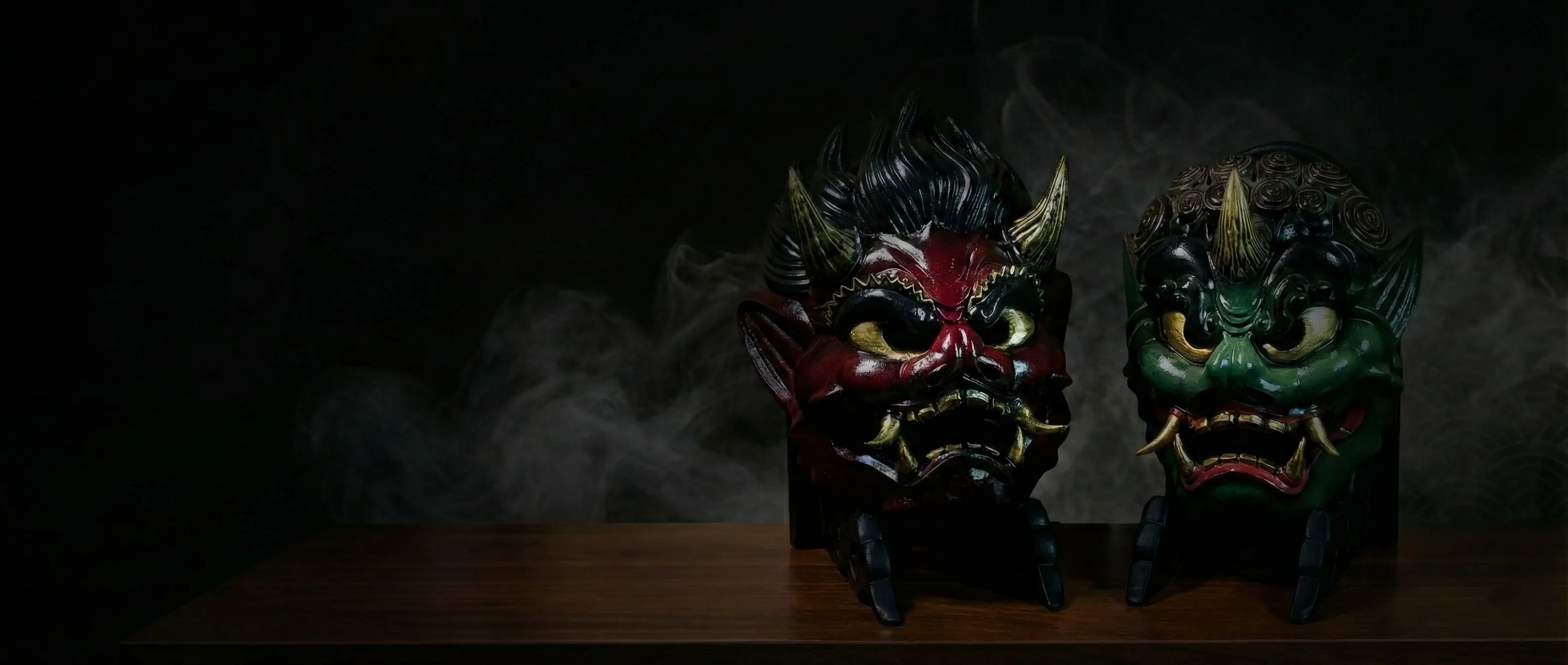
Oni, Kitsune, Hannya, Tengu, Mempo, yokai and kami. I draw from Japanese folklore, irezumi, theatre and workshop decorative objects.
Pieces are made for display, conventions, tattoo studios, collecting or light cosplay. Usage details are on each product page.
Quick answers
Are Dai Yokai masks handmade? Yes. 3D printing gives the base, then each piece is sanded, primed, painted, varnished and packed by hand in my workshop in Brittany.
What material do you use? Masks and half-masks are mostly made from PETG, chosen for its light weight and resistance. Resin is kept for small pieces when the level of detail makes sense.
Is it made to wear or display? Both uses exist depending on the model. Some masks are mainly decorative, while others suit light cosplay or conventions. The recommended use is stated on each product page.
Approach
Dai Yokai is not a shop for industrial objects. I work alone, from Brittany, with a simple goal: make Japanese masks accessible without removing the craft, the paint and the hand-finishing.
My aim stays the same: share my passion for Japanese folklore through solid, visible pieces, made to last and have a real presence when worn or hung on a wall.
The Dai Yokai website is built, maintained and optimized by Rankelier, my clear WordPress website service for independents, creators and small businesses.