
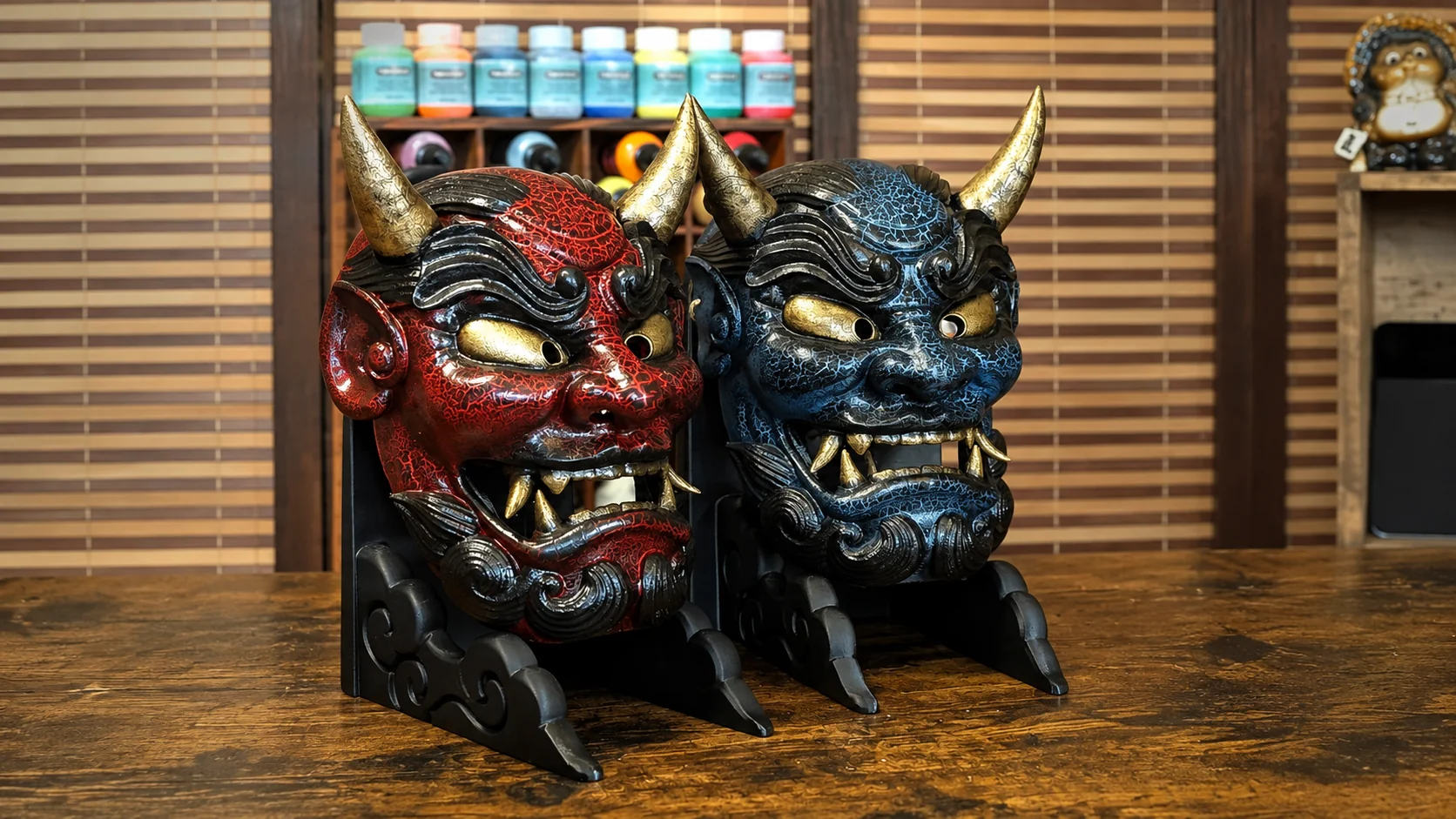
PETG, PLA and photopolymer resin can all produce good masks, but none is universally best. PETG may offer a useful balance of toughness and heat resistance for some large shells; PLA is rigid and practical for controlled indoor use; resin can give fine detail, while its properties depend heavily on formulation and post-curing. Geometry and print settings matter too.
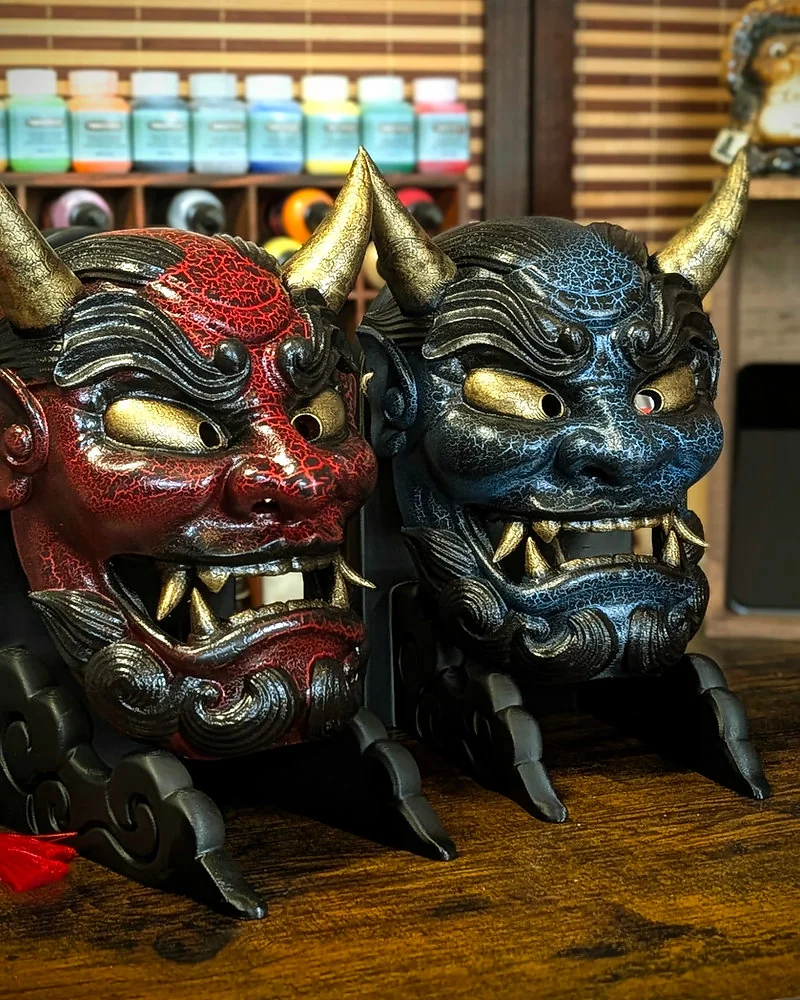
Quick comparison: PETG, PLA and resin masks
| Material family | Possible strengths | Points to verify | Common fit |
|---|---|---|---|
| PLA filament | Rigid, widely available, easy to print and sand in many workflows | Specific grade, heat exposure, thin projections and layer orientation | Indoor display, prototypes and controlled costume use |
| PETG filament | Useful toughness, some flex and higher heat-deflection data than some PLAs | Exact grade, print settings, wall design, surface preparation and coating | Large shells, transport, display and light costume use |
| Photopolymer resin | Fine features and a broad range of specialist formulations | Exact resin, part geometry, orientation, washing, post-curing and UV care | Detailed parts, display pieces and designs matched to a suitable resin |
These are starting points, not guarantees. “PLA”, “PETG” and “resin” each cover products with different additives and test results. A thick, well-oriented PLA shell may outperform a thin or poorly printed PETG shell in a particular fall. A tough engineering resin is not equivalent to a standard hobby resin.
Why the material label is not enough
Manufacturer technical data sheets describe test specimens made under stated conditions. A finished mask has curves, eye openings, horns, joins, paint and attachment points that concentrate loads differently. Fused-filament prints are also anisotropic: properties vary with layer direction and bonding. Resin parts depend on formulation and on washing and post-curing.
| Factor | Why it changes the result | What to check |
|---|---|---|
| Formulation | Additives and polymer blends change stiffness, elongation, impact and heat behavior | The exact filament or resin datasheet |
| Geometry | Wall thickness, ribs, holes, horns and sharp corners redistribute stress | Thin projections and reinforced attachment areas |
| Orientation and settings | Layer direction, temperature and cooling affect filament-part strength | Whether vulnerable features cross weak layer lines |
| Resin post-curing | Time, temperature and light exposure change final mechanical properties | The manufacturer’s validated cure schedule |
| Finishing | Primer, paint, varnish, adhesives and hardware add mass and may affect care | The complete finished object, not a raw sample |
PLA masks: useful rigidity with heat limits to manage
PLA is popular because it prints predictably in many machines and produces a rigid part with good dimensional accuracy. That can be useful for prototypes, wall pieces and masks used in controlled indoor conditions. It is not automatically weak: the exact formulation, shell geometry and print direction determine how a real part behaves.
Heat deserves attention. Prusa lists a heat-deflection temperature of 55 °C for its Prusament PLA test specimens, and it states that printed-part properties depend significantly on print settings. That number is specific to that material and method. It does not mean every PLA mask fails at exactly 55 °C, but it supports avoiding hot cars, heaters and prolonged summer heat.
PETG masks: toughness can be useful, but it is not a guarantee
PETG is a glycol-modified member of the PET family used as filament. In Prusa’s published tests, Prusament PETG has an HDT of 68 °C and shows more deflection before flexural failure than its PLA. Those figures help explain why some makers choose PETG for handled shells, but they are product-specific and cannot be applied to every PETG brand or finished mask.
PETG can demand more surface work when a smooth painted finish is wanted. Layer lines, stringing or small surface defects may need sanding, primer and repeated inspection. Its tendency to flex can help some shapes survive handling, but it can also be undesirable when a design requires maximum rigidity. The maker still has to choose wall thickness, orientation and attachment details intelligently.
Resin is a family, not one brittle material
SLA and MSLA printers use photopolymer resins formulated for different jobs. Standard display resin, tough resin, flexible resin, castable resin and high-temperature resin do not share one mechanical profile. For example, Formlabs describes Tough 1000 Resin as ductile and impact resistant, with 180% elongation at break and a 13.1 J Gardner impact result under its published conditions.
Post-curing is part of the manufacturing process, not an optional footnote. Formlabs states that post-curing improves final strength, stiffness and temperature resistance, and its recommended schedules vary by resin. Fine detail is a real advantage of resin printing, but durability cannot be judged until the formulation, geometry and cure are known.
Heat resistance: compare like with like
| Published material example | HDT in manufacturer data | Important context |
|---|---|---|
| Prusament PLA | 55 °C | ISO 75 test; values depend on print settings and specimen direction |
| Prusament PETG | 68 °C | ISO 75 test; one PETG product, not a universal PETG value |
| Formlabs Tough 1000 Resin | 55.3 °C | ASTM D648 result after the stated post-cure; other resins differ |
HDT is a laboratory comparison under load, not a “safe outdoor temperature” for a painted mask. Dark colors can heat quickly in direct sun, and cars can become much hotter than the surrounding air. Regardless of material, do not leave a finished mask in a hot vehicle or against a heat source. Follow the maker’s care instructions.
Impact resistance depends on the whole shell
A material can be tough in a test bar yet fail at a thin horn, sharp notch or poorly bonded join. For filament prints, layer orientation is especially important around straps, fangs and projections. For resin, a tough formulation cannot compensate for an unsupported paper-thin edge. Reinforcement and replaceable attachments may matter more than the material headline.
Ask what happens after damage. Some filament shells can be repaired, filled, sanded and repainted locally. Resin repairs may also be possible, but the correct adhesive and preparation depend on the resin and finish. A documented repair route is more useful than a promise that a mask will never break.
Weight and comfort are design questions
Prusament lists densities of 1.24 g/cm³ for PLA and 1.27 g/cm³ for PETG, a small difference compared with the effect of wall thickness, infill, hollowing, paint and hardware. Resin density varies by formulation, while hollowing and supports change material volume. “Resin is heavy” or “PETG weighs 150 g” is therefore not a reliable buying rule.
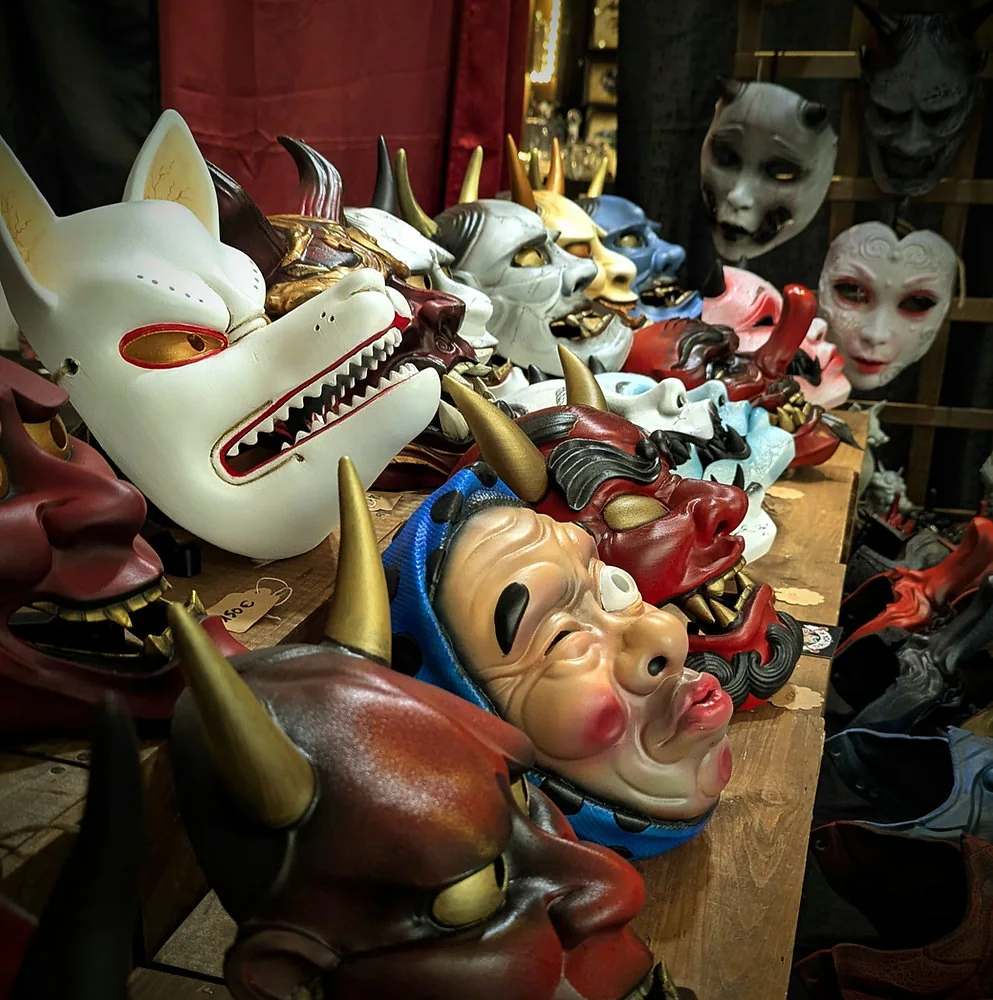
Comfort comes from the finished design. Check eye-opening position, ventilation, foam contact points, edge finish, balance and strap placement. A light shell can still be uncomfortable if it presses on the nose or shifts while walking. A decorative mask may not be designed for wear at all.
Choose the material by use
| Intended use | Priorities | Practical direction |
|---|---|---|
| Wall display | Shape, finish, mounting, color stability and repairability | Any of the three can work when the construction and care suit the room |
| Occasional indoor costume | Weight, vision, ventilation, smooth edges and secure straps | PLA, PETG or a suitable resin can work; verify the finished design |
| Transport and repeated handling | Projections, layer direction, reinforcement and repair route | A tough PETG workflow or an appropriate tough resin may be useful |
| Very fine small details | Resolution, thin-feature strength and cure | A suitable resin may capture detail well; do not assume standard resin is durable |
| Hot or sunny environment | Specific datasheet, color, coating and exposure time | Avoid prolonged heat regardless; never rely on a generic material label |
Safety: a costume mask is not protective equipment
A decorative or cosplay mask is not personal protective equipment, a respirator, a helmet or certified face protection unless it has been specifically designed, tested and certified for that purpose. Do not use it for workshop dust, chemicals, sports, driving or situations where unrestricted vision and hearing are essential.
For light convention wear, inspect the mask before each use. Stop if it obstructs breathing or vision, has a sharp edge, a loose attachment or a crack. Take regular breaks, keep the mask away from open flames and high heat, and follow venue rules. The detailed wearing and cleaning checks are in the mask care FAQ.
Why Dai Yokai uses PETG
Dai Yokai is a solo workshop in Brittany making contemporary Japanese-inspired masks, not traditional stage or ritual masks. PETG fits the workshop’s process for many large shells: printing, sanding, priming, hand painting, varnishing, shipping, wall display and occasional light costume use. That is a production choice for these designs, not proof that PETG is universally superior.
The finished mask still matters more than the raw filament. Product pages should be checked for dimensions, intended use and included attachments. If you need a mask for a fixed event or have a fit question, contact the workshop before ordering.
Browse the handmade Japanese masks, read the wearing and care FAQ, review shipping and returns, or contact the workshop.
FAQ
Is PETG always better than PLA for a mask?
No. PETG may provide a useful balance of toughness and heat resistance for some mask shells, while PLA can be rigid, easy to print and suitable for indoor display. The result also depends on the exact filament, wall thickness, print orientation, settings, geometry and finish. Compare the maker’s process and the intended use, not only the material label.
Is a resin mask always brittle?
No. Photopolymer resin is a family of formulations, not one material. Standard, tough, flexible and high-temperature resins can have very different impact, elongation and heat properties. Geometry, orientation, washing and post-curing also affect the finished part. Ask which resin and curing process were used.
Which material has the best heat resistance?
There is no universal ranking from the words PLA, PETG and resin alone. In published manufacturer data, Prusament PLA lists an HDT of 55 °C, Prusament PETG 68 °C and Formlabs Tough 1000 Resin 55.3 °C under their stated test and post-cure conditions. Other formulations can differ substantially, so use the specific datasheet.
Does PETG never yellow?
No responsible material comparison can promise that. Color change depends on the exact polymer and additives, pigments, coatings, UV exposure, heat and time. A paint and varnish system may protect the finished surface, but care and storage still matter. Keep a painted mask away from prolonged direct sunlight and excessive heat.
Which material makes the lightest mask?
The material density matters, but geometry usually matters more to the finished weight. Overall size, wall thickness, infill, hollowing, reinforcement, paint, hardware and straps can outweigh the small density difference between common PLA and PETG filaments. Ask for the finished weight of the exact mask.
Which material is best for a cosplay mask?
Choose the finished design, not a material name alone. Check weight, eye openings, ventilation, smooth edges, attachment points, balance and how long it will be worn. PETG can suit light costume use, PLA can work in controlled indoor conditions, and suitable resin systems can work when the design and reinforcement are appropriate.
Can a printed costume mask protect my face or breathing?
No, unless the product has been specifically designed, tested and certified for that protective purpose. A decorative or cosplay mask is not personal protective equipment, a respirator, a helmet or impact protection. Do not use it where eye, respiratory or face protection is required.
What should I ask a mask maker before buying?
Ask for the exact material or resin family, finished dimensions and weight, intended use, wall or reinforcement approach, edge and strap finish, care instructions and repair options. For resin, ask about washing and post-curing. For filament prints, ask how the shell is oriented and finished if durability is important.