Journal
Dai Yokai Journal
Guides, Japanese folklore, masks and workshop notes.

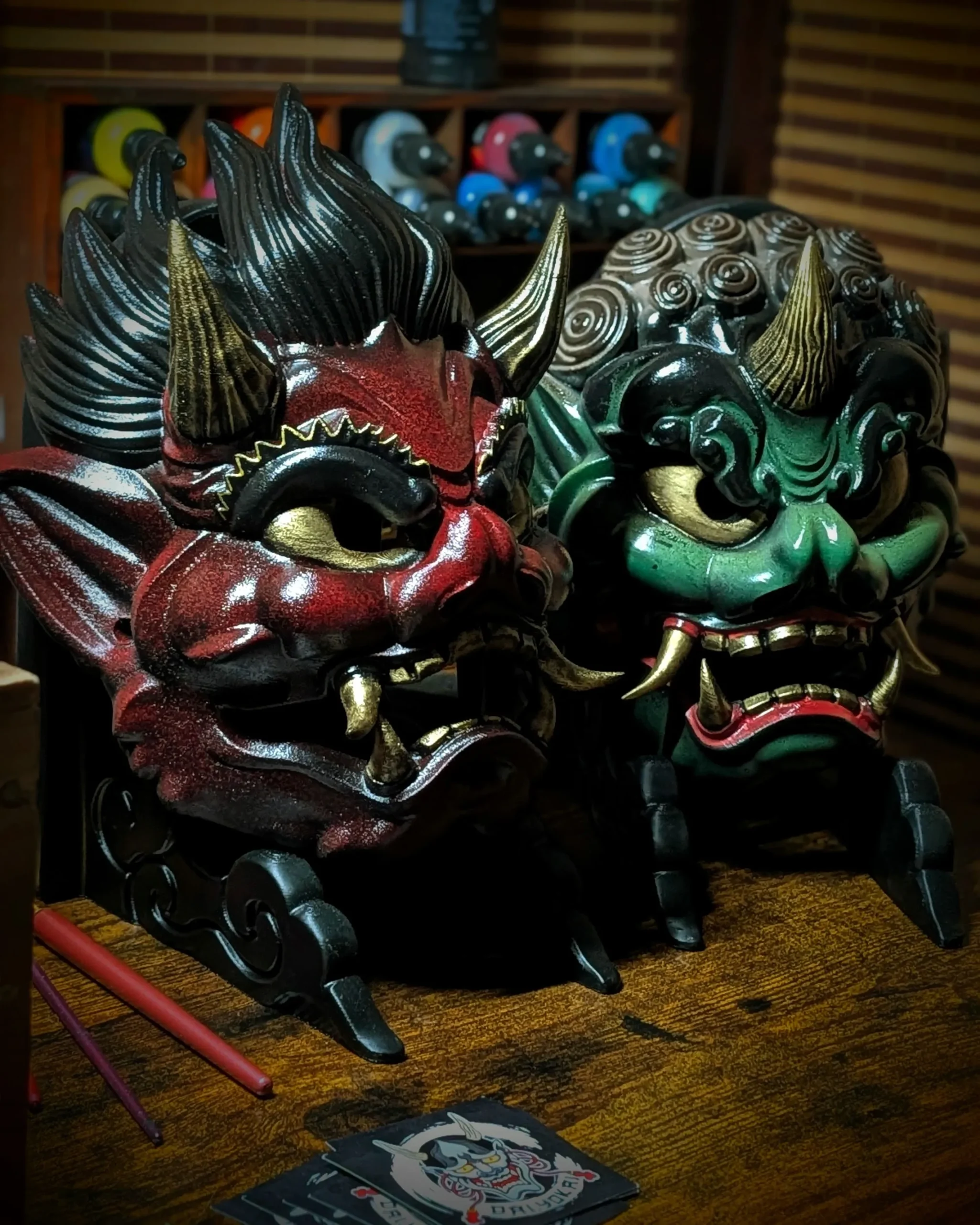
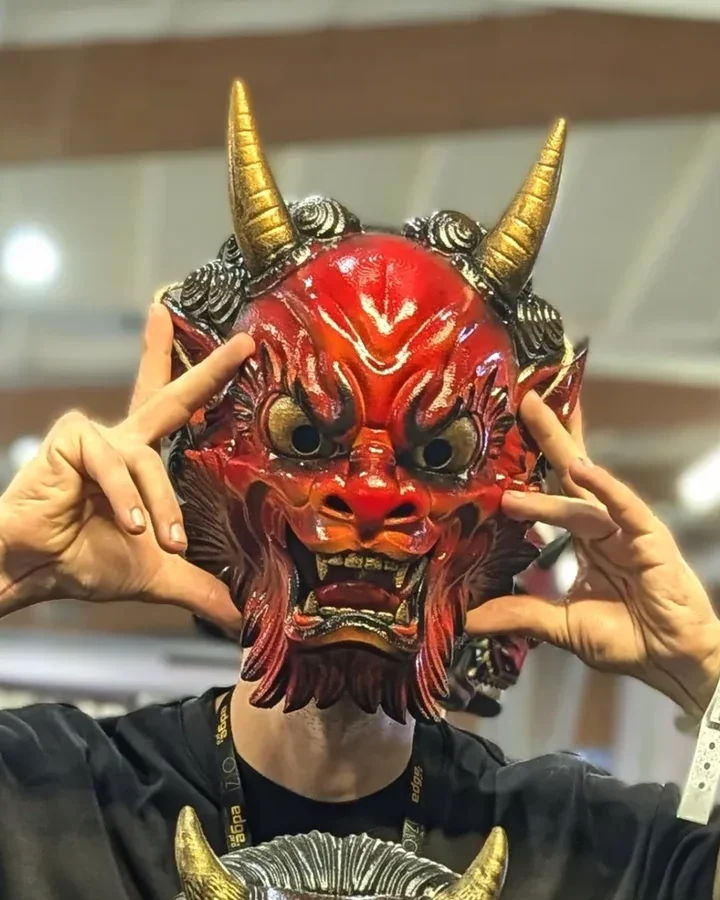
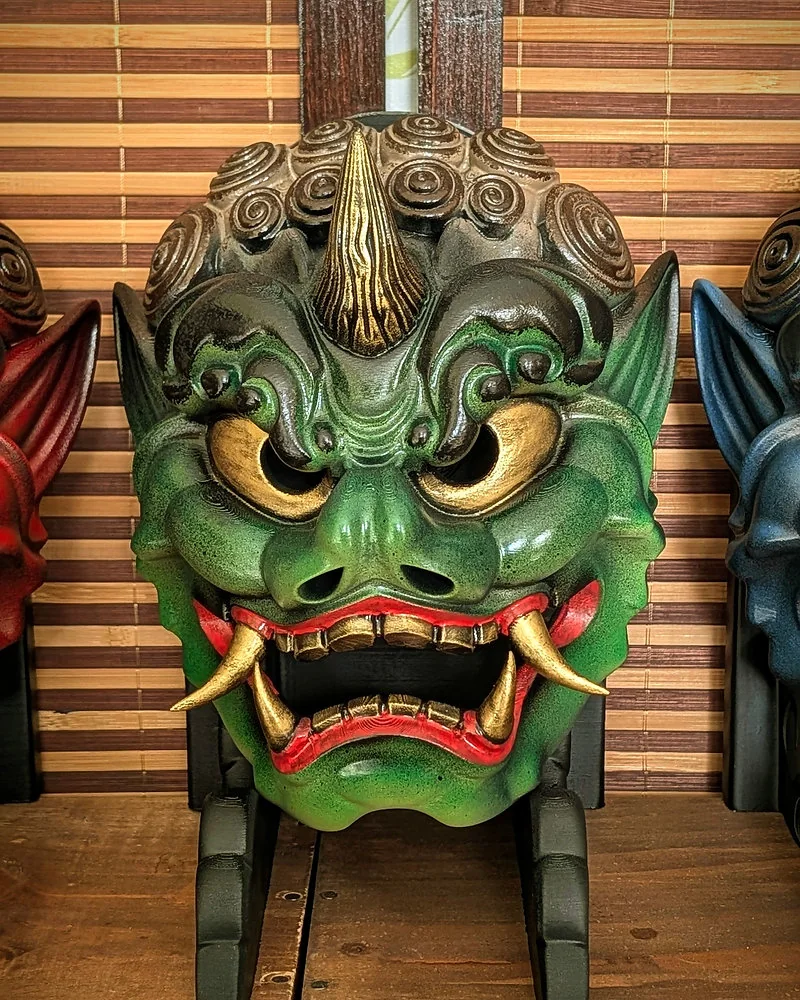
Oni mask: the guardian ogre of Japanese folklore, explained
What does an Oni mask mean? Guardian ogre, five colours, horns, tiger loincloth, irezumi tattoos and the difference between Oni and Hannya.

Hannya mask: meaning, colors and Noh legends
The Hannya mask, a woman transformed into a demon by jealousy, resentment or grief: Noh theater, possible colour meanings, tattoo symboli...

Tengu mask meaning: long nose, history and symbolism
What a Tengu mask means: long nose, Karasu and Daitengu forms, Yamabushi roots, irezumi symbolism and handmade Dai Yokai masks.

Kitsune Mask Meaning and Handmade Japanese Fox Masks
Kitsune mask meaning, Inari fox folklore, Zenko and Nogitsune symbolism, plus handmade Japanese fox masks by Dai Yokai.

Kuchisake-Onna: legend of the slit-mouthed woman
Kuchisake-Onna, the slit-mouthed woman: Japanese urban legend, origin, variants, 1979 panic, symbolism and popular culture.

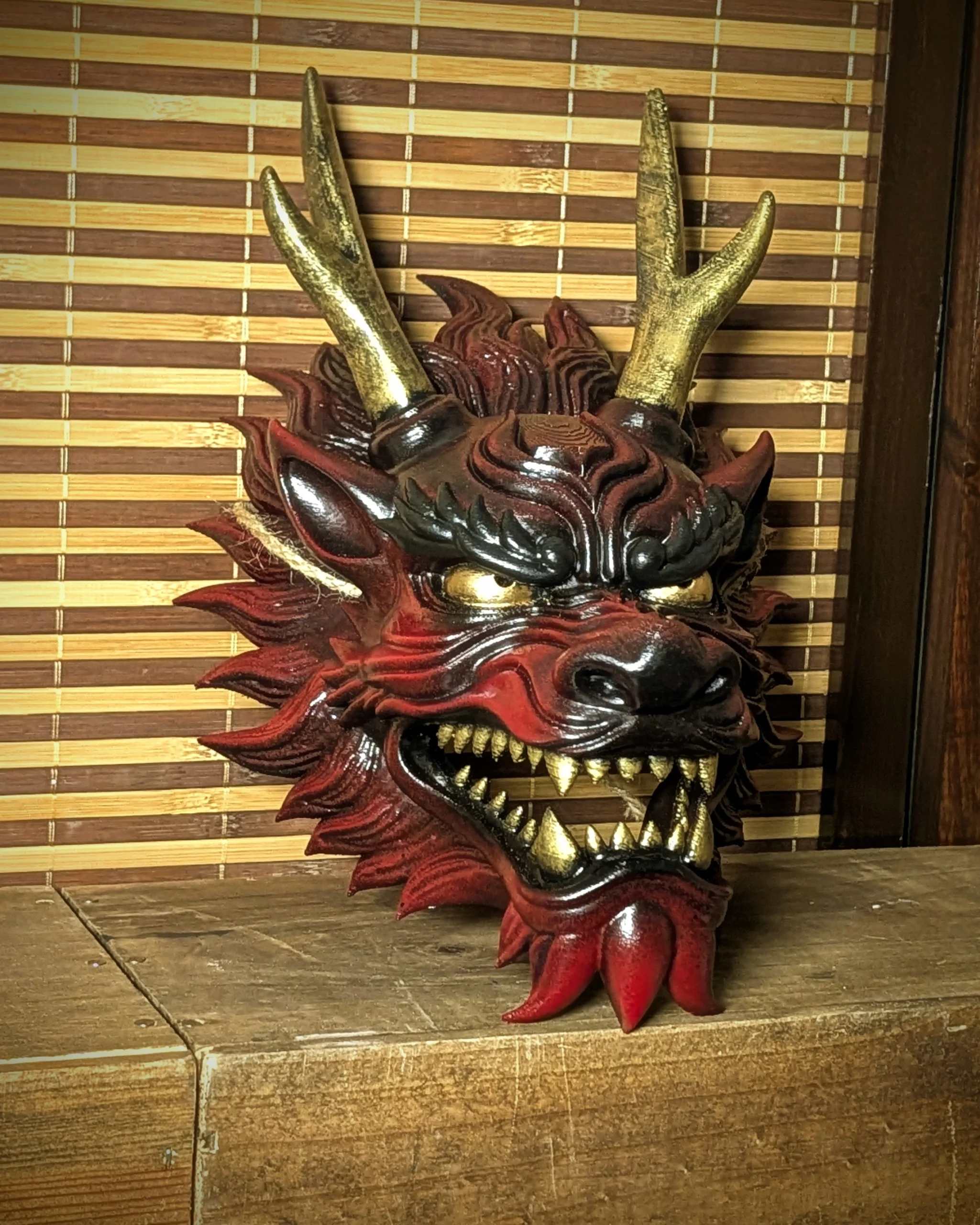
Japanese Dragon Ryū: Mythology, Types, Symbolism and Tattoo
Guide to the Japanese Ryū dragon: water symbolism, mythology, types, differences from Chinese and Western dragons, and its role in irezumi.

Yuki-onna, the Snow Woman of Japanese folklore
Yuki-onna, the snow woman of Japanese folklore: origins, Lafcadio Hearn's tale, regional variants and the meaning behind Japan's winter y...

Oni-gawara: protective demon roof tile and Oni mask
What an oni-gawara is, why demon roof tiles protect Japanese roofs, how they differ from Oni masks, and the link with Dai Yokai Oni masks.

Irezumi: The Secret History of Japanese Tattoos
Dive into the art of Irezumi. From spiritual origins to the Yakuza, see the history, the Tebori technique, and the meaning of traditional...

Japanese Halloween masks: which one actually scares?
Choose a Japanese mask for Halloween: Geisha Horror, Kuchisake-onna, Yuki-onna, Oni, Hannya or black Kitsune, with photos, meanings and c...

Fudō Myō-ō: meaning, sword, rope and Japanese mask
Fudō Myō-ō, the immovable wisdom king: his sword, rope and flames, his wrathful face, his place in Japanese art and tattooing, and the Da...

Foo Dogs and komainu: Japan's guardian lions
Foo Dogs, komainu, shīsā: Japan's guardian lion-dogs, their open-mouth / closed-mouth pair (A-Un), their origin and how to place them at...

Ōkami: the Guardian Wolf of Japan
The Ōkami, Japan's mountain guardian wolf: protected villages, okuri-ōkami, Mitsumine Shrine and the vanished Honshū wolf.

Ondeko: the protector demon-drummer of Sado Island
Sado Island's Ondeko: a protective oni who dances to the drum to purify villages. Origins, styles and the role of this Japanese ritual.

Where to Buy a Handmade Japanese Mask | Dai Yokai
Where to buy a handmade Oni, Kitsune, Hannya or Tengu mask: catalogue, prices, lead times, hand-painted PETG, worldwide shipping from Bri...

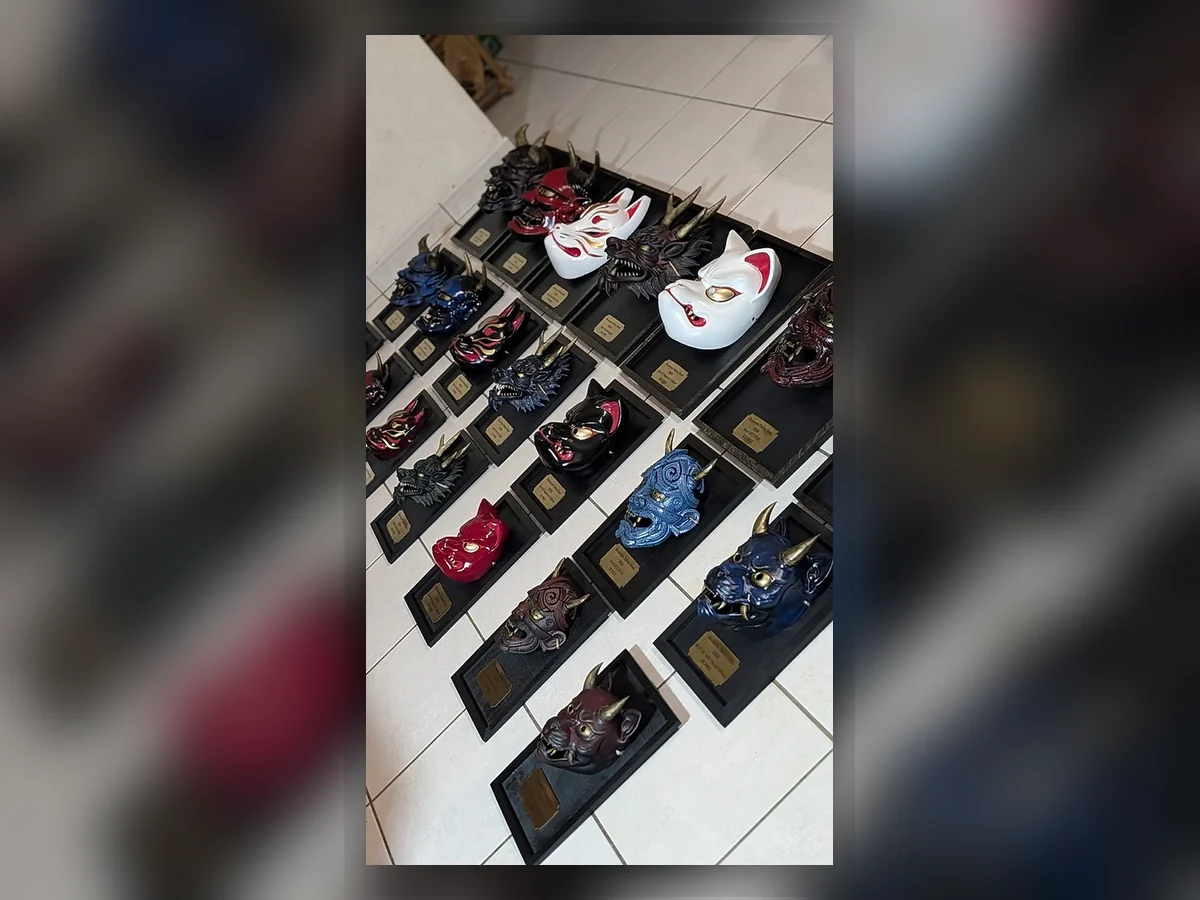
BITS 2026 trophies: 21 handmade Japanese masks
A workshop look back at the 21 trophy-masks Dai Yokai made for the Besançon International Tattoo Show 2026.

Hannya tattoo: meaning and irezumi codes
The Hannya tattoo in irezumi: what it really means, the meaning of the colours, the classic combinations, and the composition mistakes to...

Amaterasu: Japan's sun goddess and founding myth
Amaterasu, sun goddess and supreme kami of Shinto: her birth, the cave myth, the three sacred treasures, and the link to the Japanese flag.

Oni Tattoo: What the Demon Mask Really Means in Irezumi
What does an Oni tattoo mean? Color symbolism, the gakubori rule, classic pairings and placements, explained by a Japanese mask maker in...

Hyottoko mask: origins and meaning in Japan
The Hyottoko, Japan's comic twisted-mouth mask: the fire man, a household good-luck figure and Okame's festival partner.

Japanese tattoo: motifs, meaning and irezumi
Japanese tattooing (irezumi) explained: dragon, Oni, Hannya, koi carp, the role of the gakubori background, the bans and the cost of a bo...

Shōgun: who really ruled Japan?
The shōgun, Japan's military dictator: the three shogunates, Tokugawa, the relationship with the emperor, and the link to mempo war masks.

Geisha and yokai: the dangerous women of Japanese folklore
Beauty and danger in Japanese folklore: the deadly-beauty motif through Jorōgumo, Tamamo-no-Mae, Yuki-onna, Kuchisake-onna and Hannya.

Rōnin: the masterless samurai, from the 47 rōnin to Musashi
The rōnin, masterless samurai: what the word means, how one became one, Miyamoto Musashi and the revenge of the 47 rōnin of Akō.

Mempo and Mengu: the samurai armour masks
Mengu and mempo, the samurai armour masks: the difference between the terms, the five types, the Katchu-shi armourers and the psychologic...

Inari Okami: the Rice God, the Foxes and 30,000 Shrines
Inari Ōkami, kami of rice, commerce and prosperity: why the Kitsune fox is his messenger (not the god), the 30,000 shrines and the red to...

Top 10 Japanese Yokai: folklore creatures explained
The 10 Japanese yokai to know: Oni, Kitsune, Hannya, Tengu, Kappa, Tanuki, Yurei, Jorogumo, Nekomata and Gashadokuro.

Yūrei: the ghosts of Japanese folklore
Japanese yūrei ghosts: what sets them apart from yokai, their codified look, the main categories (ubume, onryō, sorei) and the Obon festi...

Ghost of Yotei: which masks fit an Atsu cosplay
Ghost of Yotei is set in 1603 Ezo. Handmade Japanese masks that fit an Atsu cosplay or the game's rōnin look: Mempo, Ōkami, Tengu.

Onigawara: the demon tile that guards Japanese roofs
The history of onigawara, the demon tiles of Japanese roofs: from lotus flowers to ogre faces, their role, the onishi craftsmen and ibush...

Samurai: history, Bushido and the real arsenal
The samurai explained: where the word comes from, the great eras, the 7 virtues of Bushido, the real arsenal beyond the katana, and the m...

Gozu and Mezu: the guardians of Japanese hell
Gozu (ox head) and Mezu (horse head) guard the Japanese Buddhist hells and serve judge Enma. Origin, role and pop culture.

Ibaraki-doji: the demon with the severed arm
Ibaraki-doji, the Oni who lost an arm to Watanabe no Tsuna: human birth, bond with Shuten-doji, shapeshifting and gender ambiguity.

Watanabe no Tsuna: the demon-slaying samurai
Watanabe no Tsuna, the samurai who cut off Ibaraki-doji's arm at the Rashomon gate: the duel, the Onikiri sword and the Watanabe privilege.

Setsubun: driving out the Oni with beans
Setsubun, the Japanese ritual of February 3rd: mamemaki, why soybeans, the phrase to shout, and the central role of the Oni mask.

chanokazé: Japanese Tea from Shizuoka, Selected in Brittany
chanokazé is Elodie's Japanese tea shop: direct Shizuoka sourcing, Nihoncha Adviser guidance, sencha, matcha, gyokuro, teaware and worksh...

Japanese Masks: 14 Centuries of History in 7 Faces
Japanese masks and meanings: the main types of Japanese masks, Oni, Hannya, Kitsune, Tengu, Mempo, articulated masks and Dragon, plus whe...

Black Kitsune Mask: the Genkō, Fox of the Stars
The black Kitsune mask, between Genkō and Nogitsune: star fox, shadow, protection, and how it differs from Inari's white Kitsune.

White Kitsune Mask: the Sacred Byakko Fox
The white Kitsune mask, sacred fox messenger of Inari: the meaning of white, red marks, and the difference between Zenko and Nogitsune.

Kintsugi: the Art of Golden Repair and the Hannya Mask
Kintsugi, the Japanese art of mending broken objects with gold: its origin, wabi-sabi philosophy, and link to the Hannya mask.

Black Oni Mask: Why the Kuro-Oni Is the Root of All Demons
What does a black Oni mask mean? The Kuro-Oni embodies doubt, the root of all Buddhist poisons. Symbolism, gold accents and placement, by...

Ao-Oni: the blue demon and the colour that isn't one
The Ao-Oni, blue Japanese demon: why "ao" also covers green, cold anger in the five colours, and his role in Naita Aka Oni.

Aka-Oni: the red demon and the tale of the crying Oni
The Aka-Oni, red Japanese demon: its place in the five colours, the tale Naita Aka Oni and the symbolism of red in folklore.

Chōchin-obake: the haunted lantern of Japan
The Chōchin-obake, haunted lantern of Japanese folklore: a tsukumogami born from a hundred-year-old object, its single eye and lolling to...

Daruma: meaning, colours and the eye ritual
The Daruma, the Japanese good-luck doll from Bodhidharma: origin, colour meanings, and the eye ritual for making a wish.

Teke-Teke: the urban legend of the ghost cut in two
Teke-Teke, the Japanese urban legend of the ghost cut in two who crawls on her elbows: origin, the sound that names her and her link to t...

Cosplay mask FAQ: wearing, comfort and care
How to wear and care for a handmade PETG Japanese mask: straps, comfort foam, alcohol-free cleaning, storage and display.

Jorogumo: the Spider-Woman Who Seduces and Devours
The Jorogumo (絡新婦), a 400-year-old spider that turns into a woman to trap men: her legends, the Tsuchigumo, and her role in irezumi tatto...

PETG, PLA or resin mask: which to choose?
PETG, PLA or resin for a Japanese mask: heat resistance, impact resistance, durability. A maker's comparison to help you choose well.

Nekomata and Bakeneko: Japan's demon cats
Nekomata and Bakeneko, the cat yokai of Japanese folklore: the split tail, the powers, and the difference between the two supernatural cats.

Gashadokuro: the Giant Skeleton Born from the Unburied Dead
The Gashadokuro, a giant skeleton born from the unburied dead. Its recent origin, the Kuniyoshi print, and the Takiyasha-hime legend.

Tanuki: the trickster yokai of good fortune
The Tanuki, Japan's shapeshifting yokai: the real animal, the eight symbols of the lucky statue, and the Bunbuku teapot legend.

Kappa: the River Yokai You Defeat with a Bow
The Kappa, Japan's river yokai: the water dish on its head, its love of cucumber, the shirikodama, and why you defeat it with a polite bow.

Tebori: the Japanese hand-tattoo technique, without a machine
Tebori, the Japanese hand-tattoo technique: the nomi tool, bokashi gradients, pain vs machine, the horishi apprenticeship and the cost.

Dogū: the mysterious figurines of Jōmon Japan
Dogū, clay figurines of the Jōmon period: the snow-goggle eyes, the theories about their purpose, and why they were broken.

Fujin: the Japanese Wind God Who Came from Greece
Fujin (風神) is the Japanese wind god: Greek roots, bag of winds, green skin, mask symbolism, and his link with Raijin in folklore.

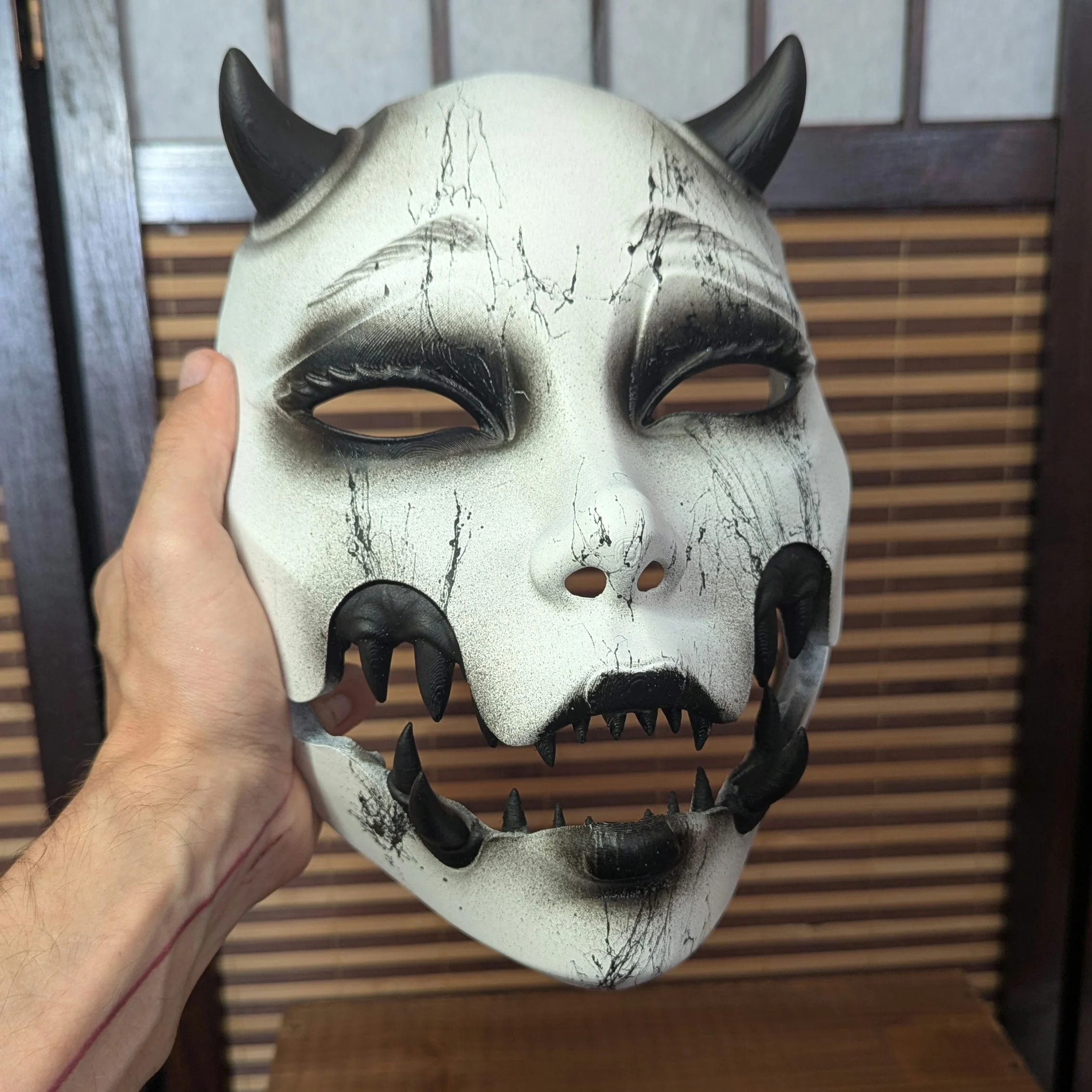
Kezurata: When the Hannya Cracks
The Kezurata, my textured take on the Hannya mask: a rage so old it cracked the face open. The concept, the painting method, and where to...

Yokai: the spirits and demons of Japanese folklore
Understanding Japanese yokai: definition, the difference with kami and yurei, the great families (Oni, Kitsune, Tengu, Tsukumogami) and o...

Kami: the Gods and Spirits of Japanese Shinto
What is a kami? Shinto deities defined, the "eight million gods", how kami differ from yokai, and the major ones: Amaterasu, Inari, Raiji...

Neko Hannya Mask: the Demon Cat Half-Mask
The Neko Hannya, my fusion of the supernatural bakeneko cat and the Hannya demon: a feline half-mask made for dark cosplay and techwear.

Shuten-dōji: the Oni king beaten by trickery
Shuten-dōji, the Oni king of Mount Ōe: his tragic origin, his reign of terror, and his fall to Minamoto no Raikō's poisoned sake.

Hannya x Berserk Mask: the Brand of Sacrifice on a Noh Demon
How a logo engraving test on a Hannya became my most requested Berserk crossover: the Brand of Sacrifice, six finishes and tattoo meaning.

Raijin: the thunder god born of death
Raijin, the Shinto thunder god: his birth from Izanami's corpse, his taiko drums, the navel-stealing folklore and his inseparable duo wit...

How to display a Japanese mask on a wall or stand
Hanging or standing a Japanese mask: wall mount, stand, height, lighting and placement by mask type. The practical guide.