The short version
- Oni, Hannya, Kitsune, Tengu and Mempo do not share the same origin, the same silhouette or the same use.
- The right starting point is not meaning but the mask's place in your project: decoration, collection, tattoo studio, convention or gift.
- A comparison table and five concrete questions let you decide quickly between the five families.
- Before ordering, it is the dimensions, the fastening and the stated use on the product page that decide, not a list of symbols.
Start with use, not with a vague meaning
- Will the mask be displayed or worn? A wall object does not have the same constraints as a convention mask.
- From what distance will it be seen? Large volumes stay readable from afar, fine details call for closer viewing.
- How much space is available? A long-nosed Tengu and a Mempo half mask do not take up the same volume.
- Does the person already know the motif? For a tattoo or a gift, it is better to start from a symbol they already like than from an assumed interpretation.
- What constraints are stated on the product page? Dimensions, fastening, visibility and comfort must be checked model by model.
Quick table: Oni, Hannya, Kitsune, Tengu or Mempo
| Type | What sets it apart | Relevant use | Point to check |
|---|---|---|---|
| Oni | Horns, fangs, powerful volumes | Large decoration, collection, tattoo world | Can the room take a very strong presence? |
| Hannya | Horned Noh face, tense and tragic expression | Collection, irezumi project, expressive decoration | Does the person know this specific motif? |
| Kitsune | Fox silhouette, long graphic lines | Bright decoration, collection, targeted gift | Which colors and which fox reading do they prefer? |
| Tengu | Long nose or bird-like features depending on the form | Profile decoration, folklore, martial world | Is there enough available depth? |
| Mempo | Facial armor protection, covering the lower face | Half mask, photo, occasional cosplay, small space | Is the model suited to the intended wear? |
Choosing an Oni mask
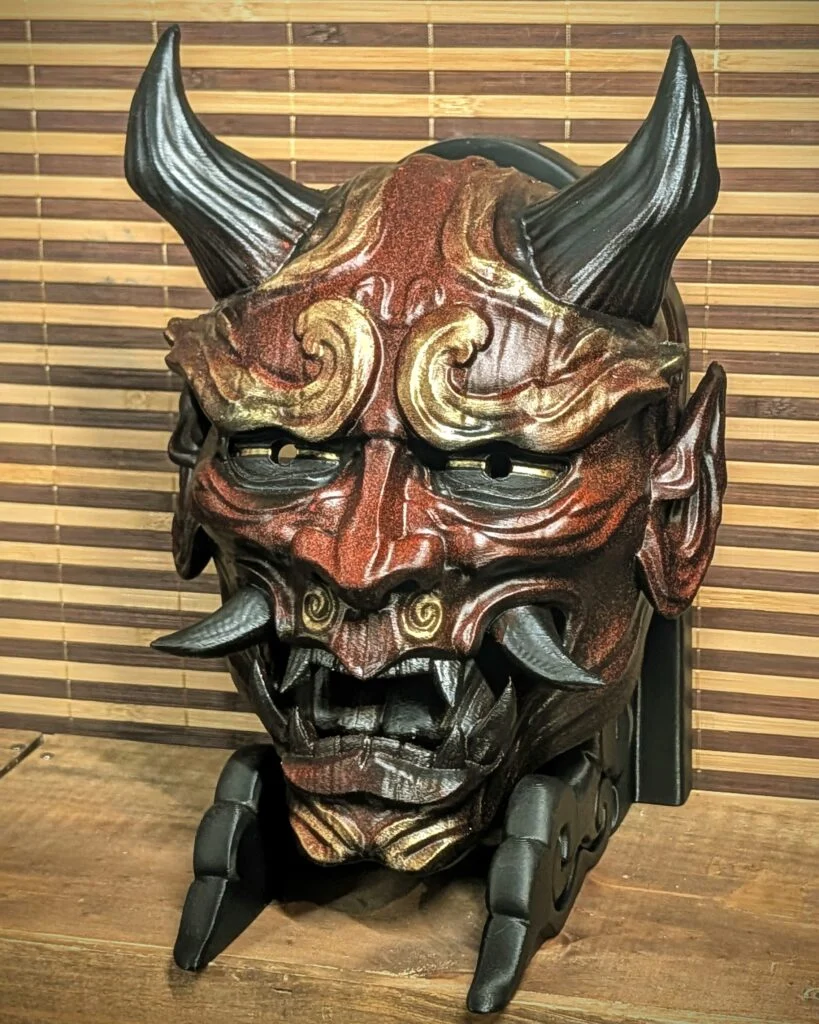
An Oni works if you want an immediately readable silhouette, with horns, fangs and marked volumes. In Japanese folklore, the word oni refers to supernatural creatures that are often threatening, but their roles vary across tales and local traditions. It is better not to turn it automatically into a universal "protective demon."
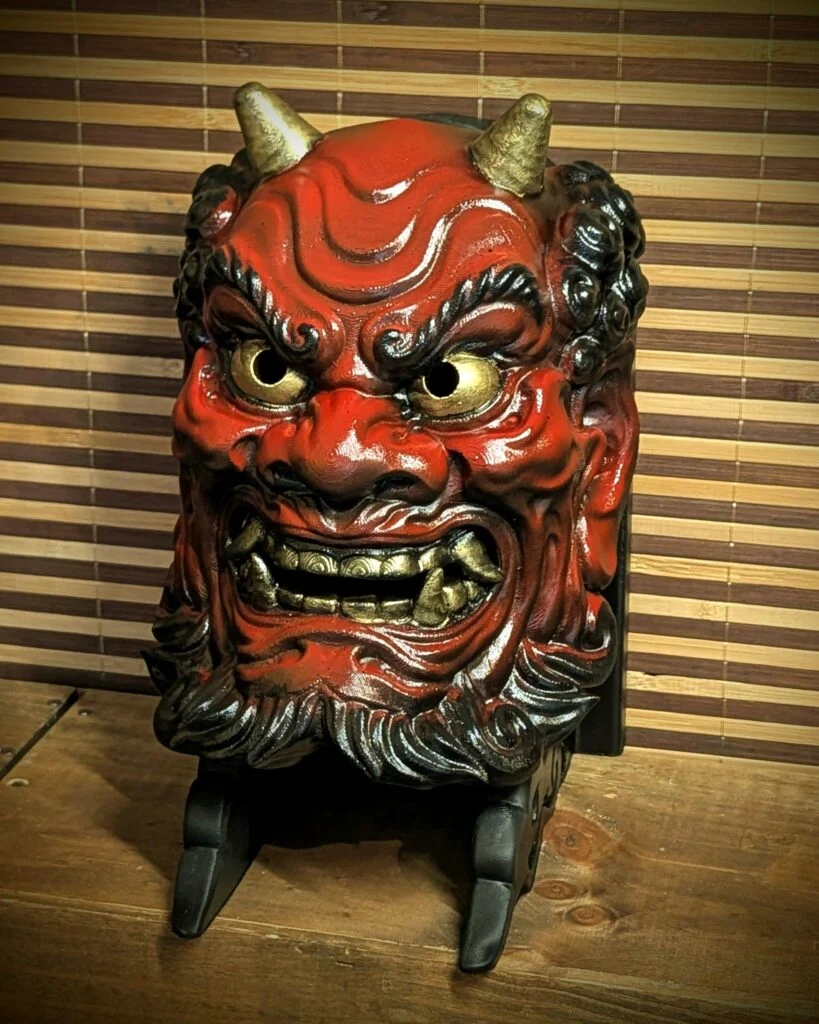
Visually, the Oni works well on a large wall, in a workshop or among irezumi references. On the other hand it can dominate a small space. Compare the width, the depth of the horns and the color with what surrounds it before choosing.
Choosing a Hannya mask
Hannya is not simply another name for Oni. It is a type of Noh theater mask associated with a jealous or vengeful female spirit. The National Noh Theatre classifies masks by role, gender, age and other categories. Hannya belongs to that specific theatrical world.
For a collection or a tattoo project, Hannya brings a more human and tragic tension than an Oni. The face is highly expressive, but its meaning does not reduce to "jealousy." You have to look at the piece, the context and how the motif is used.
The Hannya mask guide covers its history. To see the available forms, open the Hannya masks collection.
Choosing a Kitsune mask
Kitsune means fox. Depending on context, the fox can be a character in a tale, a shape-shifter or a messenger associated with Inari. Fushimi Inari Taisha specifies that foxes are the messengers of Inari Ōkami and that Inari is not itself a fox. This distinction avoids a very widespread but oversimplified formula.
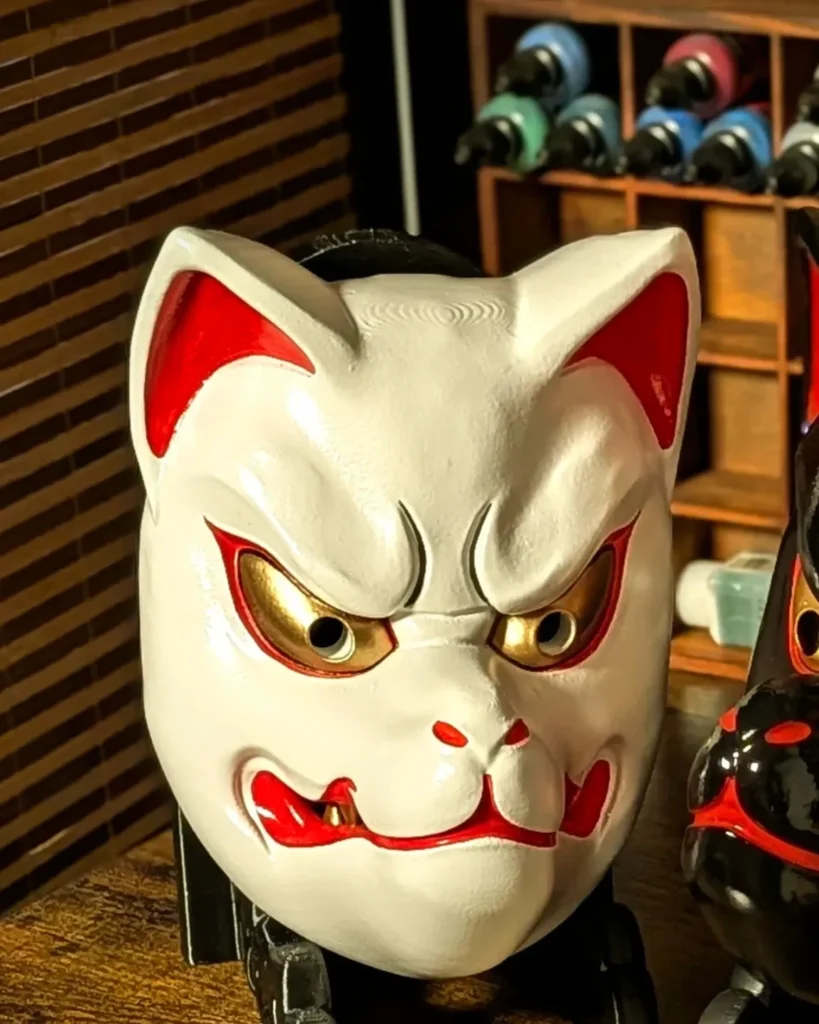
The Kitsune suits someone who already likes the Japanese fox, symmetrical lines and a more graphic silhouette. White, red, black or gold do not automatically carry a fixed meaning: colors also depend on contemporary creation. Choose them according to the piece, the person's taste and the actual finish.
Choosing a Tengu mask
The Tengu is often recognized by its long red nose, but some forms are more bird-like, such as the Karasu Tengu. These figures belong to a complex body of tales tied to the mountain, to pride, to discipline and to religious traditions. Reducing them to "martial arts" alone would be too narrow.
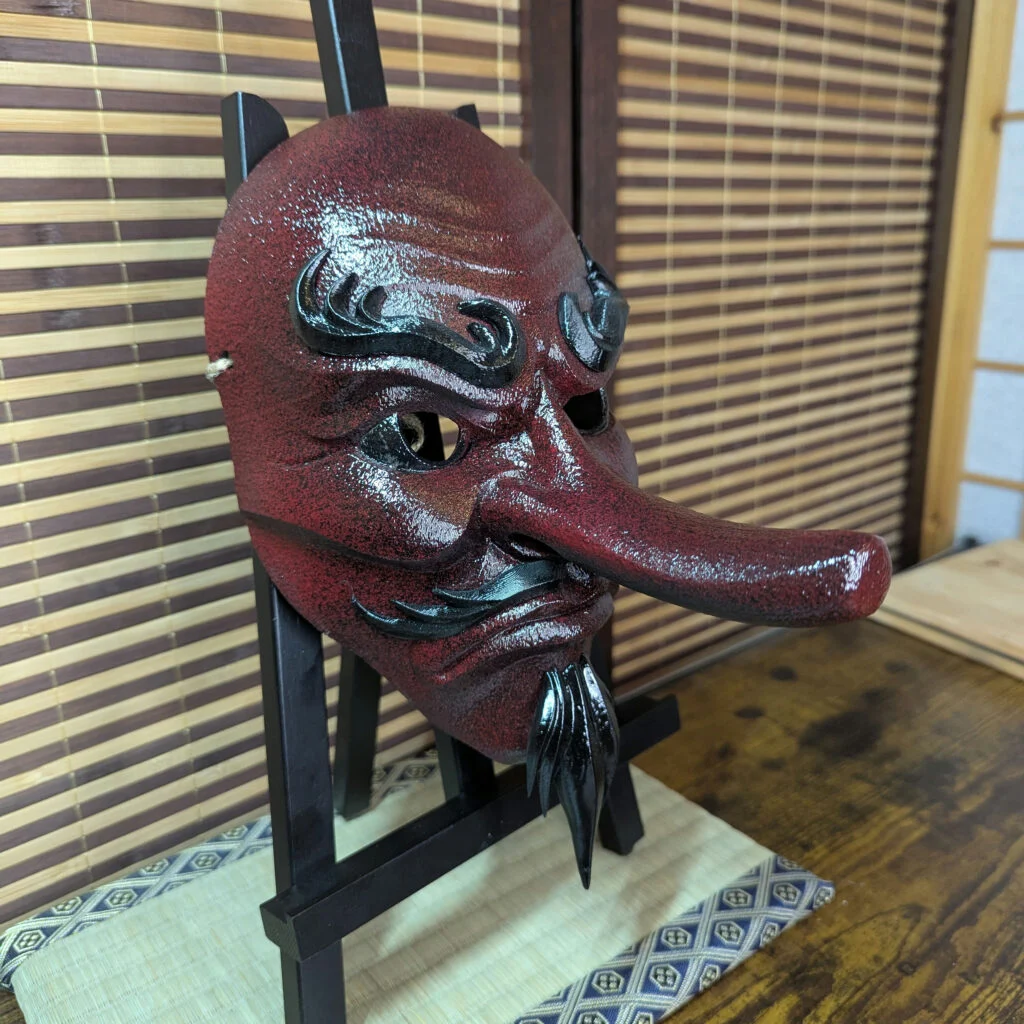
For decoration, the profile is the real criterion. A very long nose calls for depth and casts a strong shadow on the wall. In a narrow display case or a passageway, that volume can get in the way. So look at the side views, not just the front photo.
Choosing a Mempo half mask
The historical menpō belongs to Japanese armor, not to Noh theater. Museum collections hold lacquered iron menpō integrated into Japanese armors. Historically, it is therefore a facial protection tied to a warrior's equipment.
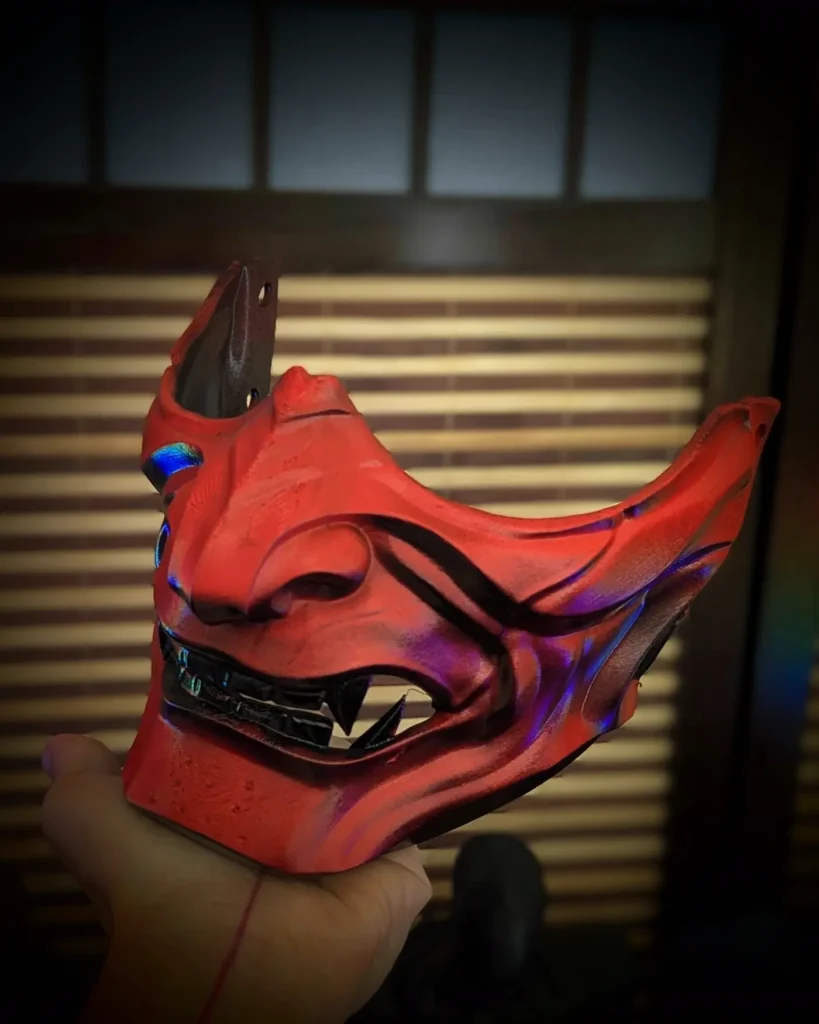
A contemporary Mempo can be interesting if you want a more compact format or if the upper face must stay visible. That does not mean every model is comfortable for several hours. For a cosplay or a convention, check the size, the fastening, the breathing and the field of vision stated on the product page.
Which Japanese mask to choose by use?
For wall decoration
Measure the available width and depth first. Oni and Hannya draw the eye quickly. Kitsune offers a longer and often brighter shape. Tengu needs real profile space. Mempo takes less height and can complete a composition without becoming the dominant piece.
For a tattoo project or a studio
Do not choose a figure only because it is frequent in irezumi. Look at the motifs already there, the tattooist's plan and the visual references in use. Oni and Hannya are often brought together, but their origin and emotional register differ. Tengu and Mempo also produce very recognizable silhouettes.
For a cosplay or a convention
The first question is not appearance but whether the model suits being worn. Check the fastening, the dimensions, the weight, the breathing and the visibility. A half mask leaves more of the face visible. A full mask has a stronger effect in photos but may call for more breaks.
For a Halloween costume, compare the options in the guide to scary Japanese masks for Halloween.
As a gift
A known motif beats a supposedly universal symbol. Ask whether the person prefers foxes, horned creatures, samurai, Japanese theater or a convention aesthetic. Also check the available space and the making time. A small Mempo can fit better than a large Oni if the person lives in a compact space.
To start a collection
Start with a family you want to explore, then keep a visual thread: color range, scale, finish or type of stand. A coherent collection does not need to gather every figure. Two well-chosen pieces can read better than a mix bought too quickly.
What Dai Yokai actually makes
Dai Yokai masks are contemporary handmade creations inspired by Japanese folklore, theater, armor and imagery. They are neither antiques, nor ritual masks, nor traditional Noh masks carved in Japan.
The base is printed in PETG in the workshop in Brittany. Each piece is then prepared, sanded, painted in acrylic and varnished by hand. Shades and some details may vary slightly. To choose a model, rely on the photos, the dimensions and the description on its page rather than on a general promise about all masks.
The decision in thirty seconds
- You want the most presence: look at the Oni.
- You want a tragic expression tied to Noh: look at the Hannya.
- You like foxes and graphic lines: look at the Kitsune.
- You want an immediately recognizable profile: look at the Tengu.
- You prefer a half format inspired by armor: look at the Mempo.
If two families remain possible, compare the dimensions, the profile and the stated use on each page. That concrete check decides it, not a list of symbols copied out of context.
FAQ
Which Japanese mask should you choose as a beginner?
Start with the use and the available space. An Oni suits a large wall presence, a Kitsune a more graphic fox silhouette, and a Mempo a compact half format. Do not automatically choose the motif presented as the best known: check the dimensions, the product page and your actual taste.
What is the difference between an Oni and a Hannya?
Oni refers to supernatural creatures of Japanese folklore with varied roles. Hannya is a type of Noh theater mask associated with a jealous or vengeful female spirit. Both can have horns and fangs, but their origin, their design and the register they evoke are not the same.
Is a Kitsune mask always linked to Inari?
No. Kitsune means fox and Japanese tales give it several roles. In the context of Inari shrines, foxes are considered messengers of Inari Ōkami, not Inari itself. A contemporary creation can also use the fox silhouette without claiming to reproduce a ritual object.
Which mask should you choose for a tattoo studio?
Choose a motif consistent with the references already in the studio. Oni and Hannya are frequent in irezumi, but they do not tell the same story. Tengu and Mempo can suit a more martial atmosphere. Above all, check the size, the colors and how readable the mask is from the entrance.
Is a Mempo a Japanese theater mask?
No. The historical menpō is a facial protection tied to Japanese armor. It could defend the face and help hold the helmet in place. Dai Yokai Mempo are contemporary PETG creations inspired by that silhouette. They are neither antique armor pieces nor protective equipment.
Can all Dai Yokai Japanese masks be worn?
No, use depends on the model. Some are mainly decorative, others can suit occasional wear. Before a convention or a cosplay, check the dimensions, the fastening, the visibility, the breathing and the notes on the page. A decorative object is never automatically suited to several hours of wear.
Which Japanese mask should you choose for a small space?
Favor a Mempo half mask or a model with limited depth. A long-nosed Tengu or an Oni with large horns needs more distance. Measure the wall, the shelf or the display case, then compare those dimensions with the product page before ordering.
Are Dai Yokai masks traditional Japanese masks?
No. They are contemporary handmade creations inspired by Japanese folklore, theater, armor and aesthetics. Their base is printed in PETG, then prepared, sanded, painted and varnished by hand in Brittany. They are neither ritual, nor old, nor carved according to the Noh tradition in Japan.
See related pieces
All masks · Oni · Hannya · Kitsune · Tengu · Mempo
Source: The Metropolitan Museum of Art, Half Mask (Menpō) and Gorget.