What is a kappa yokai?
A kappa is a water-dwelling yokai from Japanese folklore. The modern version is usually child-sized, with a turtle-like shell, webbed hands and feet, a beak and a water-filled dish on its head. Earlier traditions were less uniform. Across Japan, related river beings had different names, bodies and local stories.
What does kappa mean?
Kappa is written 河童 and is commonly translated as “river child.” Today the word suggests one recognizable creature, but that national image gathered together many local water-spirit traditions. Older names include kawatarō or gataro around Kyoto and Osaka, medochi in parts of Tōhoku, enkō in Chūgoku and Shikoku, and hyōsube in Kyūshū.
A historical overview published by Nippon.com explains that kappa was once only one regional name. Edo publishing and visual culture helped the Edo word and appearance become the modern standard. “Kappa” is therefore a useful umbrella term, not proof that every Japanese community imagined the same being.
One modern image, many older forms
The now-familiar kappa has green skin, a shell, a bird-like beak and a smooth dish surrounded by hair. That design feels ancient because it is repeated in manga, mascots and signs. Historical descriptions and pictures show a more complicated evolution.
| Feature | Modern standard | Historical variation |
|---|---|---|
| Body | Small green humanoid | Hairy, monkey-like, otter-like or other regional forms |
| Back | Turtle-like shell | Shells became dominant through Edo visual culture |
| Face | Beak with round eyes | Monkey faces, pointed mouths and animal mixtures |
| Head | Dish holding water | A widely shared motif, but its exact form varies |
| Character | Mischievous or cute | Dangerous, sexual, violent, helpful or locally sacred |
| Name | Kappa | Kawatarō, medochi, enkō, hyōsube and many others |
The University of Oregon’s Yōkai Senjafuda project notes that the early kappa concept combined aquatic legends from across Japan. A relatively stable modern form is visible by the late Edo period, while postwar media helped turn the old menace into a mostly harmless character.
Where do kappa live?
Kappa belong to rivers, ponds, pools, marshes and other waterside places. Their stories are strongest at the boundary between a community and dangerous water. They may seize a swimmer’s legs, drag a horse from the bank or wait in a deep pool where the current is hard to read.
The American Museum of Natural History presents kappa tales as warnings used to teach children caution near rivers and ponds. That practical reading is important, but it is not the creature’s only meaning: local traditions also connect kappa with water deities, medicines, agriculture and binding promises.
The head dish and the bowing weakness
The dish on top of a kappa’s head is often called a sara. In the familiar version, its water sustains the creature’s strength on land. If the water spills or dries, the kappa weakens and may be unable to move.
This leads to the famous advice: bow deeply, wait for the kappa to return the gesture, and let the water pour out. It is a memorable modern survival rule and appears in museum educational material. It should still be presented as one widespread story motif, not the universal ending of every kappa encounter.
A late nineteenth-century kappa netsuke in the British Museum shows how established the shell, frog-like limbs, monkey-like head and saucer-shaped cavity had become in Edo-period material culture.
Why are kappa dangerous?
Older kappa are not merely pranksters. They pull humans, cattle and horses into the water, drown swimmers, attack bodies and spread illness or madness. Stories could be graphically violent because the threat of deep water was real.
One recurring motif is the shirikodama, a mythical ball supposedly located inside the human body. A kappa removes it through the victim’s anus, sometimes as part of a broader attack on the internal organs. The shirikodama is folklore anatomy, not a historical medical belief that can be mapped onto a real organ.
The University of Oregon collection documents an early modern image of a kappa extracting organs from a child. Its comparison with cheerful postwar prints shows how much violence was removed from the modern mascot.
Horses, sumo and promises
Kappa frequently challenge people to sumo or try to pull horses and cattle into the water. These are not random decorations. The horse-pulling motif appears widely enough to support dedicated comparative folklore research, while sumo lets stories test the creature’s strength, pride and vulnerability.
Ishida Eiichirō’s study The Kappa Legend compares Japanese horse-pulling stories with water-spirit traditions beyond Japan. The study supports the importance of the motif without reducing every kappa legend to one origin.
A common local story pattern reverses the danger: the kappa grabs a horse but is dragged onto land, captured and forced to promise that it will stop harming the village. A written pledge, severed hand or returned limb may seal the agreement. Once bound by the promise, the former threat can become a helper or protected local figure.
Cucumbers and kappamaki
Cucumber is the best-known kappa food. Some traditions describe cucumbers marked with a person’s or family’s name and floated as an offering, asking the river being not to harm them. Customs differ, so this should not be described as one nationwide ritual performed in the same way everywhere.
The cucumber sushi roll known as kappamaki keeps the association alive in everyday language. Modern stories often use a cucumber as bait, a peace offering or a comic obsession, which helps soften the kappa’s older reputation.
Medicine and bone-setting legends
Some kappa tales end with medical knowledge rather than drowning. After a kappa is captured or loses a hand, it promises to share a powerful salve or a method for treating bones in exchange for mercy or the return of the limb. These stories are local origin legends for particular remedies or families, not evidence that one creature taught bone-setting across Japan.
Nippon.com’s historical account gives both patterns: a kappa trading medicine for its severed hand and a horse-pulling kappa promising never to drown the villagers again. The contrast explains why the being can appear as a menace, defeated opponent and later benefactor.
Is a kappa a yokai or a water kami?
Kappa are normally introduced as yokai, but local practice is less tidy. A named kappa that protects a community, keeps a promise or becomes attached to a shrine may be honoured as a water kami. The same kind of being can therefore move between monster, local spirit and deity depending on the story and ritual setting.
For the sacred side of the vocabulary, read the guide to kami in Shinto. For other shape-changing and dangerous folklore beings, see yokai in Japanese folklore.
From river terror to modern mascot
The cute green kappa is not simply the original legend with brighter colors. Edo books and prints helped standardise the shell and beak. From the 1950s, popular manga, advertising and mascots pushed the creature further toward comedy and childhood friendliness.
| Period or context | Dominant image | What changed |
|---|---|---|
| Regional oral traditions | Many named water beings with different bodies and behaviors | No single national kappa design |
| Edo print culture | Shells, beaks and visual comedy become more common | Edo imagery spreads beyond the region |
| Older danger stories | Drowning, horses, organs, illness and sexual violence | Water danger given a memorable supernatural form |
| Postwar media | Cute, mischievous, childlike mascot | Graphic violence is reduced or removed |
| Contemporary Japan | Mascot, manga character, sign and commercial symbol | The friendly form coexists with folklore research and local festivals |
This shift explains why modern audiences can recognize the kappa instantly while knowing little about the older stories. The mascot and the monster are connected, but they are not interchangeable.
Kappa imagery at Dai Yokai
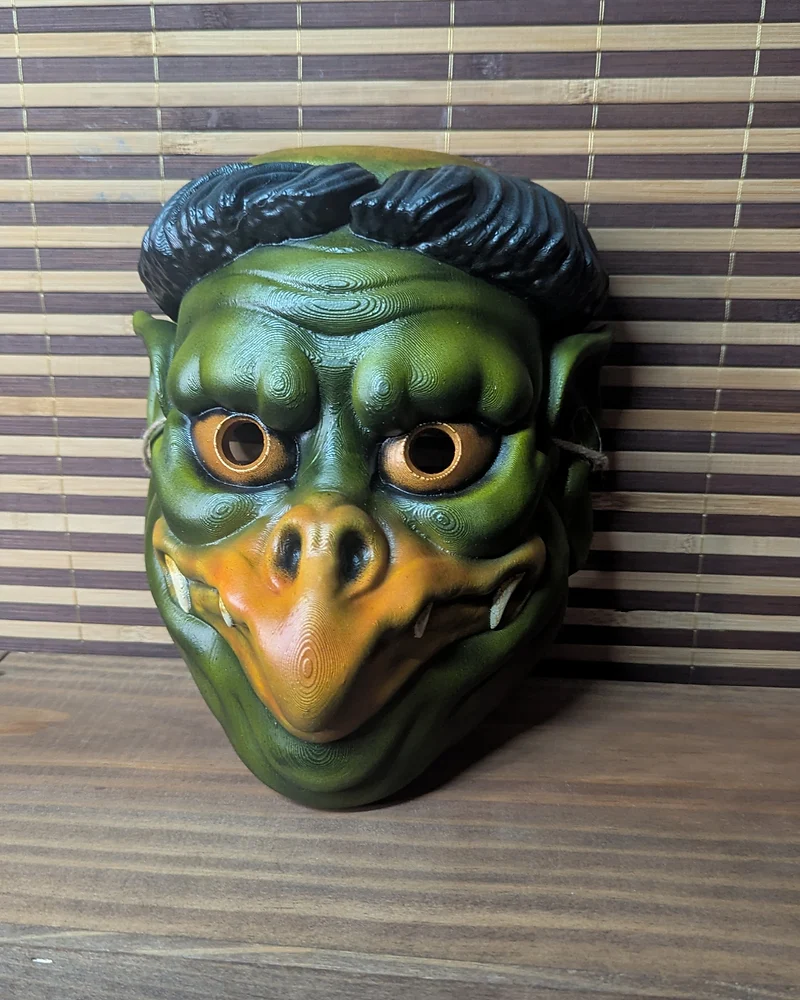
Dai Yokai uses the kappa as visual inspiration for a contemporary decorative mask, not as an authentic ritual object. The workshop is based in Brittany, France. The PETG base is prepared, sanded, primed, painted and varnished by hand, with a green aquatic face and beaked expression inspired by the modern folklore image.
See the current hand-painted Kappa River Spirit Mask for its actual finish, availability and intended uses. This article remains the cultural guide; the product page carries the commercial details.
Sources and further reading
- University of Oregon: Yōkai Senjafuda, Kappa, for the development from early modern menace to postwar character
- Nippon.com: The Terror of Japan’s Rivers, for regional names, Edo imagery, shrine traditions and modern change
- American Museum of Natural History: Kappa, for water-safety, bowing and cucumber traditions
- Asian Ethnology: The Kappa Legend, for the horse-pulling motif
- British Museum: Seated Kappa Netsuke, for a late Edo-period material depiction
Conclusion
The kappa yokai is not only a green turtle-child defeated by a bow. It is the modern shared form of many regional water beings: a warning about rivers, a violent attacker, a sumo challenger, a cucumber lover, a medicine giver and sometimes a locally honoured spirit. Keeping those layers together makes the legend stranger and more accurate.
FAQ
What is a kappa yokai?
A kappa is a water-dwelling yokai from Japanese folklore. The modern image is a child-sized creature with a shell, webbed limbs, a beak and a water-filled dish on its head. Older regional traditions were more varied and sometimes described hairy, monkey-like or otter-like river beings under many different names.
Are kappa yokai good or evil?
Neither label covers every story. Kappa can drown people or animals, steal a mythical shirikodama and challenge humans to sumo. In other tales, a captured kappa promises to stop causing harm, shares a medicine or is honoured locally as a protective water being. Their role changes with the region and legend.
What is a kappa’s weakness?
In the best-known modern tradition, a kappa loses strength if the water in the dish on its head spills or dries. A popular escape story says that bowing makes the polite creature bow back and empty the dish. This is a familiar motif, not a guaranteed rule in every regional kappa legend.
Why do kappa like cucumbers?
Cucumbers are the kappa’s favorite food in many modern stories. Some traditions describe cucumbers marked with a person’s name and offered to the water for protection. The cucumber sushi roll called kappamaki also preserves the association. The exact custom and explanation vary by region.
What is the shirikodama?
The shirikodama is a mythical ball said in kappa folklore to exist inside the human body. Older stories describe a kappa removing it from a victim through the anus, sometimes together with internal organs. It is a supernatural narrative device, not a real anatomical object.
Is a kappa a turtle?
No. A kappa is a folklore being, not a species of turtle. The shell, beak, green skin and webbed limbs belong to the now-standard visual form that became dominant through Edo-period and later popular imagery. Earlier descriptions could be more monkey-like, hairy or associated with otters.
Is a kappa a yokai or a kami?
Kappa are generally classified as yokai, but some local traditions honour a named kappa as a water kami after it makes a promise or helps a community. Folklore does not always keep yokai and kami in rigid separate boxes, so the answer depends on the specific place and story.
Are kappa real?
Kappa are figures of folklore, and there is no scientific evidence that they exist as biological creatures. Their stories gave memorable form to real dangers around rivers and ponds. Historic prints, local names, shrine traditions and modern mascots document belief and cultural use, not zoological proof.