| Question | Reliable answer |
|---|---|
| What does Raijin mean? | Thunder kami or thunder deity |
| What is his role? | Thunder, lightning, rain, agriculture and protection from calamity |
| Why the drums? | They visualize the sound of thunder in later art |
| Is he an Oni? | No. His later appearance is Oni-like, but Raijin is a kami |
| Who is paired with him? | Fujin, the wind god |
What does Raijin mean?
Raijin is written 雷神. Rai means thunder, while jin is a reading of the character for kami, deity or spirit. The direct meaning is therefore “thunder kami” or “thunder deity.” The word can refer broadly to divine thunder as well as to the familiar figure seen in sculpture, painting and popular culture.
Raiden is another name for Raijin in Japanese religious and artistic contexts; the British Museum lists both names for the thunder deity. Modern fictional characters called Raiden have their own stories, which should be distinguished from the deity and his historical depictions.
Japanese also uses kaminari for thunder. The Encyclopedia of Shinto explains this through kami “sounding,” an old way of hearing a storm as the action or presence of a kami. Lightning striking the earth could likewise be understood as a temporary divine manifestation.
Raijin is not one fixed character with one biography
Modern summaries often present Raijin as if every shrine, folktale and artwork describes the same person. The historical picture is wider. Raijin can mean a thunder kami in general, while different local cults, texts and images connect thunder with rain, agriculture, disaster, serpents, children, vengeful spirits and Buddhist protectors.
The Kojiki, compiled in 712, contributes one important layer. During Izanagi’s journey to Yomi, eight thunder kami are described on Izanami’s decaying body. This episode helps explain the dangerous, death-linked side of thunder belief, but the text does not simply introduce the later drum-bearing Raijin as one named son who is more powerful than the others.
Kokugakuin University also records older descriptions in which a thunder kami could appear as a serpent or a small child. The muscular figure with a demonic face and a ring of drums became prominent from around the Kamakura period. Raijin’s image changed as religious practice, folklore and art interacted.
Is Raijin a kami, an Oni or a yokai?
Raijin is a kami. His horns, fangs, claws and energetic pose can resemble an Oni, especially in modern illustrations and masks. Appearance alone is not a reliable classification. An Oni belongs to a broad group of demon and ogre traditions, while Raijin personifies and governs the force of thunder.
| Figure | Category | Main association |
|---|---|---|
| Raijin | Kami or deity | Thunder, lightning, rain and storm power |
| Oni | Demon or ogre figure | Punishment, danger, protection or fierce strength depending on context |
| Raiju | Legendary thunder creature | A regional and variable creature associated with lightning |
| Fujin | Wind deity | Wind, the wind bag and Raijin’s visual counterpart |
For the religious vocabulary behind this distinction, use our guide to kami in Shinto. For demon and spirit traditions, see the guide to Japanese yokai.
Why does Raijin carry a ring of drums?
Raijin’s linked drums make an invisible sound visible. He is usually shown in clouds, lifting a beater or poised to strike. Each drumbeat becomes a thunderclap. The image is easy to read even without a written label, which helped make Raijin one of the most recognizable deities in Japanese visual culture.
The drums often carry comma-shaped tomoe motifs, but not every artwork follows one fixed color, number or arrangement. Raijin may be red, white, blue or another color depending on the artist. Three fingers are also common in modern designs, yet the popular explanation that they always mean past, present and future is not established doctrine.
Thunder, rain and rice: Raijin’s agricultural side
Raijin is not only a deity of destruction. Thunderstorms bring rain, and rain sustains fields. Kokugakuin’s Encyclopedia of Shinto describes Raijin as an agricultural tutelary as well as a violent kami of calamity. Some communities prayed for rain, protected fields from lightning or marked places where lightning had struck.
The vocabulary preserves this relationship. Japanese words for lightning such as inazuma and inabikari contain ina, rice stalk. Older belief could connect lightning with the fertilization of rice plants and the promise of a good harvest. The same storm could therefore represent danger, water and future abundance.
Raijin and Fujin: thunder and wind together
Raijin and Fujin form one of Japan’s best-known visual pairs. Raijin controls thunder and is identified by drums. Fujin controls wind and carries a large wind bag. Temples and artists place them together because wind, rain and thunder belong to the same experience of a storm.
| Feature | Raijin | Fujin |
|---|---|---|
| Natural force | Thunder, lightning and rain | Wind |
| Main object | Ring of linked drums | Large wind bag |
| Common pose | Striking or preparing to strike | Opening or carrying the bag |
| Cultural role | Danger, rain, agriculture and protection | Wind, movement and protection |
| Relationship | Frequently paired in art | Frequently paired in art |
Calling them brothers is common in modern retellings, but major museum and temple descriptions do not need that family relationship. The strongest verified statement is that they are a paired set of natural deities whose forms developed through Japanese religious and artistic history.
Read the companion Fujin guide for the wind god’s history, or the Japanese tattoo motifs and composition guide for how the pair works in irezumi composition.
Three major places and artworks that shaped Raijin’s image
At Sanjusangendo in Kyoto, the Wind God and Thunder God stand among Buddhist guardian figures. The official temple describes the Raijin statue as a Kamakura-period National Treasure, 105 centimeters high, and says these highly Japanized forms helped determine how later generations pictured the two deities.
At Sensoji in Tokyo, statues of Fujin and Raijin guard the Kaminarimon, the Thunder Gate. The temple explains that the pair was installed to protect the temple from natural disasters. This is a clear example of a fearsome-looking Raijin serving a protective role.
Tawaraya Sotatsu’s seventeenth-century Wind God and Thunder God Screens are a National Treasure associated with Kennin-ji in Kyoto. Raijin floats on the left screen against gold leaf, facing Fujin across a large open space. The Kyoto National Museum notes that Ogata Korin and Sakai Hoitsu later created influential versions of the composition.
Raijin, Tenjin and vengeful spirits
During the Heian period, thunder belief became connected with goryo, the dangerous spirits of people who had died unjustly or violently. Lightning strikes and disasters could be interpreted as signs of an angry spirit that required ritual pacification.
Sugawara no Michizane, a scholar and courtier who died in exile in 903, became the most famous case. After disasters in Kyoto, his spirit was worshipped as Tenjin. This history does not make every Raijin image a portrait of Michizane, but it shows how thunder, calamity, protection and worship could overlap.
Why does Raijin steal belly buttons?
A familiar Japanese warning tells children to cover their navels when thunder rolls or Raijin may take them. The image turns a frightening storm into a rule a child can remember. Variants may involve Raijin eating the navel or a thunder creature hiding near it.
The exact origin is uncertain. Explanations about cold air, protecting the stomach or encouraging children to crouch are plausible modern interpretations, not proven historical facts. The safest conclusion is that the navel warning is genuine folklore while its original practical purpose remains unsettled.
What Raijin symbolizes today
Raijin can symbolize force, sudden change, alertness and the ability to turn danger into protection. In tattoo composition, drums, clouds, lightning and Fujin make the subject identifiable. The exact meaning still depends on the wearer, artist and surrounding motifs rather than one universal code.
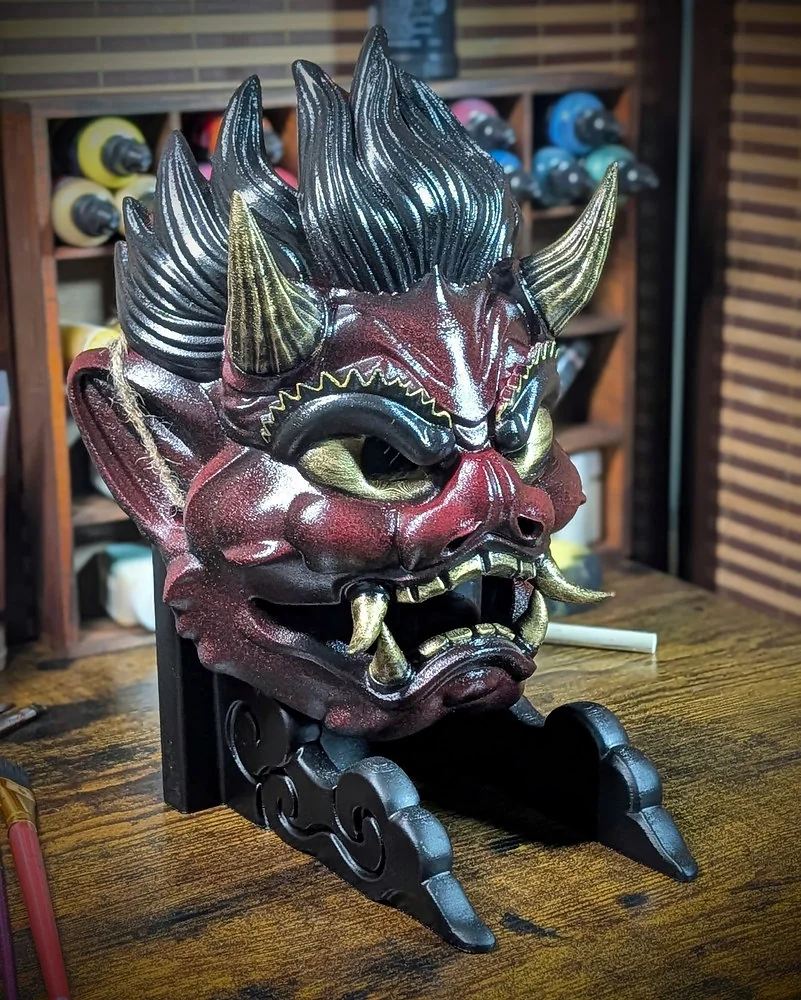
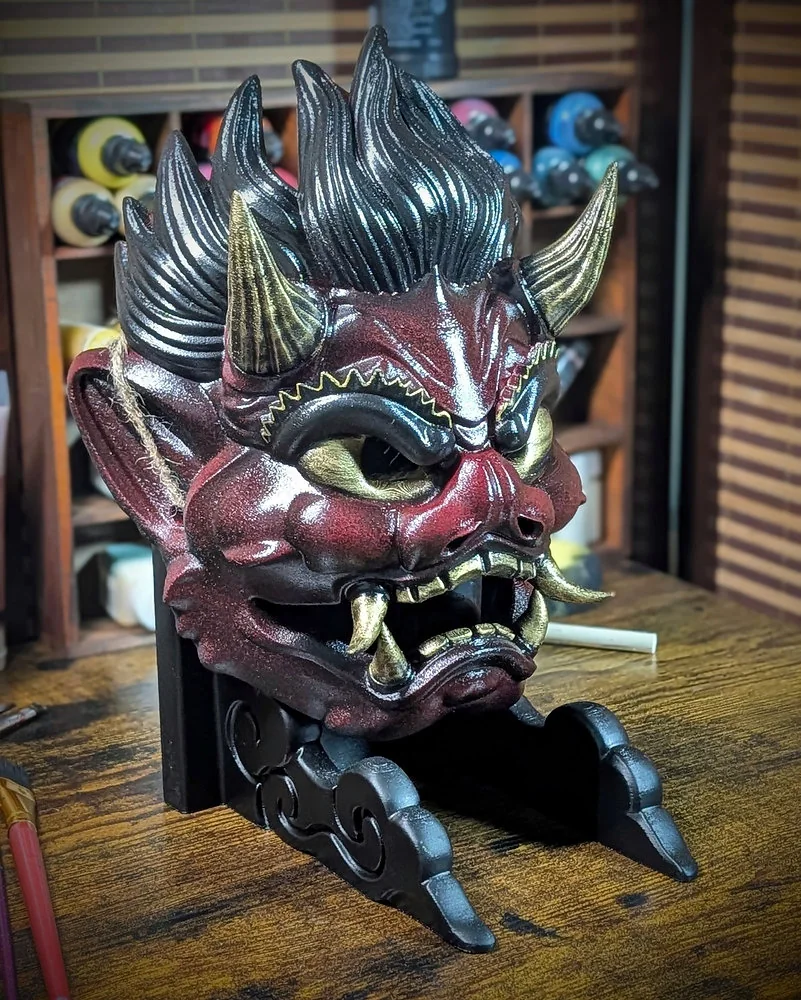
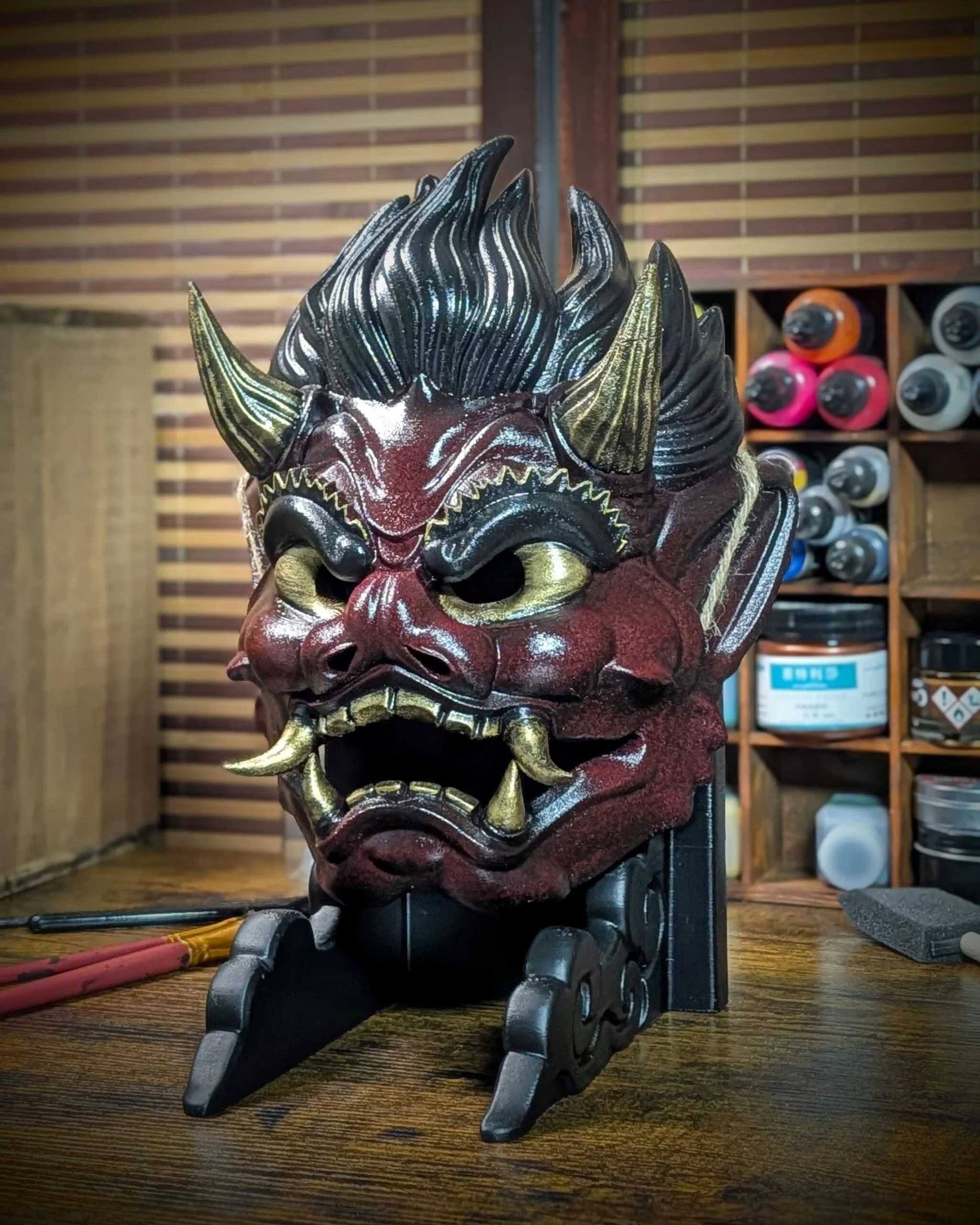
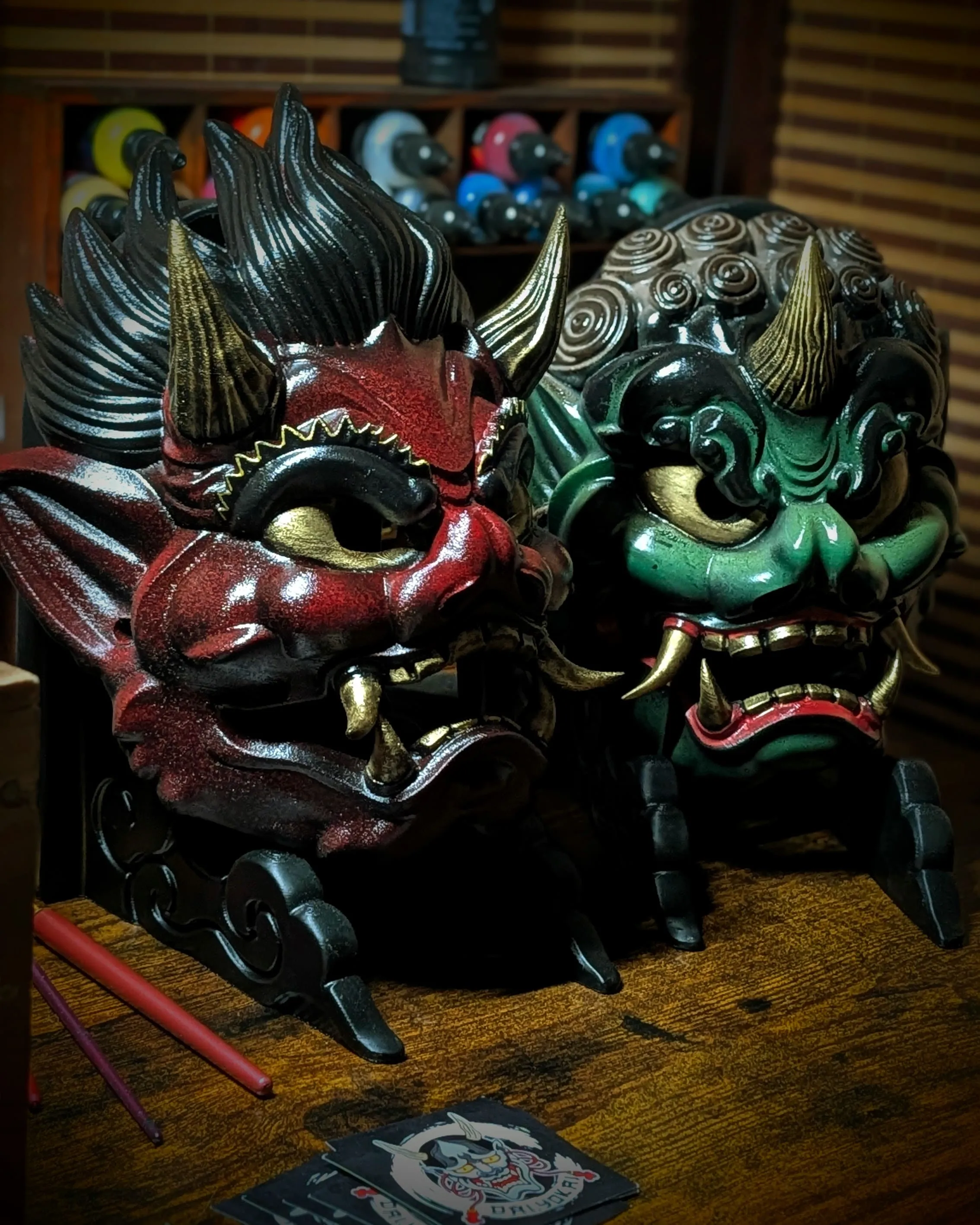
In a contemporary mask, a fierce red face can borrow from Raijin and Oni iconography. Dai Yokai masks are handmade in Brittany from PETG bases that are sanded, primed, painted, varnished and finished by hand. They are modern art pieces for display, collection, conventions or light costume use, not Japanese ritual objects.
See the red Raijin mask, the Raijin and Fujin mask duo or browse the wider handmade Japanese-inspired mask collection.
Sources and further reading
- Kokugakuin University Encyclopedia of Shinto, Raijin’s agricultural, calamitous and historical roles
- Kokugakuin University Basic Terms of Shinto, thunder kami, rain and older forms
- Japan Tourism Agency visitor guide, the Wind God and Thunder God statues at Sanjusangendo
- Sensoji, official history of the Kaminarimon guardian figures
- Kyoto National Museum, Sotatsu’s Wind God and Thunder God Screens
- National Diet Library reference database, sources discussing the thunder and navel warning
FAQ
What does Raijin mean?
Raijin is written 雷神: rai means thunder and jin means kami, deity or spirit. The name therefore means thunder kami or thunder deity. It can describe the divine power of thunder as well as the familiar drum-bearing figure seen in Japanese art.
Is Raijin a god or an Oni?
Raijin is a kami associated with thunder, lightning and rain, not an Oni. His fangs, claws and powerful body make him look Oni-like in later art, but visual resemblance does not make the two categories identical.
Why does Raijin have drums?
Later Japanese paintings and sculptures commonly surround Raijin with a ring of linked drums. He strikes them to visualize the sound of thunder. Kokugakuin University notes that this demonic, drum-ring form became established from around the Kamakura period.
Are Raijin and Fujin brothers?
They are often treated as a pair in modern retellings, but reliable temple and museum sources mainly present them as the thunder and wind deities shown together. Calling them brothers is not necessary to understand their role in Japanese art.
Was Raijin born from Izanami?
The Kojiki describes eight thunder kami on Izanami’s body in Yomi, and this episode contributes to later ideas about dangerous thunder deities. It is too simple to identify one of them as the single modern drum-bearing Raijin with a complete fixed biography.
Why does Raijin steal belly buttons?
Japanese folklore warns children to cover their navels when thunder sounds or Raijin may take them. The warning is well known, but its exact origin is uncertain. Medical or weather explanations should be presented as interpretations, not established history.
Is Raijin the same as Raiju?
No. Raijin is a thunder kami. Raiju is a separate legendary creature associated with lightning and thunderstorms, with forms that vary by region and source. Popular retellings sometimes connect them, but the names should not be used interchangeably.
Where can you see famous images of Raijin in Japan?
Major examples include the Kamakura-period Raijin statue at Sanjusangendo in Kyoto, the guardian figure at Sensoji’s Kaminarimon in Tokyo and Tawaraya Sotatsu’s seventeenth-century Wind God and Thunder God Screens, a National Treasure associated with Kennin-ji.