A Raijin and Fujin tattoo brings the thunder god and wind god into one composition. Raijin is recognised by his ring of drums, Fujin by his large inflated bag. Together they evoke storms, movement and natural forces, without having one fixed personal meaning.
At a glance: Raijin and Fujin can suggest power that is hard to contain, adaptability or the meeting of two energies. In irezumi, meaning comes mainly from the scene: gestures, gazes, clouds, lightning, direction and placement on the body. Colours are not a fixed moral code.
- Raijin: thunder, lightning, drums and heavy clouds.
- Fujin: wind, an inflated bag, flowing fabric and lines of air.
- Watch out for: reducing them to “good against evil” or brothers who must be at war.
- Composition: keep their identifying attributes clear before adding scenery.
What does a Raijin and Fujin tattoo mean?
The clearest reading starts with what the figures represent. Raijin personifies thunder; Fujin personifies wind. They give faces to atmospheric forces that can nourish, move, transform or destroy. This ambiguity is more convincing than a ready-made formula about protection, courage or victory.
A tattoo can use them to explore an unsettled period, energy that needs directing or two temperaments existing together. These are possible interpretations, not compulsory Japanese meanings. The drawing should make its chosen reading visible instead of relying on an explanation added afterwards.
| Possible reading | How to show it | What not to claim |
|---|---|---|
| Natural forces | Clouds, wind, lightning, drums and moving bodies | That the pair always depicts one particular storm |
| Tension | Meeting gazes, opposing diagonals and a compressed centre | That Raijin and Fujin must be enemies |
| Complementarity | Two balanced forms connected by a shared background | That they universally represent yin and yang |
| Adaptability | Wind moving the scenery, lightning crossing the composition | That this meaning automatically belongs to the motif |
How can you recognise Raijin and Fujin?
Attributes are more reliable than colour. Palettes change in historical works and contemporary tattoos alike. Both figures may have fangs, claws, wild hair or expressions resembling Oni. A fierce appearance alone does not make them simply demons.
Raijin: drums and thunder
Raijin usually appears in clouds, surrounded by drums that he strikes to embody thunder. The comma-shaped motif on some drums is a tomoe, a common graphic sign in Japanese art and emblems. The ring is an essential clue in a tattoo: hide it behind the body or background and the figure becomes harder to identify.
Raijin need not be red. Tawaraya Sōtatsu’s screens held at the Kyoto National Museum depict him in a pale tone. Red can create an effective warm focal point in a contemporary piece, but it is a palette choice, not proof of authenticity.
For more of his history, see Raijin, the Japanese thunder god.
Fujin: the wind bag and movement
Fujin carries a large inflated bag above him or around his shoulders. It represents the store of winds he releases. The bag often makes a clear arc around the body, while ribbons, hair and clouds show the wind’s direction. These lines help a tattoo artist connect the figure to an arm, shoulder or ribs.
Green is common, including in Sōtatsu’s screens, but Fujin may be blue, grey, black or red depending on the work and palette. Keeping bag, body and background distinct matters most. A supposedly “traditional” colour cannot fix an unreadable silhouette.
The guide to Fujin, the Japanese wind god explores his origins and imagery separately.
| Figure | Main attribute | Useful movement in a tattoo | Common mistake |
|---|---|---|---|
| Raijin | Ring of drums | Strikes, lightning and short diagonals | Recognising him only by red skin |
| Fujin | Large wind bag | Bag’s arc, ribbons and continuous airflow | Recognising him only by green skin |
Why do Raijin and Fujin form a visual pair?
The pairing extends beyond tattooing. The Kyoto National Museum presents Tawaraya Sōtatsu’s famous Wind God and Thunder God screens, painted in the seventeenth century. Each figure occupies a gold ground, facing the other across a large empty space. Ogata Kōrin and then Sakai Hōitsu later reinterpreted the work.
The National Museum of Asian Art explains that wind bags and drums as attributes circulated in Asia long before Sōtatsu. The familiar pair results from a long visual history, not one scene with a fixed story.
This structure also works in tattooing. Two strong silhouettes can frame an area while leaving breathing room. They need not fight: they can look at one another, follow the same direction or occupy separate limbs. The shared background, palette and rhythm unite them.
Are Raijin and Fujin Oni or gods?
They are deities associated with natural phenomena. Their appearance can nevertheless use fierce features: taut muscles, fangs, claws, raised hair and threatening expressions. The Cleveland Museum of Art connects certain thunder god depictions with Buddhist art and notes that the subject was often paired with the wind god.
“Demon” often appears in tattoo searches because the faces resemble Oni, but it is too vague for this subject. A Raijin and Fujin design needs the drums and bag. An Oni design can explore another story without adding those attributes as decoration.
Building a coherent irezumi composition
A large piece starts with a path for the eye, not a list of symbols. Each figure brings a face, body, large attribute and weather setting. Adding a carp, dragon, flowers and several kanji can make the whole design confusing.
1. Place faces and attributes
The face attracts attention first. Raijin’s drum ring should remain clear around him; Fujin’s bag should be distinct from back, arms and clouds. A sleeve may require fewer drums or a simpler bag to prevent everything merging at the elbow.
2. Choose the relationship between the figures
A face-to-face arrangement creates immediate tension. Gazes directed the same way suggest a storm crossing the body. A mirrored composition across two arms works when heights, masses and backgrounds correspond, without needing perfect symmetry.
3. Unify the background
Clouds, wind, rain and lightning should share one landscape. Lightning can cut through dark areas around Raijin. Longer lines can guide Fujin’s bag and fabric. The background connects the figures rather than filling every gap.
The guide to Japanese tattoo motifs places this pair alongside other irezumi subjects without confusing their roles.
Which placement works best?
No universal rule puts Raijin above Fujin. Anatomy, size and movement determine the choice. Both need space. In a small area, one deity is often better than reducing the pair until their attributes disappear.
| Placement | What it allows | Watch out for |
|---|---|---|
| Back | Two complete figures, a large central space and continuous background | Do not crowd the centre until the dialogue is lost |
| Both arms | A mirrored pair seen separately or together | Keep scale and palette compatible |
| Both thighs or legs | Broad silhouettes and developed attributes | Check readability when the legs move |
| One sleeve | A dynamic vertical scene | Avoid making both faces and attributes too small |
| Chest and ribs | Diagonals, meeting gazes and continuity with the back | Adapt to breathing and folds |
Colours: contrast before symbolism
Many summaries reduce Raijin to red and Fujin to green. This distinguishes them easily but does not cover the motif’s visual history. Sōtatsu uses a pale Raijin and green Fujin on gold. Other works and tattoos use red, blue, grey, black or flesh tones.
A useful palette separates bodies from background, keeps faces readable and ages consistently with the artist’s technique. Colour can support a personal intention without becoming a fixed cultural code.
| Palette | Possible visual effect | Keep in mind |
|---|---|---|
| Red and green | Direct contrast between figures | It is not the only traditional palette |
| Black, grey and red accents | A stormy atmosphere and clear highlights | Preserve volume in dark areas |
| Pale tones on a dark background | Silhouettes recalling certain older paintings | Allow for the ageing of lighter areas |
| A personal palette | Harmony with an existing piece | Attributes matter more than colour coding |
The pair or a single figure?
The pair suits a large surface or two strong areas. It allows relationships between bodies, flowing wind and lightning rhythms. A single figure often works better on an arm, calf or thigh. Raijin retains a graphic presence through his drums; Fujin offers a more continuous line through his bag.
Consider existing tattoos too. Fujin can fit a busy sleeve if the bag follows its movement, while a complete Raijin may need a rounder space around the drums. Ask the artist to work on a photograph or body template rather than approving an isolated illustration.
Questions to ask your tattoo artist
- Which details will immediately identify Raijin and Fujin?
- Should they face one another or look the same way?
- How will the drums and wind bag follow the anatomy?
- Does the background connect them or merely fill space?
- Will the palette remain clear from a distance and as it ages?
- Which details need simplifying to keep strong faces?
- Can the design later be extended without losing balance?
Dai Yokai does not provide tattooing services. The drawing, technique, pigments, healing and follow-up belong with a qualified artist familiar with large Japanese compositions.
Raijin and Fujin in the Dai Yokai workshop
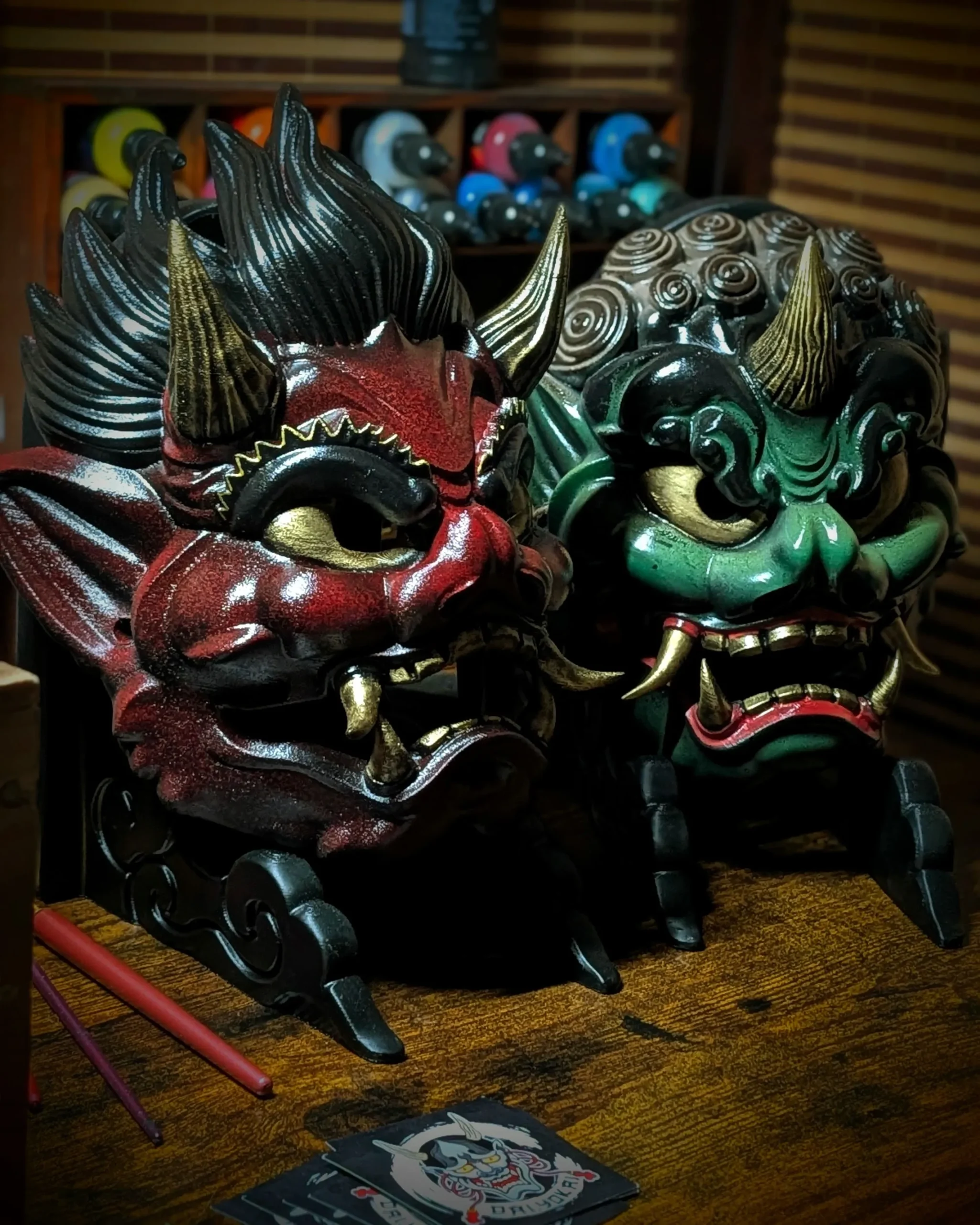
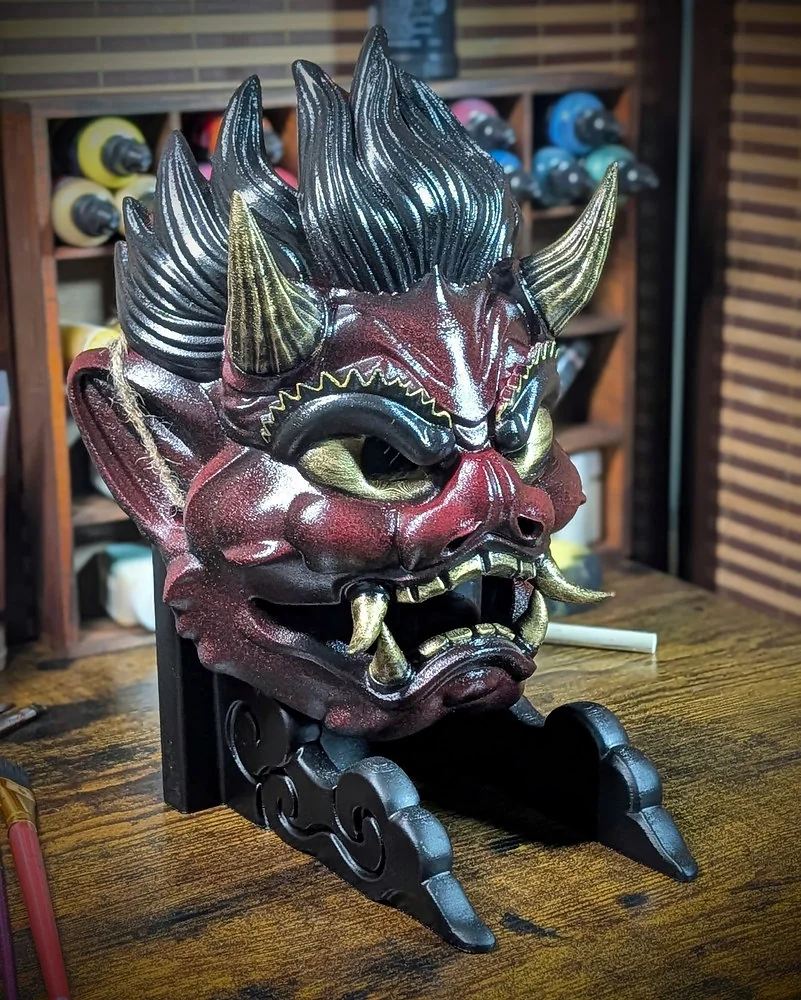
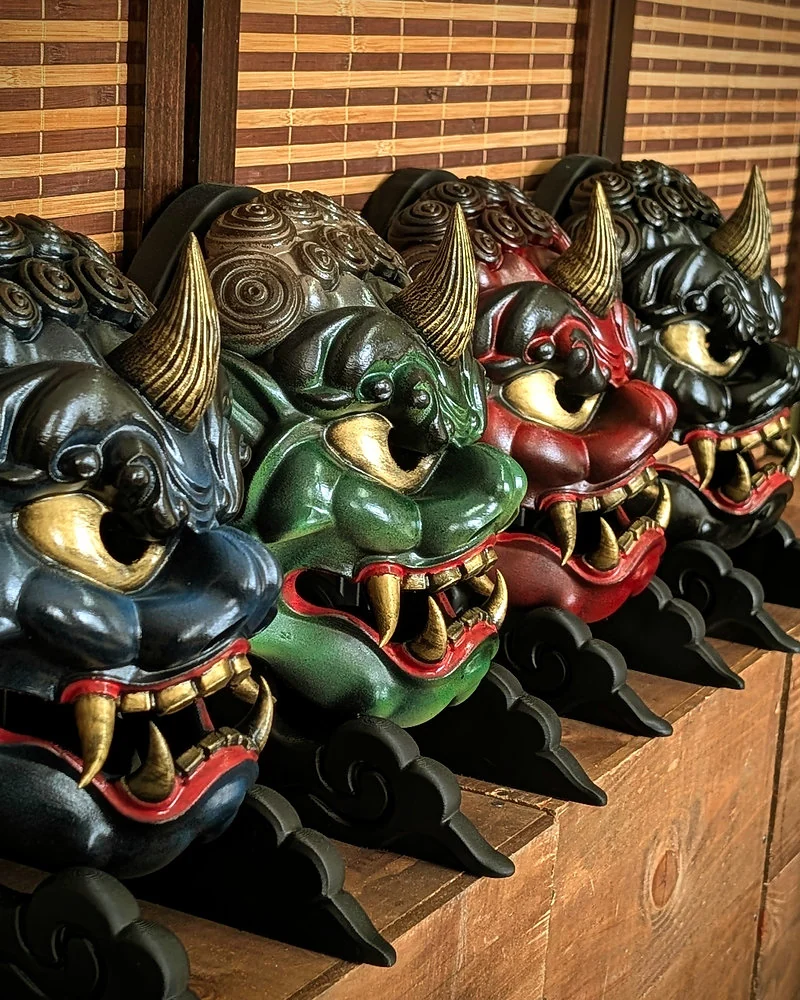
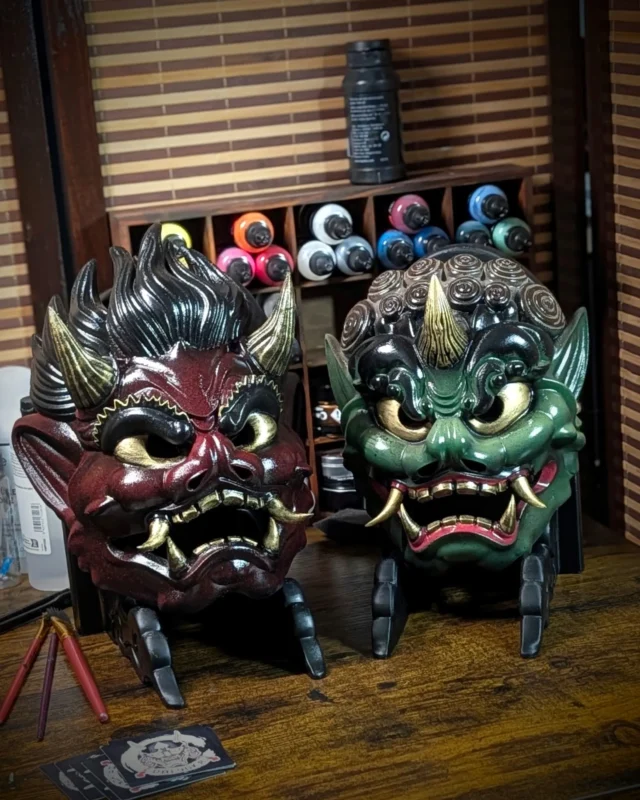
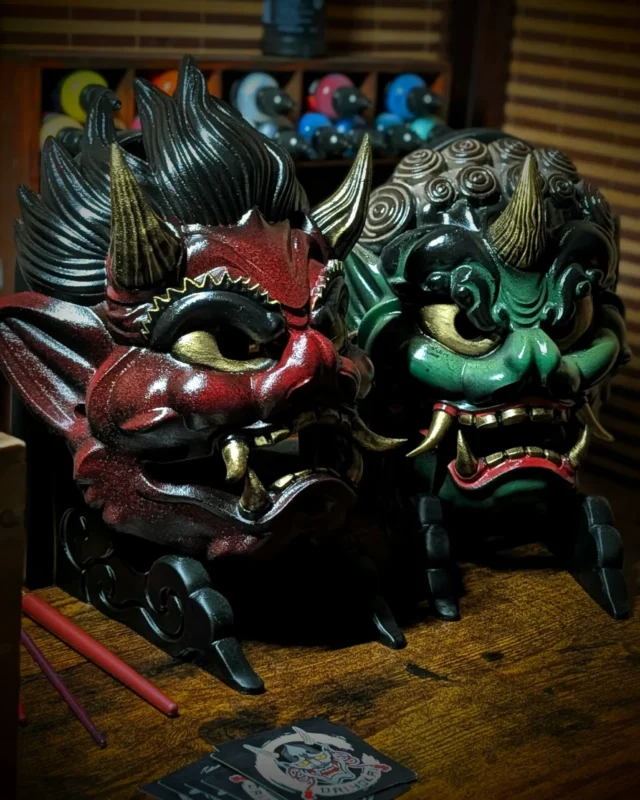
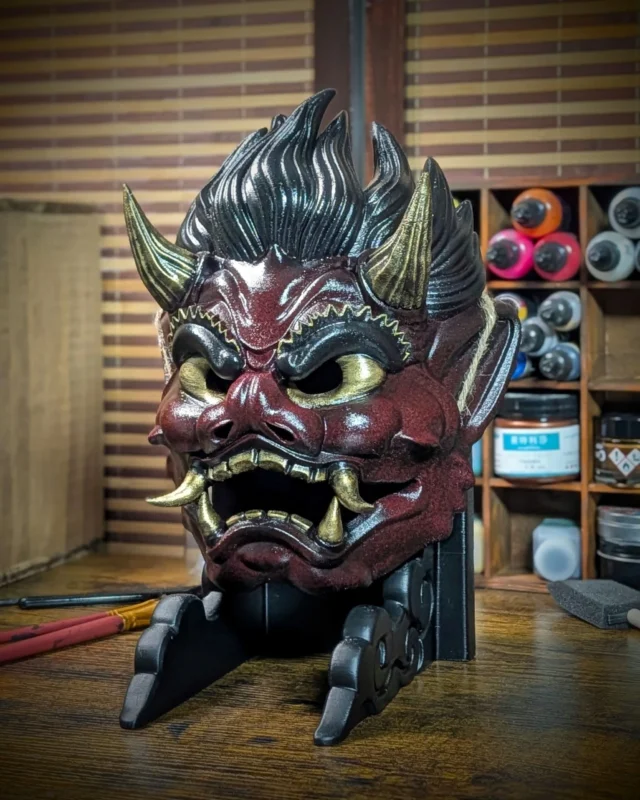
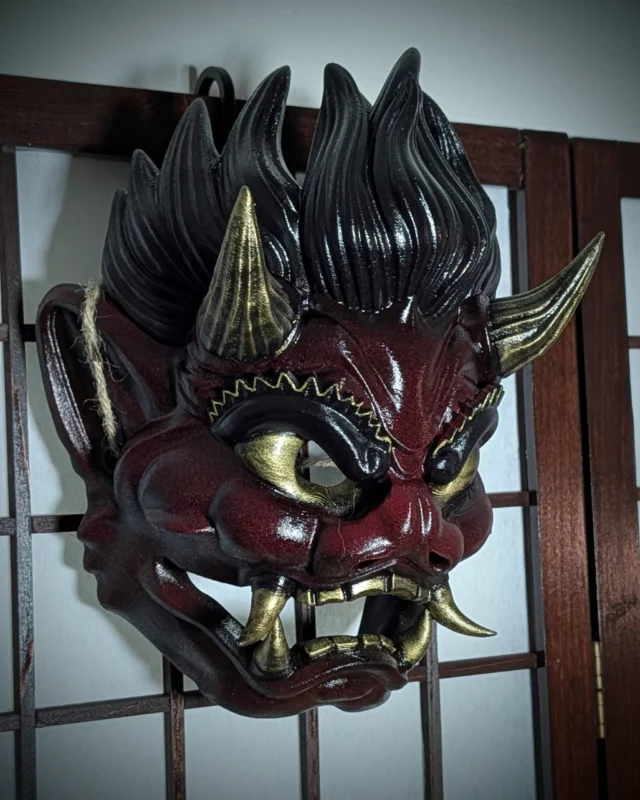
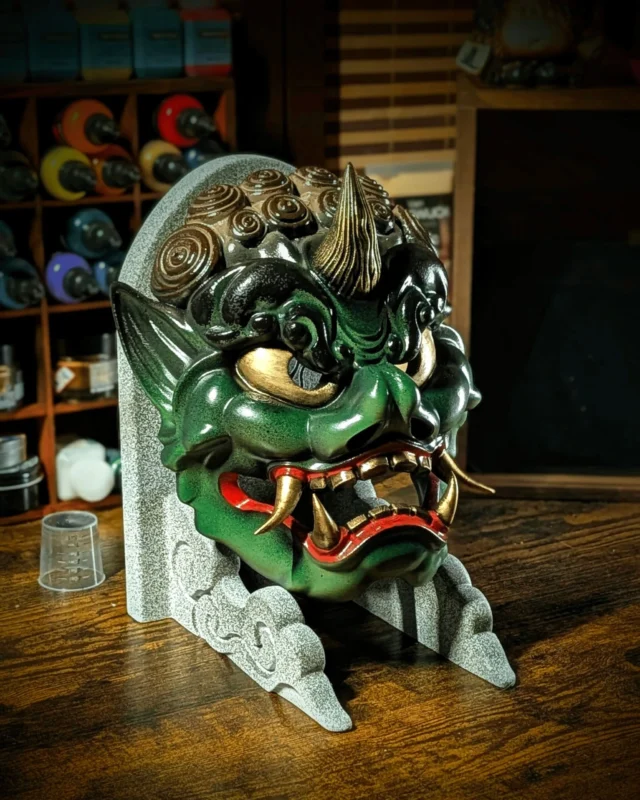
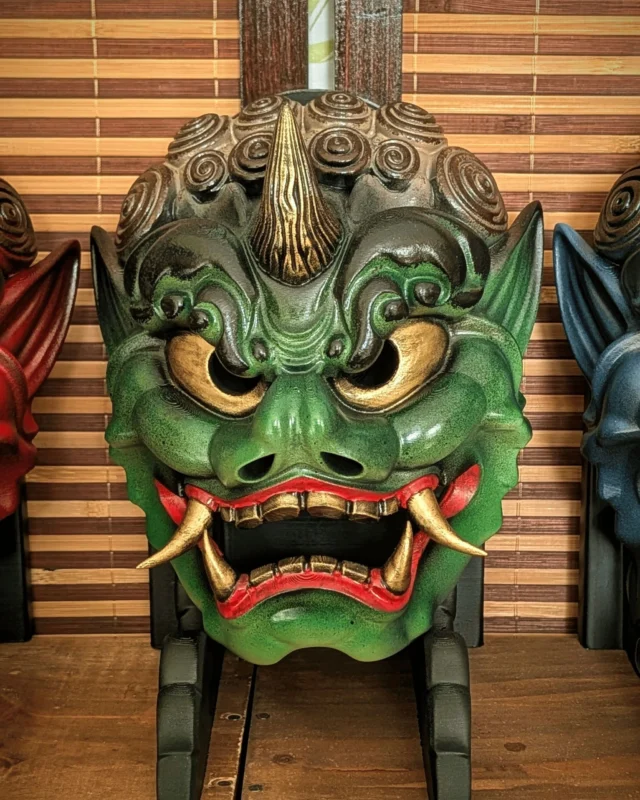
Dai Yokai offers contemporary interpretations as decorative masks. The pieces are printed in PETG, then prepared, sanded, painted, varnished and finished by hand in Brittany. They do not reproduce a Japanese ritual object or claim to replace a historical work.
The pair offers two approaches in volume: a more explosive silhouette for Raijin and spiralling forms around Fujin. They can be displayed, collected or used as visual references in a studio, provided the tattoo artist rebuilds the motif for the body rather than directly copying an object.
Masks connected with Raijin and Fujin
The Raijin and Fujin set brings both interpretations together. Individual options include the red Raijin mask and Fujin mask.
Sources
- Kyoto National Museum, Wind God and Thunder God Screens: Tawaraya Sōtatsu, seventeenth century.
- National Museum of Asian Art, The Gods of Wind and Thunder: attributes and the spread of the imagery.
- Cleveland Museum of Art, God of Thunder (Raijin): Buddhist origins and later interpretations.
Frequently asked questions
What does a Raijin and Fujin tattoo mean?
Raijin personifies thunder and Fujin wind. Together they depict natural forces in motion. A tattoo can suggest storm power, adaptability or tension between energies, but no reading is universal. Pose, background and the story chosen with the artist give the piece its specific meaning.
Are Raijin and Fujin Oni?
They are primarily divine figures associated with thunder and wind. Fierce faces, fangs and muscular forms can resemble Oni, explaining some confusion and contemporary interpretations. Their attributes identify them more reliably: drums for Raijin, the wind bag for Fujin.
Why show Raijin and Fujin together?
The pair is established in Japanese art, particularly through Sōtatsu’s screens. Their silhouettes respond across a central space. This works on a back, two limbs or a large tattoo without requiring a fight or a particular family relationship.
How do you recognise them in a tattoo?
Raijin is usually surrounded by drums that he strikes to evoke thunder. Fujin carries an inflated bag representing winds. Colours, positions and details vary, so attributes are more reliable than red, green or white skin.
Do their colours have fixed meanings?
No. Red, green, black, grey and pale tones separate figures, organise contrast and connect them to the background. Sōtatsu’s famous screens include a pale Raijin and green Fujin. A palette alone cannot impose a moral meaning.
Where can a Raijin and Fujin tattoo go?
The back offers room for both figures and their setting. Two arms, thighs or legs allow a mirrored composition. A sleeve can work if the background is simplified and attributes stay clear. Anatomy and movement determine the best placement.
Can Raijin or Fujin appear alone?
Yes. Drums identify Raijin and a wind bag identifies Fujin. One figure often suits an arm, thigh or calf better, but still needs enough room for the face, main attribute and some background movement.
Does Dai Yokai offer Raijin and Fujin masks?
Yes. Dai Yokai offers both masks and a set combining them. These are contemporary creations inspired by the figures, printed in PETG, then prepared, painted and finished by hand in Brittany. They are not presented as Japanese ritual objects.