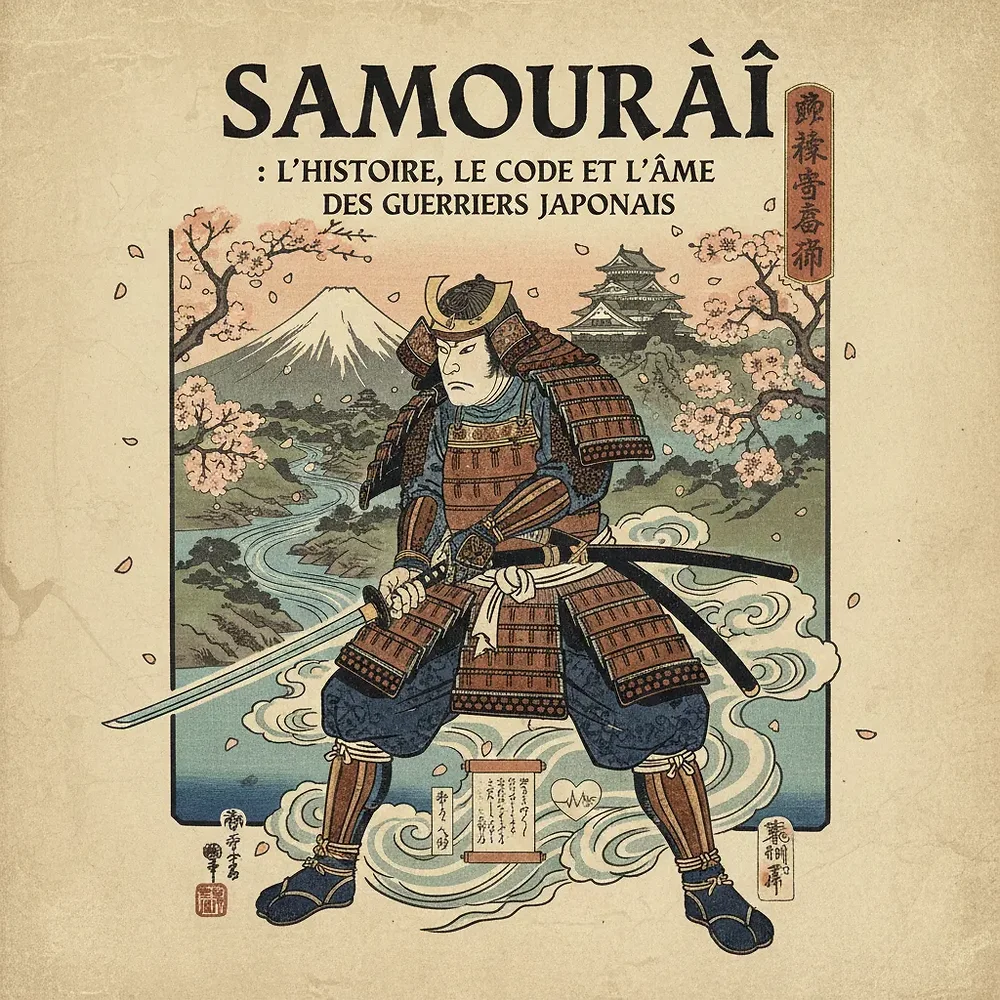
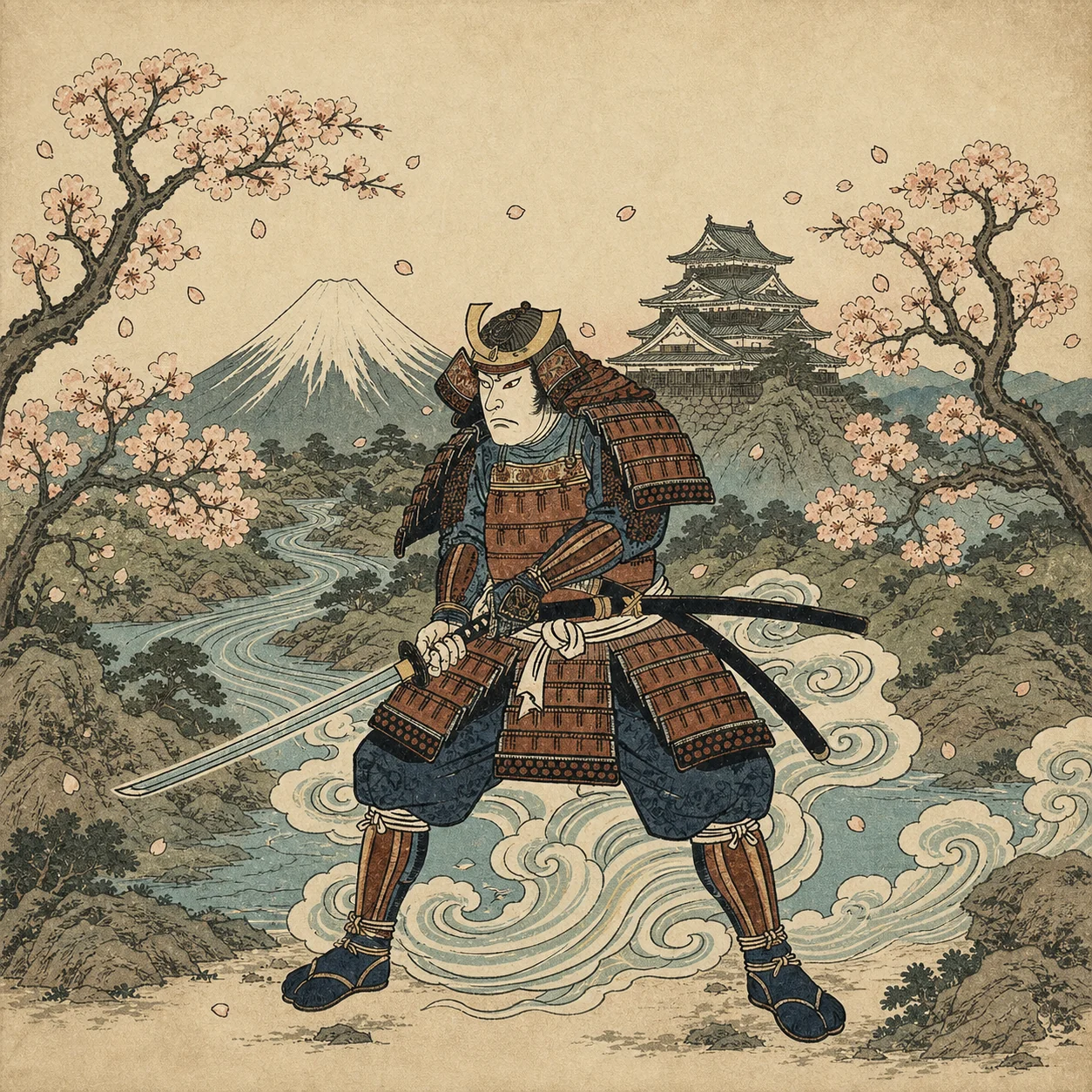
Samurai were members of Japan’s warrior status group, not one unchanging order of swordsmen. From the late Heian and medieval periods, warriors gained military and political power. Under the long Tokugawa peace, many became administrators, scholars and retainers. Their weapons, duties and ethical ideals changed across centuries, and modern Bushidō is not a single ancient rulebook.
| Quick question | Evidence-based answer |
|---|---|
| What was a samurai? | A member of Japan’s changing warrior status group |
| When did warriors gain political dominance? | From the late twelfth century |
| Did all samurai follow seven Bushidō virtues? | No, there was no single universal code |
| Was the katana always the main weapon? | No, bows, spears and firearms were also central |
| Did the class include women? | Yes, though battlefield participation was uncommon |
| When did legal samurai status end? | During reforms of the 1870s |
What does samurai mean?
Samurai is connected to the old verb saburau, meaning to serve or attend. Earlier uses referred to attendants, but the word developed as warrior households and retainers gained importance. Its exact social meaning changed by period, place and rank.
Bushi is a broader historical term for warriors. Samurai is often used in English for the whole warrior class, but the terms were not perfect synonyms in every century. Powerful shōguns and daimyō belonged to warrior society, while lower retainers, officials and household members occupied very different positions inside it.
That changing political context is explained in the guide to shōguns, emperors and the bakufu. A shōgun headed a warrior government, while samurai served throughout the institutions and domains beneath it.
A short history of the samurai
| Period | Changing role of warriors | Important correction |
|---|---|---|
| Late Heian, 10th to 12th centuries | Provincial warrior networks, mounted fighters and retainers grew in influence | There was no single national samurai organisation |
| Kamakura, 1185 or 1192 to 1333 | Warrior government developed alongside the imperial court | The emperor did not simply disappear from politics |
| Muromachi and Sengoku, 14th to 16th centuries | Regional lords, retainers and mass armies fought for territory | Samurai warfare involved formations, logistics and firearms, not only duels |
| Tokugawa, 1603 to 1867 or 1868 | Hereditary status, domain service, administration, policing and scholarship expanded | Many samurai rarely or never fought in battle |
| Meiji, 1868 onward | Status and privileges were dismantled through several reforms | The class did not vanish in a single day |
Warrior families rose during the late Heian period and became central to conflicts such as the Genpei War. Minamoto no Yoritomo built a warrior administration at Kamakura and received the title of shōgun in 1192. Military government then coexisted with the imperial court and other centres of authority.
Later warfare changed scale and organisation. The fifteenth and sixteenth centuries saw territorial armies, fortified towns, alliances, defections and large numbers of foot soldiers. Oda Nobunaga, Toyotomi Hideyoshi and Tokugawa Ieyasu were important unifiers, but the process involved many domains, commanders and institutions.
After the Tokugawa victory at Osaka in 1615, prolonged domestic peace changed warrior life. Samurai men staffed domain and shogunal governments, worked as officials and studied literature, history and the arts. Women also belonged to samurai households and status networks. The class was never only a body of active battlefield soldiers.
Bushidō was not one ancient seven-virtue code
Bushidō means “the way of the warrior,” but the familiar image of one timeless code is misleading. Warrior houses issued their own rules, governments regulated military families, and writers debated loyalty, service, reputation, learning and readiness for death. Those ideas did not form one handbook accepted by every warrior across seven centuries.
| Popular claim | What the evidence supports |
|---|---|
| Every samurai followed the same seven virtues | No universal seven-item code governed all warriors |
| Bushidō was fixed in the medieval period | Warrior ethics changed with political and social conditions |
| Zen created the samurai code | Buddhist, Confucian, legal, family and military ideas all contributed in different contexts |
| Loyalty was always absolute | Warriors also changed sides, negotiated and pursued household survival |
| Nitobe recorded an unchanged ancient code | His 1899 English book helped shape the modern international image of Bushidō |
This does not mean warrior ethics were invented from nothing. Medieval and early modern sources contain rules, moral arguments and ideals of conduct. The correction is narrower: historians should not project a modern, unified Bushidō checklist backward onto every warrior.
The British Museum’s overview of the samurai notes that Nitobe Inazō’s Bushido: The Soul of Japan, written in English in 1899, spread an influential chivalric image that was not grounded in evidence for one universal historical code. The National Museum of Japanese History likewise treats the formation of Bushidō as a historical process, including its modern reinvention.
The real samurai arsenal changed by period
The sword became the most recognisable samurai symbol, especially during the Edo period, but battlefield equipment followed practical needs. Mounted archery mattered greatly in earlier warfare. Spears and mass infantry became increasingly important, and matchlock firearms were adopted rapidly in the sixteenth century.
| Weapon or equipment | Historical role | Common misconception |
|---|---|---|
| Yumi and arrows | Central to mounted warrior practice and earlier warfare | The sword was not always the primary weapon |
| Tachi and katana | Sidearms, combat weapons and later powerful status symbols | A sword could not cut through every material |
| Yari | Effective reach for individual and formation fighting | Spears were not merely weapons for low-status troops |
| Naginata | Used in several periods and contexts by warriors and religious forces | It was not exclusively a women’s weapon |
| Tanegashima matchlock | Used widely after its sixteenth-century introduction and produced in Japan | Firearms were not rejected as dishonourable |
| Armour | Protection adapted to mounted and foot combat, rank and changing weapons | One armour design did not represent all samurai eras |
The Battle of Nagashino in 1575 is often reduced to a perfect rotating volley of guns destroying old-fashioned cavalry. Firearms and field defences were important, but the familiar cinematic formation is debated. The safer conclusion is that Japanese commanders had integrated large numbers of guns into combined forces by this period.
The Metropolitan Museum of Art’s samurai exhibition includes swords, archery equipment, firearms, equestrian equipment and armour. That range is a better guide to samurai military culture than treating the katana as the only meaningful weapon.
Samurai armour and facial protection
Samurai armour changed with warfare. Earlier high-ranking mounted warriors used box-like ō-yoroi suited to archery from horseback. Later dō-maru and other closer-fitting cuirasses offered greater freedom of movement. By the sixteenth century, armour makers also responded to larger armies and firearms.
A complete suit could include a kabuto helmet, a dō cuirass, shoulder protection, sleeves, thigh guards and shin guards. Materials and construction included iron, leather, lacquer, silk and textiles. Decoration could indicate rank, family association or individual taste, but surviving ceremonial pieces should not be assumed to represent what every fighter wore.
Mengu were facial defences. A menpō protected much of the lower face, while other forms covered less or more. They could help secure the helmet and create a forceful appearance. Not every suit included one, and fierce facial features were artistic and martial choices rather than proof that all samurai copied one yokai tradition.
For the armour terminology and surviving examples, continue with the history of menpō and mengu. Dai Yokai’s handmade Mempo half-masks are contemporary pieces made in Brittany, inspired by the visual structure of samurai facial armour. They are not historical replicas or ritual objects.
Women in the samurai class
Samurai was a hereditary social status that included women, not a job title reserved for men who fought. Women in warrior households managed property, family continuity, education and household defence. Some trained with weapons, including the naginata.
Evidence for women on battlefields exists, but it should be handled carefully. Tomoe Gozen is celebrated in the literary Tale of the Heike, which is not a neutral battlefield report. Nakano Takeko’s participation in the Boshin War is much later and better documented. Neither example proves that separate female armies were common throughout samurai history.
Samurai, shinobi and rōnin
Popular culture often treats samurai and ninja as moral opposites. Historically, shinobi described covert functions such as intelligence, scouting and infiltration, not one clearly separate nationwide caste. Samurai commanders could employ specialists or use deception themselves.
A rōnin was a warrior without a current lord or secure domain service. The circumstances varied: a lord might die, a domain could be confiscated, or a retainer could be dismissed. Rōnin could become teachers, officials, guards or fighters, and they did not all live as wandering duelists.
Read the separate guide to rōnin, Miyamoto Musashi and the Forty-seven Rōnin for the difference between historical status and later legend. The story of Watanabe no Tsuna shows how historical warrior identity and demon-slaying literature could also overlap.
How samurai status ended
The Meiji Restoration did not erase the class in one moment. The new government reorganised domains, created national institutions, converted hereditary stipends and removed legal distinctions during the 1870s. The 1876 sword-wearing restriction affected former samurai identity, but it was one part of a wider transformation.
The Satsuma Rebellion of 1877 became a powerful symbol of the old order’s defeat, yet many former samurai entered the new government, army, police, education and business. Their families and influence continued even after their separate legal privileges ended.
Sources and further reading
- British Museum: Samurai, myth and historical change
- British Museum: Who were the samurai?
- National Museum of Japanese History: Bushi, Myths and Realities
- Metropolitan Museum of Art: Art of the Samurai
- Metropolitan Museum of Art: Dō-maru armour
- Tokyo National Museum: Arms and Armor of the Samurai
FAQ
What was a samurai?
A samurai was a member of Japan’s warrior status group. The role changed over time: medieval warriors fought and managed land, while many Edo-period samurai served as officials, administrators, scholars and retainers. Samurai was therefore a social and political identity as well as a military one.
Did every samurai follow one Bushidō code?
No. Warrior houses, governments and writers promoted different rules and ideals in different periods. Loyalty, reputation, discipline and service mattered, but there was no universal seven-virtue handbook followed by every samurai. The familiar unified image of Bushidō was shaped strongly in the modern era.
Was the katana the samurai’s main battlefield weapon?
Not throughout samurai history. Mounted warriors were closely associated with bows and horses, while later armies relied heavily on spears and firearms. Swords remained important weapons and powerful status symbols, but their battlefield role depended on the period, rank and situation.
Did samurai use guns?
Yes. Matchlock firearms reached Japan in the sixteenth century and were soon manufactured and used on a large scale. Samurai commanders organised gunners alongside archers and spearmen. The idea that firearms were rejected because they were dishonourable is a modern romantic myth.
Were there women in the samurai class?
Yes. Samurai was a hereditary status group that included women. Women managed households, property and family responsibilities, and some trained with weapons. Evidence for women fighting in major battles exists but is uncommon, so “female samurai” should not automatically be treated as a separate army of professional warriors.
What is the difference between a samurai and a ninja?
They were not two fixed opposing castes. Samurai described a warrior status, while shinobi referred to people performing intelligence, infiltration or covert tasks. A samurai lord could employ shinobi, and samurai themselves could use deception or espionage when circumstances required it.
What did samurai wear on their faces?
Some samurai armour included facial defences called mengu. A menpō covered much of the lower face, while other forms protected smaller or larger areas. These pieces could help secure the helmet and present a forceful appearance, but not every samurai wore one and no single design represented all warriors.
Do samurai still exist today?
Not as a legal hereditary class. The Meiji government dismantled samurai status and privileges during the 1870s, including stipends and the public wearing of swords. Samurai families and cultural legacies continued, but the former status group no longer had a separate legal role.