A Japanese mask can create a strong focal point in a tattoo studio, but the right choice does not depend on a colour or supposedly universal symbol. Consider the display area, viewing distance, lighting, cleaning and the visual language the studio actually works with.
Short answer: first choose a place in reception, the waiting area or consultation space. Then select a visual family that suits the studio, such as Oni, Hannya, Kitsune, Tengu or Mempo, and check weight, mounting and cleaning access. In a treatment room, hygiene and easy maintenance come before decoration.
Start with the right area, not the mask
Different parts of a studio have different functions. A piece visible from the entrance can act as a landmark. A mask near the consultation desk can start a conversation about shapes and volume. In the room where tattooing takes place, priorities change: the space must stay clean, orderly and easy to maintain.
| Studio area | Possible role of the mask | What to watch |
|---|---|---|
| Reception or waiting area | Create a focal point and introduce the visual style | Do not obstruct movement or signs |
| Consultation space | Show volume, profiles and colour combinations | Do not present the object as the single meaning of a tattoo motif |
| Display cabinet or collection wall | Arrange pieces by family, size or palette | Allow easy access for dusting and checking fixings |
| Treatment room | Very limited decoration, compatible with maintenance | Follow hygiene, disinfection and studio procedures |
In France, the rules include a room dedicated to tattooing, washable surfaces, separation of clean and dirty areas, and daily cleaning of the treatment room. The order of March 11, 2009 sets out these requirements. The French Ministry of Health also calls for a regular, documented cleaning and disinfection programme. Keep objects that are difficult to maintain in reception, waiting or consultation areas.
Which Japanese mask suits a tattoo studio?
Start with the shape and story the studio wants to show. Meanings change across stories, periods and compositions. Decoration should not turn a complex figure into a quick label.
| Family | Visual character | Possible decorative use | Avoid this simplification |
|---|---|---|---|
| Oni | Broad face, horns, fangs and strong contrast | A central piece visible from the entrance | Oni are not always male or protective |
| Hannya | Long face, two horns, an expression mixing anger and pain | Consultation wall or a more theatrical arrangement | Hannya is not simply a “female Oni” |
| Kitsune | Finer lines, fox muzzle and graphic surface | A bright studio, reception space or more minimal arrangement | The Japanese fox has no single meaning |
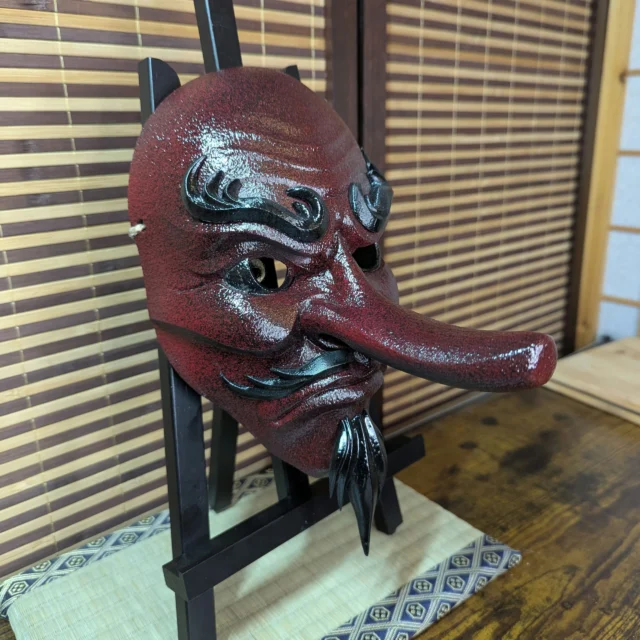
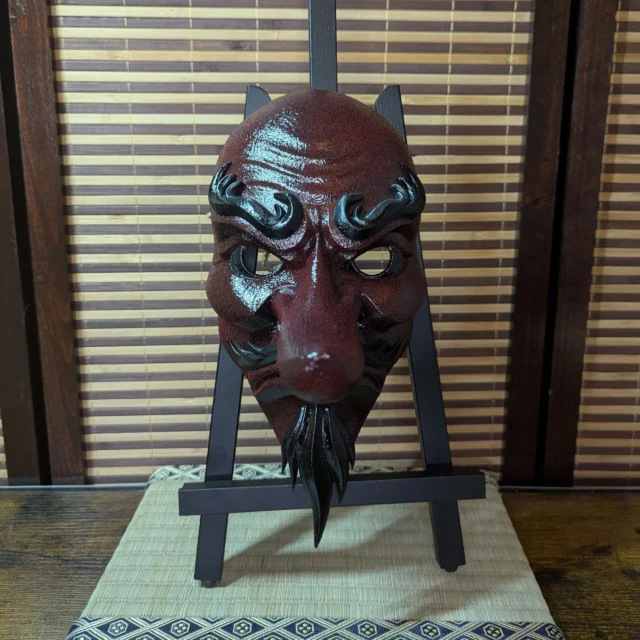
| Tengu | Long nose or bird-like features, depending on the form | A vertical piece, high wall or mountain and martial imagery | Tengu are more than warrior demons |
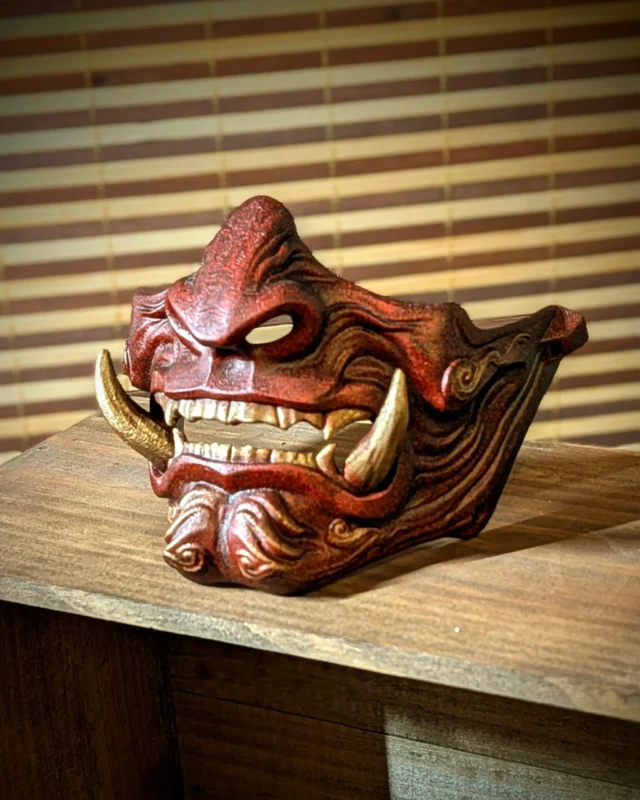
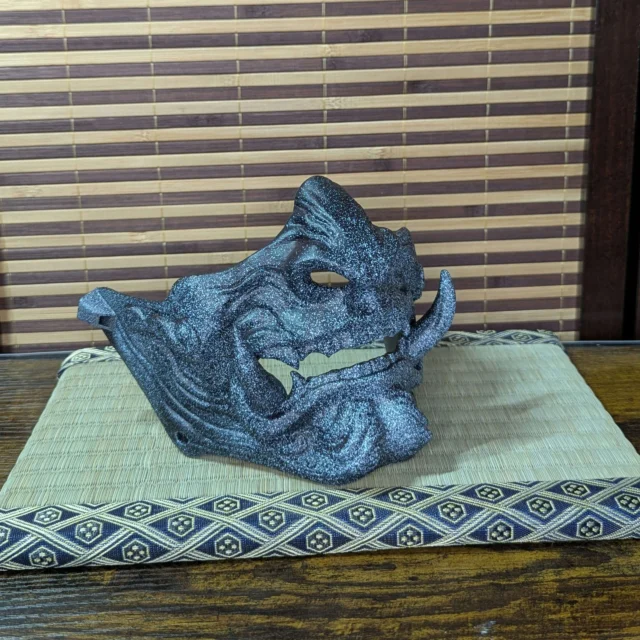
| Mempo | Compact half mask inspired by armour face protection | Shelf, stand, recess or small wall | A contemporary Mempo is not historical armour |
Explore these figures in the guides to Oni masks, Hannya masks, Kitsune masks and Tengu masks.
Connecting with irezumi without inventing a fixed meaning
Oni, Hannya, Kitsune and Tengu appear in Japanese tattoos, but meaning depends on the whole composition. Flowers, animals, season, body movement and the tattoo artist's choices all change the reading. A three-dimensional mask can help someone study a profile, shadow or palette. Its presence alone does not prove that a studio “understands Japanese culture”.
Connect the decoration to motifs actually represented in the portfolio. A black-and-grey studio might choose a monochrome piece. An artist who often works with Hannya might display a mask near their drawings while explaining that neither the Noh theatre mask nor the tattoo motif is simply about jealousy. For context, read the guides to Japanese tattoo motifs, Oni tattoos and Hannya tattoos.
Choose the scale for the wall and viewing distance
A product photograph is not enough to judge scale. Before ordering, measure the available width and height, the distance from which people see the wall and the space needed around the piece.
- Photograph the wall straight on.
- Record the free space, excluding switches, doors and signs.
- Cut a paper or cardboard template to the mask's dimensions.
- Temporarily attach it using suitable tape and view it from the entrance, waiting chair and desk.
- Check that it does not obstruct movement, lighting or cleaning.
A full mask works well as a focal piece. A half mask or small piece on a stand suits a recess, shelf or counter. Always ask for the chosen model's actual measurements rather than relying on “large” in a title.
Arrange a wall without overcrowding it
There is no rule requiring three masks. One may be enough when the wall already has frames, flash sheets or a sign. For a larger arrangement, choose a focal point first, then add secondary pieces with clearly different sizes, heights or colours.
- Centred arrangement: one main piece aligned with furniture, a logo or a bench.
- Asymmetrical arrangement: a larger piece and a smaller offset piece, with deliberate space between them.
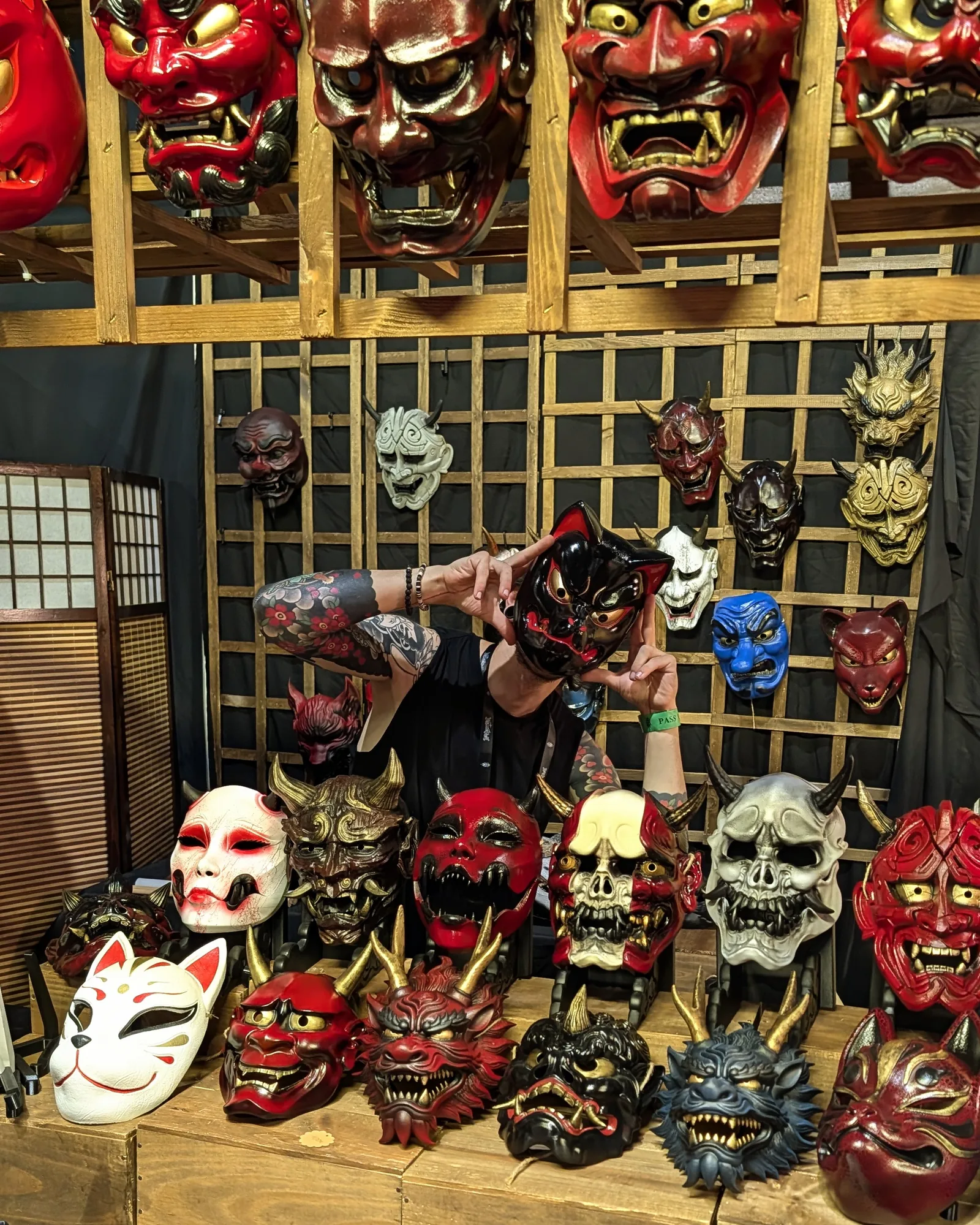
- A collection by family: several Oni, Hannya or Mempo grouped by type on a genuinely dedicated wall.
- Display on stands: useful for rearranging without drilling more holes, provided the furniture is stable and outside work areas.
Coordinate colour and light
Red, black and gold create a strong presence, but they are not a compulsory tattoo-studio palette. Start with fixed elements: floors, walls, chairs, logo and lighting. One dominant colour and one or two accents are often enough to connect the mask to the rest of the room.
Test the lighting too. Gloss varnish can reflect a direct spotlight. Side lighting reveals volume, but should not dazzle clients or alter the light used for tattooing or photographing tattoos. Avoid prolonged direct sunlight, strong heat sources and damp areas.
Mounting, safety and maintenance
A “simple fixing” does not suit every wall. The correct system depends on the mask's weight, its hanging point, the wall material, such as plasterboard, brick, concrete or wood, and how busy the area is. Ask for weight and measurements, use fixings intended for that wall and regularly check their hold.
Do not install a piece above a client, workstation or narrow passage where it might fall. In premises open to the public, have uncertain installations checked by a competent person. Leave enough room around the mask to dust it without taking it down every time. The guide to displaying a mask on a wall or stand explains the main presentation options.
Three simple arrangements to adapt
A signature piece in reception
Place an Oni, Hannya or Tengu on a wall visible from the entrance without competing with practical information. This suits a small studio: one prominent piece, controlled lighting and empty space around it.
A pair in the consultation area
Combine different profiles, such as a broad Oni and a longer Hannya. The pair can support a conversation about composition, light and volume with a client. Avoid presenting it as a universal opposition between masculine and feminine.
A Mempo on a stand for a compact space
A half mask needs less height and is easier to move. On stable furniture, it suits a consultation corner, bookcase or display cabinet. Keep it away from consumables, preparation areas and surfaces that must be disinfected between clients.
Dai Yokai creations for a studio
Dai Yokai masks are contemporary creations inspired by Japanese folklore, theatre and visual traditions. Their PETG bases are printed, then prepared, sanded, primed, painted and varnished by hand in Brittany. They are not antique or ritual objects, nor made using traditional Noh techniques.
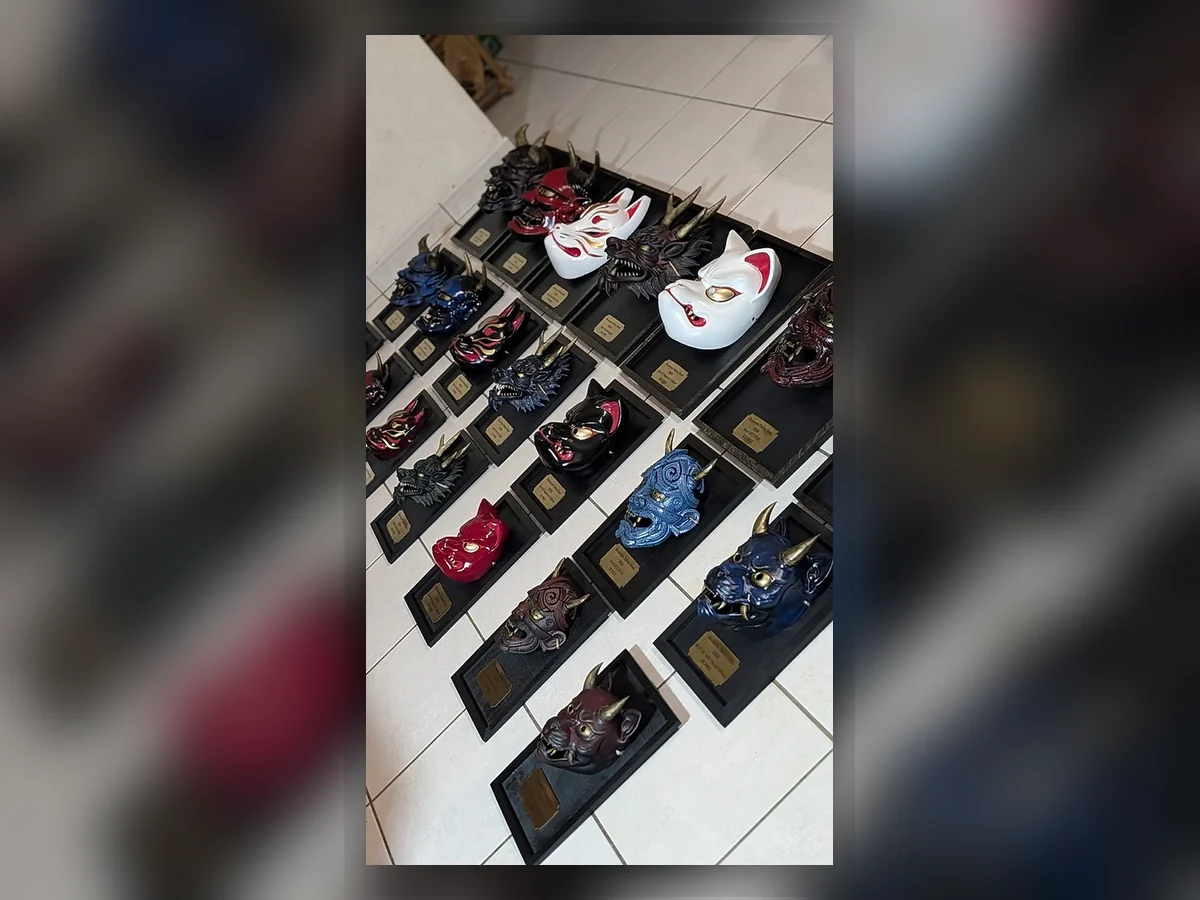
In 2026, Dai Yokai also made 21 trophy masks for the Besançon International Tattoo Show, across seven competition categories and three podium places.
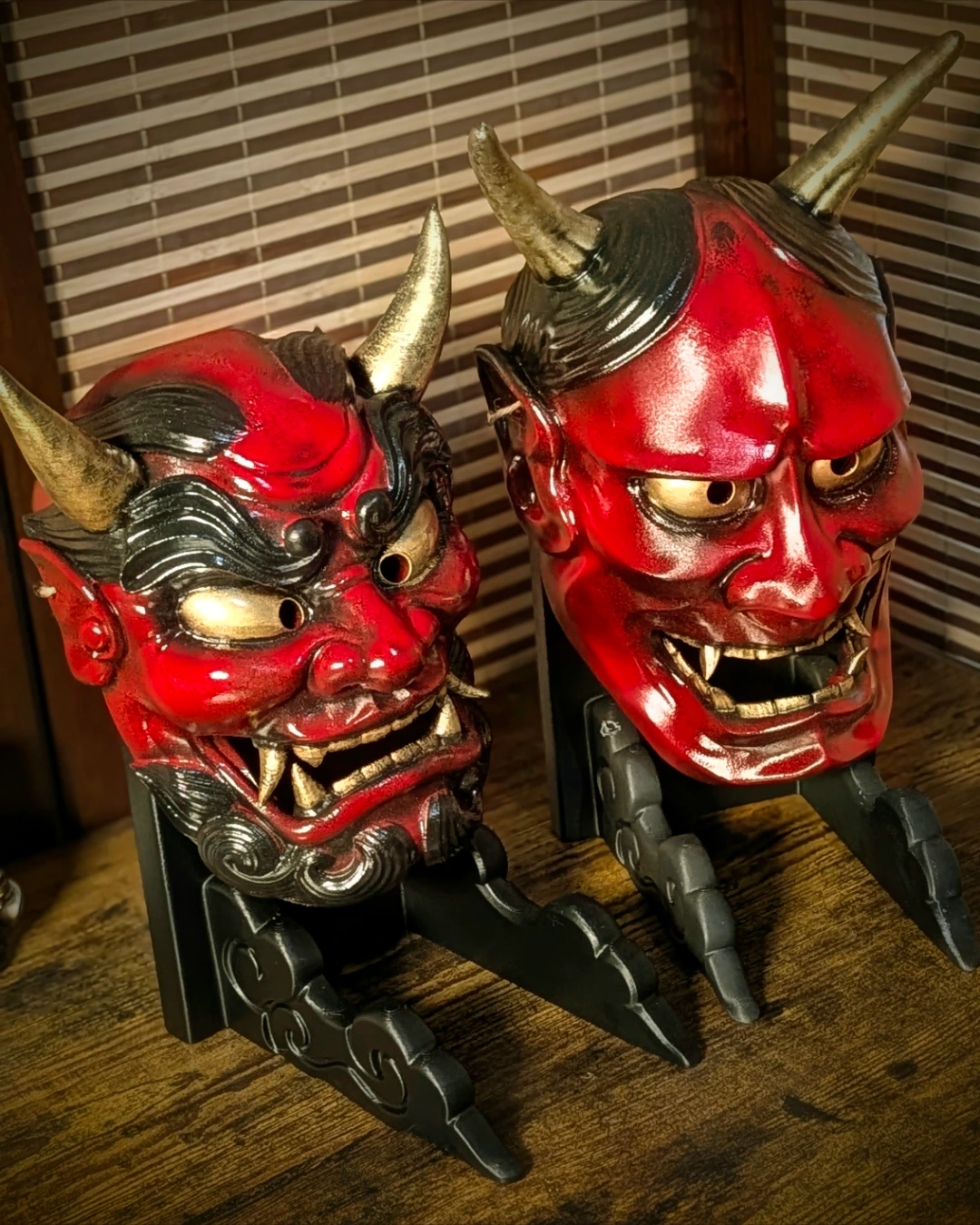
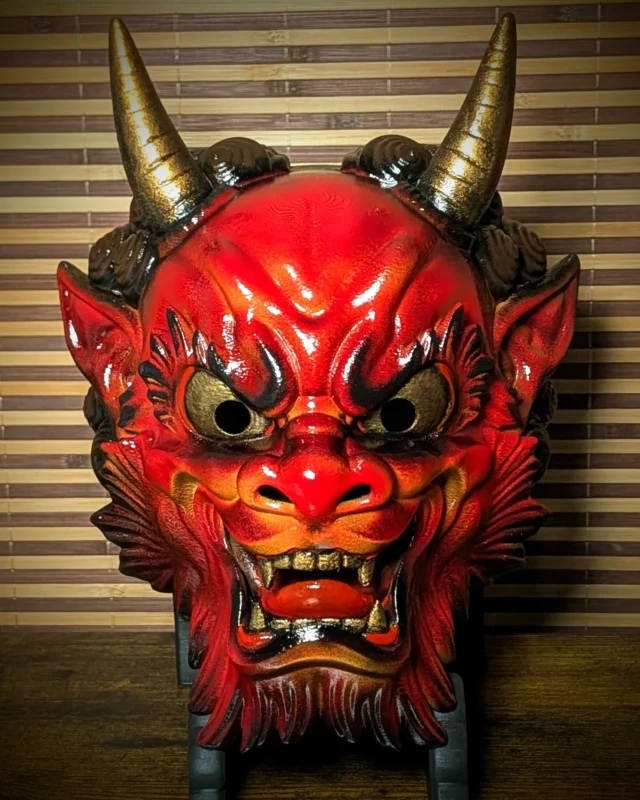
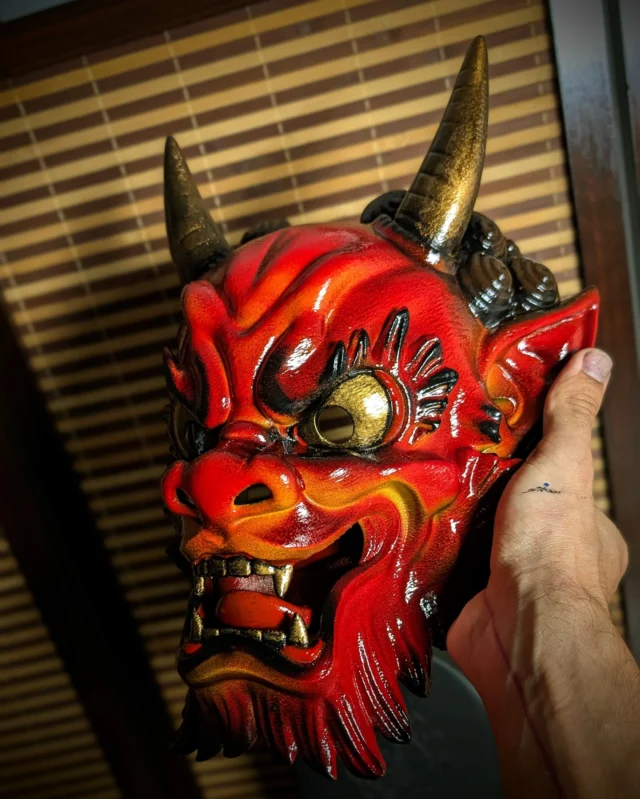
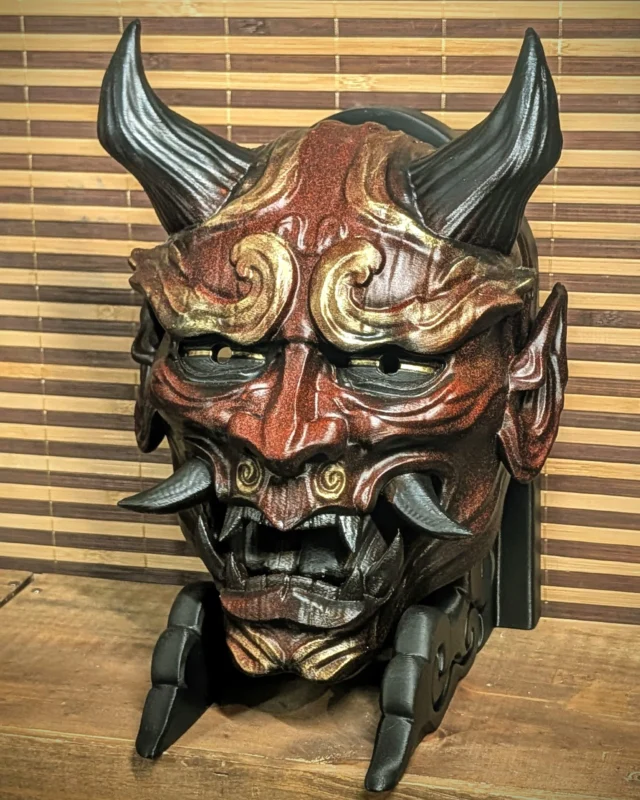
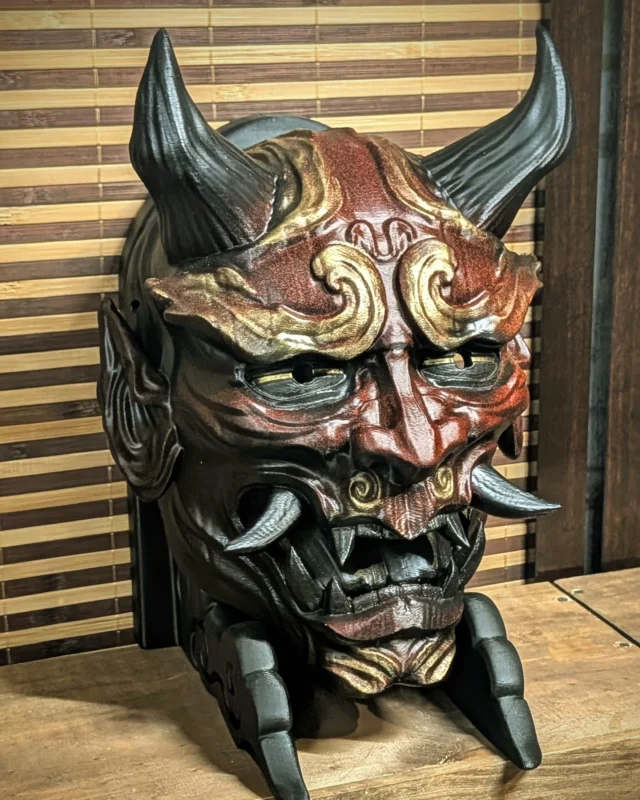
The four models below show different formats and silhouettes: Oni, Hannya, Tengu and Mempo. Prices and availability come from the product pages and may change. Colour adaptations can be considered according to the model and schedule, after feasibility is confirmed.
Checklist before ordering or installing
- Choose the area: reception, waiting, consultation, cabinet or collection wall.
- Measure width, height and viewing distance.
- Ask for the model's dimensions, weight and hanging system.
- Test a full-size template on the wall.
- Check compatibility between fixings and wall.
- Avoid positions above clients, workstations or narrow passages.
- Allow easy access for cleaning and checking the fixing.
- Test reflections under the studio's actual lighting.
- Compare the mask's palette with the logo, walls and furniture.
- Send a photograph and measurements if considering adapted colours.
FAQ: Japanese decoration in a tattoo studio
Which Japanese mask should I choose for a tattoo studio?
There is no universal choice. Oni give a broad, energetic presence, Hannya a more theatrical tension, Tengu an instantly recognisable silhouette and Mempo a compact format. Start with the available area, the studio's visual identity and motifs the artists actually work with.
Are Oni and Hannya the best fit for irezumi?
Oni and Hannya often appear in Japanese tattoo compositions, but have no fixed meaning. Oni describe a broad category in folklore, while Hannya is a codified Noh theatre mask. Their presence on the wall should support the atmosphere without replacing the tattoo artist's explanation.
Can a mask go in the treatment room?
In France, treatment rooms and furniture must remain compatible with cleaning, disinfection and maintenance rules. Decoration that is difficult to dust or close to the working area is unsuitable. Reception, waiting and consultation areas are often simpler choices.
How many masks should I display?
The number depends on the wall, viewing distance and other items. Start with one main piece. Add one or two only if they improve the arrangement. A larger collection can work in a cabinet or on a dedicated wall with regular spacing and easy cleaning access.
Which colours suit a tattoo studio?
No palette is compulsory. Red, black and gold create strong contrast, but white, blue or monochrome may suit a bright studio better. Repeat a colour already used in furniture, the logo or walls, and test it under the actual lighting before adding more accents.
How do I mount a Japanese mask on a wall?
Fixings depend on the piece's weight, hanging system and wall material. A suitable wall plug is not interchangeable with a simple hook. Check measurements and weight before installation, avoid positions above clients and seek professional advice if unsure.
Can I request colours that suit the studio?
Dai Yokai can consider colour adaptations case by case. Feasibility depends on the model, desired shades and production schedule. Send a wall photograph, studio colours and intended size. Feasibility and timing must be confirmed before ordering.
Are Dai Yokai masks traditional Japanese masks?
No. They are contemporary creations inspired by Japanese folklore, theatre and visual traditions. Their PETG bases are printed, then prepared, sanded, painted and varnished by hand in Brittany. They are intended for decoration, collecting or occasional costume wear depending on the model, not ritual use.
At a glance
A Japanese mask works best in a studio when it serves the space rather than fills it. Start with the area, measurements, maintenance and mounting. Then choose a shape and palette that reflect the studio's actual work without reducing Oni, Hannya or Tengu to single-meaning symbols.