
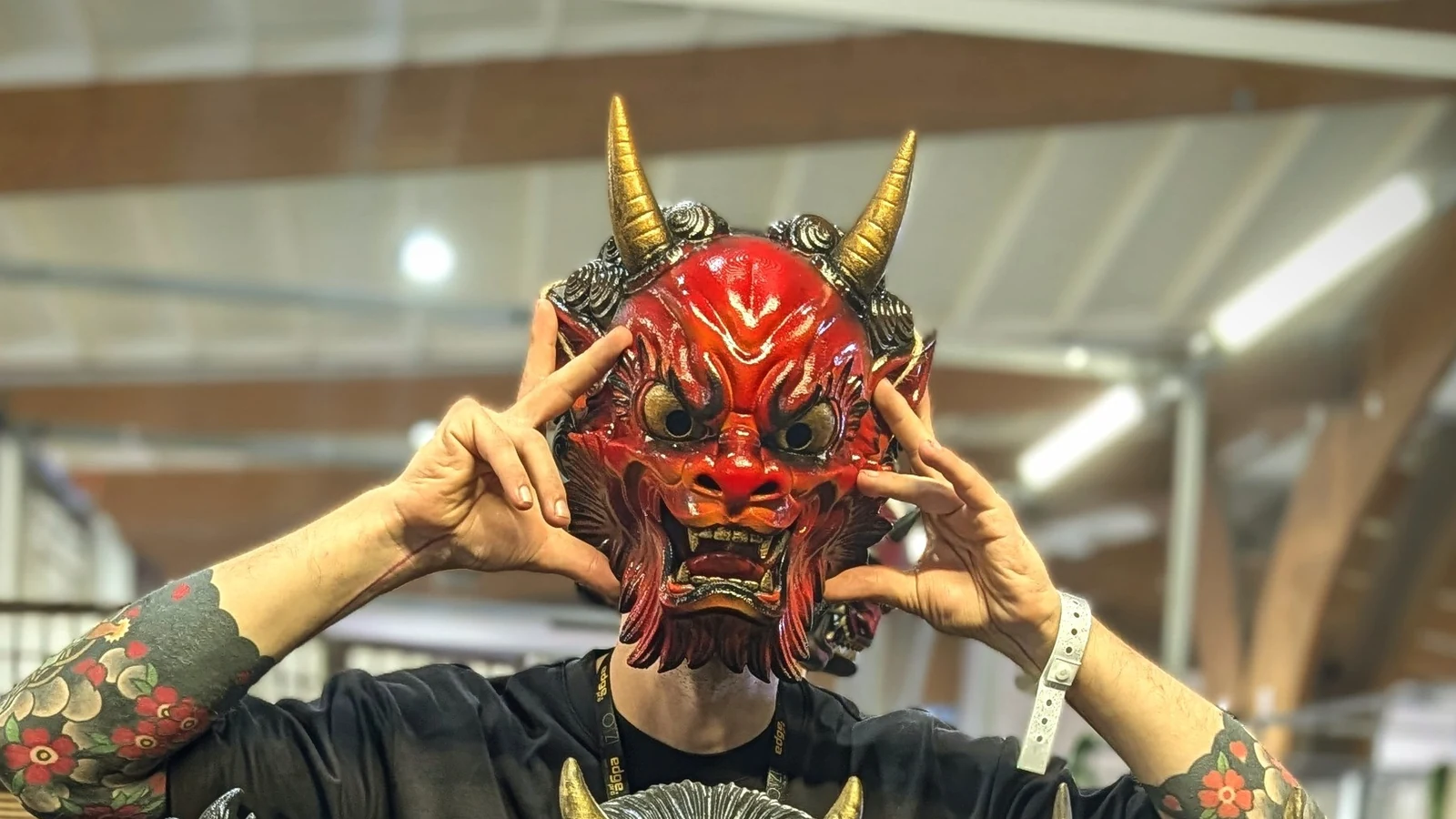
A cosplay mask should be tested in short sessions before an event. Confirm vision, ventilation, balance, smooth edges and secure attachment. Plan breaks, and remove it if you feel hot, dizzy, short of breath or unable to see clearly. Clean it only with a method suited to its painted finish, then store it cool, dry and supported.
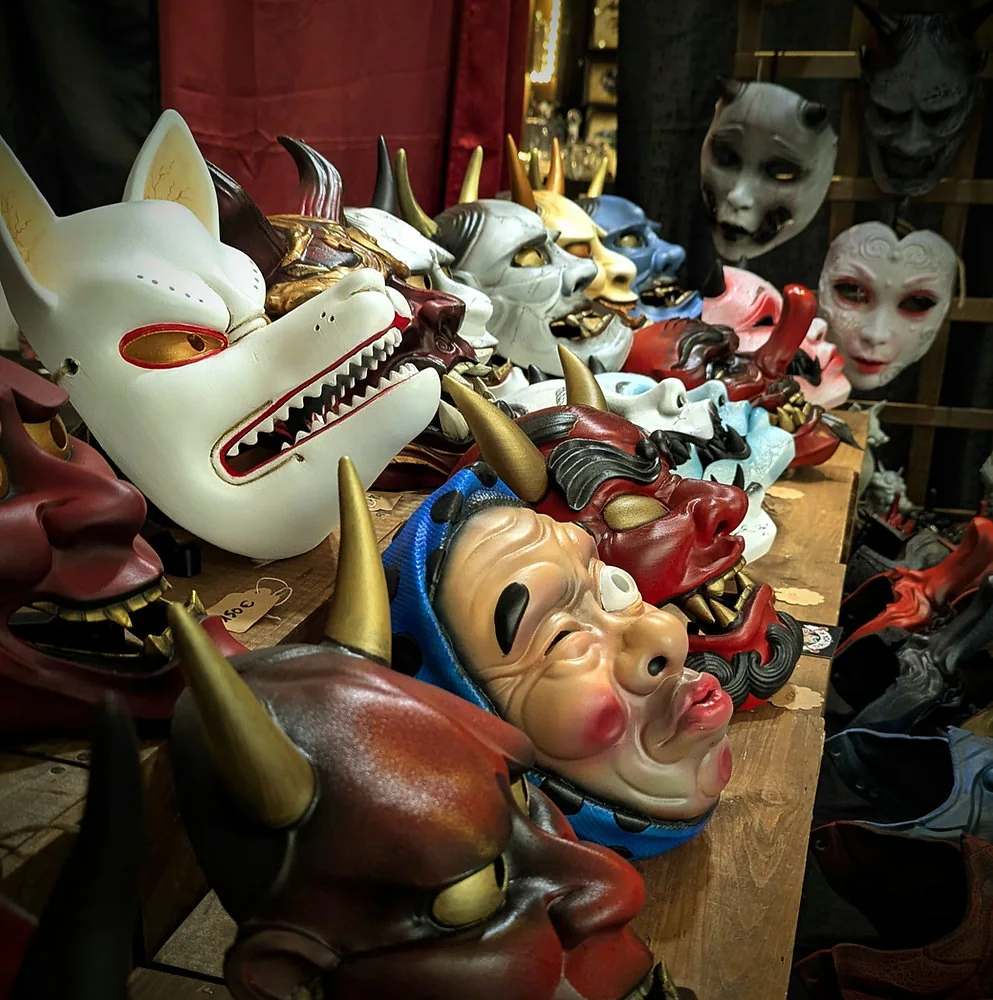
Before the convention: run a complete fit test
Do not make the convention floor your first test. Wear the mask indoors for a few minutes with the same wig, glasses, makeup, collar and costume layers you plan to use. Turn your head, speak, sit down and remove the mask without help. Repeat for a longer session only if the first test is comfortable.
| Check | Pass condition | Stop and adjust if |
|---|---|---|
| Vision | You can see the route, people and obstacles needed for the activity | Eye openings hide steps, side traffic or the floor |
| Breathing and heat | Air moves freely and you remain comfortable at rest | Breathing feels restricted or heat builds quickly |
| Pressure | No painful point on the nose, forehead, temples or ears | Pain, numbness, skin pinching or a headache develops |
| Stability | The mask stays in place during gentle head movement | It slips, rotates or pulls on one attachment |
| Removal | You can remove it quickly without tools | Hair, glasses, straps or costume parts trap it |
| Surface and edges | Edges are smooth and all parts are secure | A crack, sharp edge or loose horn is present |
A pass in a quiet room does not guarantee all-day comfort in a hot, crowded venue. Weight, face shape, humidity, costume layers and activity all change the experience. Treat wear time as something to discover gradually, not a promise attached to PETG or any other material.
Vision comes before the photograph
Full-face masks can reduce peripheral and downward vision. If you cannot see the floor, steps or people beside you, remove the mask while walking and use it only for stationary photographs. Never drive, cycle, cross a road, use machinery or take part in sport while vision is obstructed.
A friend or handler can help in a crowded venue, but does not replace your own safe field of view. Agree on a simple signal for removing the mask. Check the event’s prop and face-covering rules before travelling, because security staff may require the face to remain visible in some areas.
Ventilation, heat and planned breaks
A rigid costume mask does not breathe like fabric. Keep all intended openings clear and avoid padding that blocks airflow near the nose or mouth. Test the whole costume together, because a wig, hood, armour or heavy clothing can add much more heat than the mask alone.
NIOSH guidance on heat stress notes that exertion, hot environments and clothing can increase heat load. Warning signs include heavy sweating, weakness, dizziness, nausea, headache and confusion. Remove the mask, stop the activity and move to a cool place if symptoms appear. Confusion, loss of coordination or collapse requires urgent help.
| Situation | Practical response |
|---|---|
| Before entry | Hydrate, identify cool rest areas and decide where the mask can be stored |
| During normal wear | Take regular breaks before discomfort develops |
| Fogging or reduced vision | Stop moving and remove the mask in a safe place |
| Dizziness, nausea or unusual weakness | Remove costume layers, rest in a cool area and seek help if symptoms persist |
| Confusion, collapse or loss of coordination | Treat as an emergency and get immediate assistance |
Straps and padding: stable, reversible and model-specific
A wider strap may spread pressure better than a thin cord, and soft padding can reduce a hard contact point. There is no universal minimum strap width or foam position, however. The correct setup depends on the mask’s weight, attachment design, face shape and intended use.
Prefer reversible adjustments. Do not drill, heat or glue a finished mask unless the maker confirms the method. Adhesives can mark paint or varnish, and extra holes can weaken a shell. Padding must not reduce the eye openings or block ventilation. Inspect elastic, buckles and attachment points before every event.
Glasses and contact lenses
Glasses compatibility must be tested with the exact mask and frames. Check temple clearance, pressure at the bridge and whether the mask can still be removed quickly. If lenses fog or frames shift, stop and remove the mask before walking. A half-mask may leave more room, but dimensions still need to be checked.
Do not present contact lenses as the automatic solution. The US Food and Drug Administration classifies contact lenses, including decorative lenses, as medical devices and warns that incorrect fit or use can cause infection, corneal injury and vision loss. Use only lenses prescribed and fitted for you, following the instructions of your eye-care professional.
Cleaning a hand-painted mask
Cleaning instructions are finish-specific. Paint, varnish, adhesives, foam and hardware may react differently to water or cleaning products. For a Dai Yokai mask, start with a clean, soft, dry microfibre cloth. Use a soft brush for loose dust only if it cannot scratch the surface. Do not blast fragile details with canned air.
For a small mark, use a barely damp microfibre cloth on an inconspicuous area first, without scrubbing. Dry the surface promptly. Do not soak the mask or put it under running water. Avoid alcohol, acetone, solvents, disinfectant sprays, abrasive sponges and household cleaners unless the maker has approved a specific product for that exact finish.
| Task | Safer starting point | Avoid |
|---|---|---|
| Loose dust | Soft dry microfibre cloth or very soft clean brush | Compressed-air blast near horns, paint or eyes |
| Small surface mark | Barely damp cloth after a hidden spot test | Scrubbing or soaking |
| Sweat after wear | Allow the mask to air dry in a safe shaded place | Closing a damp mask in a case |
| Unknown stain | Photograph it and ask the maker | Trying several solvents in sequence |
| Interior padding | Follow the material or maker instructions | Assuming every foam or adhesive is washable |
Transport and storage without pressure or heat
Transport damage often happens at horns, fangs, thin edges and attachment points. A rigid box provides better crush protection than a soft suitcase. Support the mask with clean, soft, non-abrasive material and protect projections individually. Do not force packing material against painted details or let straps rub the visible surface.
Store the mask clean and fully dry in a cool place away from direct sunlight, radiators and hot vehicles. Support its shape without loading thin areas. Wall display can work when the mount is secure and does not concentrate weight on a horn or decorative part. Long-term storage under other costume pieces can deform or damage almost any mask.
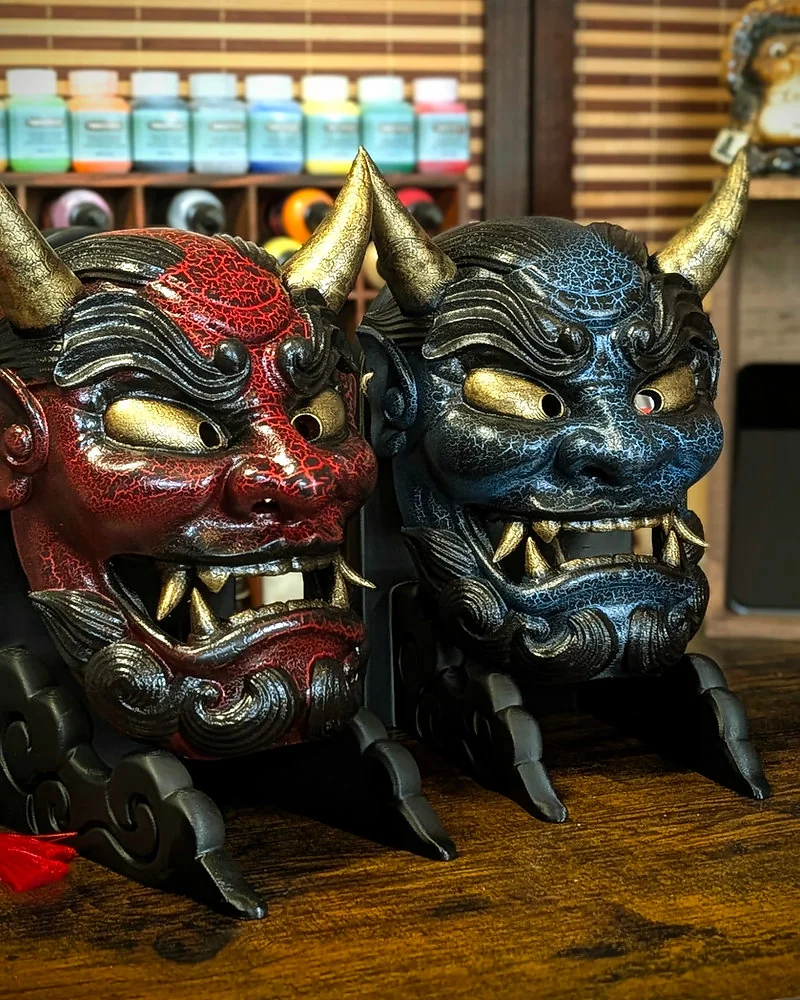
What to do after damage
Stop wearing the mask if it is cracked, warped, has a loose attachment or develops a sharp edge. Take clear photographs of the outside, inside and damaged area, then contact the maker. A repair that looks acceptable on a wall may still be unsuitable for wear if it changes balance, visibility or attachment strength.
Do not reshape a finished PETG mask with a heat gun. Concentrated heat can deform the shell unevenly, damage coatings and cause burns. Do not treat a glued horn or strap mount as structurally sound until the repair method has been checked. When in doubt, keep the piece for display rather than wear.
Display mask, light costume use or protective equipment?
| Use | What the mask must provide | Dai Yokai guidance |
|---|---|---|
| Wall display | Secure support, suitable environment and surface care | Check mounting and keep away from heat and prolonged sun |
| Stationary photographs | Comfort for a short session and adequate breathing | Test first and remove between sessions |
| Light convention wear | Usable vision, ventilation, stable attachment and quick removal | Verify the individual product page and venue rules |
| Driving, sport or impact activity | Certified protection and unrestricted control | Do not use a decorative cosplay mask |
| Dust, vapour or respiratory protection | Certified equipment selected for the hazard | A cosplay mask is not a respirator or PPE |
Dai Yokai masks are contemporary hand-finished pieces inspired by Japanese folklore and mask aesthetics. Intended use can vary by model. Check the exact product page for dimensions, included parts and use information, and contact the Brittany workshop before ordering if you need a mask for a particular event.
Compare PETG, PLA and resin mask materials, use the Japanese mask selection guide, browse Mempo half-masks, or contact the workshop about fit and intended use.
FAQ
Can you wear a cosplay mask all day at a convention?
Do not assume that any mask is comfortable or suitable for an entire day. Test it at home in short sessions, then plan regular breaks in a cool place. Remove it immediately if you feel overheated, dizzy, short of breath, nauseous or unable to see clearly. Comfort depends on fit, weight, ventilation, costume layers and the venue.
How should a cosplay mask fit?
It should remain stable without painful pressure on the nose, forehead, temples or ears. You should be able to breathe freely, turn your head and see enough for the activity. Check that edges are smooth and attachments are secure. A decorative one-size mask may not fit every face, so verify the exact dimensions before buying.
Can you wear glasses under a cosplay mask?
Sometimes, but only if the mask leaves enough clearance and the frames do not create pressure or block removal. Test your own glasses with the mask before the event. Do not switch to contact lenses only as a costume workaround. Contact lenses are medical devices and should be fitted and used according to an eye-care professional’s instructions.
How do you clean a hand-painted cosplay mask?
Follow the maker’s instructions for the exact paint and varnish system. For a Dai Yokai mask, begin with a clean, soft, dry microfibre cloth. If needed, use a barely damp cloth on a small inconspicuous area, then dry it. Do not soak the mask or apply alcohol, solvents, household sprays or abrasive products.
Should you add foam or change the straps?
Reversible padding or a different strap can improve fit, but modifications must not block eye openings or ventilation, damage the painted surface or weaken attachment points. Use only hardware that suits the specific model. If the mask has no documented wearing setup, ask the maker before drilling, heating, gluing or adding load to it.
How do you prevent a cosplay mask from fogging?
Fogging varies with temperature, humidity, glasses and airflow. Test the full costume indoors before the event. Keep intended vents clear, take breaks and remove the mask when vision becomes obscured. Use only anti-fog products approved for your specific eyewear or visor; do not apply an unknown product to a hand-painted mask.
How should you transport and store a cosplay mask?
Keep it clean, dry and protected from pressure. Support the shape with soft, non-abrasive material, protect horns and projections individually, and place it in a rigid box when possible. Store it in a cool, dry place away from direct sunlight, heaters and hot cars. Do not leave heavy costume parts stacked on it.
Can you reshape a painted PETG mask with a heat gun?
Do not try this on a finished mask. A heat gun can deform the shell unevenly, damage paint and varnish, release fumes from coatings and cause burns. If a mask is warped, cracked or no longer fits safely, stop wearing it and contact the maker with photographs before attempting a repair.