
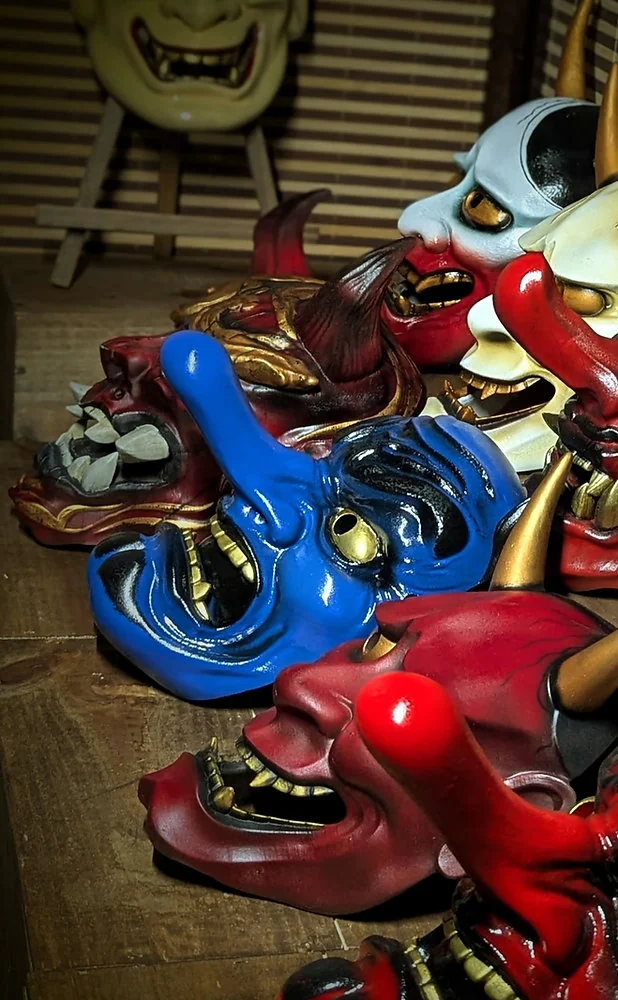
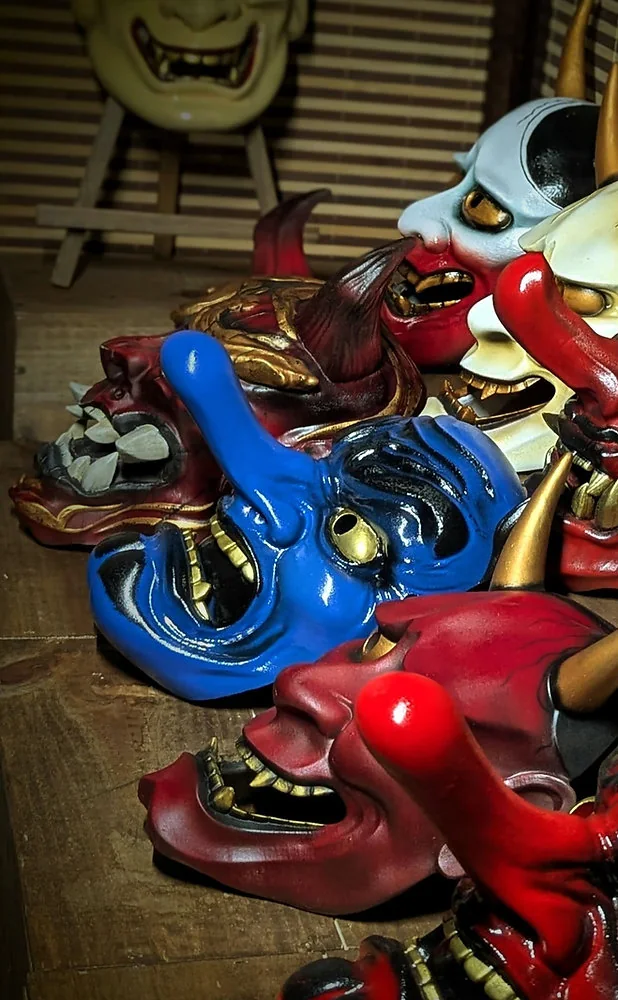
Where to buy a handmade Japanese mask
There is no single best shop for every buyer. A direct workshop is useful when you want to see who makes the piece, understand the process or discuss a color. A curated marketplace makes it easier to compare independent makers. Specialist Japanese shops may carry masks by contemporary artists or theatre-related craftspeople. Antique dealers serve a different need and should provide condition and provenance information.
| Buying route | Best suited to | What to verify |
|---|---|---|
| Maker’s own shop | Direct communication, process information and possible custom work | Maker identity, current lead time, materials and return terms |
| Artist marketplace | Comparing independent styles and price levels | Each seller, listing, dispatch location and review history |
| Specialist Japanese mask shop | Artist-made, theatrical or culturally specific work | Origin, maker, school or intended context |
| Antique dealer | Older masks and documented collectibles | Provenance, age, repairs, condition and export rules |
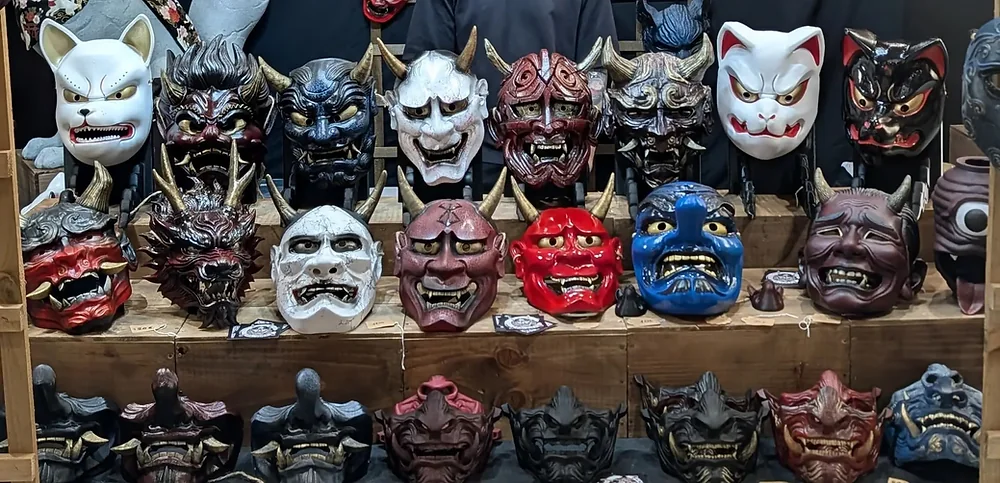
| Convention or artist event | Seeing scale, color and finish in person | Stock availability, payment receipt and after-sales contact |
If you already want a contemporary Dai Yokai piece, go directly to the handmade Japanese masks collection. This guide is for deciding what to check before that purchase, not for replacing the collection page.
Browse the handmade Japanese masks, or compare broader shopping channels in the guide to marketplace and handmade Japanese masks.
First decide which kind of mask you want
Japanese mask is a visual description, not one product category. A Noh mask, a contemporary Oni wall piece and a lightweight convention mask may share a face or motif, but they come from different practices and are made for different uses. Defining the category first prevents misleading comparisons.
| Mask category | Typical purpose | Questions to ask |
|---|---|---|
| Traditional or theatrical reproduction | Study, performance context or specialist collection | Who made it, from which model or school, and is it intended for stage use? |
| Contemporary folklore-inspired mask | Wall display, tattoo studio, collection or light costume use | Who designed and finished it, and how is the inspiration described? |
| Antique or vintage mask | Collection and historical interest | What is the documented age, provenance, condition and repair history? |
| Costume or souvenir mask | Occasional wear, festival styling or inexpensive decor | What are the dimensions, material, comfort limits and seller? |
For the historical contexts behind Noh, Kyōgen, festival, folk and popular mask forms, use the separate Japanese mask types and meanings guide. It explains the visual families without turning a buying page into a compressed history lesson.
Read Japanese mask types, history and meanings before choosing a motif.
Ten checks before you buy
| Check | Why it matters | Good evidence |
|---|---|---|
| 1. Maker or seller | Handmade claims need an identifiable source | Name, workshop location and direct contact |
| 2. Process | Shows what the seller actually contributes | Workshop images and specific making stages |
| 3. Material | Affects weight, finish, handling and care | Exact wood, polymer, resin, paper or mixed construction |
| 4. Dimensions and weight | Photos alone do not show scale | Measurements and approximate finished weight |
| 5. Intended use | Display and wearable masks need different features | Clear statement for wall, collection, stage or light costume use |
| 6. Visibility and fit | Eye openings and proportions affect safe wear | Front, side and interior photographs |
| 7. Attachment | A strap or wall mount may not be included | Included parts listed explicitly |
| 8. Production time | Handmade and made-to-order are not immediate dispatch | Current estimate and a confirmed deadline when needed |
| 9. Shipping | Packaging, tracking, tax and customs affect the final order | Dispatch country, carrier, tracking and checkout total |
| 10. Returns and repairs | Custom work may have separate conditions | Accessible policy and an after-sales contact |
How to assess a handmade claim
Handmade does not necessarily mean that every stage uses only hand tools. A contemporary maker may sculpt digitally, print a base, sand it by hand, paint it and assemble the finished piece. Another may carve wood, form paper, cast resin or combine several techniques. The useful question is which stages the maker performs and describes.
Look for consistent workshop photographs, specific materials, real dimensions, close views of the finish and a maker who can answer practical questions. Repeated catalogue images, vague origin claims and text that never identifies the process are reasons to investigate further, not automatic proof of fraud.
Traditional, authentic and Japanese-inspired are not synonyms
A traditional Noh mask belongs to a defined theatrical practice. Specialist sources describe Noh masks as mainly carved from wood, especially Japanese cypress, with coloring on the front and often lacquer on the reverse. Museum examples also identify lacquered wood. That does not make wood the only valid material for every contemporary Japanese-inspired mask.
Authentic should be followed by a verifiable statement: made in Japan, made by a named artisan, produced for a specific theatre tradition, or documented as an antique. A mask can be sincerely handmade outside Japan and inspired by Oni, Kitsune, Hannya or Tengu imagery, but it should not be sold as a Japanese ritual or theatrical original without evidence.
Choose by use, not only by face
For wall display, check the hanging system, profile depth, color under room lighting and how strongly the silhouette reads from a distance. Tattoo studios and convention booths often benefit from a larger, more graphic face, while a home display may need a quieter scale or finish.
For light cosplay or photographs, check eye alignment, ventilation, edges, weight and strap points. A Mempo half-mask usually leaves more of the field of view open than a full-face design, but fit still depends on the individual model. A display mask should never be assumed wearable because it appears face-sized in a photograph.
For practical wear questions, read the cosplay mask wearing and care FAQ.
Choose the motif without inventing one fixed meaning
| Family | Visual character | Practical buying direction |
|---|---|---|
| Oni | Horns, strong jaw and confrontational expression | Full-face impact for display, or a smaller Mempo format for easier wear |
| Kitsune | Fox face with clean lines and graphic markings | Check ear dimensions, eye placement and whether the finish is traditional-looking or modern |
| Hannya | Horned Noh-derived face shaped by anguish and jealousy | Distinguish a theatre-informed reproduction from a contemporary decorative interpretation |
| Tengu | Long nose or beaked form depending on the type | Check profile depth and storage before choosing a large display piece |
| Mempo | Lower-face form inspired by samurai armor | Useful when you want a more open field of view, but confirm fit and attachment |
Materials: compare the finished object
Wood, PETG, resin, paper-based materials and mixed constructions can all produce good masks when matched to the intended use. Material labels alone do not prove durability or quality. Thickness, reinforcement, surface preparation, paint, varnish, edges, joins and storage conditions all affect the finished object.
Dai Yokai uses PETG for its contemporary pieces, followed by sanding, priming, acrylic painting, varnishing and hand-finished details. The detailed PETG, PLA and resin comparison covers the trade-offs without repeating them here.
Compare materials in PETG, PLA or resin mask: which to choose?
Ordering from Dai Yokai
Dai Yokai is a solo workshop in Brittany, France. The masks are contemporary creations inspired by Japanese folklore and mask aesthetics. They are not presented as traditional Japanese theatre masks or ritual objects. Each piece is printed in PETG, prepared, painted and finished by hand in the workshop.
Most pieces are made to order. Check the current product page for the production estimate, included parts and intended use. If you need a particular color or a mask for a fixed convention date, contact the workshop before ordering so feasibility and timing can be confirmed. Shipping destinations, tracked delivery options and the final price are shown through the current shop process.
See all handmade Japanese masks, check shipping and return information, view upcoming events and conventions, or contact the workshop.
FAQ
Where can you buy a handmade Japanese mask online?
You can buy from an independent maker’s own shop, a curated artist marketplace, a specialist Japanese mask shop or a reputable antique dealer. Choose the route that matches the object you want. Contemporary folklore-inspired masks, theatrical reproductions, antiques and inexpensive costume props are different categories and should not use the same authenticity claims.
What should you check before buying a Japanese mask?
Check the maker or seller’s identity, location, process photographs, exact material, dimensions, weight, intended use, attachment system, production time, shipping method and return terms. Product photos should show the actual finish clearly. If a listing uses words such as authentic or traditional, look for a precise explanation of origin, maker and intended cultural context.
What does authentic Japanese mask mean?
The phrase is too broad on its own. It may refer to a mask made in Japan, a work made by a Japanese artisan, a theatrical mask produced within a specific practice, or an antique with documented provenance. A contemporary mask inspired by Japanese folklore can be genuinely handmade without being a traditional Japanese ritual or stage object.
Which material is best for a Japanese-inspired mask?
There is no single best material. Carved wood suits traditional mask-making and specialist reproductions. PETG can work well for lightweight contemporary display pieces and light costume use. Resin can capture fine surface detail but varies greatly by formulation and thickness. Compare the finished construction, not just the material name.
Can every handmade Japanese mask be worn?
No. Some masks are designed only for wall display or collection. Before wearing one, check its dimensions, weight, eye openings, ventilation, inner surface, edge finish and attachment points. Ask whether the photographed strap is included. Large decorative masks may be visually impressive but unsuitable for extended wear or unobstructed movement.
Can a handmade mask be customized?
Many independent makers accept some color or finish requests, but customisation depends on the design and production schedule. Contact the maker before ordering and confirm the agreed color, size, finish, deadline and extra cost in writing. Personalized or made-to-specification pieces may also have different cancellation and return conditions.
How long does a made-to-order Japanese mask take?
Production time depends on the maker, material, finish and current order queue. A handmade piece may require printing or carving, surface preparation, several paint stages, varnish and drying time. Use the estimate shown on the current product page and ask before ordering if you need the mask for a convention, gift or fixed date.
Should you buy from a maker, marketplace or antique dealer?
Buy directly from a maker when process, customisation and communication matter most. Marketplaces are useful for comparing independent sellers, but each listing still needs verification. Use a specialist shop for traditional or artist-made Japanese work, and a reputable dealer with provenance and condition information when buying an antique or collectible object.