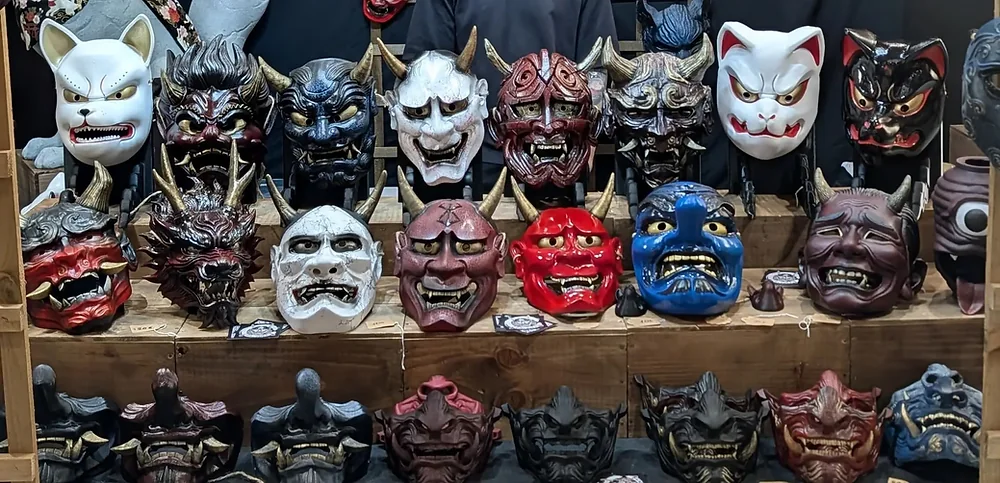
Japanese masks do not share one universal meaning. They can identify a Noh or Kyogen role, support court dance or a local festival, represent a figure from folklore, form part of samurai armor or serve as contemporary art. The right interpretation depends on the mask, period, performance and context.
This guide follows fourteen centuries of mask history, then compares seven faces familiar to Dai Yokai readers. Some are historical mask types, some are represented figures, and others are modern construction or design categories. Keeping those distinctions clear prevents folklore, theatre and contemporary decor from being mixed together.
Japanese masks quick facts
| Question | Short answer |
|---|---|
| Do all Japanese masks have the same meaning? | No, meaning depends on tradition and use |
| Early surviving tradition | Gigaku masks from the seventh and eighth centuries |
| Major theatrical form | Noh and Kyogen, established in the medieval period |
| Word used for a Noh mask | Omote, meaning face or surface |
| Armored face protection | Mengu, including forms such as menpō |
| Common folklore figures | Oni, Tengu, Kitsune and dragons |
| Modern categories | Decorative, cosplay and articulated masks |
A history of Japanese masks in six stages
Masks reached different parts of Japanese life through religion, imported performance, court culture, theatre, festivals and warfare. The timeline is not one straight evolution: several traditions developed alongside one another and continue to be preserved in different ways.
| Period | Mask context | What to know |
|---|---|---|
| Seventh to eighth centuries | Gigaku | Large masks used in Buddhist dance-drama; important examples survive in Japanese museum collections |
| From the imperial court tradition | Bugaku | Court music and dance includes masked roles, sometimes with movable elements |
| Medieval period | Noh and Kyogen | Codified theatrical masks support role, age, gender, emotion and supernatural identity |
| Medieval to Edo periods | Japanese facial armor | Mengu protected or covered parts of a warrior’s face; menpō is one familiar form |
| Regional and seasonal traditions | Festivals and some Kagura forms | Masks vary by place, event and performed figure |
| Modern and contemporary use | Decor, collection and cosplay | New materials and moving parts adapt older imagery without becoming ritual objects |
The Tokyo National Museum identifies seventh-century Gigaku masks in its collection and places the formal establishment of Noh and Kyogen in the Muromachi period. Museum collections also preserve Japanese facial armor, including an eighteenth-century so-menpo held by the Tokyo Fuji Art Museum. Those are separate histories, even when modern search results group them all under “traditional Japanese masks.”
Omote: what “mask” means in Noh
In Noh practice, a mask is called omote, a word that also means face or surface. The mask is the performed face of a role. It should not automatically be described as a yorishiro or spirit vessel, because that term belongs to a different religious context and does not define every Noh mask.
A Noh mask has a fixed carved expression, but the actor changes how it reads through angle, movement and light. A slight upward or downward tilt can make the same face appear brighter, darker, younger, sadder or more severe. The British Museum notes this changing perception in its description of a seventeenth-century Noh mask.
Traditional Japanese mask types by context
| Context | Function | Examples |
|---|---|---|
| Noh and Kyogen theatre | Represents a codified role or character type | Ko-omote, Hannya, Okina, Tengu and many others |
| Court and Buddhist performance | Supports dance, procession or dramatic performance | Gigaku, Bugaku and Gyodo masks |
| Festival and local performance | Appears in seasonal rites, dance and community celebration | Hyottoko, Okame, fox and demon figures depending on region |
| Japanese armor | Protects or covers the face and creates a martial appearance | Menpō, hanbō and sōmen |
| Contemporary craft | Decorative, collectible or wearable interpretation | Folklore-inspired and articulated masks |
These contexts overlap visually but not functionally. A Hannya made for a Noh performance, a demon face used in a local event and a modern Oni wall mask may all have horns, yet they are not the same object with the same meaning.
Seven Japanese mask faces and their meanings
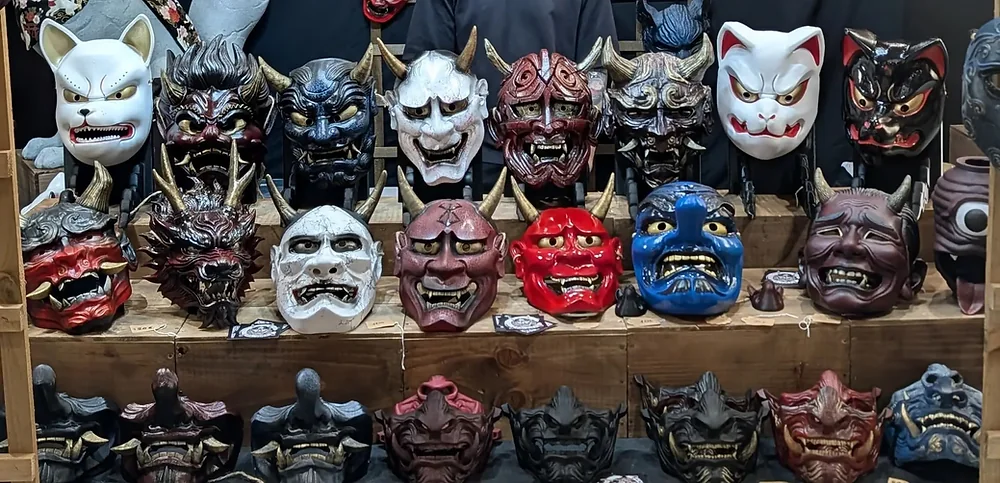
The seven categories below are a practical Dai Yokai guide, not a canonical list of Japan’s seven traditional masks. They mix specific mask types, represented figures and contemporary workshop categories because that is how people now search, collect and compare Japanese-inspired masks.
| Face or category | Historical status | Reliable meaning |
|---|---|---|
| Oni | A represented being across folklore, religion, theatre and festivals | Danger, punishment or disruptive power; protective readings depend on context |
| Hannya | A specific Noh mask | A woman transformed through jealousy, anger and anguish |
| Tengu | A folklore and religious figure represented in masks | Mountain power, pride, disruption, martial skill or protection depending on tradition |
| Kitsune | Fox imagery used in several performance and festival contexts | Transformation and cleverness; foxes are also associated with Inari worship |
| Mempo | Japanese facial armor | Protection and martial appearance rather than a theatre role |
| Articulated mask | A modern construction category | Movement and dramatic reveal, especially for cosplay or horror-inspired work |
| Dragon Ryu | A mythic motif, not one standardized mask class | Water, weather, power and wisdom in different Japanese traditions |
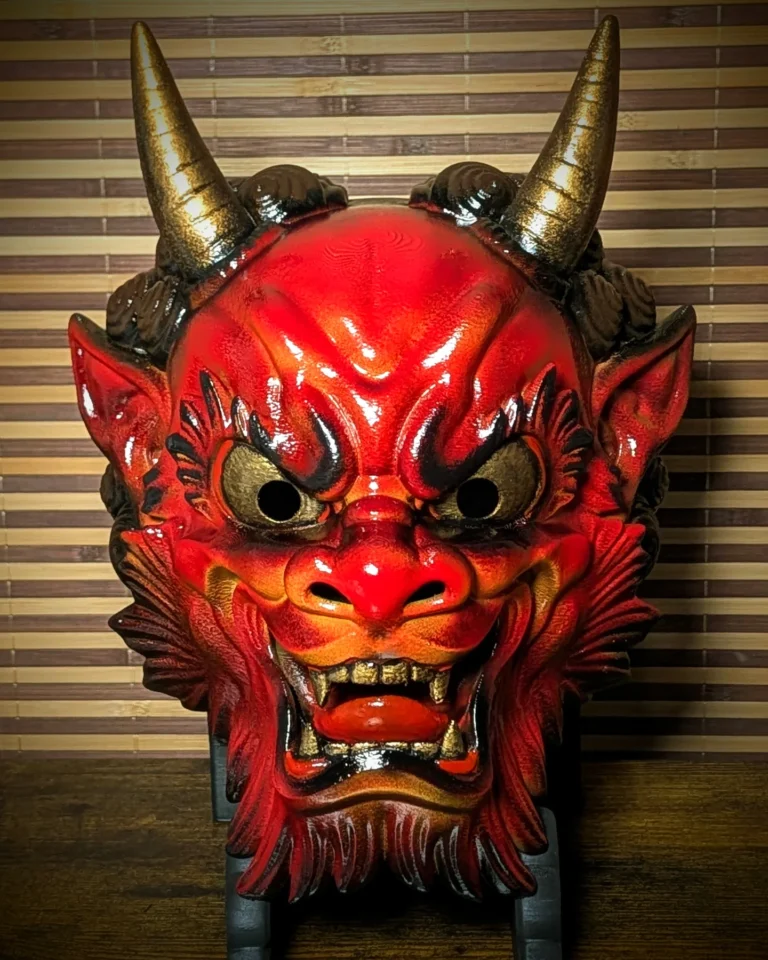
Oni mask
Oni appear in folklore, theatre, temple imagery and seasonal customs. Horns and fangs are common, but meaning changes with context.
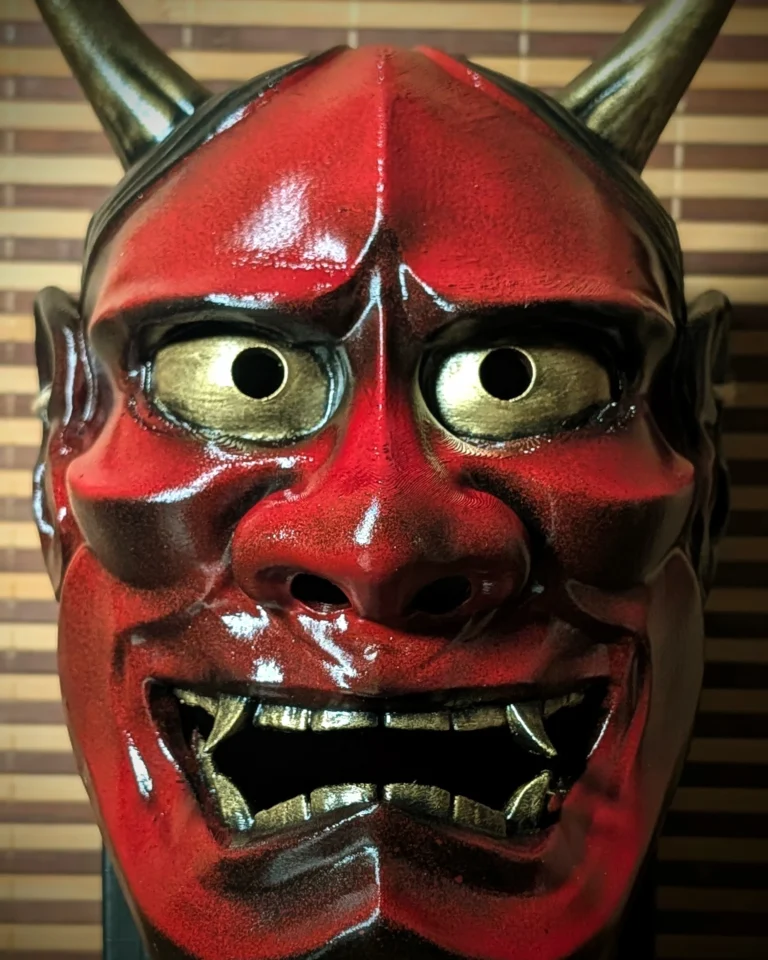
Hannya mask
A specific Noh mask for a woman transformed by jealousy, anger and anguish, not a generic name for every horned demon face.
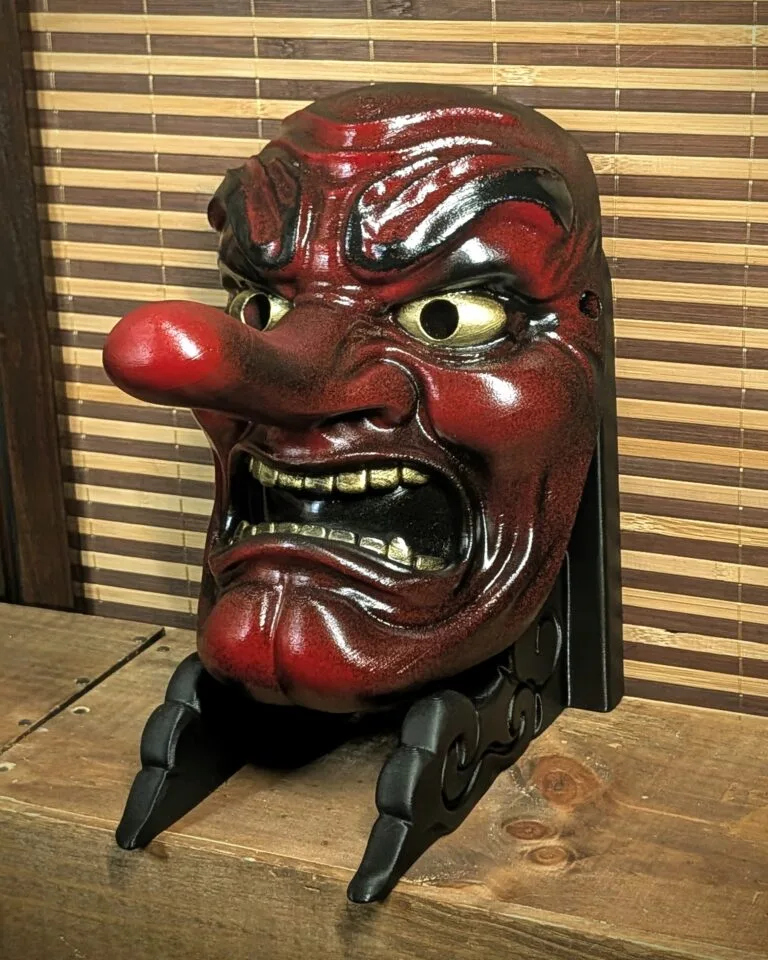
Tengu mask
Tengu have long-nosed and birdlike forms in Japanese visual culture. Their roles range from disruptive mountain beings to protective figures.
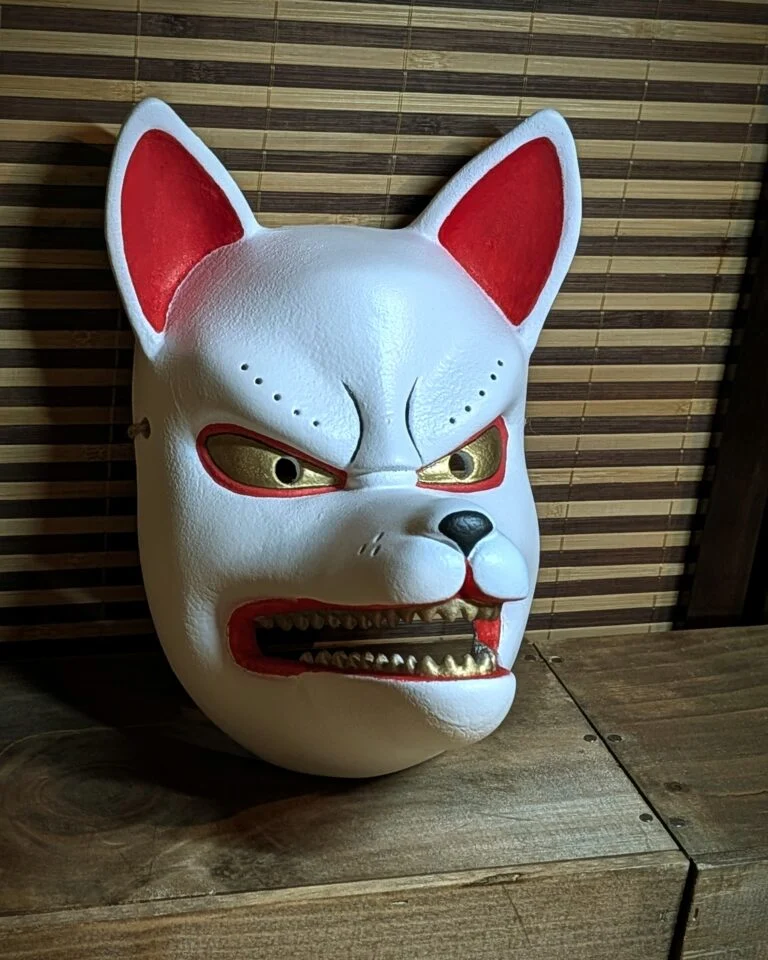
Kitsune mask
Fox imagery is closely associated with Inari, but modern Kitsune masks also belong to festival, stage, decorative and cosplay contexts.
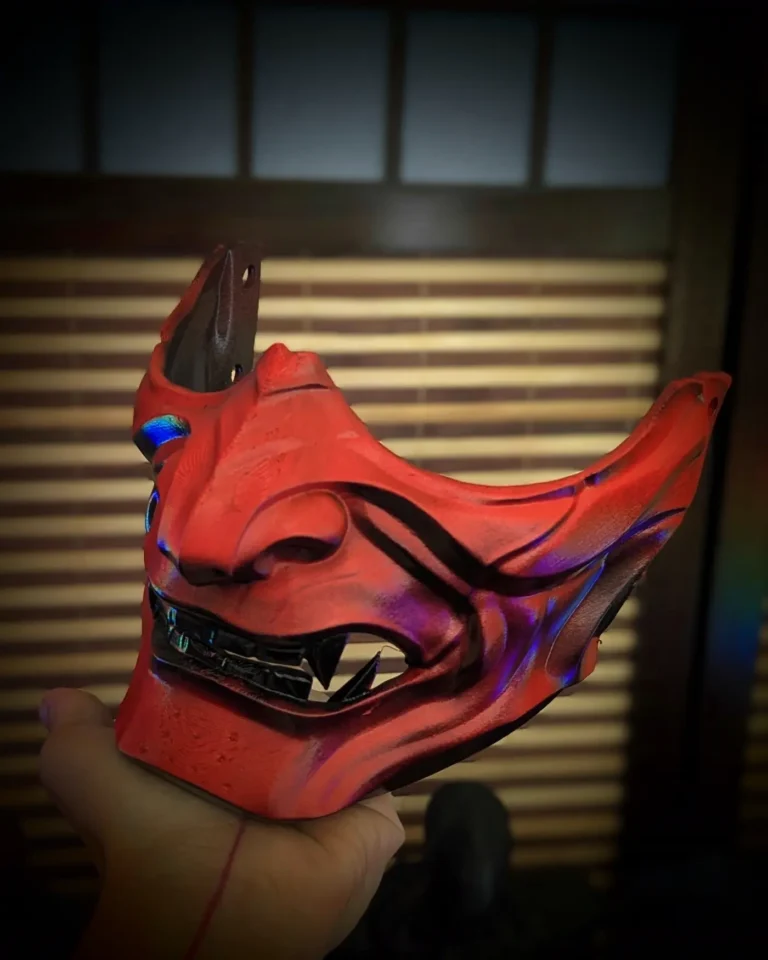
Mempo half-mask
Menpō belongs to Japanese facial armor history. Contemporary versions adapt the lower-face silhouette for display and light cosplay.
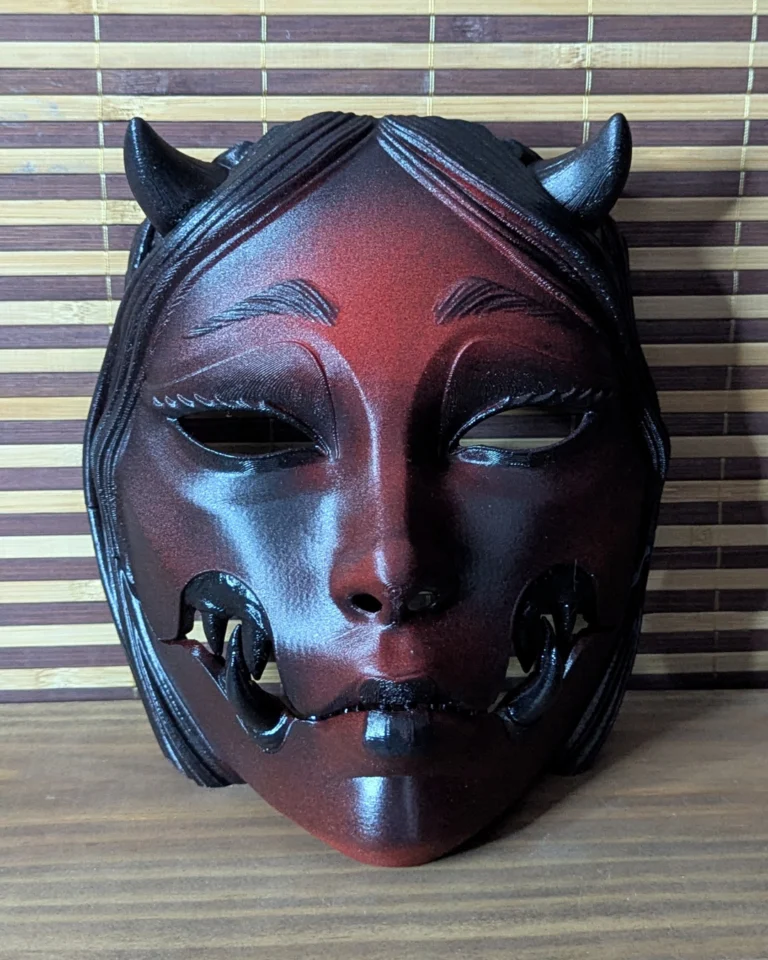
Articulated mask
An articulated jaw is a construction method used in contemporary masks. It is not one historical Japanese mask tradition.
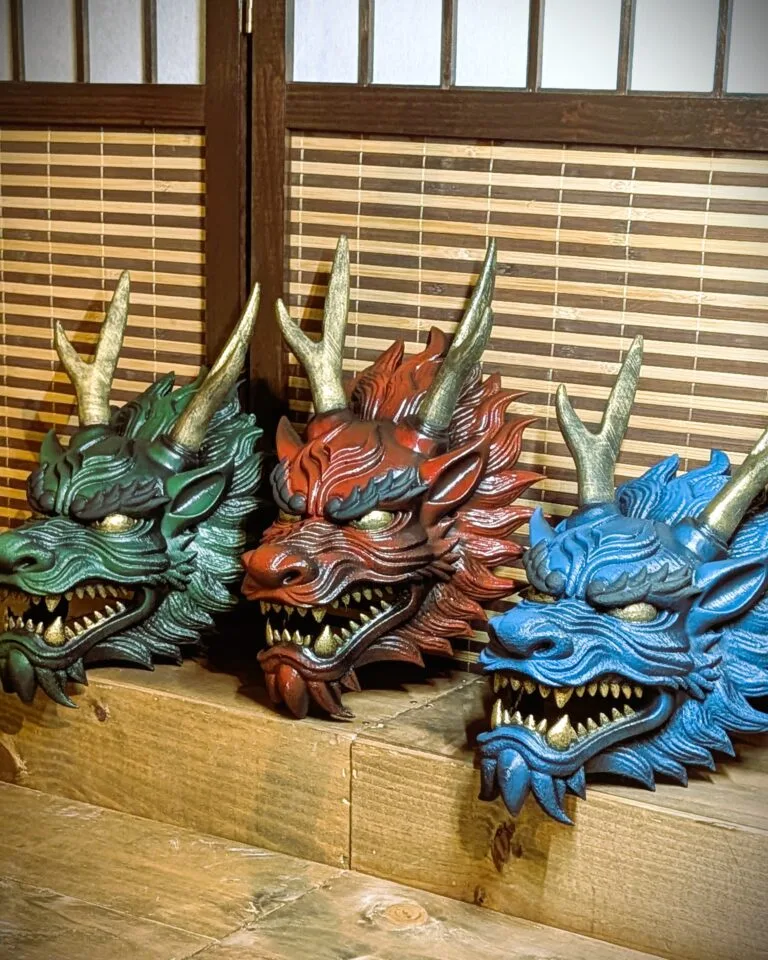
Dragon Ryu mask
Ryū is a dragon motif connected with water and power in Japanese mythology, not a single standardized traditional mask class.
How to choose a Japanese mask today
Choose first by purpose. A collector may care about the figure and finish, a tattoo studio may need a strong silhouette visible from across the room, and a convention wearer needs weight, visibility and movement. Historical accuracy matters most when a mask is being described as theatrical, ritual or armor-related.
| Use | What to prioritize | Suitable direction |
|---|---|---|
| Wall display or tattoo studio | Silhouette, depth, finish and mounting | Oni, Hannya, Tengu or dragon imagery |
| Collection | Source, maker, materials and accurate description | A clearly identified historical or contemporary category |
| Light cosplay or convention | Comfort, visibility, ventilation and secure fit | Mempo, Kitsune or a lightweight articulated design |
| Folklore research | Primary sources, museum records and regional context | A named figure or mask tradition, not a generic “Japanese demon mask” |
Traditional object or contemporary creation?
Age, use and maker matter more than appearance alone. A mask carved for Noh theatre, a festival mask maintained by a community and a newly made decorative mask may share visual references while having completely different status. “Traditional style” does not make a modern object an antique or ritual artifact.
Dai Yokai masks are contemporary handmade creations made in Brittany, France. The forms begin with PETG printing, then each piece is sanded, primed, painted, varnished and finished by hand. They draw from Japanese folklore and mask aesthetics but are sold for decor, collection, tattoo studios, conventions or light cosplay, not as authentic Japanese ritual objects.
If your intent is to browse or buy rather than research meanings, continue to the handmade Japanese-inspired masks collection. For deeper cultural context, read the guides to Oni mask meaning, Hannya masks, Kitsune masks and samurai facial armor.
Sources and further reading
Tokyo National Museum, Gigaku Masks, museum overview of early Gigaku masks and masked drama.
Tokyo National Museum, Select Noh Masks, history and collection information for Noh masks.
Japan Arts Council, Invitation to Nohgaku, official introduction to Noh and Kyogen performance.
Tokyo Fuji Art Museum, Face Guard (So-menpo), object record for an eighteenth-century armored face guard.
Sano Art Museum, Noh and Kyogen Masks, museum overview of Noh and Kyogen mask types.
FAQ
What are the main types of Japanese masks?
Japanese masks include Noh and Kyogen theatre masks, Gigaku and Bugaku dance masks, masks used in some festivals and Kagura traditions, and armored face protection such as menpo. Oni, Hannya, Tengu and Kitsune describe figures or motifs, while articulated and dragon masks may be contemporary design categories.
What do Japanese masks mean?
There is no single Japanese mask meaning. A mask may identify a theatre role, support a dance or festival, represent a figure from folklore, form part of armor or serve as contemporary decoration. Its meaning depends on the mask type, performance, region, period and context of use.
What's the difference between a Noh mask and a festival mask?
A Noh mask belongs to a codified theatrical repertoire and represents a specific role type. Festival masks vary by local event and may appear in processions, dances or seasonal rites. Their carving, movement and meaning follow different traditions, so the two labels should not be treated as interchangeable.
What does omote mean in Noh?
Omote means face or surface and is the established word for a mask in Noh practice. The term reflects how the mask becomes the performed face of a role. Actors use controlled head angles, light and body movement to change how a fixed expression is perceived.
Is a Hannya mask the same as an Oni mask?
No. Hannya is a Noh mask representing a woman transformed by jealousy, anger and anguish. Oni is a broader term for ogre-like beings in religion, folklore, theatre and festivals. Both may have horns and fangs, but their histories, roles and visual conventions are different.
Are Kitsune masks sacred?
Not automatically. Foxes are strongly associated with Inari worship, and fox imagery appears in shrine and festival contexts, but a modern Kitsune mask sold for decor or cosplay is not therefore a sacred object. Its status depends on who made it, why and how it is used.
What is a samurai menpo mask?
Menpo is a common English spelling for menpō, a form of Japanese facial armor that protects part of the face. Related terms include men yoroi and mengu for armored face equipment. It belongs to military costume and armor history, not to the repertory of Noh theatre masks.
Are Dai Yokai masks traditional Japanese ritual masks?
No. Dai Yokai masks are contemporary handmade creations produced in Brittany, France. They are inspired by Japanese folklore, mask shapes and visual culture, then printed in PETG, sanded, primed, painted, varnished and finished by hand. They are not antique, ritual or shrine-certified objects.
Read the mask before reading the symbol
Start with context: theatre, festival, armor, folklore or contemporary craft. Then identify the figure, maker, materials and intended use. That order gives a more reliable meaning than assigning one fixed symbol to every Japanese mask with horns, a long nose or a fox-shaped face.