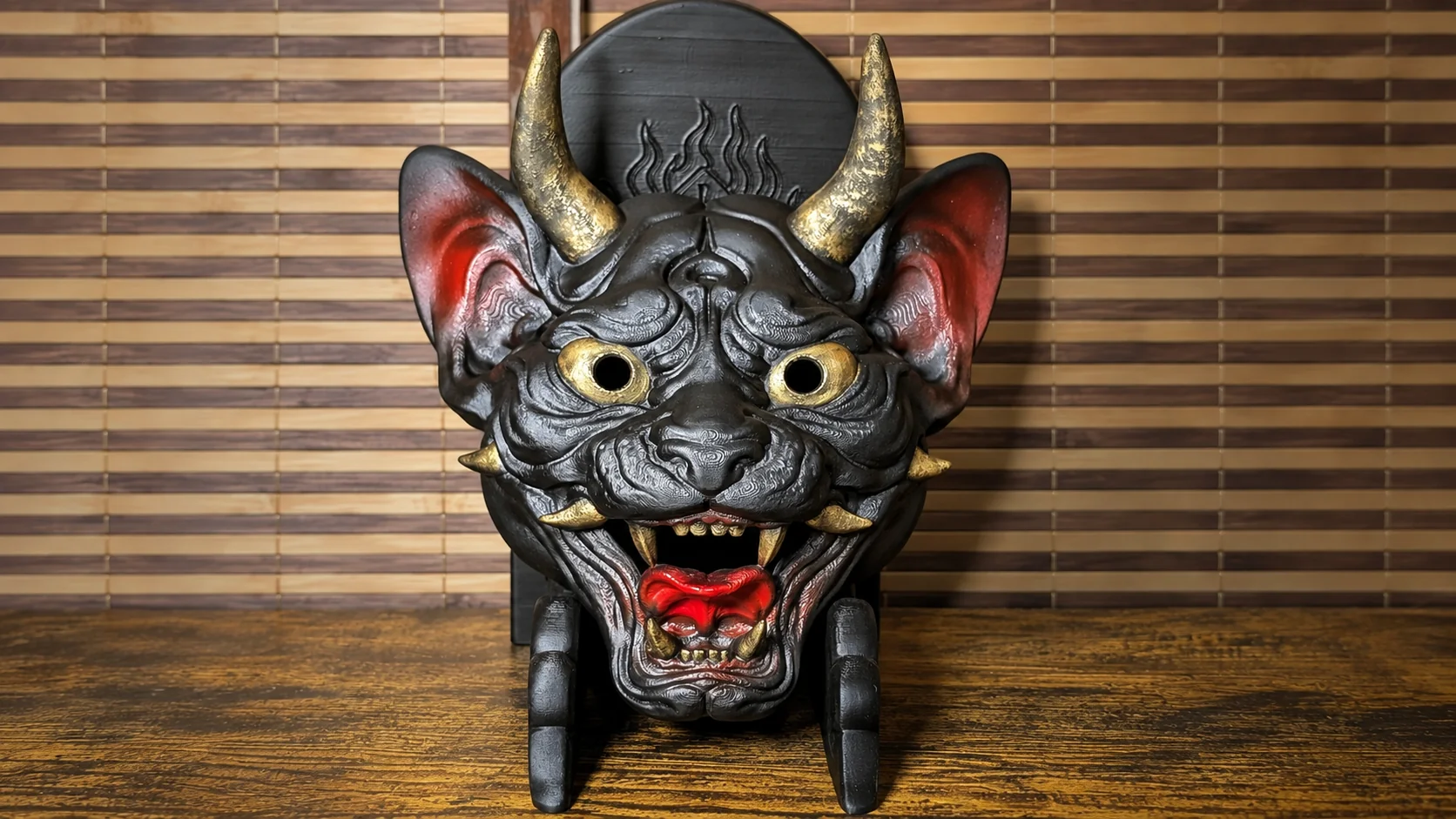
Neko Hannya is a contemporary Dai Yokai mask, not a traditional Japanese yokai. The design combines feline features with the horns, fangs and emotional tension associated with Hannya. Bakeneko and nekomata provide documented cat-yokai context, but neither is an automatic ancestor or official identity of the mask.
| Quick question | Short answer |
|---|---|
| What does neko mean? | Cat |
| Is Neko Hannya a traditional yokai? | No |
| Cat-yokai references | Bakeneko and nekomata |
| Theatrical reference | Hannya mask from Noh |
| Is the half-mask protective armor? | No |
What does Neko Hannya mean?
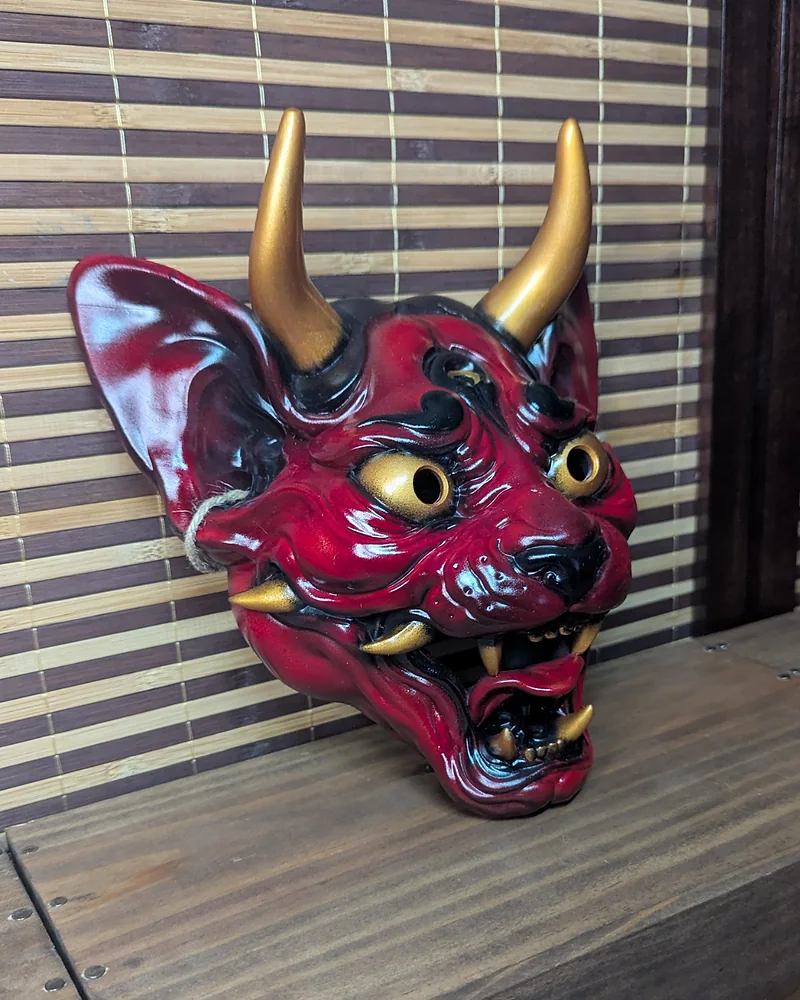
Neko (猫) means cat. Hannya (般若) names a mask type used in Noh theatre. Putting the two words together does not reveal an established creature from a historical bestiary. Neko Hannya is the name Dai Yokai uses for a modern hybrid design.
The feline part appears through the pointed ears, muzzle and compact lower-face silhouette. The Hannya reference comes through the sharp mouth, fangs, horns and emotional tension. The result can suggest alertness, resentment or animal unpredictability, but those meanings belong to this artwork rather than one fixed Japanese legend.
Bakeneko: the transforming cat tradition
Bakeneko (化け猫) can be translated as changed cat or monster cat. The term covers stories in which an ordinary cat behaves supernaturally or transforms. Motifs can include walking upright, speaking, taking human form, dancing with a cloth on its head, haunting a household or seeking revenge.
These details do not form one universal biography. Some tales focus on an old domestic cat, others on mistreatment, strange behavior or a local disturbance. Age, weight, tail length and lamp-oil licking appear in different explanations, but no single threshold turns every Japanese cat into the same bakeneko.
The research project Bakeneko: A Look into the Origins of Japan’s Supernatural Cats, archived by Portland State University, uses kaibyō as a broader term for Japan’s strange or supernatural cats. The distinction matters because bakeneko, nekomata and other feline beings overlap without forming a neat game-like hierarchy.
Nekomata: related, but not a higher level
Nekomata is another cat-yokai tradition. Older accounts include feared cats in the mountains, while later stories also describe domestic cats that grow old and transform. A split or forked tail became one of the best-known visual signs, especially in later imagery.
Calling nekomata the higher stage of bakeneko is too simple. The names, stories and images overlap, but they also developed through different texts and local traditions. Powers involving shapeshifting, speech, corpses or the dead vary from story to story and should not be assigned to every nekomata.
A Nippon.com survey of Japanese cat lore records both helpful cat legends and dangerous nekomata accounts, including a 1683 document about a large feline yokai. The example shows historical variety rather than one fixed transformation chart.
| Figure | Documented context | What not to assume |
|---|---|---|
| Bakeneko | Transforming or uncanny cat stories | Not every bakeneko has the same origin or powers |
| Nekomata | Mountain-cat and transformed domestic-cat traditions | Not automatically an evolved bakeneko |
| Hannya | Female demon or woman transformed by resentment in Noh | Not a cat yokai |
| Neko Hannya | Contemporary Dai Yokai hybrid mask | Not a historical folklore creature |
What Hannya contributes to the design
Hannya is a theatrical mask type rather than a general name for any horned female demon. The Nohgaku Performers’ Association describes it as a female demon or a woman transfigured by resentment. The mask’s expression can appear differently as the actor changes its angle under stage light.
The official Nohgaku Performers’ Association guide places Hannya within established Noh mask types. Dai Yokai borrows visual tension from that face, but the feline ears and lower-face format are contemporary additions rather than Noh conventions.
The fusion therefore works on a visual level. The cat gives the silhouette alert ears and an animal muzzle. Hannya contributes the fangs, horns and strained expression. No traditional story states that a Hannya woman becomes a cat or that a bakeneko wears a Hannya face.
Bakeneko, nekomata and Neko Hannya compared
| Feature | Bakeneko | Nekomata | Neko Hannya mask |
|---|---|---|---|
| Category | Cat yokai or supernatural-cat tradition | Cat yokai tradition | Modern mask design |
| Typical form | Often an uncanny domestic cat or shapeshifter | Mountain cat or transformed domestic cat, often split-tailed in later art | Feline Hannya-inspired half-mask |
| Fixed personality? | No | No | Defined by the artist and wearer |
| Historical mask type? | No | No | No |
| Traditional Noh role? | No | No | No |
For the broader context, read the guide to yokai in Japanese folklore and the Hannya mask meaning guide. Those articles own the general subjects; this page stays focused on the Neko Hannya hybrid.
Why use a half-mask format?
The half-mask covers the mouth, cheeks and lower face while leaving the wearer’s eyes visible. That makes the expression depend on both the sculpted mask and the person wearing it. Hoods, wigs and dark clothing can change the result without hiding the gaze.
The shape can visually recall a samurai menpo, but it is not armor. It offers no historical or protective function. The Dai Yokai piece is made mainly for display, photos and occasional event styling. Fit and fastening should be checked before extended wear.
Half-mask or full Neko Hannya?
| Format | Best suited to | Practical difference |
|---|---|---|
| Neko Hannya half-mask | Photos, styling, compact display and occasional event wear | Leaves the eyes and upper face visible |
| Neko Hannya full mask | Wall display, collection, studio decor and staged photos | Creates a complete feline-demon face |
| Traditional object? | Neither format | Both are contemporary Dai Yokai designs |
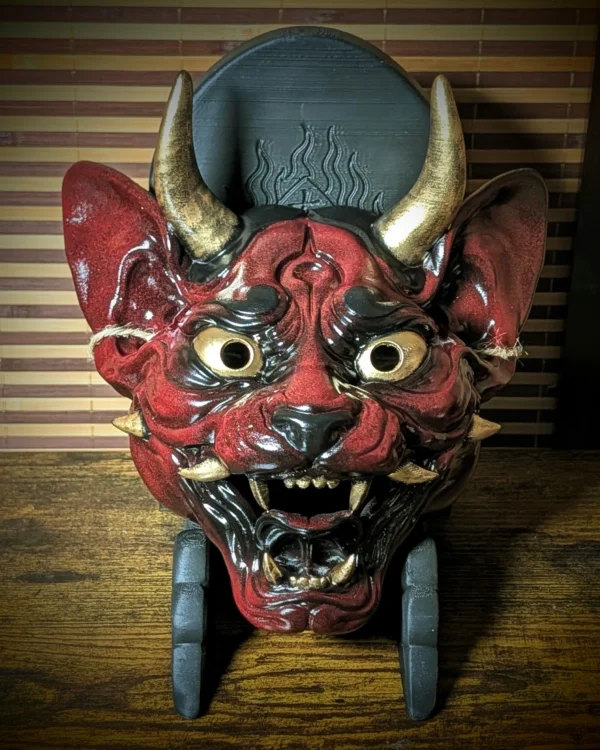
Compare the Neko Hannya half-mask with the full Neko Hannya demon-cat mask. The product pages own the commercial intent; this article explains the cultural references and the limits of the fusion.
How the Neko Hannya mask is made
Each mask is made to order in the Dai Yokai workshop in Brittany, France. The base is printed in PETG, then cleaned, sanded and primed. Acrylic layers build the main color and shadows around the muzzle, fangs and relief before the finish is varnished.
PETG is a plastic, so the value comes from the sculpting, preparation and hand finishing rather than pretending the material is something else. Small variations in sanding marks, painted shadows, color depth and varnish remain from one handmade piece to another.
For care, keep the mask indoors and away from prolonged direct sunlight or damp rooms. Dust it with a soft dry cloth. Do not soak the painted surface or use aggressive cleaning products. For wearing, check comfort, visibility and fastening before a long event.
Sources and further reading
- Portland State University: Bakeneko and Japan’s supernatural cats
- Nippon.com: studies of Japanese cat lore
- University of California Press: The Book of Yokai
- National Diet Library catalogue: The Book of Yokai
- Nohgaku Performers’ Association: Noh masks
FAQ
What does a Neko Hannya mask mean?
Neko Hannya is Dai Yokai’s name for a contemporary demon-cat mask that combines feline features with the tension of a Hannya-inspired face. It is not a traditional yokai or Noh mask. Its meaning comes from the modern design: animal alertness, theatrical resentment and a compact half-mask silhouette.
Is Neko Hannya a real Japanese yokai?
No. Japanese folklore includes supernatural cats such as bakeneko and nekomata, while Hannya is a historical Noh mask type. Neko Hannya combines visual references from those separate traditions. The name identifies a Dai Yokai creation, not a creature recorded under that name in classical folklore.
What does neko mean in Japanese?
Neko (猫) means cat. It does not by itself mean demon cat, lucky cat or cat yokai. A supernatural cat must be identified from its specific story or name, such as bakeneko or nekomata. In Neko Hannya, neko simply signals the feline part of the contemporary design.
What is a bakeneko?
Bakeneko (化け猫) can be translated as changed cat or monster cat. Stories describe domestic cats that gain strange abilities, including taking human form, speaking or behaving unnaturally. The details vary by period and region, so age, size, tail length and powers should not be treated as one universal checklist.
What is the difference between bakeneko and nekomata?
The traditions overlap, and sources do not support one simple evolutionary ladder. Nekomata stories include dangerous mountain cats and old domestic cats that transform; later imagery often gives them a split tail. Bakeneko is a broader label for uncanny or transforming cats and does not always have a forked tail.
What does the Hannya mask represent?
The Nohgaku Performers’ Association defines Hannya as a female demon or a woman transformed by resentment. It is a theatrical mask type, not simply the demon of jealousy and not a cat yokai. The Neko Hannya borrows its horns, fangs and emotional tension as modern visual references.
Is the Neko Hannya half-mask a samurai menpo?
No. Its lower-face format can visually recall a menpo, but it is not historical armor and offers no protective function. The PETG piece is a contemporary decorative and styling mask. It leaves the eyes visible and can be used for photos or occasional event wear after checking the fit and fastening.
How is the Neko Hannya mask made?
The mask is made to order in the Dai Yokai workshop in Brittany, France. Its PETG base is printed, cleaned, sanded and primed before acrylic colors and shadows are painted by hand. Varnish protects the finish. Small differences in sanding, color depth and painted details remain between pieces.
A modern hybrid, clearly named
Bakeneko, nekomata and Hannya each have their own histories. Neko Hannya is Dai Yokai’s contemporary way of bringing feline and theatrical features onto one face. Keeping those layers separate makes the mask more credible without reducing its imaginative character.