Japanese good luck objects carry different wishes. A Daruma points to perseverance and a goal you are working towards. A Maneki-neko welcomes good fortune, while Shigaraki Tanuki figures are associated with hospitality and business prosperity. Komainu and Inari foxes have distinct roles as guardians and messengers.
These figures often share a shelf in contemporary interiors, but their meanings are not interchangeable. Local traditions, religious settings and individual makers all matter. Knowing the difference helps you choose a gift or a piece to display without turning a modern interpretation into an ancient rule.
Which symbol fits the intention?
- A goal that takes commitment: the Daruma, connected with perseverance and completing an undertaking.
- A new shop or business: the Maneki-neko or Shigaraki Tanuki, associated with welcome and prosperity.
- An interest in guardian figures: Komainu, the lion-dogs found at the entrances to many shrines.
- An affinity with Inari foxes: a messenger figure whose meaning belongs within the context of Inari worship.
A meaningful choice expresses a wish or a personal connection. It does not guarantee success or protection. When giving an object, a short explanation of its symbolism can say more than an elaborate chart of lucky colors.
Daruma: keeping a goal in sight
A traditional Daruma is a figure inspired by Bodhidharma. Its rounded, weighted body returns upright when pushed over, making perseverance visible. A common Takasaki custom is to fill in one eye when setting a wish or goal, then complete the second eye after achieving it. The official Gunma guide describes this practice and the variations in color symbolism.
For an exam, a creative project or a new professional chapter, the message is to keep working towards the result. Choosing a color does not require a promise for every shade. The full Daruma guide explains the eyes, colors and regional customs in more detail.
Maneki-neko and Tanuki: two images of prosperity
The Maneki-neko is the cat with a raised paw that appears to beckon someone inside. Gotokuji Temple in Tokyo tells a story of a cat inviting a lord into the temple grounds before a rainstorm. The temple connects the figure with wishes for happiness, family well-being and prosperous business. This is the temple’s own account, among several stories associated with the beckoning cat.
The Shigaraki Tanuki has a different presence: a rounded belly, a welcoming expression, a hat and a sake flask. The Japan Tourism Agency describes its association with good fortune and its place outside shops and restaurants. This ceramic character does not represent every tanuki in folklore. The Tanuki guide separates the real animal, the shapeshifting character and the auspicious Shigaraki figure.
Komainu and Inari foxes: guardians and messengers
Komainu are guardian lion-dogs. They often appear as a pair, such as the bronze figures at Suwa Taisha documented by the Japan National Tourism Organization. Their role belongs to the protection of sacred space. That makes their symbolism different from a cat inviting customers or a Daruma marking a goal. The Komainu guide explores their history and visual features.
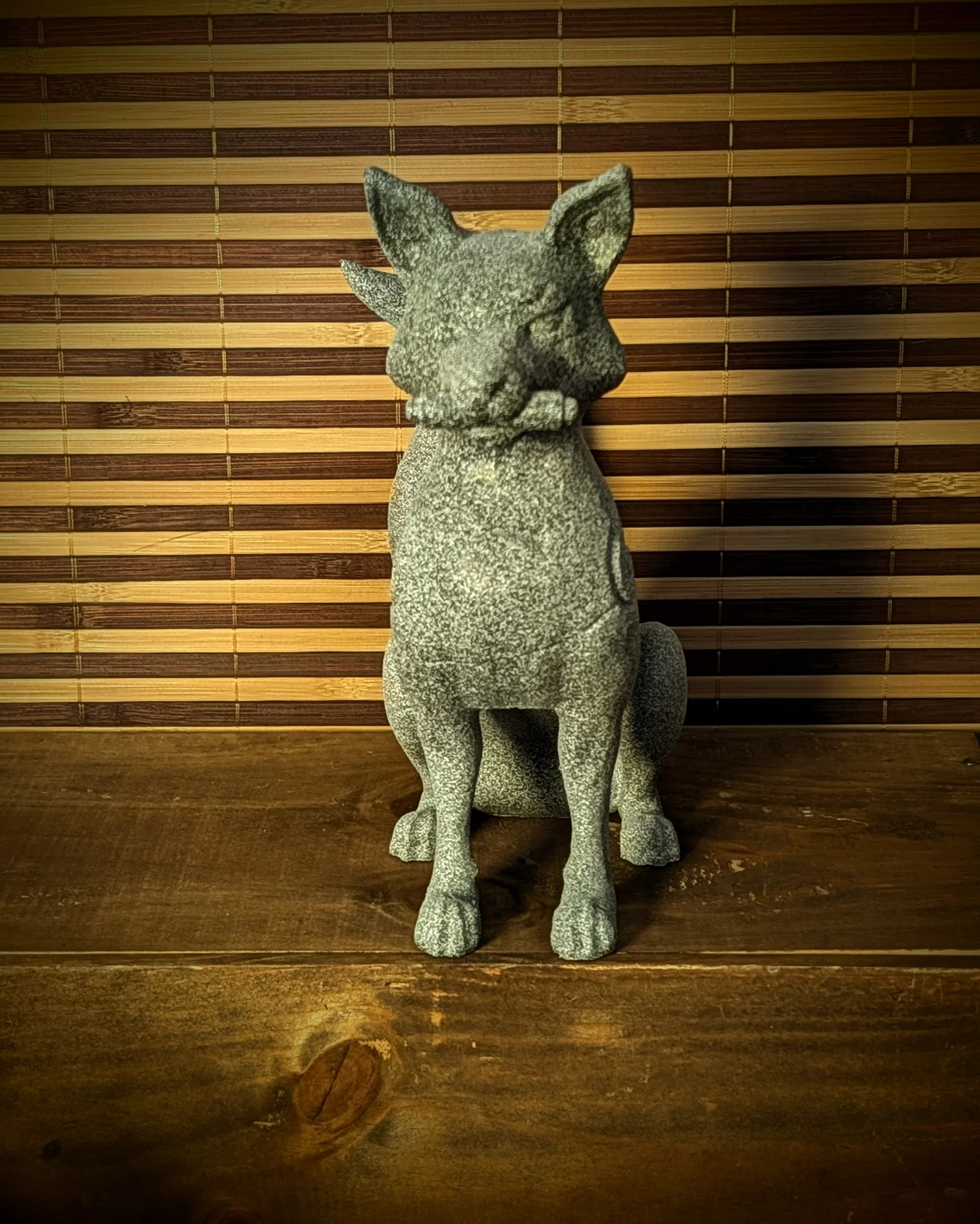
Foxes associated with Inari are messengers of the kami, not the deity itself. Fushimi Inari Taisha’s official FAQ makes this distinction clear. Prayers to Inari include those for harvests and business prosperity, but a decorative fox figure does not become a consecrated object through its shape. The Inari Okami guide explains the religious context and the imagery.
Consider the space and the material
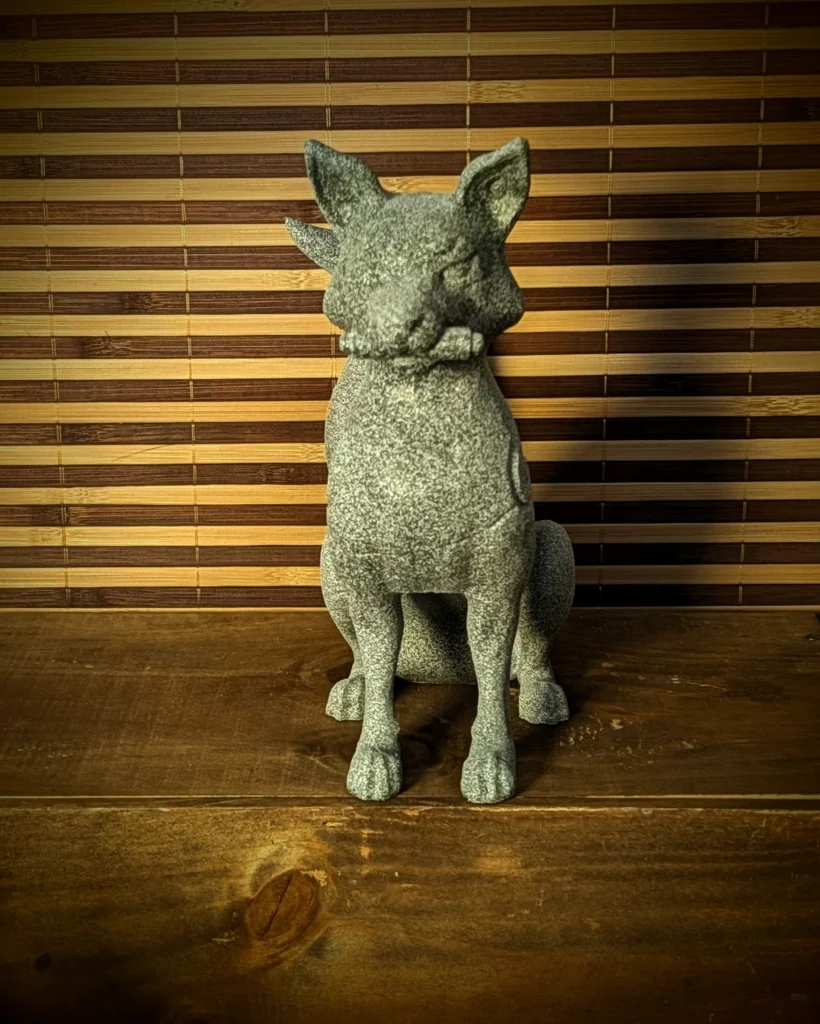
Before choosing a Japanese statue, measure the space where it will stand. Height is only one part of the decision. Width, depth, the stability of the surface and room around the object also matter. A small figurine might fit a desk; a larger piece needs a suitable shelf or plinth. Check the exact variation and the number of pieces included on the product page.
Then read the material and care information. A stone-effect finish does not mean an object is carved from stone. A photograph taken outdoors does not establish that a piece can be left in the rain. Dai Yokai decorative pieces are intended for indoor display, away from moisture, strong heat and prolonged direct sunlight.
A tradition can inspire a contemporary piece
You might choose a figure for its story, its silhouette or a memory it brings back. Understanding what you are buying helps keep that connection clear. An object obtained from a shrine, a traditional Daruma and a contemporary sculpture do not automatically serve the same purpose.
In my workshop in Brittany, France, I prepare, sand, paint and finish decorative creations by hand using PETG bases. The Blood Rage Daruma takes a familiar silhouette in a darker visual direction. The Kitsune Inari figurine draws on fox imagery. These are decorative pieces. The votive uses and self-righting construction of a traditional Daruma are not attributed to them.
To compare the actual models, sizes and finishes, browse the Japanese statues and figurines collection.