The Tengu draws attention with its red face, oversized nose, or birdlike silhouette. In Japanese tattooing, that image is more than an aggressive demon or a simple good-luck charm. Its appeal lies in its ambiguity: pride and self-control, danger and protection, isolation and the passing on of knowledge.
The main idea: a Tengu tattoo can evoke pride kept in check, discipline, power, or a mountain guardian. Its meaning depends on the chosen form, a long-nosed Daitengu or a beaked Karasu Tengu, as well as the setting and the character's attitude. Protection is one possible reading, not an automatic meaning.
- The symbol's key quality: ambiguity.
- A moral reading: mastery should not become arrogance.
- A martial reading: learning, strategy, and discipline in certain stories.
- A visual reading: an expressive frontal mask or a winged figure in motion.
What does a Tengu tattoo really mean?
The Tengu is a supernatural figure associated with Japanese mountains, Buddhism, and Shugendō. It can be feared as a disruptive spirit and respected as the guardian of a sacred peak. That tension offers a stronger basis than a list of fixed meanings.
A Tengu tattoo may therefore speak of strength, pride, solitude, discipline, or a warning against ego. It does not always mean war. The martial connection mainly comes from stories and images in which the Tengu has combat knowledge, rather than a universal irezumi code.
Choose one main intention, then make it visible through posture, gaze, setting, and supporting details. To explore the character before drawing, read the Tengu history and symbolism guide.
| Intention | How to make it readable | What to avoid |
|---|---|---|
| Pride under control | A stern mask, restrained composition, direct gaze | Treating the long nose as one absolute code |
| Discipline | A steady stance, fan or weapon integrated into the story | Turning every Tengu image into a military emblem |
| Mountain | Rocks, forest, clouds, wind, and depth | A generic setting without seasonal coherence |
| Ambiguous guardian | An imposing figure at a threshold or overlooking a place | Promising automatic magical protection |
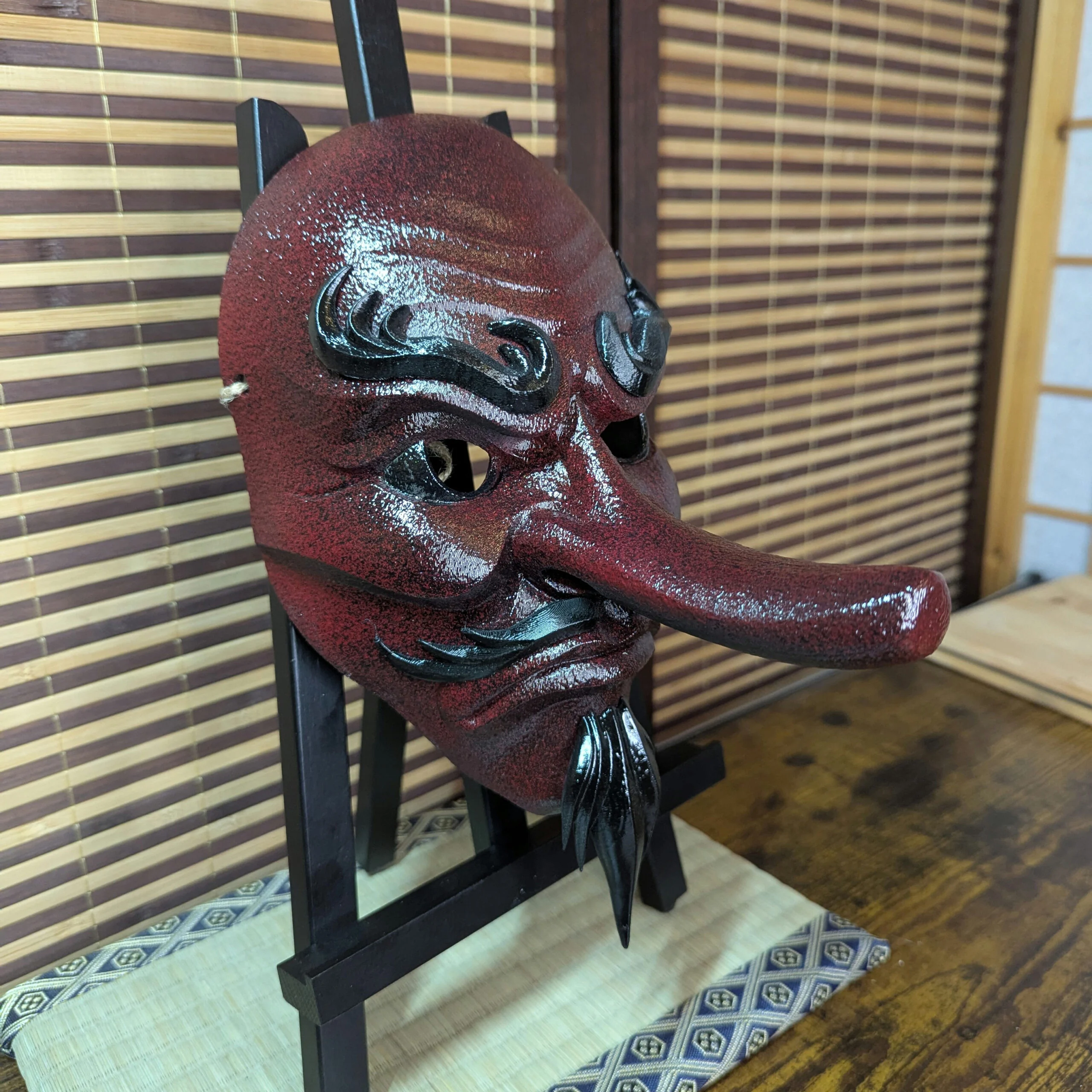
Daitengu or Karasu Tengu: two different silhouettes
The human-faced Tengu, often red and long-nosed, is generally associated with Daitengu or the yamabushi Tengu. Karasu Tengu keeps more bird features: a beak, wings, talons, or feathers. These two forms do not tell exactly the same story on skin.
| Form | Visual traits | Strength as a tattoo |
|---|---|---|
| Daitengu | Human face, long nose, stern expression, ascetic clothing | A clear mask, pride, authority, and frontal presence |
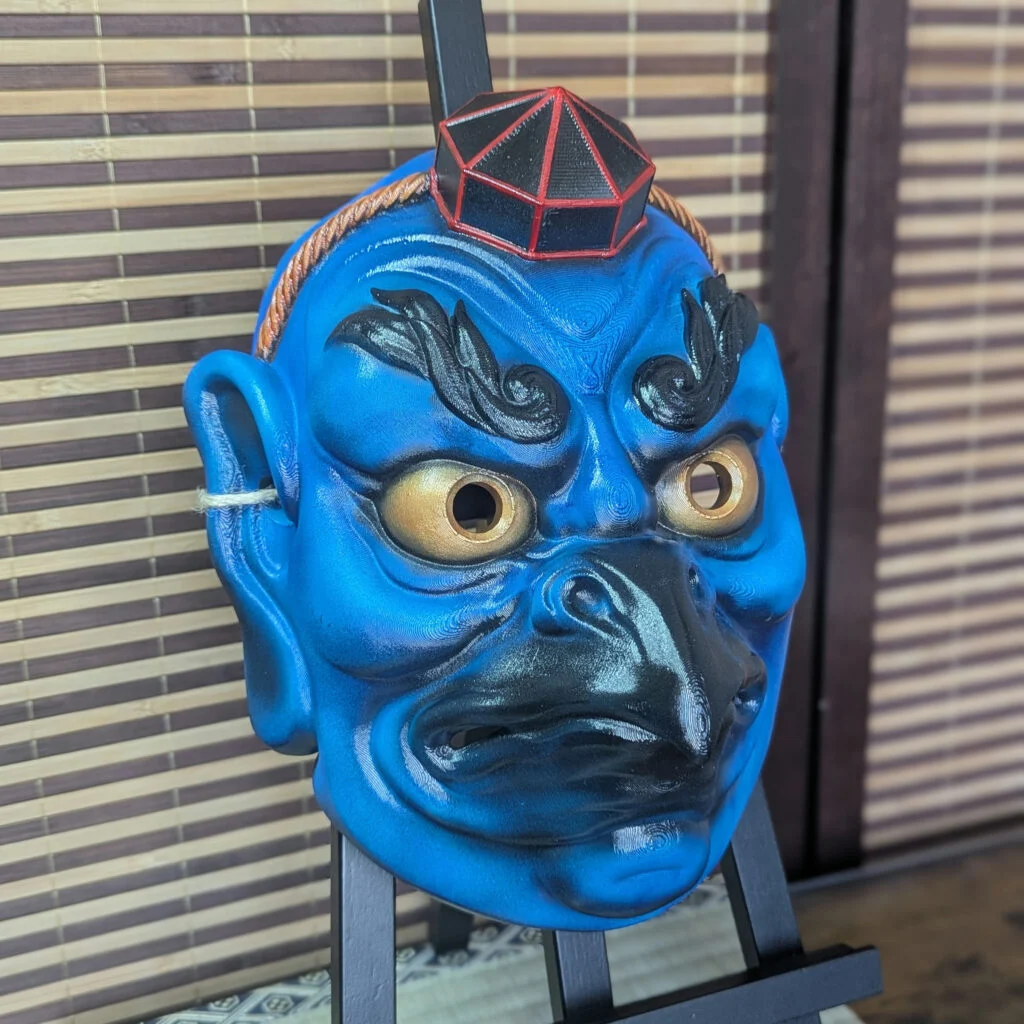
| Karasu Tengu | Beak, wings, and more animal-like anatomy | Movement, strangeness, speed, and a full silhouette |
| Contemporary interpretation | Mixed forms, freely chosen colors, graphic framing | More freedom, provided it is not called strict tradition |
Mountains, yamabushi, and the Yoshitsune legend
The heritage collections on Japan Search describe the Tengu as a red-faced, long-nosed mountain spirit connected with Buddhism, mountain worship, and the appearance of yamabushi. They also describe its dual status as a feared being and a guardian of sacred peaks.
The story of Kurama Tengu features a great Tengu who teaches combat to young Ushiwaka, the future Minamoto no Yoshitsune. This is a legend and theatrical material, not evidence that every Tengu was historically a weapons master. In a tattoo project, that distinction allows learning or discipline to be explored without turning folklore into military fact.
The same heritage source includes both the long-nosed and birdlike Tengu. It confirms that both silhouettes coexist in imagery, without imposing one tattoo meaning on either.
Does the long nose always represent pride?
The connection with pride is relevant, but it remains one reading among others. The Japanese dictionary Kotobank records the expression tengu ni naru, becoming a Tengu, for someone who becomes conceited or lets praise go to their head.
A tattoo can use that idea as a personal reminder: gain mastery without becoming arrogant. The nose is also a visual feature that makes the Tengu instantly recognizable. There is no need to invent an additional meaning for every inch of its length.
A mask alone or a complete character?
| Composition | Advantage | Suggested area |
|---|---|---|
| Frontal mask | Direct expression and quick readability | Upper arm, thigh, calf, or a sufficiently broad forearm |
| Three-quarter mask | The long nose creates a strong line and greater depth | Shoulder, thigh, or flank |
| Whole character | Room for wings, clothing, a fan, weapon, and movement | Back, torso, thigh, or a planned sleeve |
| Karasu Tengu in flight | A dynamic silhouette and a more narrative mountain setting | Back, side of the torso, or a large thigh piece |
A highly detailed face quickly loses clarity when reduced. The nose, eyebrows, teeth, and headwear need space. For a small piece, simplifying the mask is better than compressing a whole scene.
Colors: red is common, not compulsory
Red is common for the long-nosed Tengu, but it does not define the character by itself. Black and gray can emphasize form and a mountain atmosphere. Red accents can guide the eye. A blue or green palette belongs more to contemporary interpretation and should be presented that way.
The choice should also consider aging, skin tone, the size of the piece, and neighboring tattoos. A striking color on a screen is not necessarily the one that will remain clearest on skin.
Building a coherent irezumi composition
A Tengu should not be placed randomly among Japanese elements. In a large composition, the background connects the subject to the body. Clouds, wind, rocks, and vegetation can suggest its mountain territory. A feather fan, yamabushi clothing, or a weapon can strengthen the story if its purpose is clear.
- Start by deciding whether the subject is a mask, a Daitengu, or a Karasu Tengu.
- Choose one main intention: pride, discipline, a trial, solitude, or guarding a place.
- Check the season and whether the plants fit the rest of the project.
- Avoid piling together a katana, pagoda, flowers, and kanji simply to look Japanese.
- For a sleeve or back piece, start with the irezumi motifs guide and let your tattoo artist assess the composition as a whole.
Which placement should you choose?
The back suits a whole character or mountain scene. The thigh offers enough width for a three-quarter mask. The upper arm works for a strong head integrated into a sleeve. The calf and forearm can hold a simplified mask, provided the larger shapes and outlines remain clear.
The direction of movement matters as much as size. A beak, nose, or fan placed against a joint can disrupt readability. Ask the artist to show the drawing directly on a photo or body template, rather than only as a rectangular illustration.
Questions to ask before your appointment
- Does the artist actually work in traditional Japanese, neo-Japanese, or an illustrative style?
- Can they explain the difference between the long-nosed Tengu and Karasu Tengu?
- Does the project need to fit a sleeve, back piece, or existing motifs?
- Which details will still be readable in five or ten years?
- Do the references come from documented Japanese works or only Pinterest images?
Dai Yokai does not create tattoos. A specialist tattoo artist's advice remains essential for technique, aging, and traditional combinations.
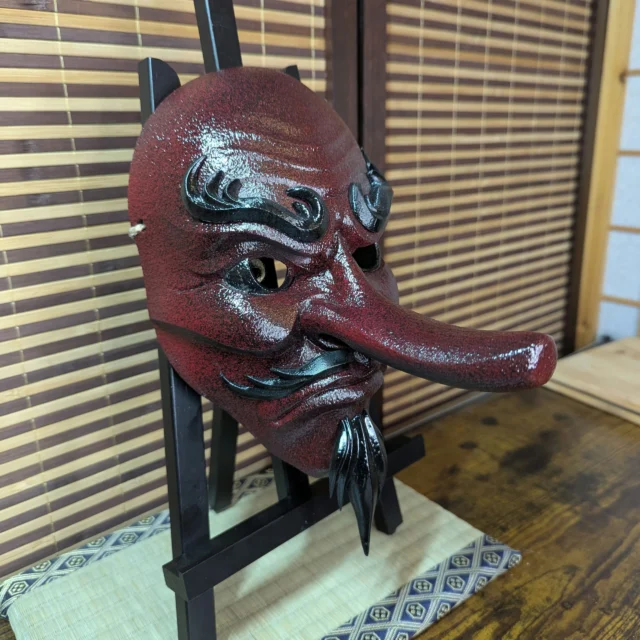
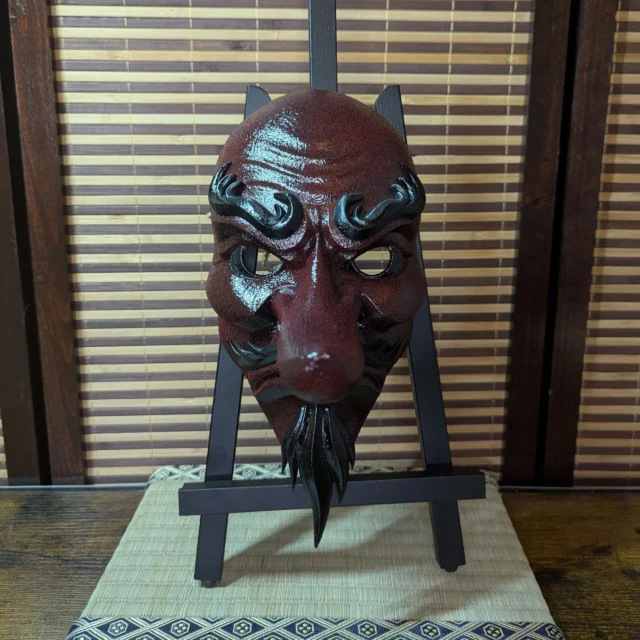
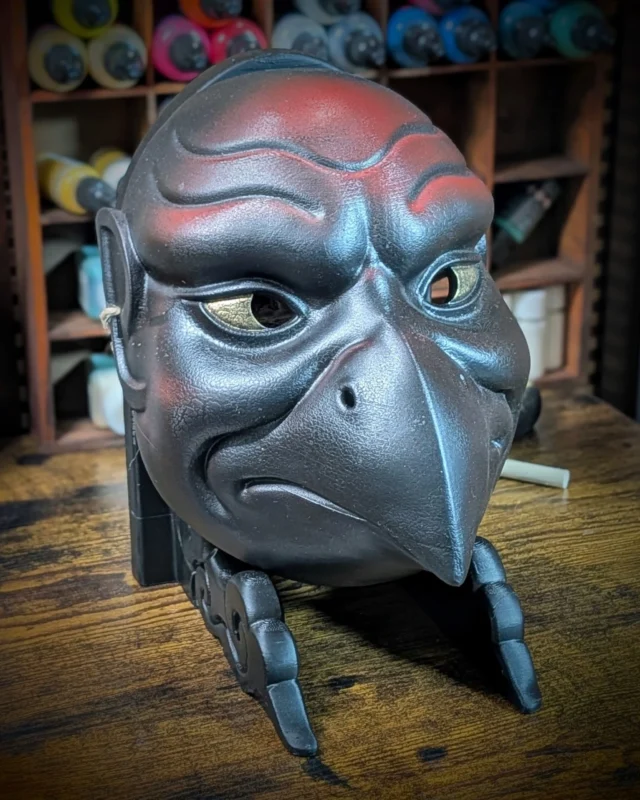
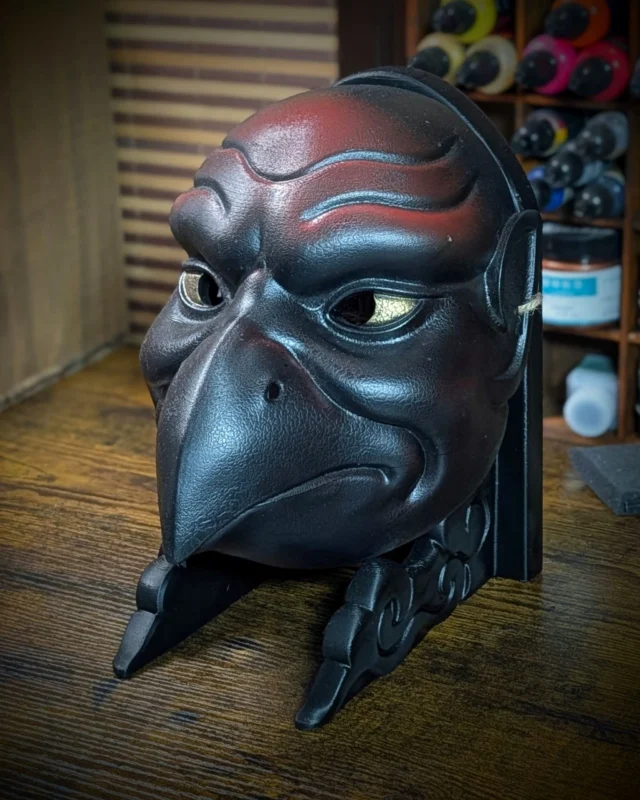
Tengu from the Dai Yokai workshop
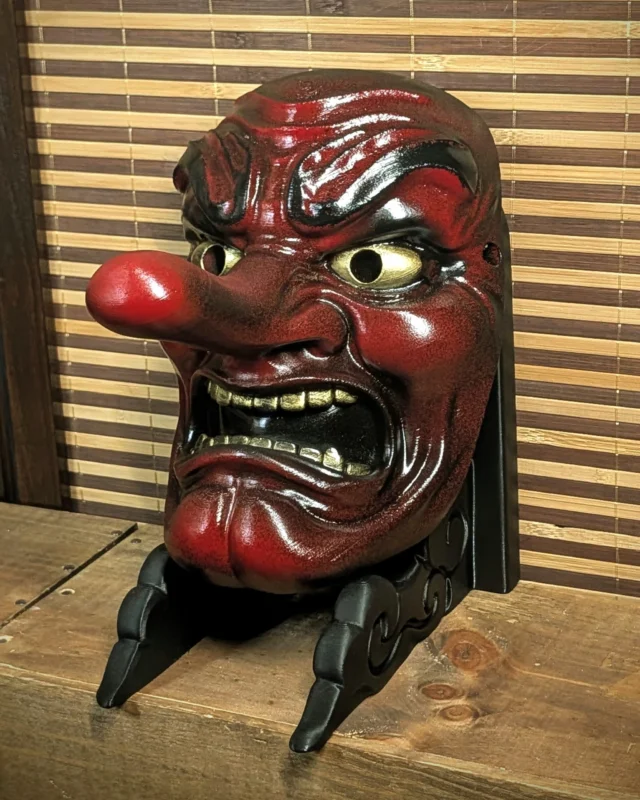
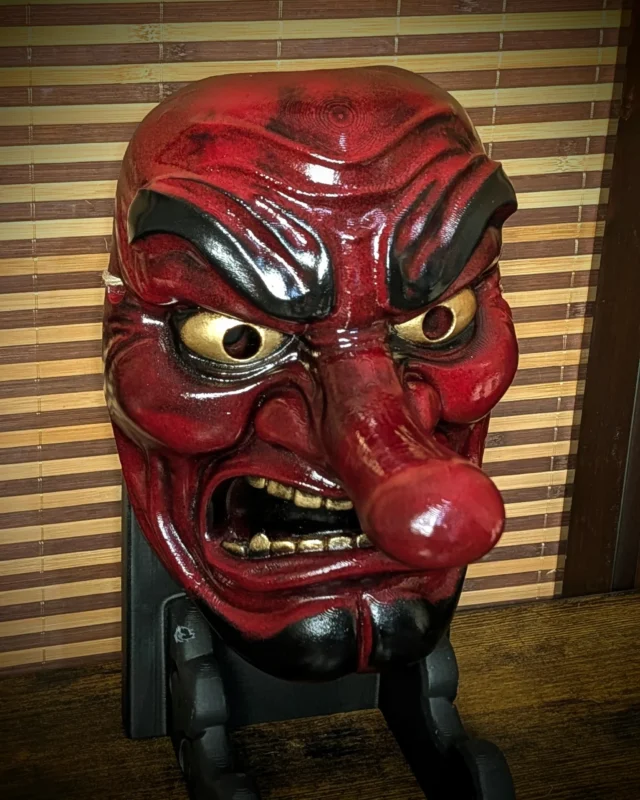
In the workshop, I approach Tengu as a contemporary creation inspired by Japanese folklore. The pieces are printed in PETG, then prepared, sanded, painted, and finished by hand in Brittany. A physical mask can help you study volume, shadows, and profile before building a drawing, without becoming a compulsory model.
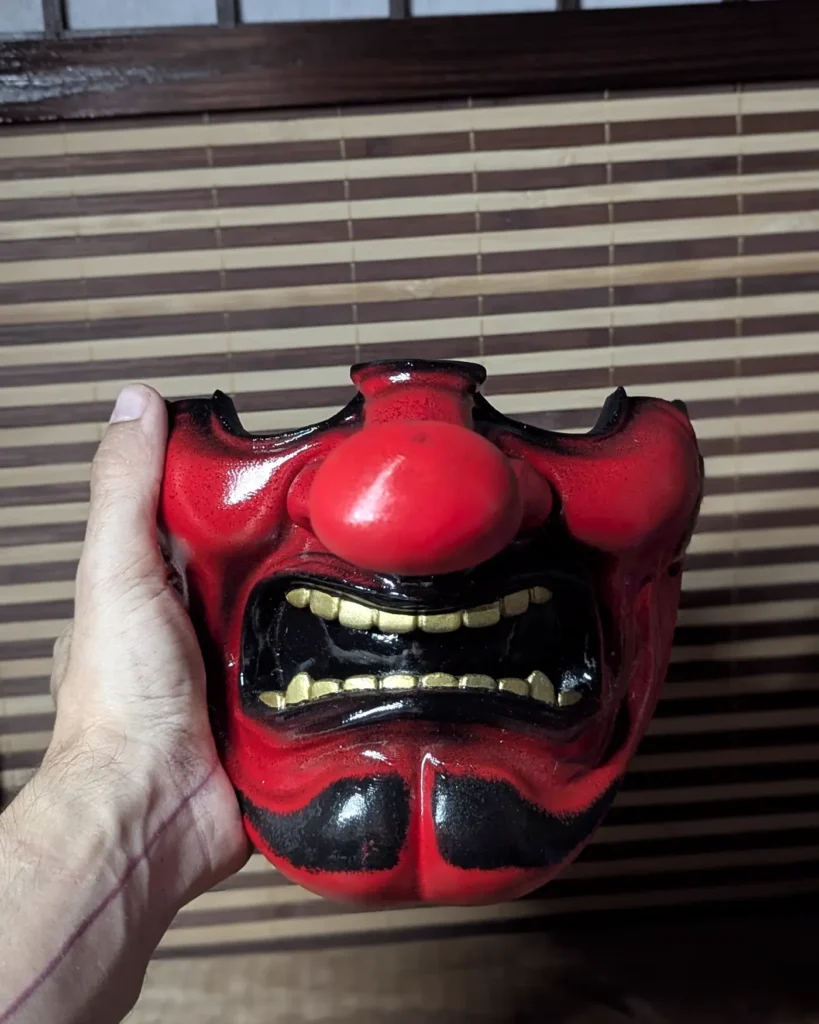
Related Tengu masks
To compare silhouettes and palettes, explore the handmade Tengu mask collection.
Sources
- Japan Search: Tengu, connections with mountains, Shugendō, yamabushi, and the Kurama story.
- Kotobank: tengu ni naru, the expression connected with conceit.
Frequently asked questions
What does a Tengu tattoo mean?
A Tengu tattoo may evoke pride kept in check, discipline, power, mountain solitude, or a formidable guardian. The character remains ambiguous: it may mislead, punish, test, or protect depending on the story. The final meaning depends on the chosen form and the composition developed with the tattoo artist.
Is a Tengu tattoo a symbol of protection?
It can be read as a guardian because some Tengu are associated with protecting sacred mountains. It is not a universal talisman. Stories also describe them as dangerous, proud, or disruptive beings. A protective composition needs to make that intention visible instead of assuming it is automatic.
What is the difference between Daitengu and Karasu Tengu?
Daitengu is generally depicted with a red human face, a very long nose, and clothing resembling that of mountain ascetics. Karasu Tengu retains a beak, wings, and a more animal-like silhouette. In tattooing, the former emphasizes the mask and expression, the latter movement.
Why does Tengu have a long nose?
The long nose has become the best-known visual feature of the humanlike Tengu. It is often connected with pride, particularly because the Japanese expression tengu ni naru means becoming conceited or getting a big head. That connection is relevant, but it does not explain the entire figure.
Does a Tengu tattoo have to be red?
No. A red face is common in images of the long-nosed Tengu, but it is not compulsory. A tattoo can work in black and gray, with a dark palette, or with a few red accents. Color should support clarity, aging, and the project as a whole.
Where should a Tengu tattoo go?
The back, thigh, and upper arm provide room for an expressive head, headwear, wings, or a mountain setting. A mask alone can fit a calf or forearm. The right placement mainly depends on the level of detail and the body's natural lines.
Which elements can accompany a Tengu in irezumi?
Clouds, wind, rocks, a mountain forest, a feather fan, or a weapon can build a coherent story. No combination is automatic. Seasons, directions, and existing tattoos should be discussed with an artist who understands Japanese composition.
Does Dai Yokai create Tengu tattoos?
No. Dai Yokai makes contemporary masks in Brittany inspired by Japanese folklore. They are printed in PETG, prepared, painted, and finished by hand. These pieces can provide references for volume or palette, but a tattoo artist must create the drawing intended for skin.