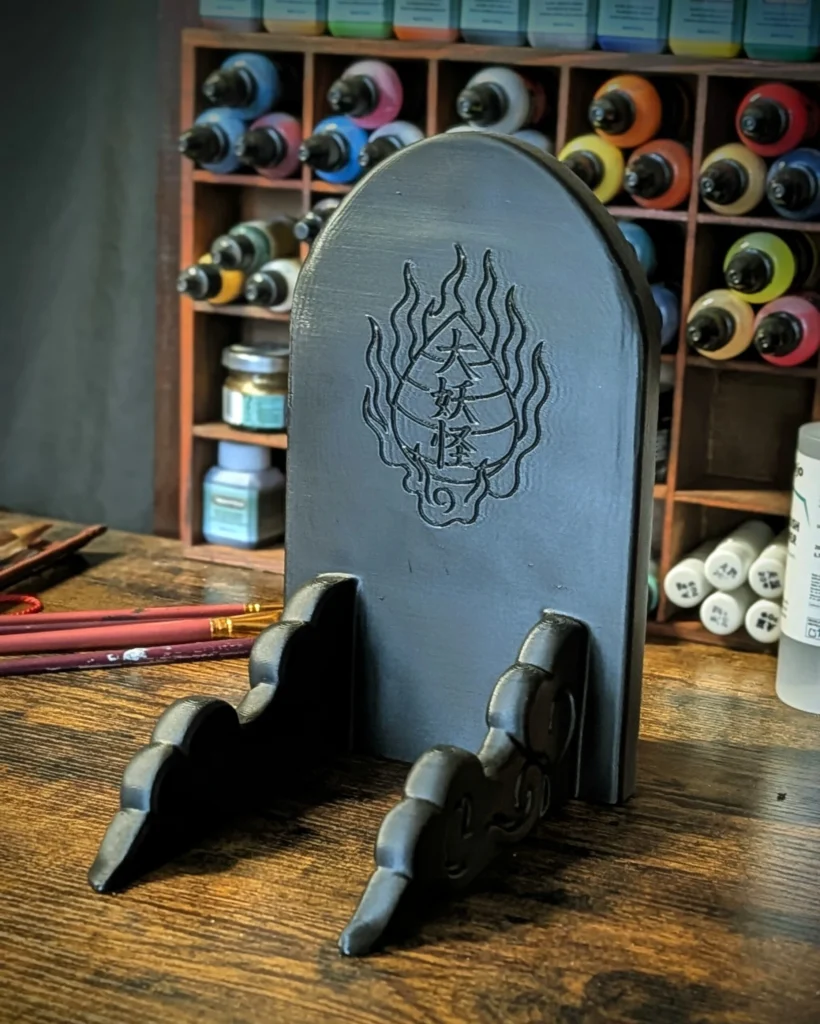
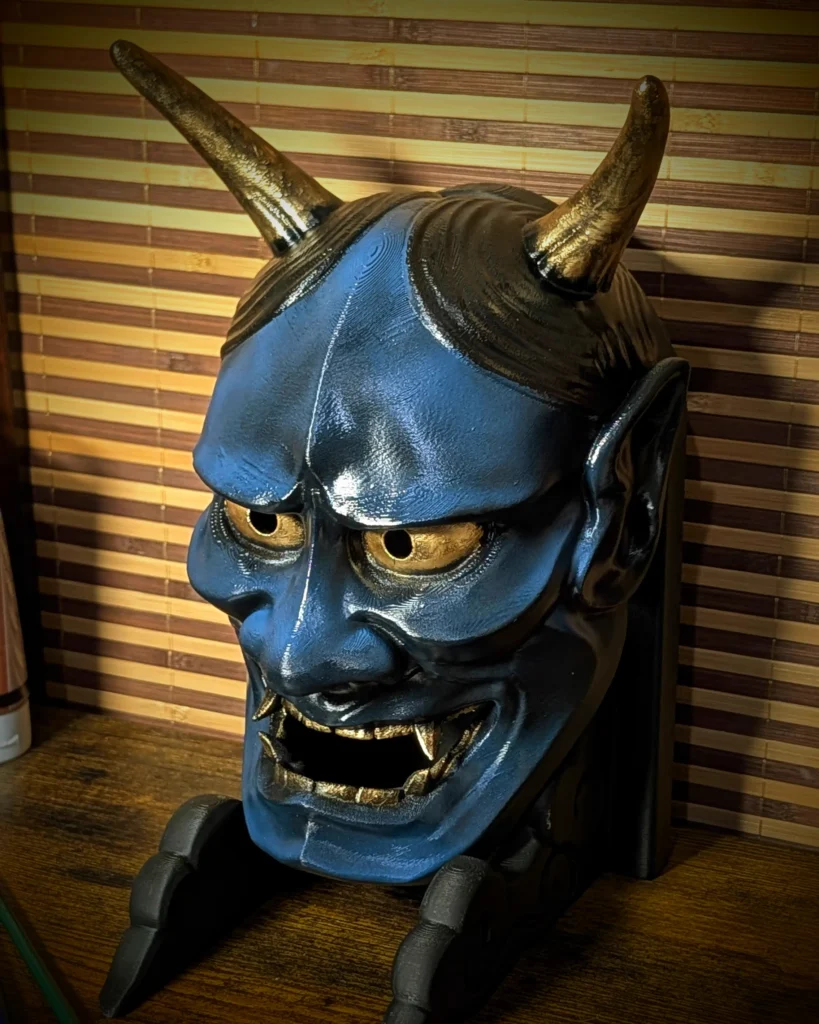
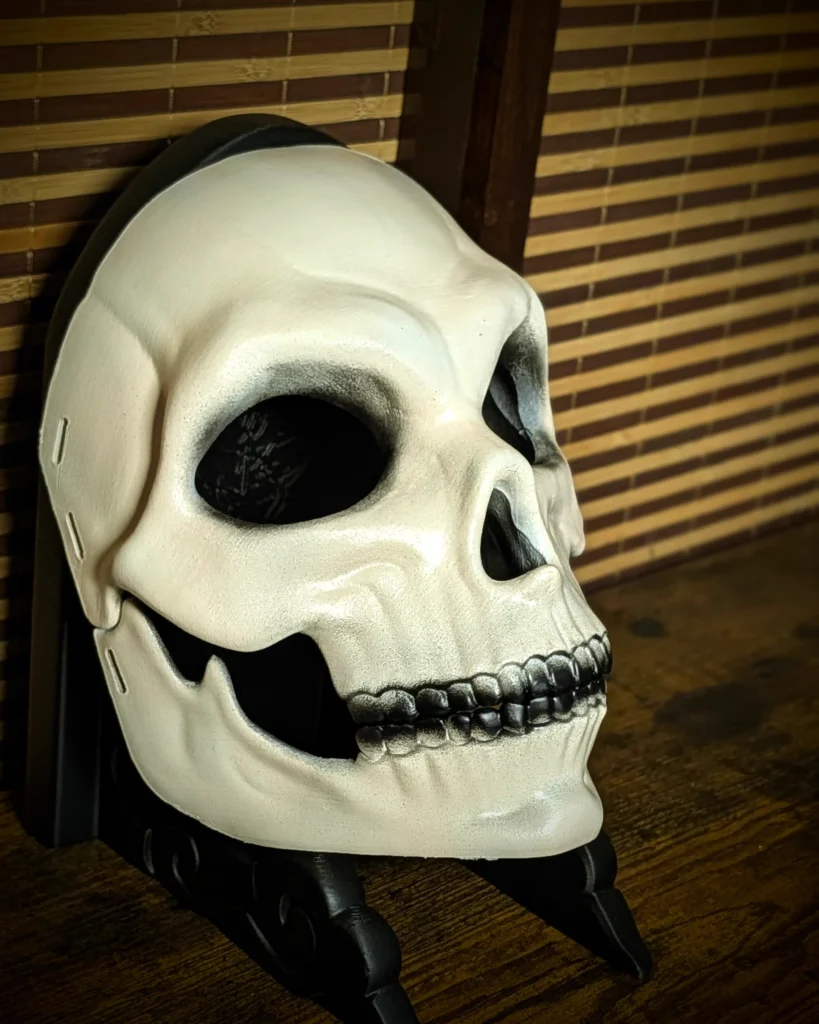
When you’re planning a shelf display, look at the stand’s footprint and the parts of the mask that project beyond it. These three photos show the stand on its own, followed by angled views of a Hannya and an articulated Gashadokuro.
The empty Hōju stand
In the photo of the Hōju stand, two supports project in front of the upright engraved panel. Look at where the feet end. They take up room in front of the panel, even when the mask hides it. This view gives you a clear idea of the stand’s shape before you see it with a mask.
Two masks on the stand
In the photo of the blue Traditional Hannya, the feet frame the lower part of the face and the back panel is visible along one side. The horns extend well above the stand. Look at their tips if there’s another shelf overhead.
The white articulated Gashadokuro sits on the same style of stand with its jaw closed. The angled view shows where the chin sits in relation to the feet. If you want to display it with the jaw open, check the contact points in that position.
Allowing room on your shelf
Measure the depth of the stand and mask together, taking both the front feet and the parts of the mask that project into account. Check the height up to the tips of any horns as well. With a moving jaw, check that the weight rests on a fixed part of the mask. The moving-jaw guide covers both display positions, and the display guide helps you choose between a stand, wall mount and display case.