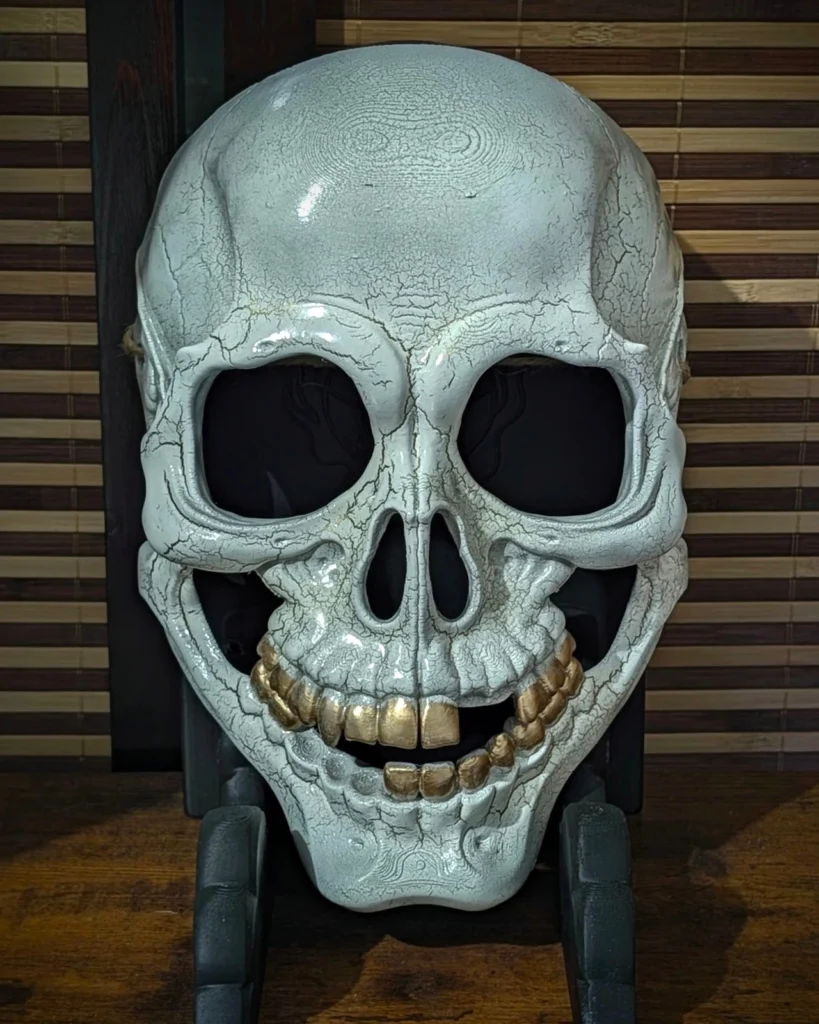
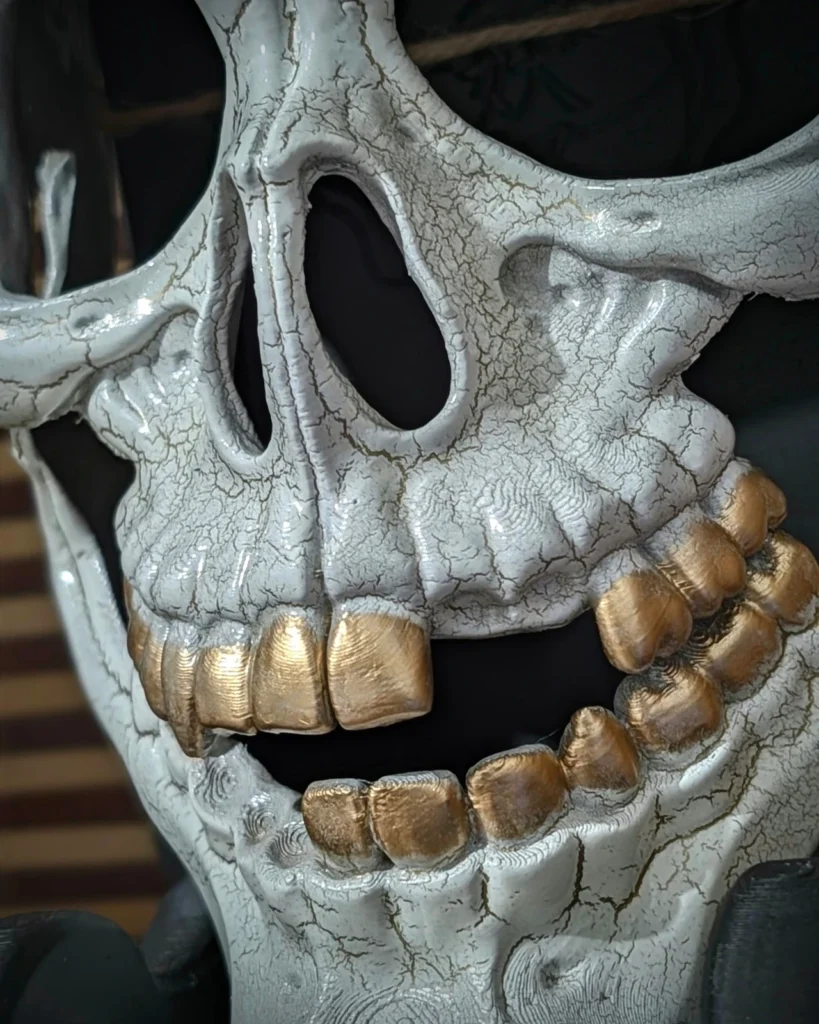
The white and gold Gashadokuro sets gold teeth against a glossy, crackled skull. On the white articulated mask, weathered teeth and dark eye sockets contrast with the bone tone. The four photos also show how opening the jaw changes the shape of that second face.
Gold teeth on white crackle
In the front view, the skull sits on a dark stand. The deep hollows around the eyes and nose frame the gold mouth. In the close-up, follow the fine cracks around the nose and across the lower jaw, where the light catches the finish. The teeth reflect the light while the inside of the mouth stays in shadow. See the white and gold crackle Gashadokuro.
Weathered teeth on the white articulated mask
The pale finish has a bone tone. In the three-quarter shot with the jaw closed, the patina follows the teeth and draws a dark line below the nose. In the front view, the mask is held in one hand and the rows of teeth sit visibly apart. See the articulated Gashadokuro in white.
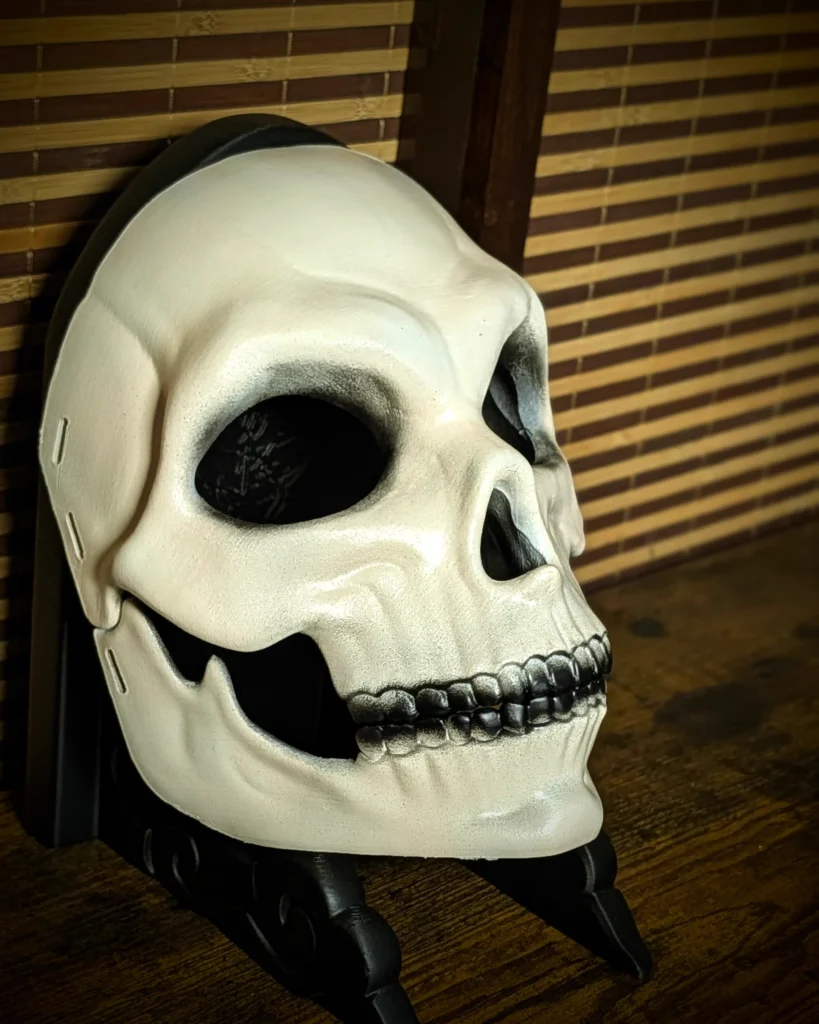
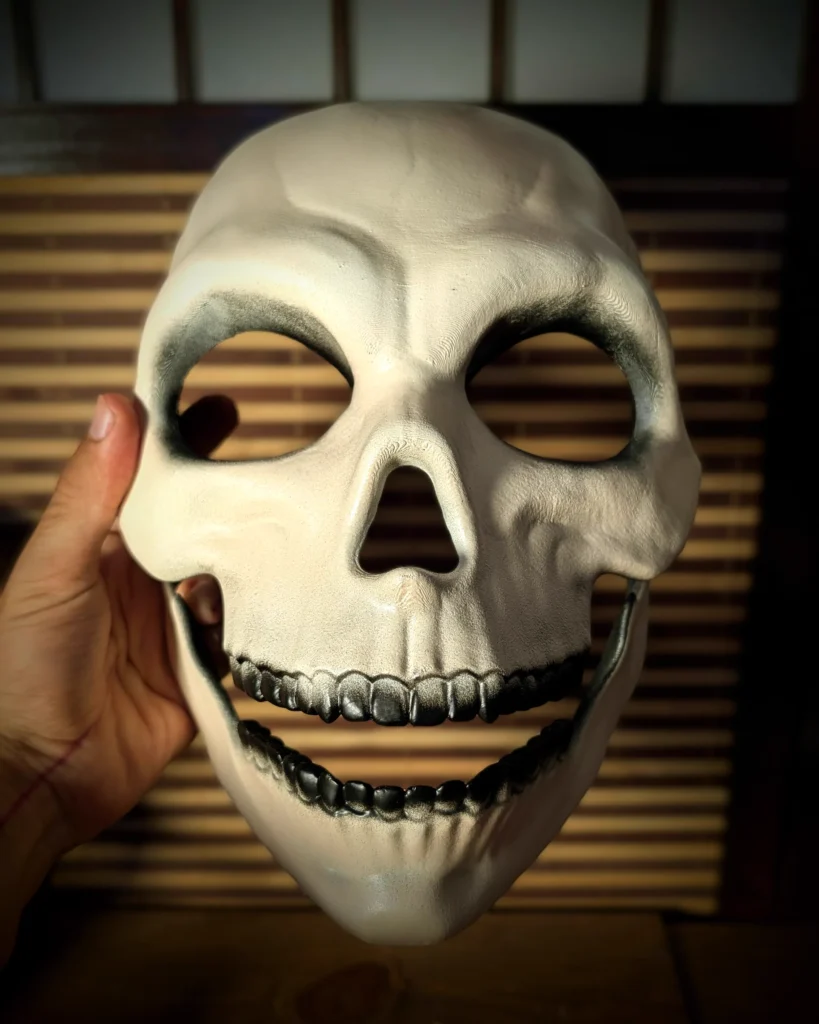
What the open jaw changes in a photo
When the articulated mask is closed, the upper and lower teeth almost read as one line. With the mouth open, you can see the background between them, with the chin curving below the teeth. The two views show how the outline changes. To judge how far the jaw moves or how it moves while worn, you would need shots from the same angle or a video.
Decide what you want to see
If the contrast between gold teeth and fine crackle catches your eye, start with the white and gold close-up. If the shape of the mouth matters for your photos, look at both views of the white articulated mask. The guide to masks with moving jaws covers choosing and wearing one. For the story behind the name, see the origins of the giant skeleton Gashadokuro.