
An articulated mask immediately catches the eye because its jaw can open and close. In cosplay, that movement can give a creature, horror character or filmed scene more presence. It does not automatically make a mask more comfortable, easier to breathe in or suitable for an entire convention day.
The right choice depends on actual use. If the mouth defines the character and the mask will mainly be worn for photographs, video or a short appearance, articulation can help. If you want something simple to wear for longer periods, move around frequently or display without handling, a fixed mask may make more sense.
Articulated or fixed mask: a quick comparison
| Consideration | Moving jaw | Fixed mask |
|---|---|---|
| Expression | Changes the outline of the mouth | Keeps the same expression |
| Photography and video | Useful for showing different attitudes | Easy to frame and consistent between shots |
| Fit | Must allow movement without pressing on the face | Mainly needs stable positioning |
| Handling | More moving parts to check | Fewer adjustments and points to monitor |
| Longer wear | Needs a longer test before a convention | Often simpler when movement adds little |
| Display | Can be shown with the mouth open or closed | Stable, straightforward presentation |
| Care | Gentle cleaning and inspection of the joint | Cleaning the surface and fixings |
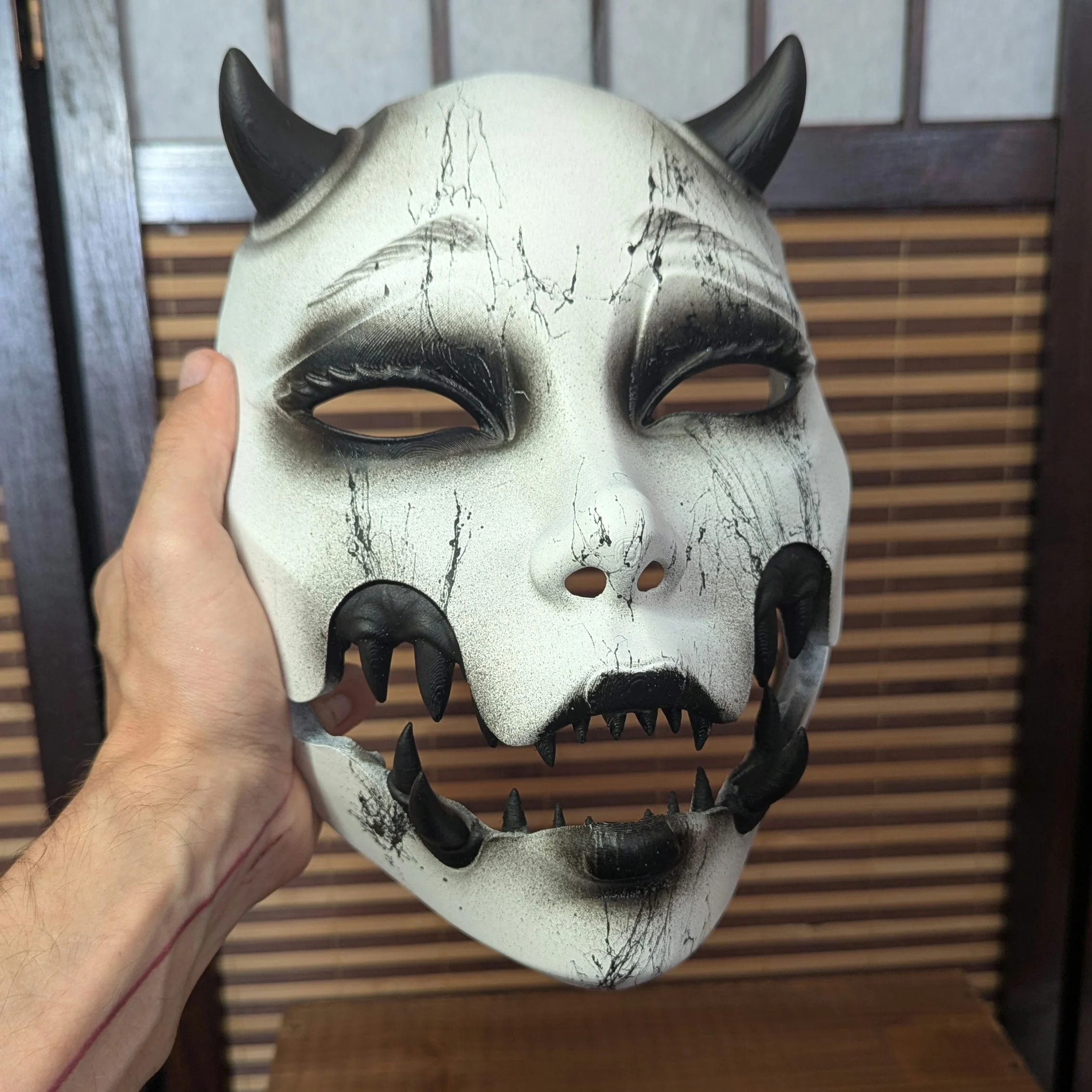
What is a moving-jaw mask?
An articulated mask has a lower section separate from the rest of the face. When the mask fits correctly, this jaw can open and close with the wearer's mouth movements. The purpose is visual: rather than keeping one expression, the mask changes from a closed mouth to a more pronounced opening.
This does not make the mask animatronic. It adds no voice, sound or automatic movement. Results depend on the model, its intended range of motion and its fit on the individual. Judge it both open and closed, then test it in use rather than relying on a front-facing photograph.
Dai Yokai's articulated moving-jaw masks are contemporary PETG creations, prepared and painted by hand in the Brittany workshop. Depending on the model, they are intended for photography, occasional cosplay, collecting or display. They are not presented as traditional Japanese masks.
When a moving jaw makes a difference
When the mouth defines the character
Articulation is relevant when a character is recognisable through its mouth, fangs, scream or changing expression. Kuchisake-Onna is the clearest Dai Yokai example: the slit mouth is central to the figure. A moving version can change from an almost closed face to a far more unsettling opening.
The same reasoning applies to creatures, demons and horror characters whose jaws shape their silhouettes. When a mask depends mainly on horns, eyes or colour, mouth movement may be secondary.
For a photo session or short video
In photographs, a moving jaw offers two readings of the same mask. Closed, the expression is restrained. Open, it reveals the teeth and extends the shape of the face. This lets you create a short sequence without changing accessories.
In video, movement can accompany acted breathing, a grimace or a reaction. It works best in close shots where the mouth is clearly visible. In a wide shot, crowd or low light, the difference may be less apparent.
For open or closed display
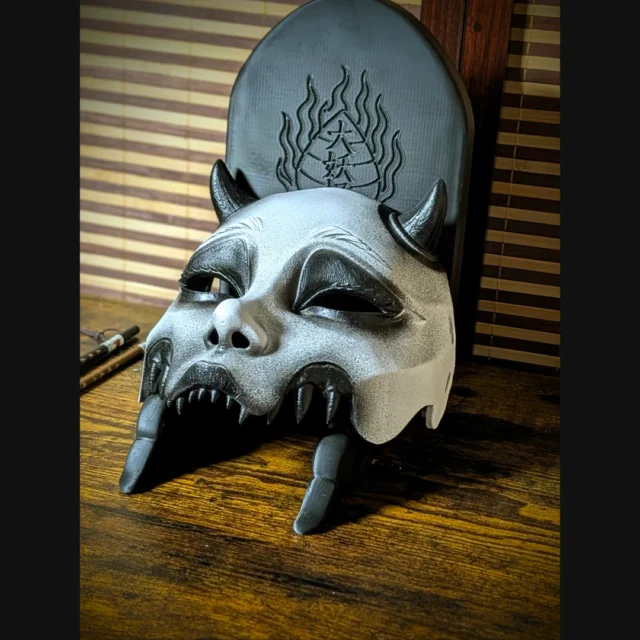
You can also choose an articulated mask for decoration. Display it closed for a compact outline, or open to reveal the teeth and interior. Here the movement serves the presentation rather than wearing.
When a fixed mask is the better choice
A moving jaw is a function, not an upgrade in quality. If it adds nothing to the character, it simply adds components to adjust and handle. A fixed mask may therefore be the more practical choice.
- The mouth is not an important feature of the character.
- You will put the mask on and take it off often throughout the day.
- You want fewer adjustments before a convention.
- The piece will mainly hang on a wall or sit on a stand.
- You prefer the same expression in every photograph.
- You cannot test the fit before the event.
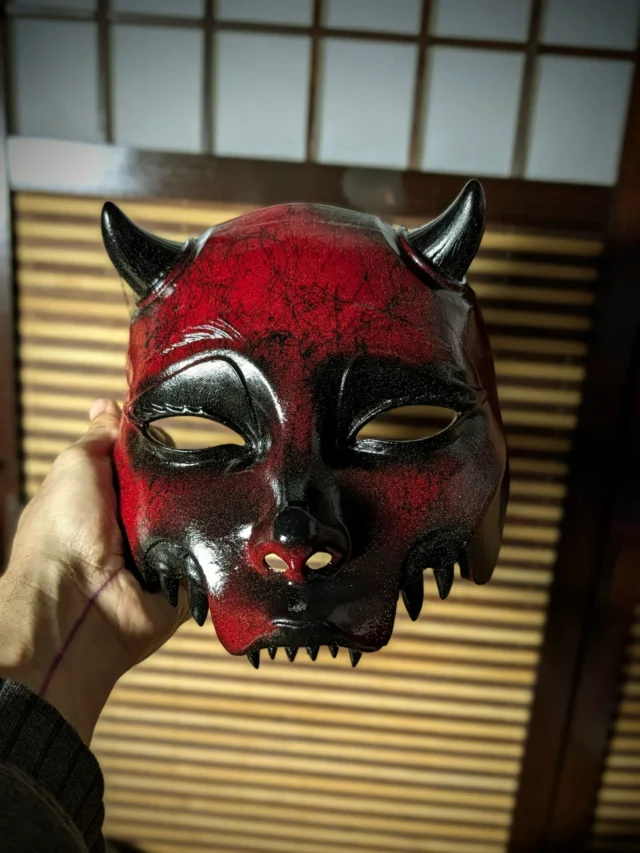
A fixed half mask may also suit you better if you want to leave the upper face free, speak more easily or combine the piece with makeup. It does not give the same effect as an articulated full face, but it addresses a different priority.
What the open and closed positions actually show
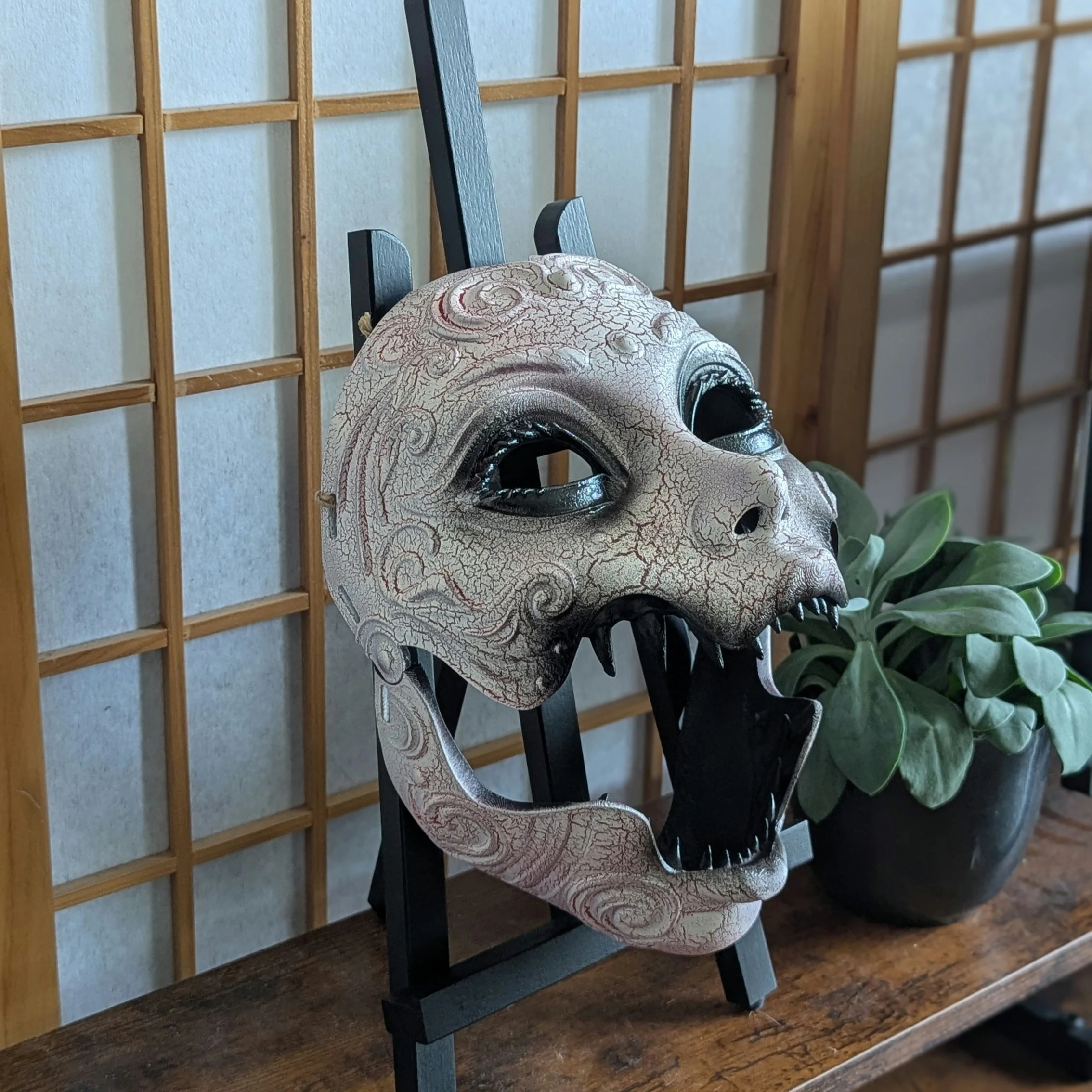
In the open position, the lower section clearly changes the silhouette. This suits horror photography, a screaming creature or a more aggressive display. Check what becomes visible behind the mask and whether the opening looks right from the chosen angle.
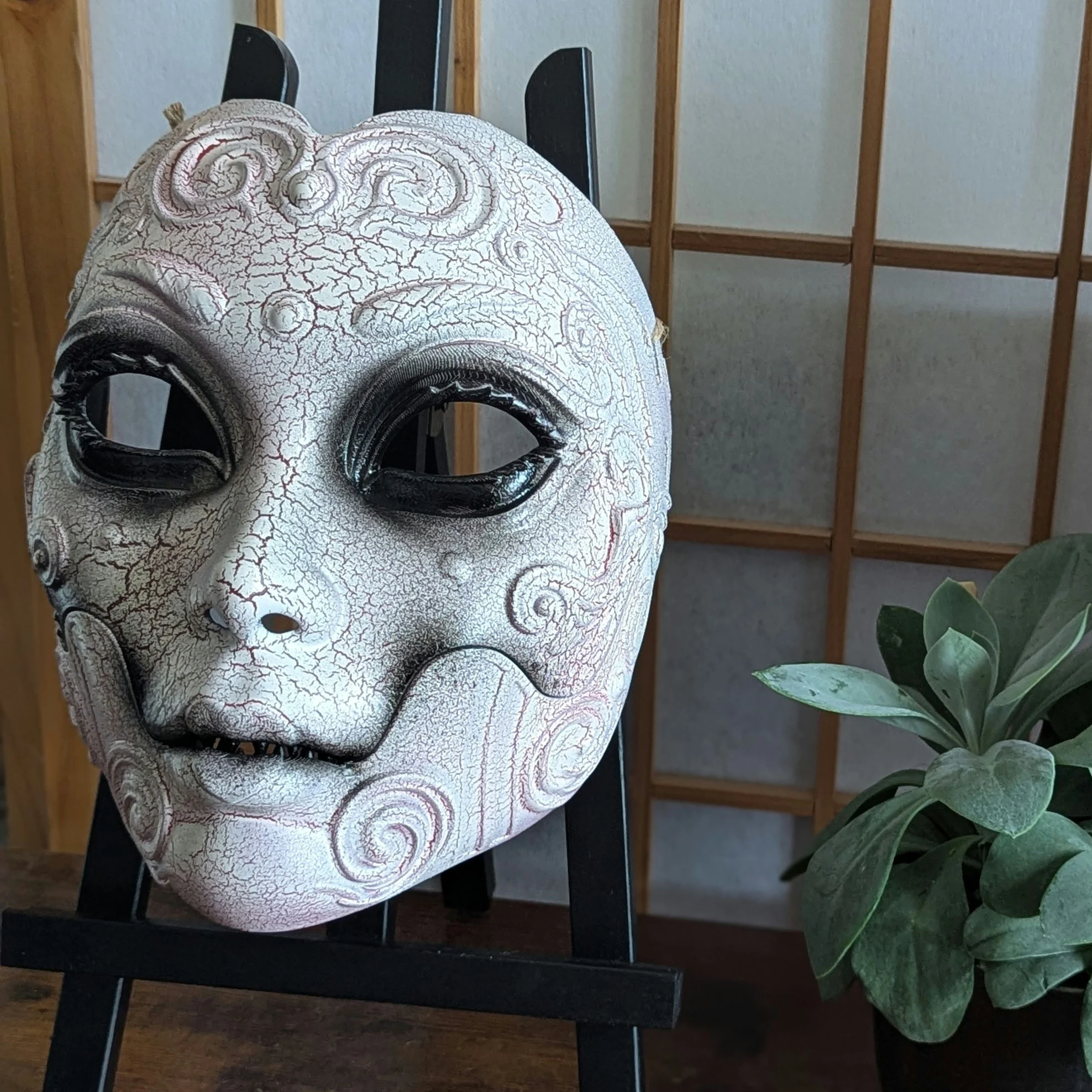
The closed position matters too. A good articulated mask should not be interesting only when fully open. Both sections should form a readable face at rest, without making the jaw look as though it has simply been placed underneath.
Comfort: what to test before an event
The word “articulated” tells you nothing certain about comfort. Two people can experience the same model differently because of face shape, fixing positions, costume, wig or wearing time. Test with the complete outfit where possible.
Stability
The upper part should stay still when the jaw moves. If the whole mask slips whenever you open your mouth, the effect will be imprecise and your field of vision may change. Also check that the fixing does not pull on a wig, headpiece or accessories around your head.
Contact points
Find the areas touching your forehead, cheeks, nose or chin. Contact that is acceptable for two minutes may become uncomfortable after half an hour. Include several mouth openings, head movements and quick removal in the test.
A useful range of movement
You do not need to open the jaw fully with every movement. Find a range that reads clearly in photographs without forcing the moving section. Do not push the joint beyond its normal travel for a more dramatic effect.
Visibility, breathing and speech: assume nothing
An open jaw does not guarantee easier breathing. Air also passes through nose and eye openings and the spaces built into the model. Likewise, large eye openings in a photograph do not prove that peripheral vision will be sufficient once the mask is fitted.
Before wearing the mask in public, check each of these separately:
- vision straight ahead, to the sides and towards the floor;
- comfortable breathing while at rest;
- being able to speak and be understood;
- stability when turning your head;
- being able to remove it quickly without tools;
- no uncomfortable contact when the jaw opens.
If vision is too limited, remove the mask before walking through a crowd, using stairs or moving around an unfamiliar place. The cosplay mask comfort and care FAQ provides further checks for PETG masks.
Conventions: prepare the mask as a stage accessory
A convention is not a photography studio. You need to manage crowds, heat, checks, storage and walking. An articulated mask can work well for a few poses and then come off between sessions. Planning for this avoids turning a visual feature into a constant burden.
Before leaving, try it with your full outfit. Walk, sit, turn your head, open and close the jaw, then remove the mask. Prepare a bag or support that will not compress the moving section during transport.
Rules vary between events. For example, the Japan Expo Marseille cosplay FAQ permits masks but requires an uncovered face at security checks. Always check the rules of your particular convention, especially for full-face masks and accompanying accessories.
Caring for an articulated jaw
Care begins with gentle handling. Hold the mask by solid areas, not a tooth, thin horn or jaw edge. Open the moving section along its normal axis without twisting it to show the interior.
- Remove dust with a soft, dry cloth.
- Avoid abrasive or harsh products on paint and varnish.
- Store indoors, away from persistent damp and direct sunlight.
- Do not place heavy objects on the jaw during storage.
- Prevent the mask from moving freely inside its bag or box during transport.
- Before wearing it again, visually inspect the joint and fixings.
Hair, tentacles and other added shapes need their own storage space. A more elaborate model may therefore require a larger box than a bare face, even when both have moving jaws.
Kuchisake-Onna and Geisha Horror: two different approaches
Kuchisake-Onna is a figure from Japanese urban horror associated with the slit-mouthed woman. An articulated mask uses jaw movement to express that motif. To separate legend from contemporary creation, the Kuchisake-Onna guide explains the cultural background.
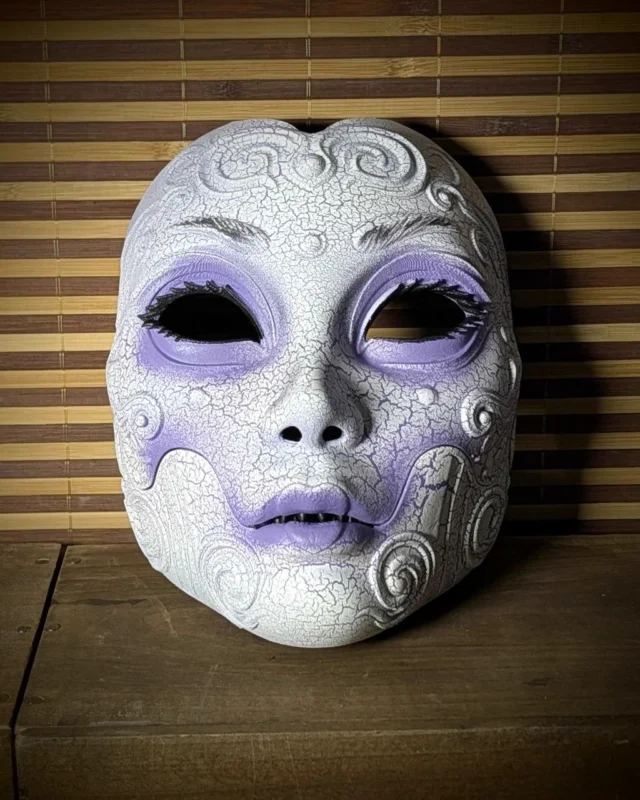
Dai Yokai's Geisha Horror follows a different approach. It combines an adorned face with an unsettling expression in a contemporary horror creation. It is not a historical geisha mask. The article on geisha and yōkai helps distinguish geisha, folklore and monstrous characters.
Two concrete options to compare
The first model below is an articulated full-face mask. The second is a fixed half mask centred on the mouth. They serve different purposes: one prioritises a changing face, while the other leaves the upper face free and simplifies handling. Product pages remain the reference for availability and options when ordering.
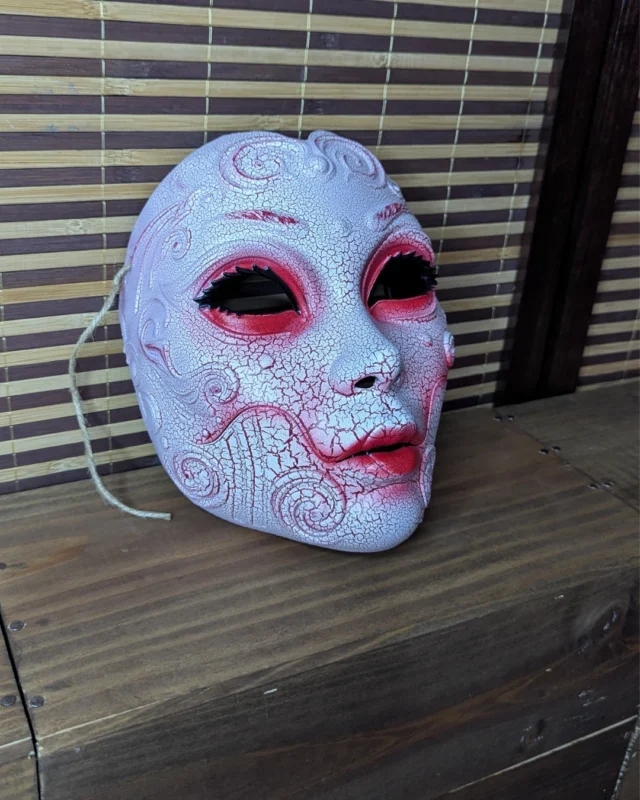
A checklist before choosing
- Does the moving mouth genuinely contribute to the character?
- Will you wear the mask for a few photographs or several hours?
- Can you test visibility, breathing, speech and quick removal?
- Does your wig or headpiece allow the fixings to work normally?
- Do you have storage that protects the jaw?
- Does the event allow the mask, and under what conditions?
- Would a fixed version or half mask better meet the same need?
If several answers remain unclear, begin with a short wearing test. A moving jaw is worthwhile when it improves the character without making use unnecessarily complicated.
FAQ: articulated cosplay masks
What is an articulated moving-jaw mask?
It has a separate lower section that can open and close with mouth movements when correctly fitted. Movement changes the character's expression, but adds no sound or automatic animation.
How does the mask's jaw move?
The lower jaw follows the wearer's movements through the model's joint and fit. Exact operation varies. Test its normal travel, closure and stability without forcing it.
Should I choose an articulated or fixed cosplay mask?
Choose articulation when the mouth defines the character and you want different poses in photographs or video. Choose fixed when movement is not essential, wear will last longer or you want fewer adjustments.
Is an articulated mask necessarily more comfortable?
No. Comfort depends on face shape, fixings, contact points, visibility and wearing time. A moving jaw is a visual feature, not a comfort guarantee. Testing with the complete outfit is essential.
Can I wear an articulated mask all day?
That depends on the model and person. Start with short tests, check contact points and plan breaks. At a convention, remove it when vision is insufficient, during security checks or when moving around is difficult.
Can I talk and breathe with a moving jaw?
A moving opening does not guarantee clear speech or easier breathing. Test both separately with the mask fitted. Remove the mask if you feel discomfort or other people cannot understand you.
Can an articulated mask be displayed on a wall or stand?
Yes. Display it open or closed for the desired effect. Use a stable support that puts no load on the moving section, and check that fixings, hair or accessories do not pull on the mask.
How should I care for the joint and paint?
Handle the jaw without twisting, dust with a soft dry cloth, avoid harsh products and store indoors. Secure the mask during transport to protect teeth, paint and moving parts.