The Maneki-neko is the Japanese cat with a raised paw that beckons good fortune. It appears in shops, homes and some religious settings. The gesture is an invitation to come closer, rather than a wave goodbye. The figure is commonly associated with welcome, useful encounters and business prosperity.
Several stories explain its origins, and the meanings of its paws, colors and accessories can vary. Understanding a particular figure means looking at its setting and maker, rather than applying one universal chart of promises.
What does a Japanese lucky cat mean?
Maneki-neko is usually translated as “beckoning cat.” Its raised, curled paw makes a gesture of invitation. Web Japan describes it as an auspicious ornament seen in restaurants and a familiar souvenir for visitors to Japan.
The figure expresses a wish: welcoming people, inviting opportunities or supporting the life of a business. These are cultural associations, rather than measurable properties of an object. Its emphasis differs from the Daruma’s connection with perseverance and a chosen goal.

Where did Maneki-neko come from?
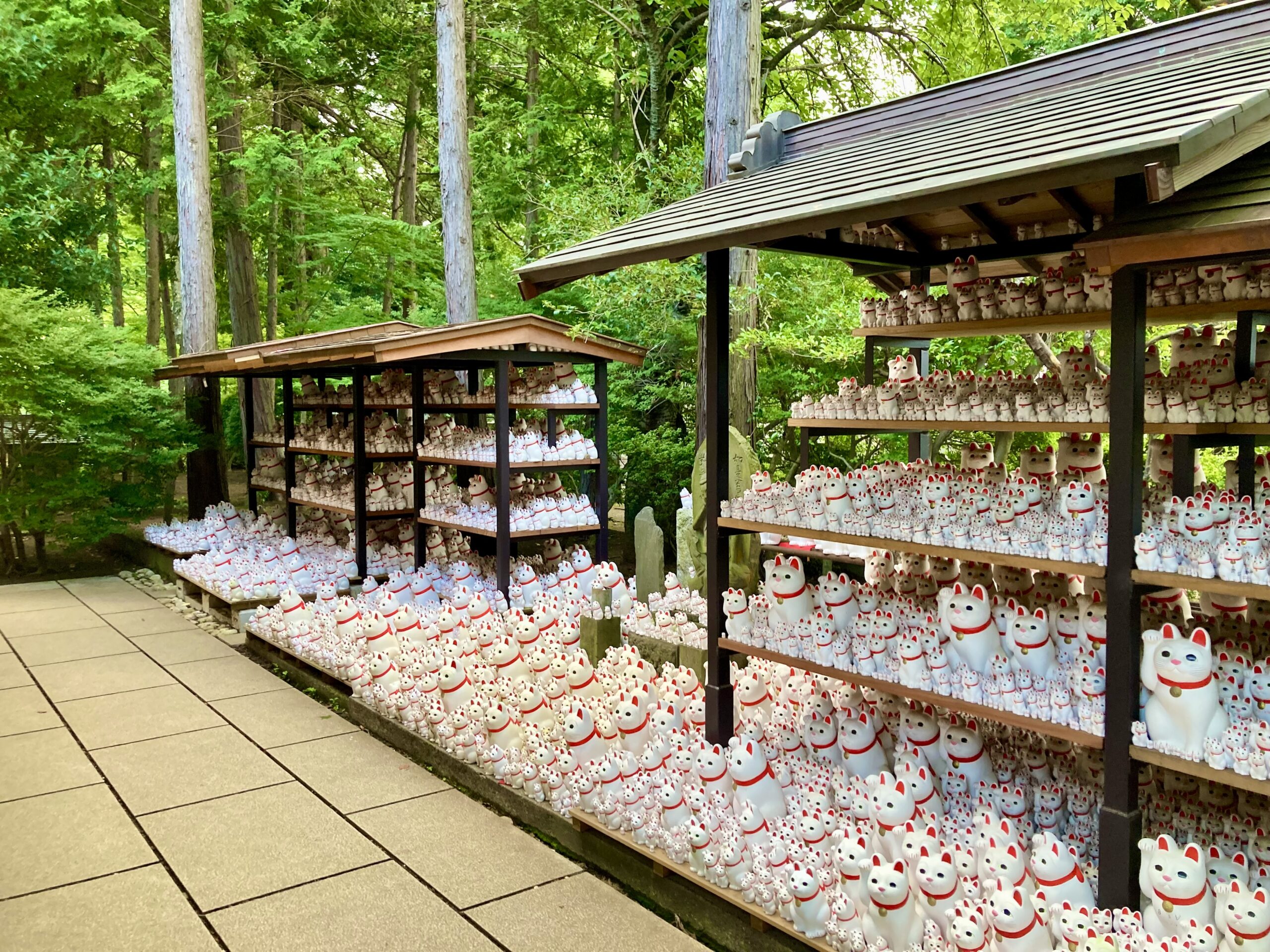
Gotokuji Temple in Tokyo tells a story of a cat beckoning the lord Ii Naotaka inside before a thunderstorm. The temple connects that fortunate encounter with its Maneki-neko tradition. Its cat raises the right paw and carries no coin. The temple explains that the cat invites opportunities to meet people, which individuals must then make use of themselves.
Other places have their own associations with the figure. Tokyo’s official visitor guide also presents Imado Shrine in Asakusa, where the lucky cat is connected with wishes for relationships. These local accounts should not be flattened into a single proven story of who invented the beckoning cat.
Right paw, left paw and color meanings
A common reading connects the right paw with wealth and the left with people or customers. Web Japan presents this distinction. Gotokuji’s explanation of its right-pawed cat shows why a specific temple or workshop can give a different meaning to a familiar feature.
White, calico, black and gold cats sit alongside many contemporary colors. Some makers associate each color with a particular wish. If that meaning matters to you, read the maker’s explanation. A decorative piece can also be chosen for how its colors work in a room, without treating every modern variation as an ancient rule.
Tokoname and the craft of making lucky cats
Tokoname in Aichi Prefecture is an important production center for Maneki-neko. Its official tourism site describes a recognizable style with large ears, large eyes and a rounded body. The city’s lucky cat street also displays contemporary interpretations made by artists with local connections.
This is a useful reminder that a Maneki-neko is a made object as well as a symbol. Shape, material, expression and painted details vary between workshops. Two cats with the same name can have very different characters. A clear front view and a side view often tell you more about a piece than an elaborate claim about luck.
Choosing a figure for a desk or counter
Start with the available space. Check height, width and the depth of the surface. A figure standing near a till, computer or busy walkway needs a stable position and room for cleaning. Read the material and care instructions for the actual piece you are considering.
For a gift, a simple message is enough: a good beginning, meaningful encounters or a business that grows. To compare that intention with Daruma and Tanuki symbolism, read the guide to Japanese good luck symbols and objects.
Japanese figurines coming to Dai Yokai
New Japanese figurines are coming soon to Dai Yokai. Models and availability will be announced when they are introduced.
The Japanese statues and figurines collection shows the creations currently offered, with the sizes and information specific to each piece.
Sources
- Web Japan, Lucky Cats, Maneki-neko, gesture, paws and contemporary colors.
- Gotokuji Temple, Gotokuji and Manekineko, the temple’s account and interpretation.
- GO TOKYO, Cats and Love at Imado Shrine, a different local setting.
- Visit Tokoname, Maneki Neko, production and design variations.