Ordering a custom Japanese mask rarely starts with a blank page. At Dai Yokai, most requests begin with an existing model whose colors or finishes can sometimes be adapted. Feasibility, price, and timing must be confirmed before payment.
The starting point: choose a Dai Yokai model, then describe the intended use, palette, finish, details to preserve, and preferred date. A paint adaptation is more realistic than a completely new sculpture. Instead of simply saying “I want it in blue,” send a clear brief so the contrast, appearance, and technical limits can be checked.
Custom does not always mean made entirely from scratch
Customization can involve several levels of work. Distinguishing them avoids expecting a change in shape when the request only concerns paint.
| Type of request | Example | What needs checking |
|---|---|---|
| Color adaptation | Changing a red Oni to black and gold | Contrast, areas involved, and availability of shades |
| Finish direction | Matte, satin, glossy, weathered, or metallic | Compatibility with the model and appearance under light |
| Limited details | A gold accent, painted cracks, different colors for horns and fangs | Clarity and additional painting time |
| Structural change | Changing the size, horns, openings, or shape | A separate assessment and price, with no guarantee of feasibility |
| Completely new model | Creating a sculpture that is not in the catalog | This is not an automatic option, and the request may be declined |
The Dai Yokai FAQ explains that a custom color can be considered depending on the model and the workshop schedule. Contact the workshop before ordering a color outside the catalog to confirm feasibility, price, and timing.
What can change on an existing model
The main color and accents
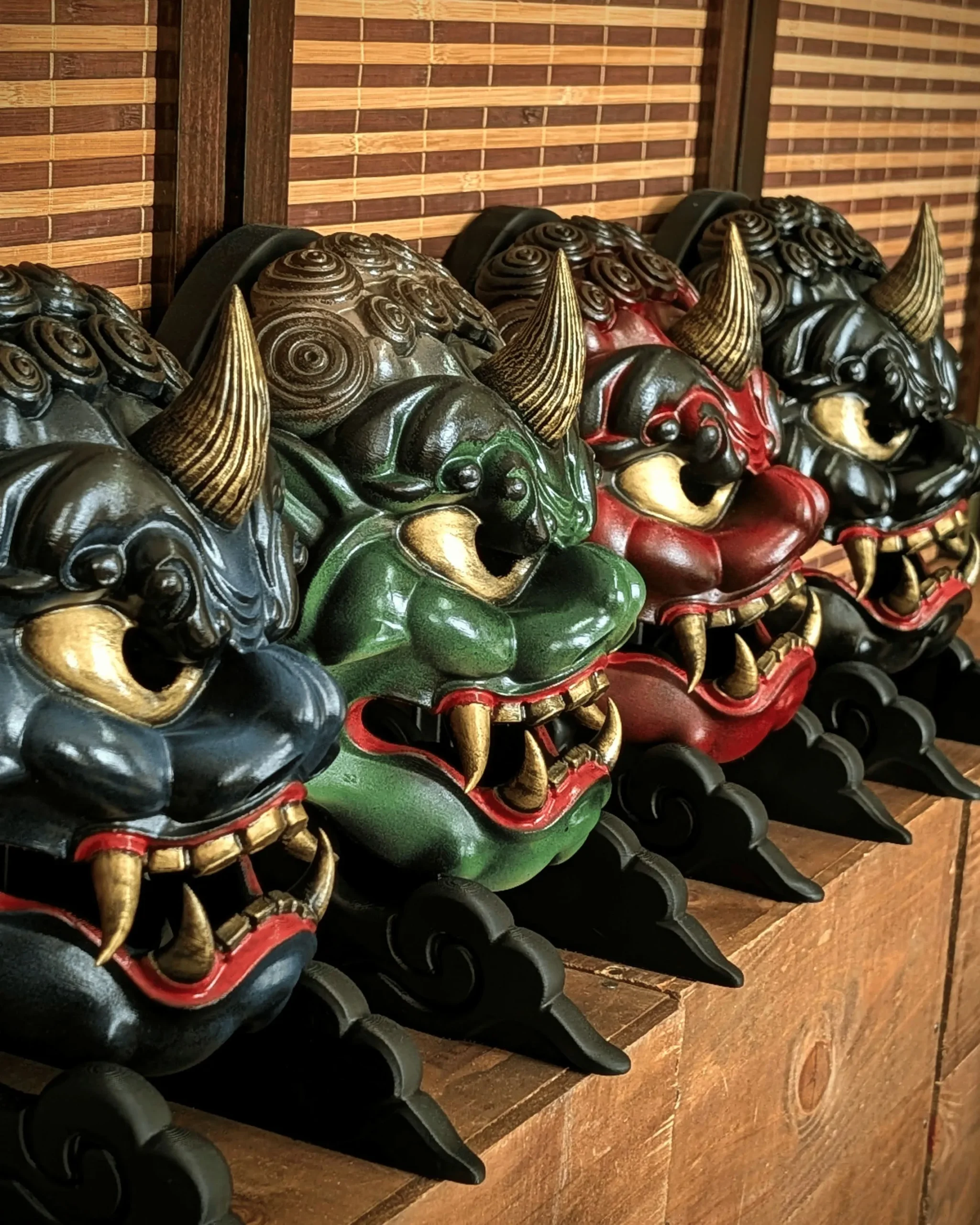
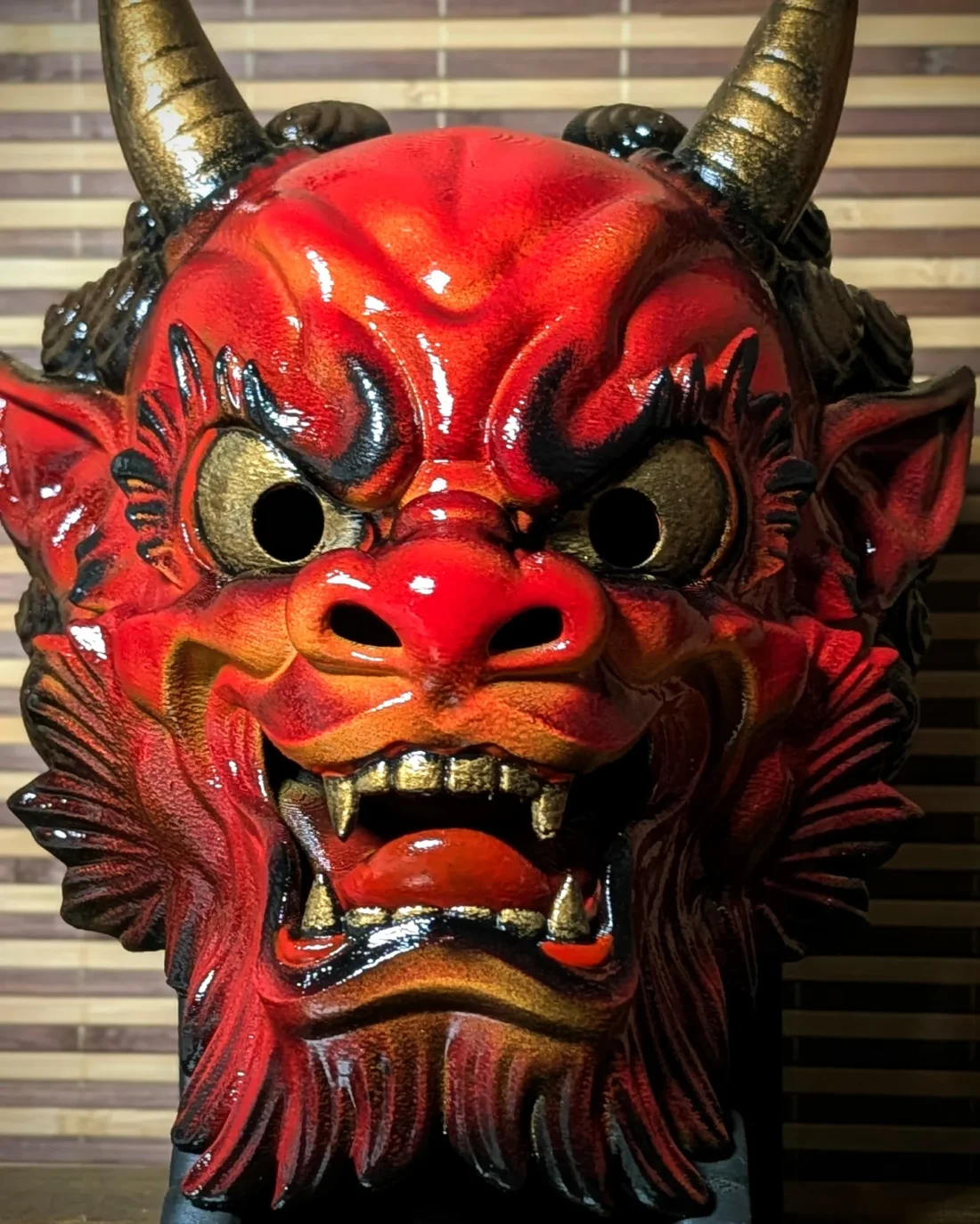
A red, black, white, or blue base can be discussed depending on the model. Horns, fangs, eyes, engraved lines, and raised areas can receive separate accents where the shape allows. The aim is to keep the face readable from both nearby and a distance, rather than piling on colors.
Colors do not have universal meanings. A red Oni does not automatically mean strength, and a white Kitsune does not represent everything sacred on its own. The character, story, and creative context matter more than a quick color code. The Oni mask guide explains these distinctions.
The surface finish
The finish changes how light reveals the shape. The options below provide a vocabulary for preparing a request. They must always be confirmed for the chosen model.
| Finish | Visual effect | Point to clarify |
|---|---|---|
| Matte | Limited reflections and a quieter appearance | May soften some metallic effects |
| Satin | A balance between softness and visible relief | A useful middle ground for indoor lighting |
| Glossy | Brighter colors and contrasts | May create reflections under a direct spotlight |
| Metallic | Gold, bronze, or steel accents | Best reserved for areas that need to stand out |
| Weathered or patinated | Uneven contrasts and a rougher appearance | The degree of wear needs to be described or shown |
| Kintsugi-inspired | Painted cracks and gold accents | A decorative effect, not a traditional kintsugi repair |
The article on kintsugi and the Hannya mask explains the difference between repairing ceramics and interpreting that appearance on a contemporary creation.
A color reference does not guarantee an exact match
A photo on a phone may not show the same color as a computer screen. Room lighting, primer, pigments, and varnish also change the result. To avoid misunderstandings, provide a color reference if you have one, but focus on describing the level of contrast you want.
- Choose one main color and no more than two accents.
- Specify any colors to avoid or areas that should stay neutral.
- Explain whether the mask will be seen under warm, cool, or natural light.
- Allow for small variations from painting and finishing by hand.
Display or wear: the intended use changes the request
A wall mask mainly needs to work with the room, lighting, and display system. A mask intended for wear needs other checks: field of vision, ventilation, fastenings, contact with the face, and weight.
Color alone does not make a model wearable. Read the product page and the mask wear and care FAQ. If the product page does not clearly describe the mask as wearable, treat it as decorative. Dai Yokai creations are not protective equipment for airsoft, sports, or work.
The brief to send before a custom order
For a series made for an event, the 21 BITS 2026 trophies show why the brief also needs quantities, sizes, display supports and the distribution of models.
A useful request covers a few clear points. It should let the workshop answer yes, no, or suggest a more realistic approach.
- Starting model: the name or link to an existing Dai Yokai product.
- Use: decoration, collection, tattoo studio, convention, or wear if the model allows it.
- Palette: one main color, accents, and shades to avoid.
- Finish: matte, satin, glossy, metallic, patinated, or another direction to consider.
- Fixed details: areas of the model that must stay unchanged.
- References: one or two mood images, rather than fifty conflicting pictures.
- Preferred date: a convention, birthday, or installation, allowing time for shipping.
- Destination: the delivery country, to distinguish production from transit.
For decoration, add a photo of the wall and its colors. For a gift, explain what the recipient collects. For occasional wear, describe the setting and ask explicitly whether the model is suitable. Send the brief through the Dai Yokai contact page.
How the request works
- You choose an existing model as a starting point.
- You send the brief before placing an order.
- The workshop checks feasibility and may simplify or decline certain details.
- The total price and estimated production time are confirmed in writing.
- The order is approved according to the arrangements provided by Dai Yokai.
- Production starts after approval, according to the workshop schedule.
Do not pay for a standard product and simply add a customization request in a comment without prior agreement. The Dai Yokai FAQ asks you to contact the workshop before requesting any color outside the catalog.
Price and timing: why there is no single answer
The price depends on the starting model, the number of areas to change, the paint effects, and the additional work involved. Timing also depends on the production queue. A general estimate shown elsewhere on the site does not replace the confirmation given for your project.
Always ask for two separate estimates: production time and shipping time. If a date is essential, say so before paying. An urgent request may be declined if it leaves too little time for preparation, painting, drying, and varnishing.
Limits to agree on before starting
- A color adaptation does not guarantee an exact copy of a photograph.
- An existing shape cannot always be enlarged, reduced, or transformed.
- A decorative model does not become wearable simply by adding fastenings.
- A protected work, logo, character, or another artist's mask must not be copied exactly.
- Small variations in shade, texture, and finish are part of working by hand.
- Availability for a custom order must be confirmed before payment.
Returns and approval of a custom piece
A piece made to specific instructions may not follow the same withdrawal rules as a standard product. The Dai Yokai terms and conditions of sale state that custom orders may be excluded from the right of withdrawal. This exception is provided by Article L. 221-28 of the French Consumer Code for goods made to the consumer's specifications or clearly personalized. Also read the shipping and returns page before approving the order.
This exception does not remove applicable legal guarantees for a lack of conformity or damage in transit. Keep the written summary of your request, approved colors, and confirmation of the chosen model.
Inside the Dai Yokai workshop
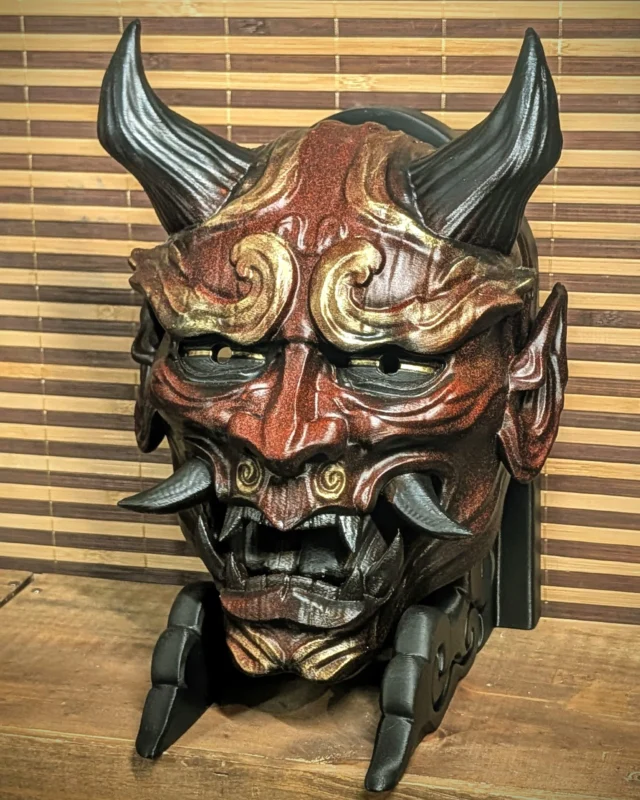
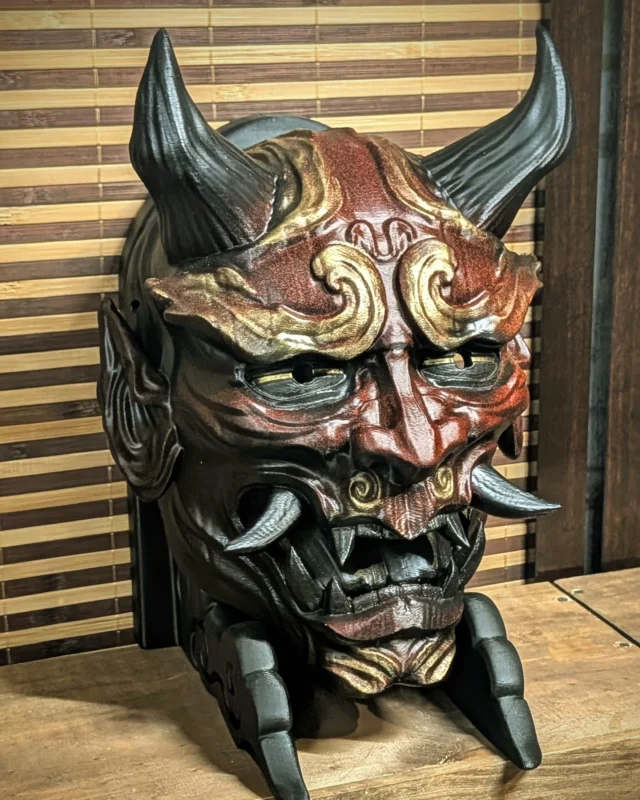
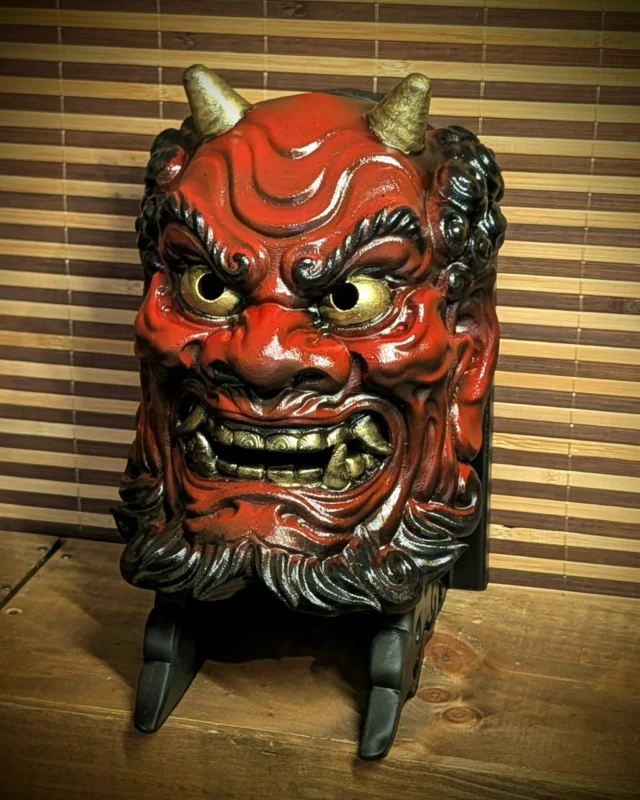
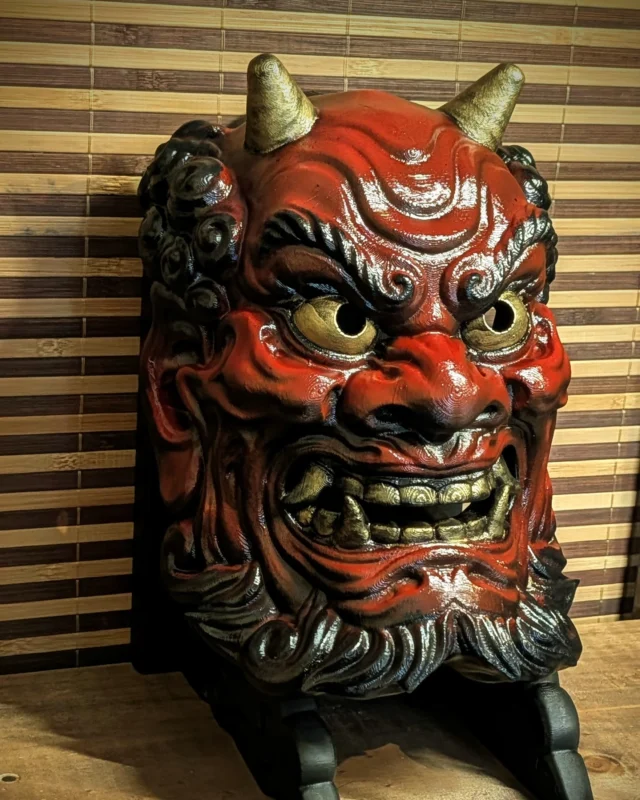
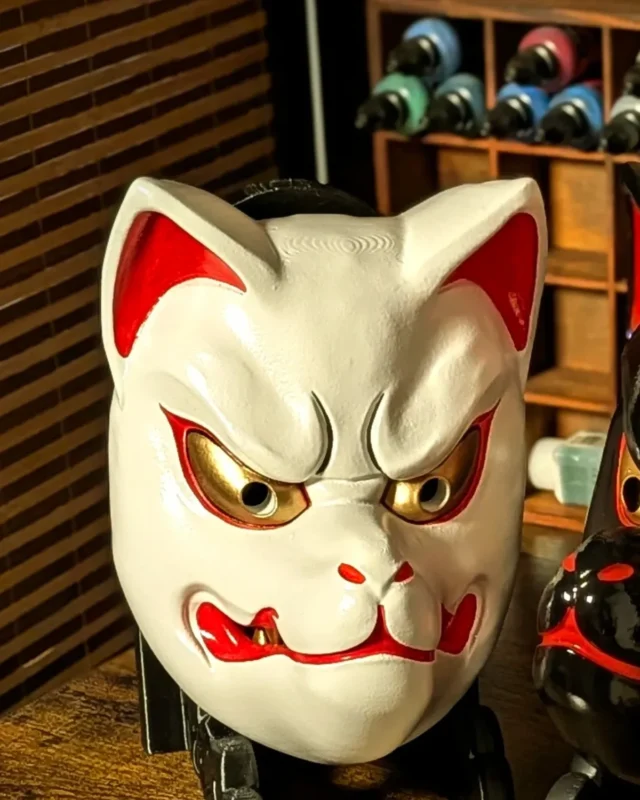
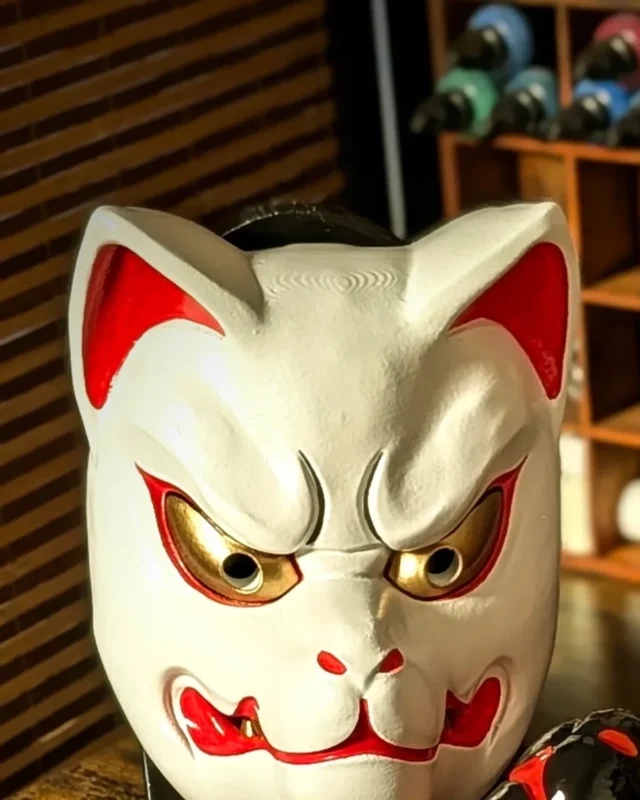
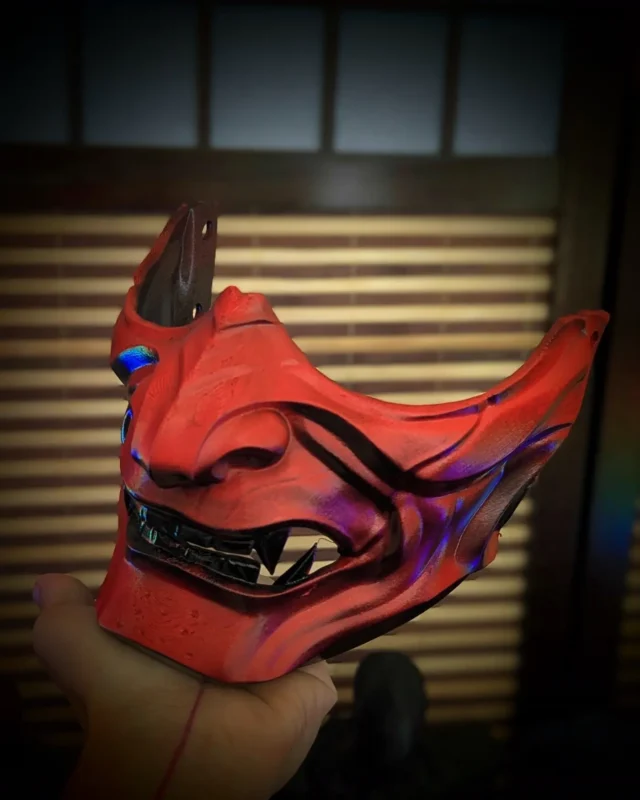
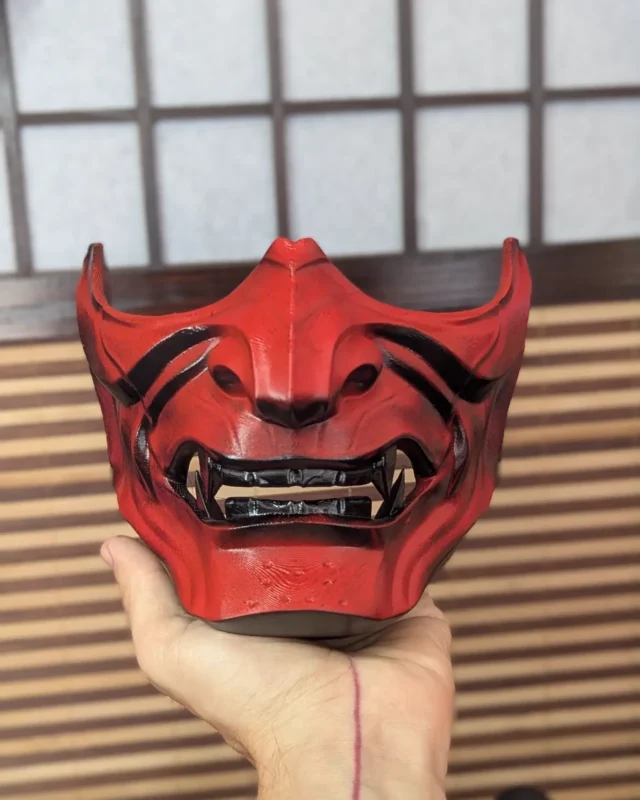
Dai Yokai creations are contemporary pieces. Their base is printed in PETG, then prepared, sanded, primed, painted, and varnished by hand in Brittany. They draw inspiration from folklore, theater, irezumi, and Japanese aesthetics, but they are not antiques, ritual objects, or traditional masks made in Japan.
The four models below can serve as visual starting points: Hannya, Oni, Kitsune, and Mempo. Prices and availability come from the product pages and may change. To browse the full catalog, see the handmade Japanese masks.
FAQ: ordering a custom Japanese mask
What can be customized on a Dai Yokai mask?
A request usually starts with an existing model. The main color, some accents, and the finish direction can be considered. Feasibility depends on the mask, the clarity of its details, and the schedule. Custom paint does not automatically mean a new shape, size, or sculpture created entirely for the project.
Can I order a completely new mask shape?
This is not an automatic option. A change to the structure, size, or model needs a separate assessment and may be declined. Dai Yokai accepts a limited number of custom orders. Present your project before paying and wait for written confirmation of feasibility, price, and timing.
What information should I send with a custom request?
Include the Dai Yokai model chosen as a starting point, the intended use, colors, finish, details to preserve, and the date you actually need it. Add one or two mood references and, for decoration, a photo of the wall. A short, precise brief avoids conflicting interpretations.
Can a color be reproduced exactly?
A shade can be a target, but a perfect match cannot be guaranteed from a screen or photograph. Light, varnish, and the base change the appearance. Painting by hand also creates small variations. Specify a reference, a level of contrast, and the colors you do not want.
Can I request a copy of a character, logo, or another artist's mask?
An exact reproduction of a protected work, logo, or another creator's work is not accepted. An image can help explain a mood, palette, or degree of wear, but the request must remain an adaptation of a Dai Yokai model and respect the original creator's rights.
Can a custom mask be worn?
Only if the model is already intended for wear and the product page says so. Color does not turn a decorative mask into wearable equipment. Vision, fastenings, ventilation, and comfort must be checked before ordering. A Dai Yokai mask is not protective equipment.
How much does a custom mask cost, and how long does it take?
There is no single price or timeframe. The starting model, painting, requested effects, and workshop availability affect the quote. Ask for written confirmation of the total price and production time before paying. Shipping comes afterward and must be distinguished from workshop time.
Can a custom order be returned?
Dai Yokai's terms state that a piece made to a specific request may be excluded from the right of withdrawal. Read the shop policy and terms of sale before approving the order. This exception does not remove applicable legal guarantees for a lack of conformity or a damaged product.
Key points
A successful customization starts with an existing model and a precise brief. Describe the use, palette, finish, and date, then wait for confirmation of feasibility, price, and timing. This approach protects both your idea and the workshop's time.