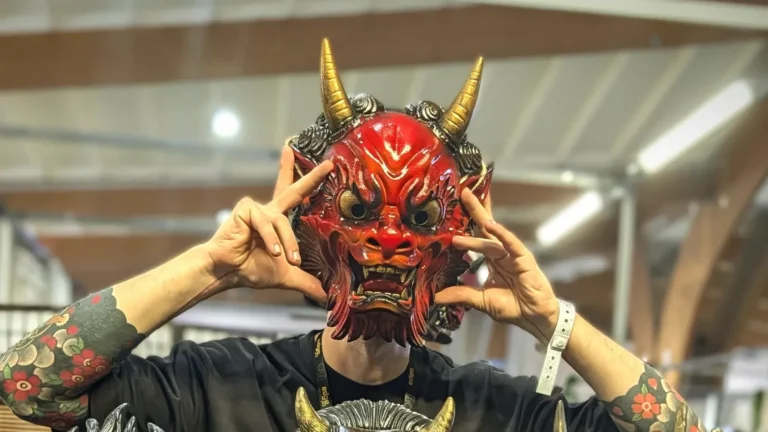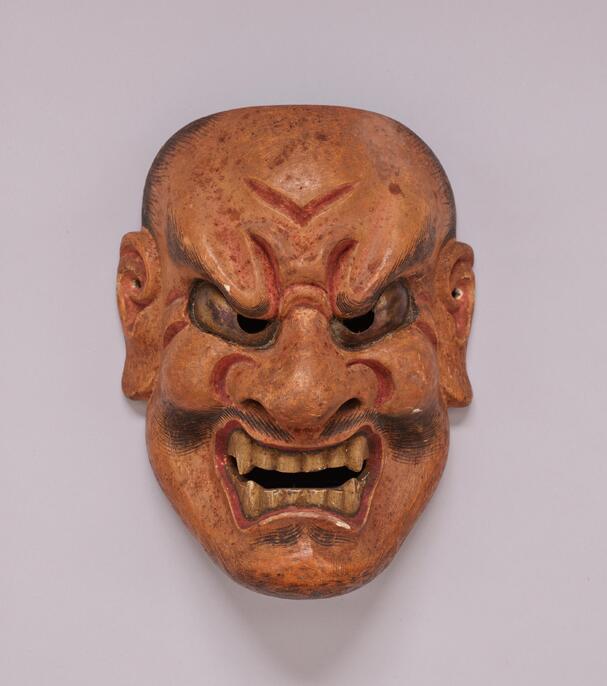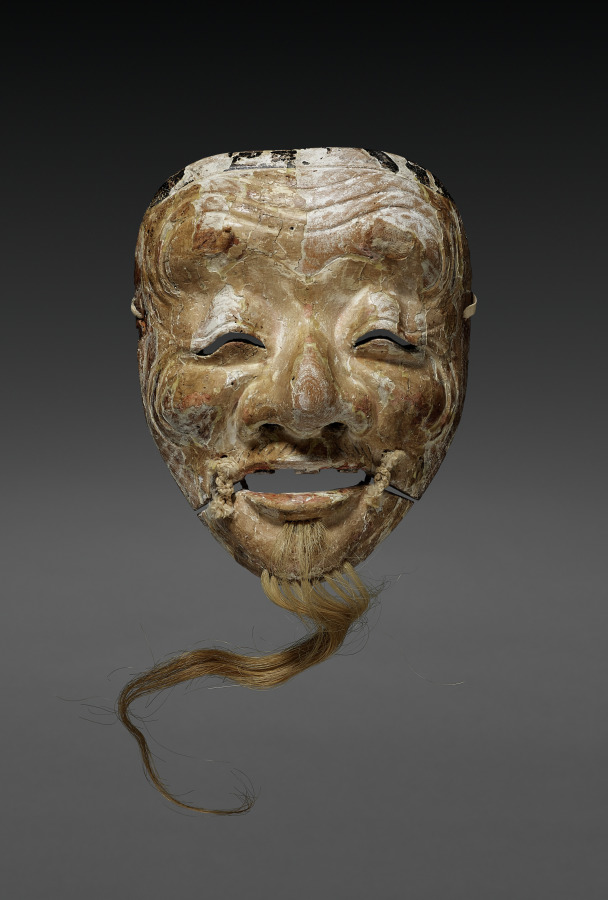
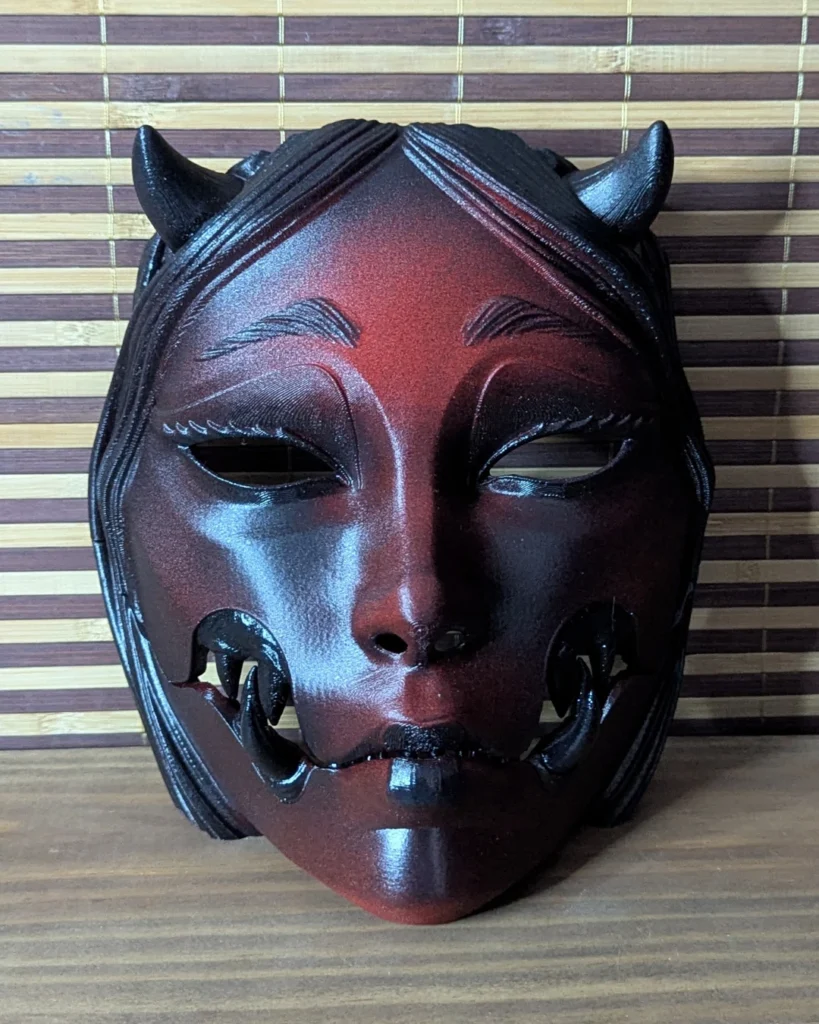
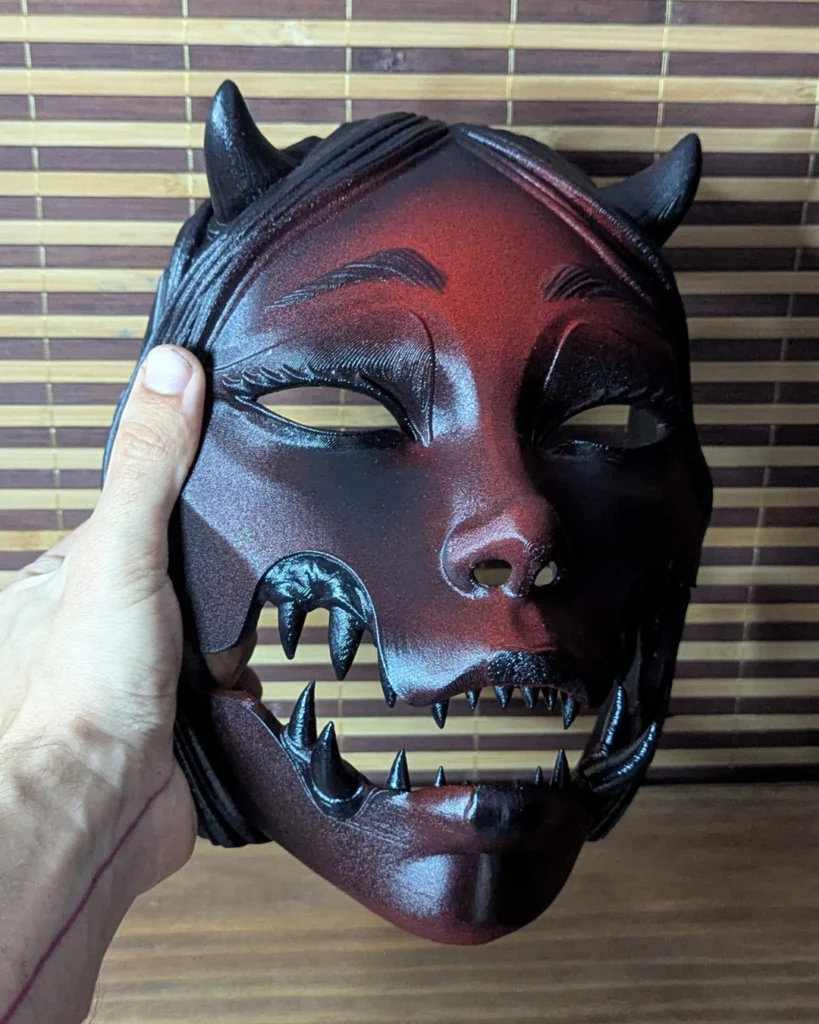
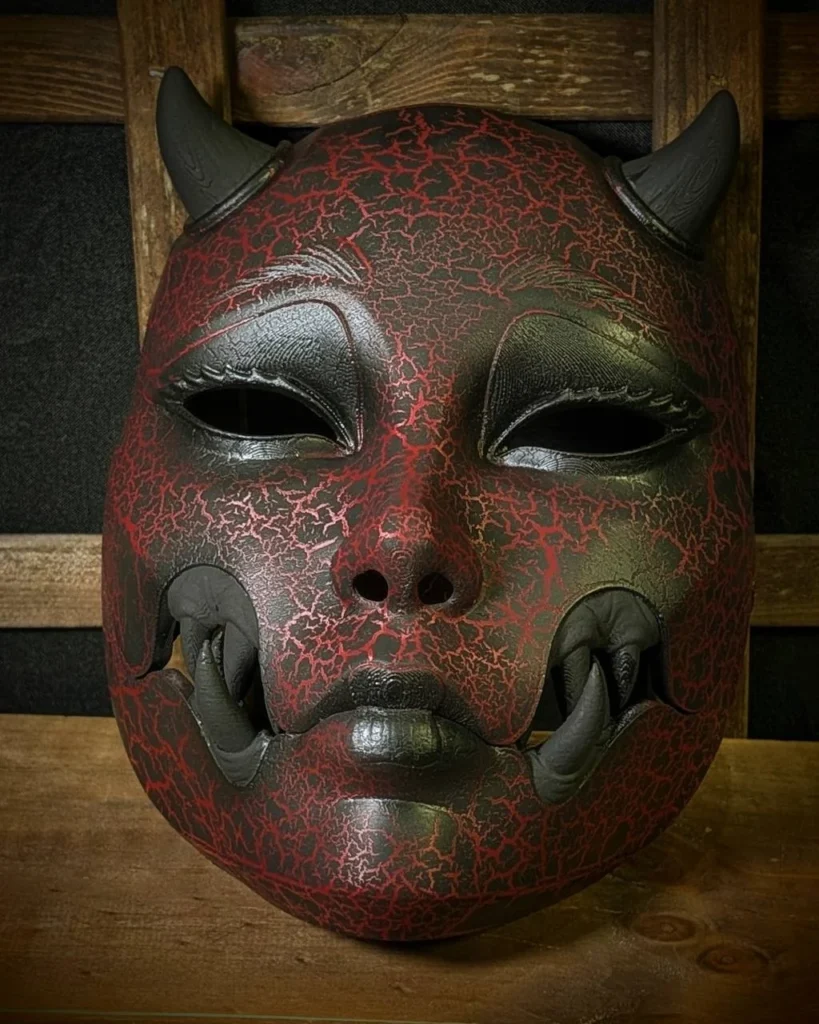
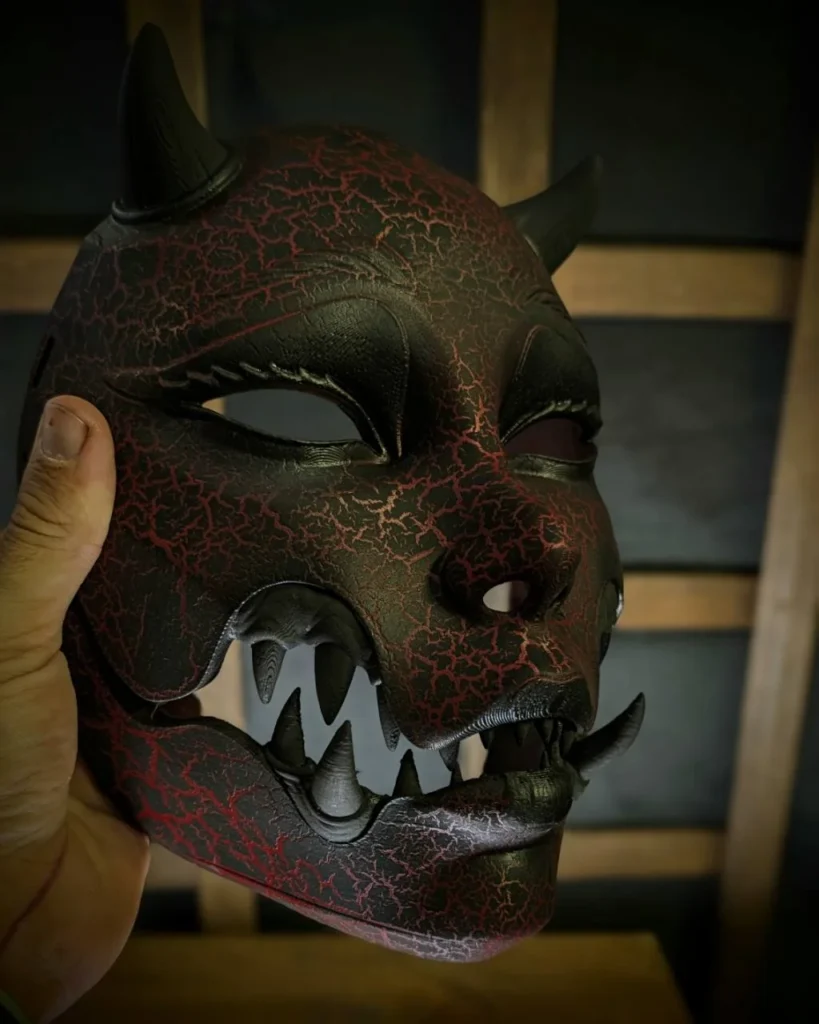
The articulated Kuchisake-Onna mask with sculpted hair and its bare face version differ first in contour. On the burgundy mask, the sculpted strands form a dark frame around the face. On the crackled red and black version, the forehead and cheeks form the outer line. With the jaw open, both show the space between the two rows of fangs. The four photos vary in scale and finish, so only framing and visible areas are compared.
Sculpted hair
In the first photo, the strands part at the center of the forehead and run along the cheeks. When the jaw opens in the second view, you can see the gap between the two rows of fangs, with the hair still framing the face. The product page for the articulated Kuchisake-Onna mask with sculpted hair presents this model.
Bare face
With the jaw closed, the outer fangs remain visible at the corners of the mouth. The second photo, taken at a three-quarter angle, also shows the space between the rows of teeth. The crackle pattern is visible on both the forehead and the jaw. The product page for the articulated Kuchisake-Onna mask with a bare face details this model.
What changes in the framing
To show the opening and teeth, frame either mask close around the mouth. To compare silhouettes, pull back far enough to keep the edges of the cheeks and chin in the shot. The side strands then become part of the portrait on the sculpted-hair version.
Choosing between the two
Choose the sculpted-hair version if you want the hairstyle to be part of the silhouette. The bare face leaves room for a wig or hood in your framing. For cultural context, see the guide to the legend and history of Kuchisake-Onna.