Which Kitsune mask should you choose: traditional, modern or kawaii? Start by looking at the actual shape. Dai Yokai's traditional model has a more intense face, with a white base, red and gold details, angular ears and visible fangs. The modern version keeps the fox silhouette but uses more graphic lines. The kawaii version rounds off the expression and creates a lighter, pop-inspired presence.
None of the three is automatically more sacred, authentic or protective than the others. Here, “traditional”, “modern” and “kawaii” compare three Dai Yokai design directions. They are not an official historical classification of Japanese masks. Each piece is a contemporary creation made to order in my workshop in Brittany.
Which Kitsune mask should you choose? A quick comparison
| Criterion | Traditional Kitsune | Modern Kitsune | Kawaii Kitsune |
|---|---|---|---|
| Expression | Intense, frontal, visible fangs | Clear, graphic, stylised | Gentle, rounded, lighter |
| Main lines | Pronounced ears and relief | Geometric patterns and painted curves | Simple outlines and a softer expression |
| Atmosphere | Strong, theatrical, contrasting | Contemporary, decorative | Pop, colourful, approachable |
| Main use | Wall, collection, occasional photography | Graphic wall display, studio, photography | Wall, bedroom, gift, photography |
| Cultural status | Current creation inspired by Japanese references | Contemporary Dai Yokai design | Contemporary Dai Yokai design |
| What to check | Expression and available space | Patterns, colours and viewing angle | Colour, finish and intended use |
These three models are Dai Yokai creations, not families of yōkai. For the fox's history in Japanese stories, read the Kitsune guide. To see the models currently listed, browse the collection of handmade Kitsune masks.
First, “traditional”, “modern” and “kawaii” are not historical categories
The Japanese word kitsune means fox. Folklore contains many shapeshifting fox stories, and they do not all tell the same thing. Some foxes are associated with Inari; others deceive humans, change their appearance or feature in local tales. A mask's style alone cannot assign it a precise role.
Fushimi Inari Taisha shrine makes an essential distinction: invisible white foxes are considered messengers or attendants of Inari Ōkami, but Inari is not a fox. This does not turn every folklore Kitsune into a sacred messenger or every fox-shaped object into a religious item.
Fox masks do appear in Japanese theatre. The British Museum holds a Kitsune mask for kyōgen, made in wood in Kobe around 1994. This documented piece is not, however, a compulsory standard that every contemporary creation must copy.
At Dai Yokai, “traditional” means the Dai Yokai model most directly using a white, red and gold face recognisable as a fox mask. “Modern” means a more graphic interpretation. “Kawaii” means a rounder, cute version. The names help you choose a product, but should not be presented as a scholarly classification of Japanese folklore.
The Dai Yokai traditional Kitsune mask
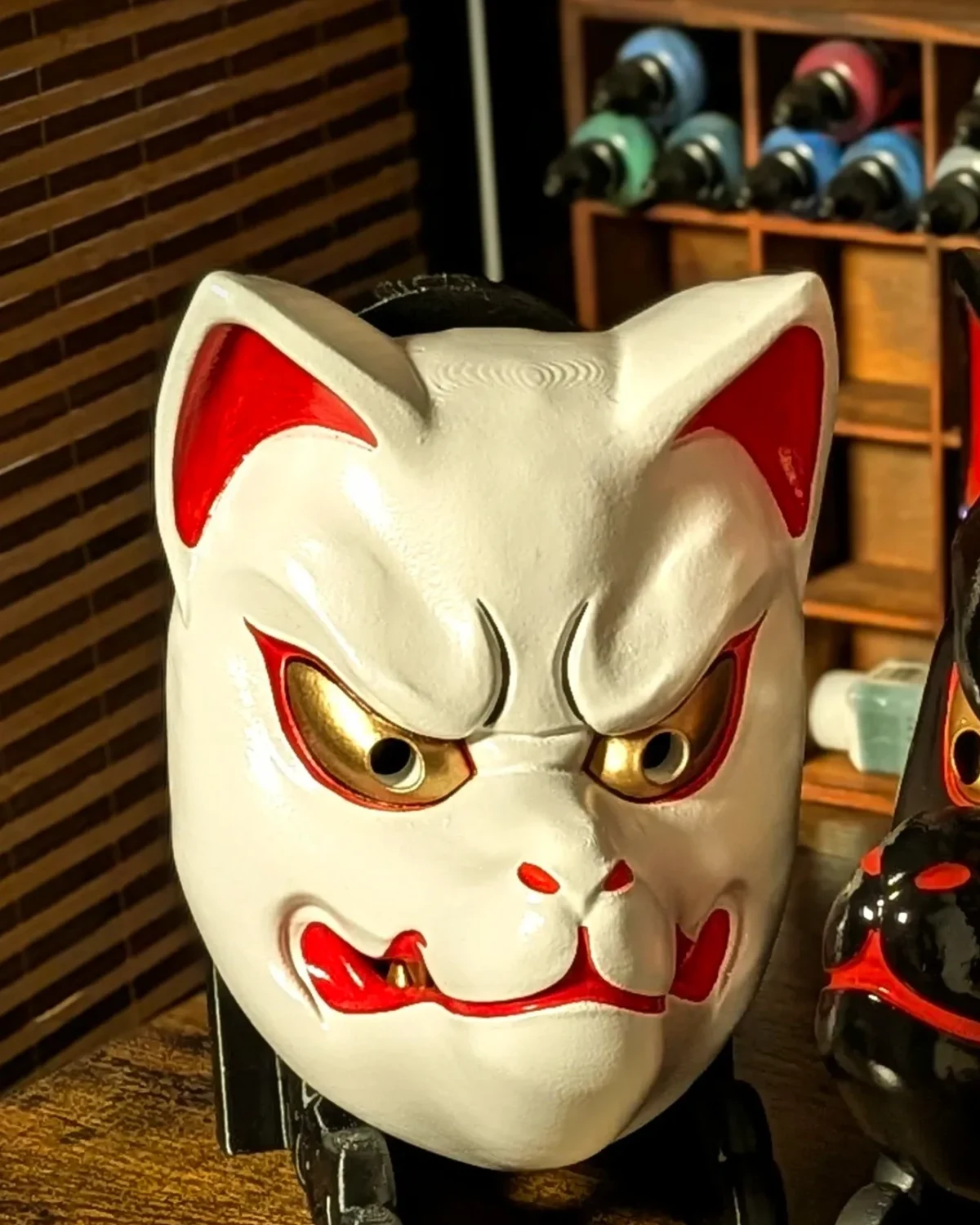
The traditional Kitsune mask is the most frontal of the three. Its white base contrasts with red ears, golden eyes and dark lines. Fangs and raised brows create a strong expression. It is not simply “understated” or “peaceful”. From the front, it draws attention immediately.
Choose this model if you want a main wall piece, a clearly readable face in a collection or a mask that keeps its presence in a photograph. It works better with some room around the ears and chin. Avoid squeezing it between frames or objects that would break up its silhouette.
The word traditional does not mean the piece is historical, ritual or made in Japan. It is a contemporary Dai Yokai creation made in Brittany. The Japanese reference lies in the fox motif and certain visual choices. The material, production and finish belong to my current work.
The Dai Yokai modern Kitsune mask
The modern Kitsune mask keeps the fox's ears and muzzle, but its surface is organised around more graphic patterns. Red and gold lines cross the forehead and cheeks. The design centres more on painted curves than on imitating fur or a naturalistic face.

Choose it for a contemporary interior, tattoo studio, display cabinet or outfit that already includes graphic shapes. It may be easier to combine with a poster, textile or specific palette than the traditional model, whose expression commands more attention.
Modern does not mean neutral. The patterns, contrasts and painting remain very visible. Look at the complete photograph, not just a cut-out face on a product page. Consider whether you prefer the modern version's forehead lines, eye shape and mouth to the traditional version's more aggressive expression.
The Dai Yokai kawaii Kitsune mask
The kawaii Kitsune mask is the roundest and visually lightest version. Its product page presents it as a pop-inspired model, with colours depending on the available options. Its expression aims for less tension or mystery than the other two.

Choose it for a bedroom, cosplay corner, colourful display or a gift for someone who prefers cute shapes to stern expressions. Here, kawaii describes the piece's visual language. It does not make the mask a particular traditional symbol or give it an independent spiritual meaning.
If an unfinished version is offered, check your selection carefully: an unfinished piece does not have the same finish as a hand-painted mask. Confirm the listed options before ordering a colour seen in a photograph.
Choose the visual effect you want
The best way to compare the models is to forget their names for a few minutes. Look only at the ears, eyes, muzzle, mouth, patterns and palette. A product called traditional can look more aggressive than a modern one. A kawaii product can be very noticeable in a bright colour.
| Desired effect | Suggested choice | Why | What to check |
|---|---|---|---|
| An intense main face | Traditional | Frontal expression, fangs and strong contrast | Viewing distance and space around the mask |
| A clear, graphic display | Modern | Structured patterns and contemporary appearance | Compatibility with the wall colours |
| A gentle or pop presence | Kawaii | Rounded shapes and different finish options | Colour option and level of finishing |
| A collection of several foxes | All three | The silhouettes create a visual progression | Even spacing and hanging height |
| A historically documented object | None by default | These are contemporary creations | Do not present them as antiques |
If you still hesitate, print or display the three photographs at the same size. Place them where the mask would go and look from several distances. The mask that works in a close-up is not always the one that stays readable from the room's entrance.
Which Kitsune should you choose for decoration?
For a main wall, the traditional model has the most immediate impact. Its expression and contrasts create a focal point. The modern one fits more easily into a composition with frames, a poster or clean-lined objects. Kawaii suits a lighter atmosphere, bedroom or space devoted to pop culture.
Measure the available width and check the mounting before ordering. Consult the weight on each product page and choose a fastening suitable for the wall. Keep the ears away from furniture corners and areas where people pass.
For installation, see the guide to displaying a Japanese mask on a wall or stand. Keep the piece indoors, away from persistent damp and prolonged direct sunlight.
Which Kitsune suits photography, cosplay or a convention?
In a frontal photograph, the traditional mask retains a strong presence. The modern version works well with an outfit whose lines and colours are already coordinated. Kawaii produces a gentler result and combines more easily with a colourful, pop-inspired setting. These are visual differences, not evidence of comfort.
For occasional wear, check fastening, stability and field of view. Do not assume that a low listed weight makes a mask comfortable all day. Weight distribution, pressure on the face, heat, hairstyle and movement matter just as much as the number.
Before a convention, wear the mask for a few minutes in a safe space. Walk, turn your head, sit down and check that you can see obstacles. If it shifts, blocks too much of your vision or creates pressure, keep it for photographs and display it the rest of the time.
Which Kitsune makes a suitable gift?
Kawaii is not automatically the best gift. It mainly suits someone who likes gentle expressions, colour and pop culture. The modern model is more appropriate for someone drawn to graphic design. The traditional one better suits someone looking for a stronger fox face.
Before choosing, look at the person's home, favourite colours and existing collection. Check whether they want decoration, a photography accessory or a piece to paint themselves. A surprise works better when it matches a real use.
| Use | Traditional | Modern | Kawaii |
|---|---|---|---|
| Main wall | Well suited | Suited | Suited depending on the colour |
| Graphic composition | Possible, but visually dominant | Easiest to integrate | Possible in a pop display |
| Frontal photograph | Strong impact | Clear appearance | Gentle expression |
| Extended wear | Test first, not guaranteed | Test first, not guaranteed | Test first, not guaranteed |
| Gift | For intense imagery | For graphic tastes | For soft or colourful tastes |
Kitsune and Inari: keep the distinction clear
The foxes visible at Inari shrines have created a strong association between Kitsune and Inari. The wording still matters. Fushimi Inari Taisha explains that invisible white foxes are Inari Ōkami's messengers. The shrine also states that Inari Ōkami is not a fox.
Japanese folklore also contains stories of shapeshifting foxes who deceive or help humans. A Japanese government publication on spirits and foxes discusses this changeable, sometimes mischievous character. There is therefore no single meaning automatically attached to every fox mask.
For more religious context, read Dai Yokai's article on Inari Ōkami. When choosing an object, then return to the concrete product details: shape, options, finish, production and intended use.
The three Dai Yokai models in this comparison
The selection below contains the three models discussed in this comparison. Check their product pages for current options and availability.
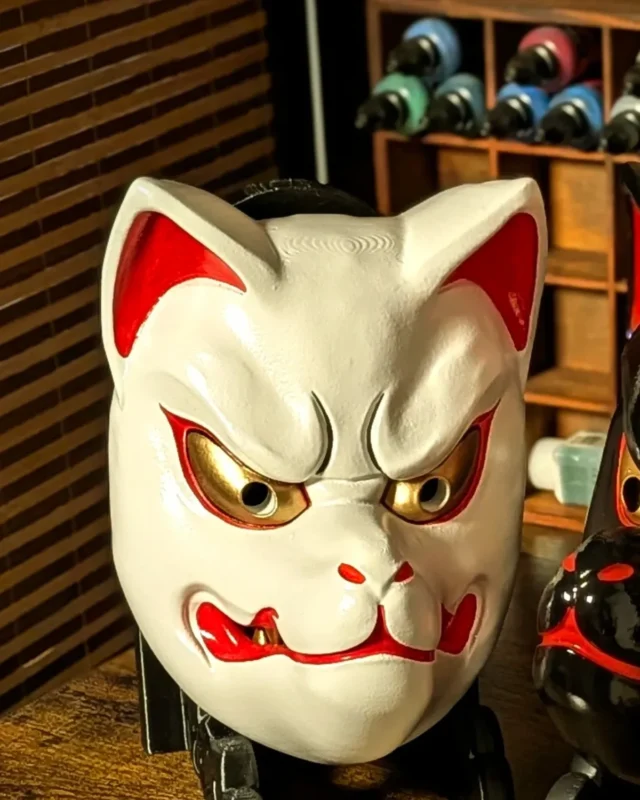
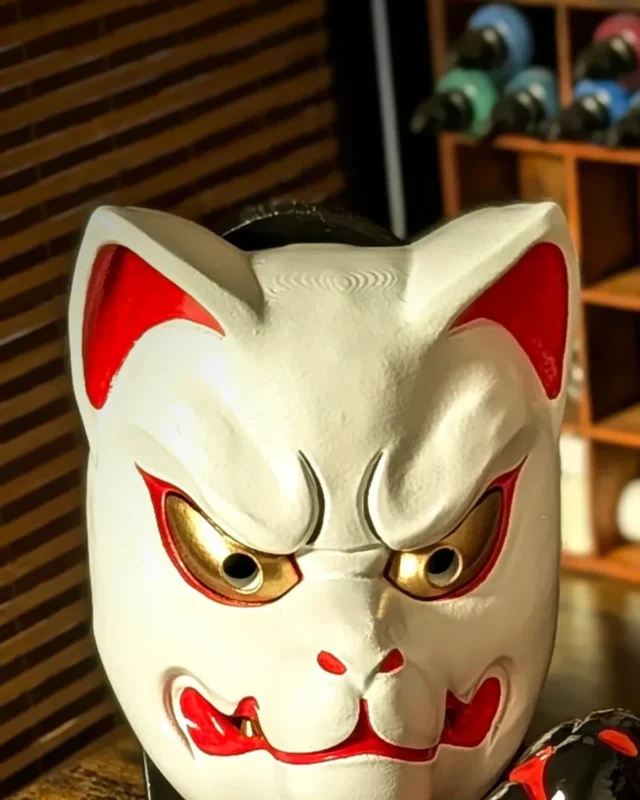
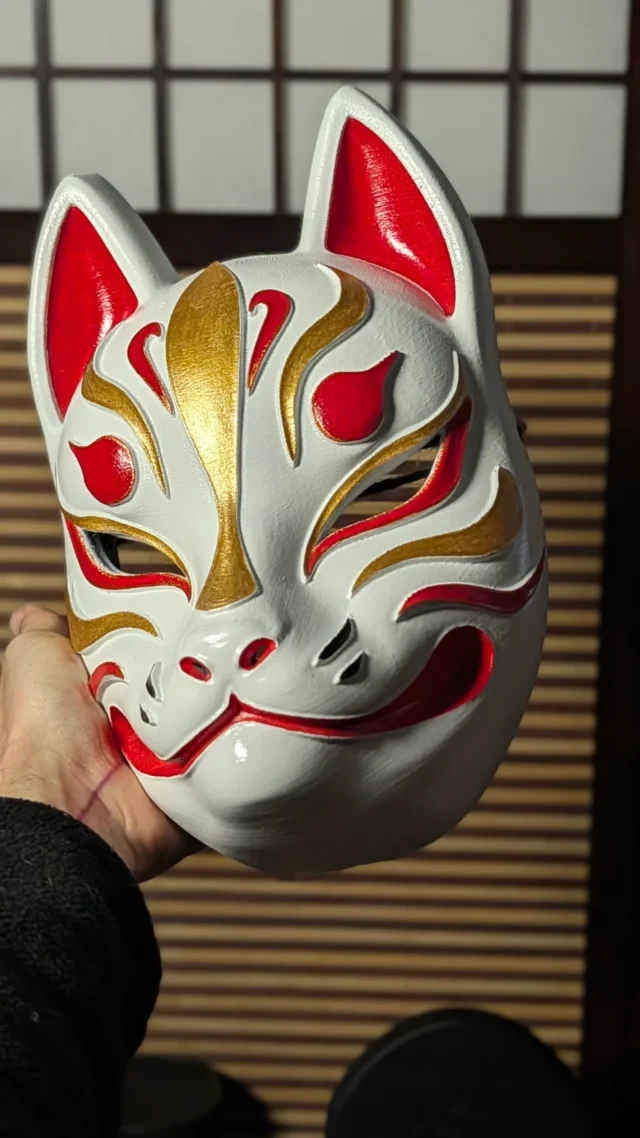
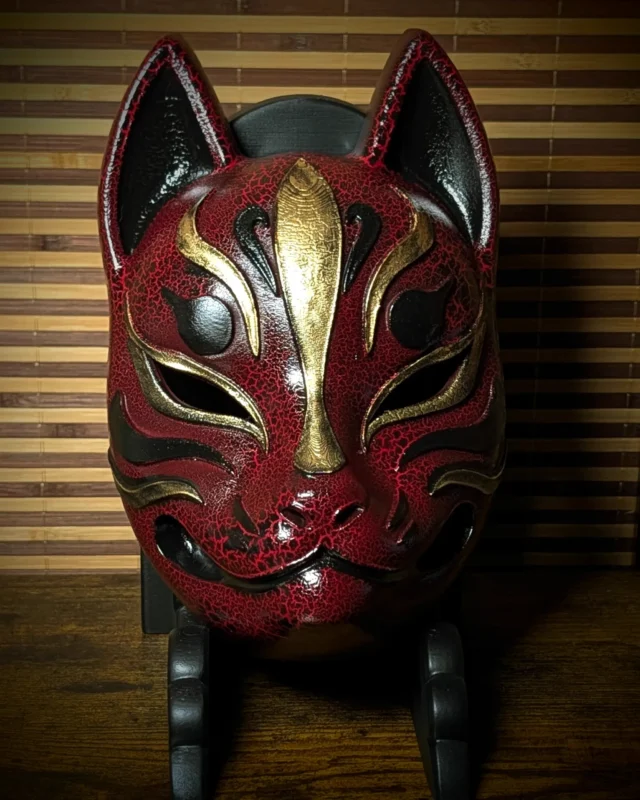
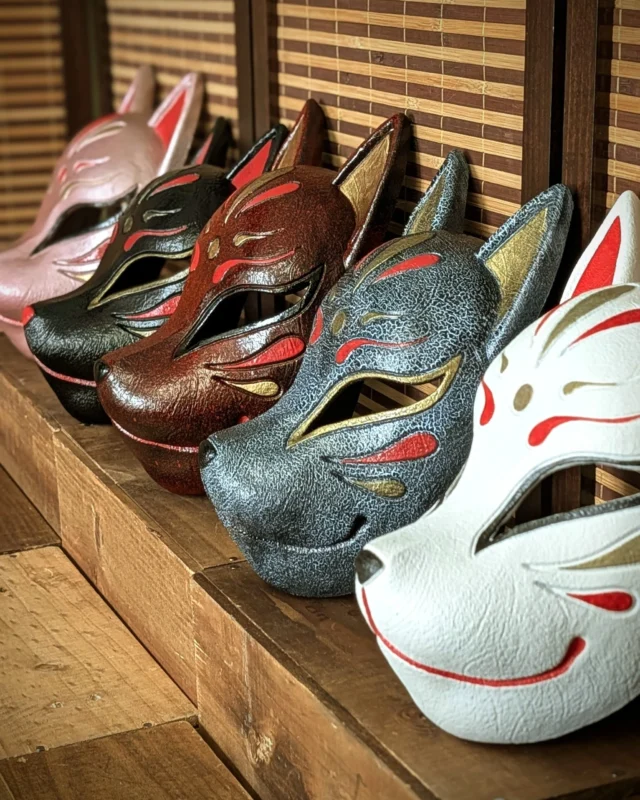
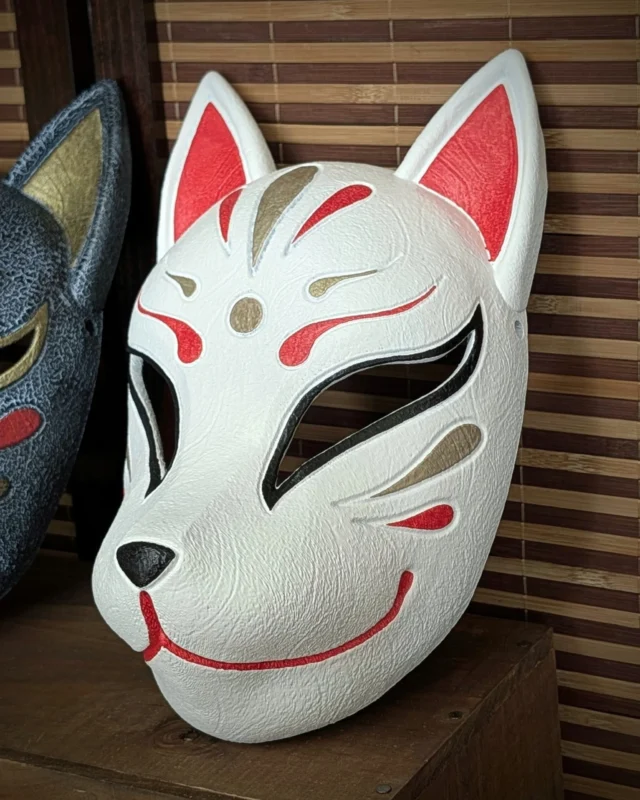
The product cards display current prices and options. Open the product page before ordering, because a colour, finish or availability can change after this article is written. If an option does not clearly match the photograph, contact the workshop before confirming your basket.
Production, finishes and care
The masks are made to order in Brittany on a PETG base. Painted versions are prepared and sanded before acrylic paint and varnish are applied in the workshop. An unfinished version does not include the same painted finish; check the exact option on its product page. Small variations in shade and finish are part of working by hand, so the delivered piece need not match every tiny detail of the photographed example.
For care, use a soft, dry cloth. Avoid harsh products, very damp rooms and prolonged direct sunlight. Protect the ears and raised details during transport. Do not place heavy objects on the mask or leave it loose in a bag with metal accessories.
Checklist before ordering
- Look at the whole face: eyes, mouth, ears, muzzle and patterns.
- Define the main use: wall, stand, photography, costume or gift.
- Measure the space: width, height, viewing distance and clearance from furniture.
- Check the product page: availability, price, colours and chosen finish.
- Confirm suitability for wear: fastening, visibility and comfort if it will be worn.
- Allow for production time: each piece is made to order.
In brief: choose traditional for its intense expression, modern for its graphic lines and kawaii for its gentle pop appearance. None proves ritual authenticity or promises protection. The right mask is the one whose shape, finish and use match your project in practical terms.
Frequently asked questions
Which Kitsune mask should you choose for a first purchase?
Choose a shape first, not an assumed meaning. Dai Yokai's traditional model has a more intense expression in white, red and gold. Modern is more graphic. Kawaii is rounder and pop-inspired. For a first purchase, choose the face that actually suits your wall, outfit or gift recipient.
How does the traditional Kitsune differ from the modern Kitsune?
The Dai Yokai traditional mask has a more frontal, expressive face, pronounced ears, visible fangs and a white, red and gold palette. The modern one retains the fox silhouette but uses more geometric lines and graphic painted patterns. Both are contemporary creations made to order in Brittany.
How does the modern Kitsune differ from the kawaii Kitsune?
The modern version aims for a clearer graphic appearance. Kawaii rounds the lines and softens the expression for a lighter, pop-inspired effect. They are not two categories of Japanese folklore. They are two Dai Yokai design directions offering different moods around the same fox silhouette.
Is the Dai Yokai traditional Kitsune a historical Japanese mask?
No. It is a contemporary creation inspired by the Japanese fox and visual references associated with Kitsune. It is neither an antique nor a shrine object, nor a certified reproduction of a theatre mask. Traditional describes the model's visual direction, not a historical or ritual provenance.
Are all Kitsune messengers of Inari?
No. Fushimi Inari Taisha states that its invisible white foxes are messengers of Inari Ōkami and that Inari is not a fox. Folklore also includes other shapeshifting foxes, sometimes helpful and sometimes deceptive. Do not automatically assign the same sacred role to every Kitsune or fox mask.
Which Kitsune mask should you choose for wall decoration?
Traditional suits an intense face that reads clearly from the front. Modern works better in a graphic or contemporary composition. Kawaii adds a gentler, more colourful presence. In every case, measure the location, check the mounting and leave enough space around the ears for a clear silhouette.
Can you wear these Kitsune masks at a convention?
For photography or costume use, first check whether the model’s product page allows wear. Suitable fastening alone does not guarantee all-day comfort. Before a convention, check stability, field of view, breathing, contact points and compatibility with your hairstyle. Try moving in a safe space before the event.
Which Kitsune mask should you give as a gift?
Kawaii is often easiest to give to someone who likes gentle shapes and pop culture. Modern suits someone drawn to graphic patterns. Traditional is preferable if they like more intense faces. Still check their favourite colours, available space and actual interest in masks.