Hannya, Yuki-onna, Kuchisake-onna and Jorōgumo are often grouped as “female yōkai”. This convenient label hides four very different histories: Nō theatre, traditions associated with snow, a 1970s urban legend and tales of shape-shifting spiders.
Four female figures, four different origins
| Figure | More precise category | Main context | What to avoid |
|---|---|---|---|
| Hannya | Nō mask and demonic role | Theatre, jealousy, vengeful spirit | Presenting it as one historical woman |
| Yuki-onna | Supernatural snow figure | Regional traditions and literary stories | Reducing every version to deadly breath |
| Kuchisake-onna | Modern urban legend | Children’s rumours and late-1970s media | Inventing a certain ancient origin |
| Jorōgumo | Shape-shifting spider yōkai | Edo-period literature and tales | Making it one character with a single legend |
Yōkai covers a broad range of beings, apparitions and strange phenomena. Its boundaries are not rigid. An urban legend such as Kuchisake-onna can enter modern yōkai culture while remaining historically distinct from figures found in older stories.

Hannya: a Nō theatre mask, not an ordinary yōkai
Hannya is often described as “a woman transformed into a demon by jealousy”. That offers a starting point but oversimplifies. Hannya is primarily a type of Nō mask used for a demonic female figure or vengeful spirit. By itself, it does not tell the life of one particular character.
The Japan Arts Council explains that Nō masks are chosen for the role, gender, age, play and performance style. The Hikone Castle Museum record documents the Hannya mask and its theatrical context.
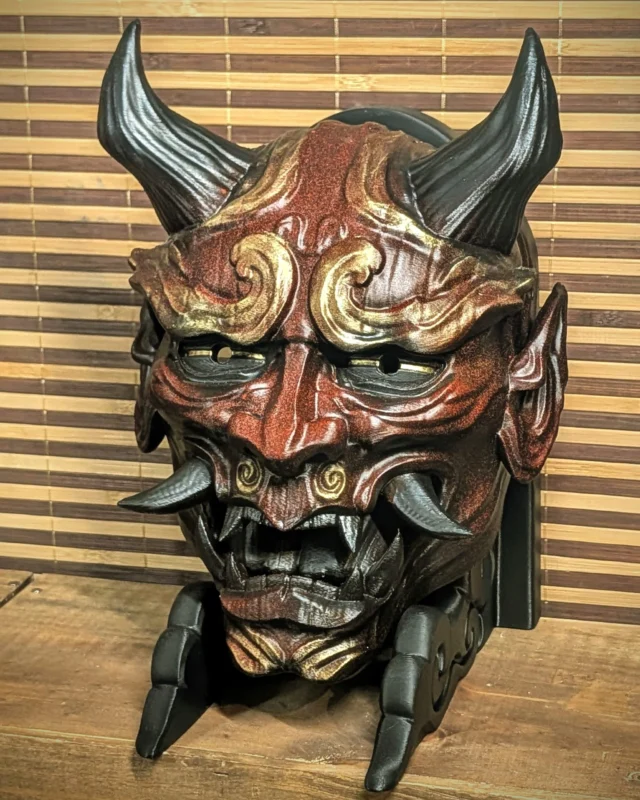
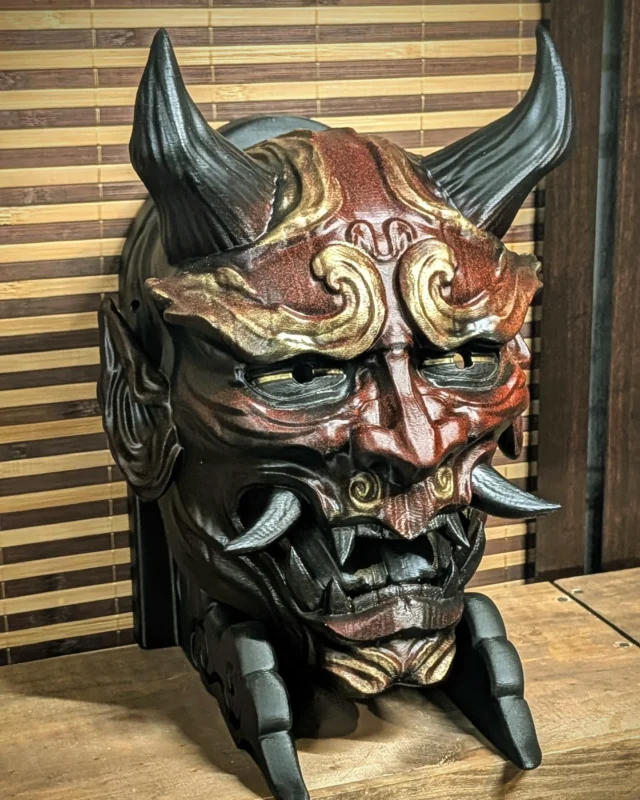
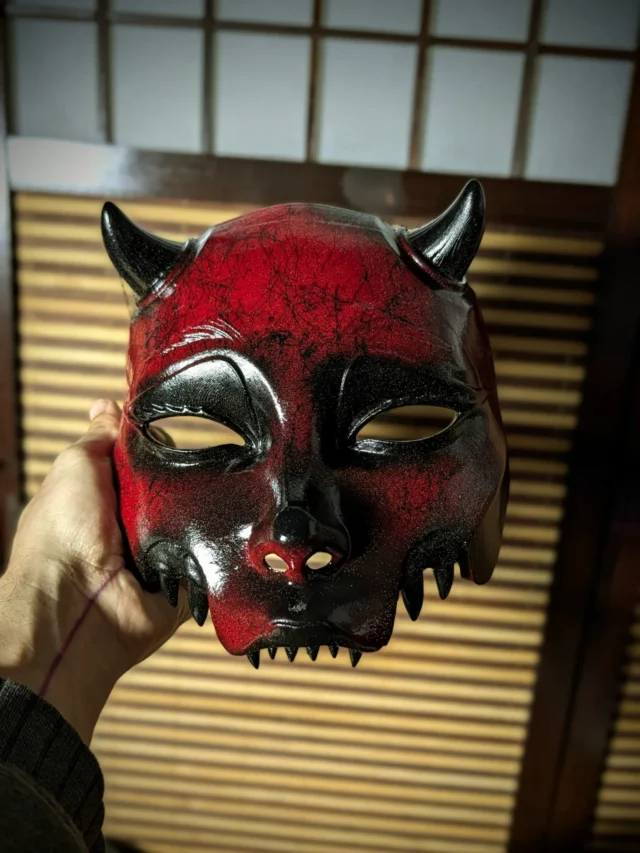
Horns, metallic eyes and an open mouth create a violent expression. Yet angle and light can retain a sense of human suffering. This tension gives the mask its visual force, beyond a definition limited to “female jealousy”.
For plays, expressions and colours, see Hannya masks: meaning and Nō legends.
Yuki-onna: the snow woman has more than one story
Yuki-onna literally means “snow woman”. She appears in traditions from Japan’s colder regions, with names and behaviour changing by location. She may kill, mislead, warn, marry a human or disappear after a broken promise. No single plot describes every Yuki-onna.
The version best known outside Japan was published by Lafcadio Hearn, also called Koizumi Yakumo, in Kwaidan in 1904. The National Diet Library’s reference database shows that researchers distinguish this literary story from regional traditions and continue to discuss its exact source.

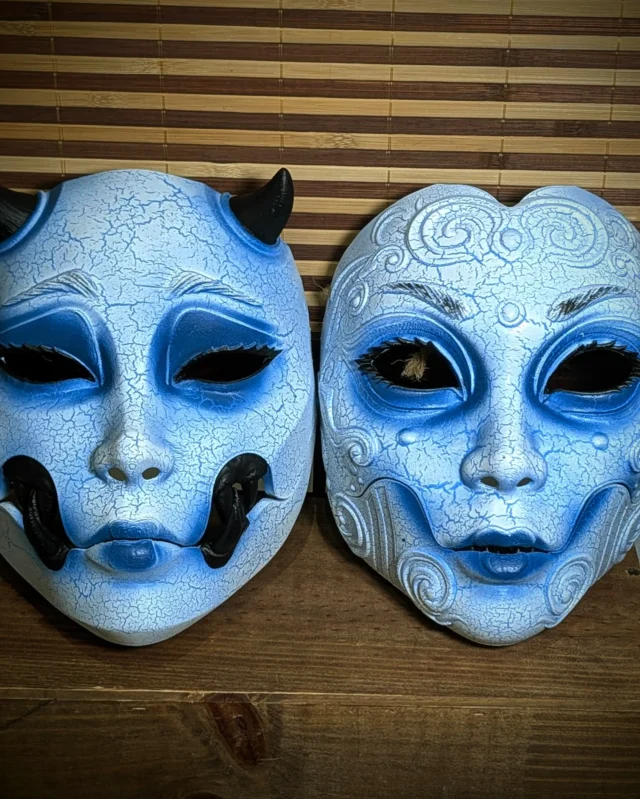
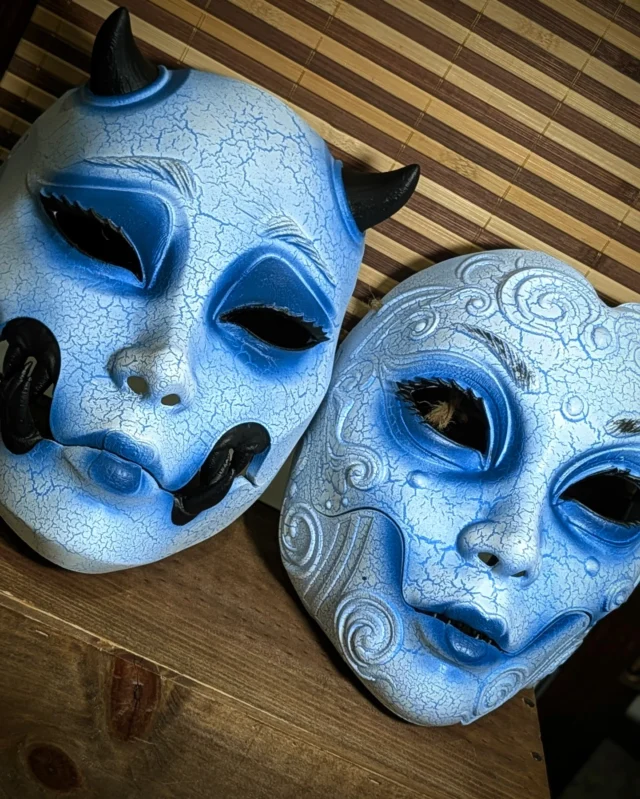
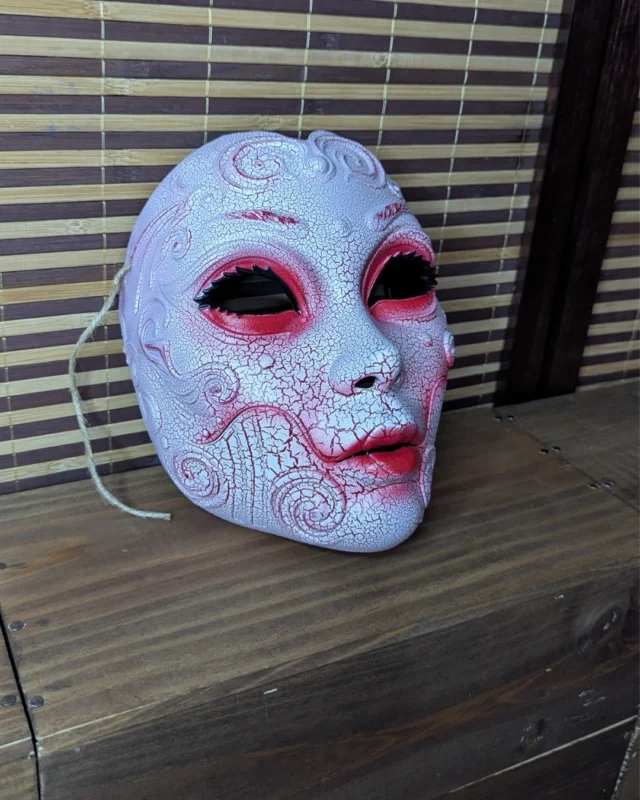
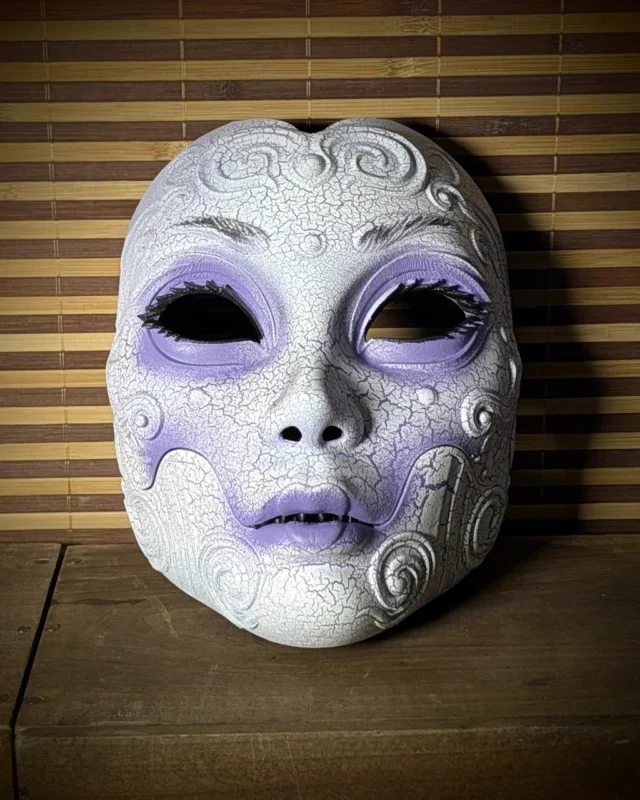
White and blue in contemporary creations evoke cold, but do not prove folkloric authenticity. Dai Yokai’s Yuki-onna-inspired masks visually interpret snow and cracking ice. They do not reproduce a particular traditional Japanese mask.
The guide to Yuki-onna, the snow woman of Japanese folklore explores Hearn’s story and several variants.
Kuchisake-onna: an urban legend from the late 1970s
Kuchisake-onna, the “slit-mouthed woman”, belongs to a different historical setting from Hannya or Jorōgumo. Her current form spread in Japan in the late 1970s. A masked woman stops a child or passer-by, asks whether she is beautiful, then reveals her slit mouth. Answers, weapons and ways of escaping change between versions.
Oral-literature specialist Iikura Yoshiyuki explains in Nippon.com that the rumour travelled through neighbourhoods, schools and evening classes before newspapers and television amplified it. It subsided during summer 1979, but the image endured.
A jealous husband, failed operation or disfigured woman should not be presented as an established biography. These are additions to a legend that works through repetition and change.

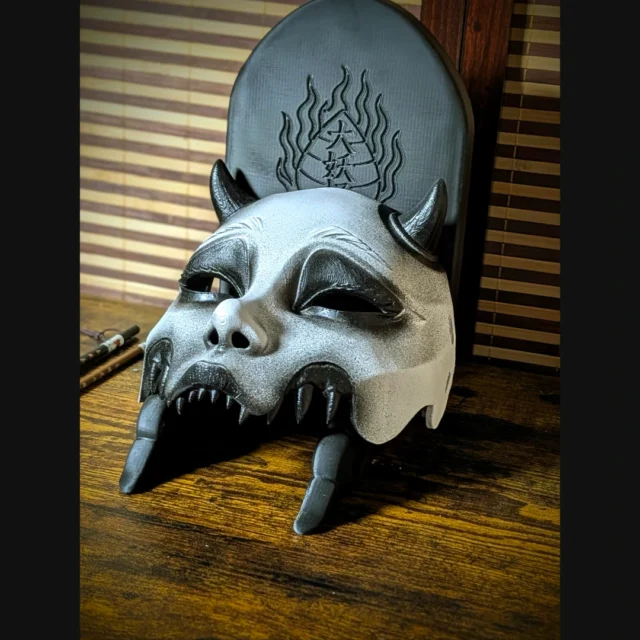
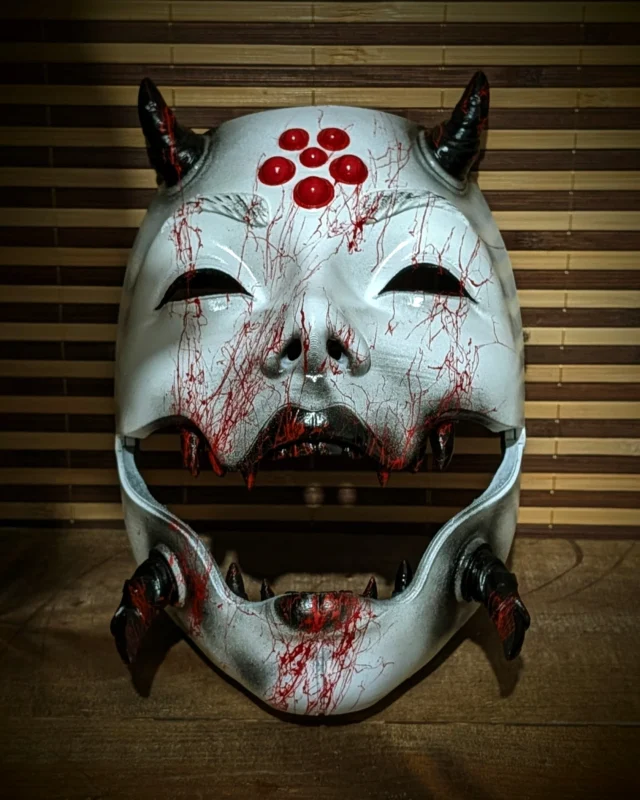
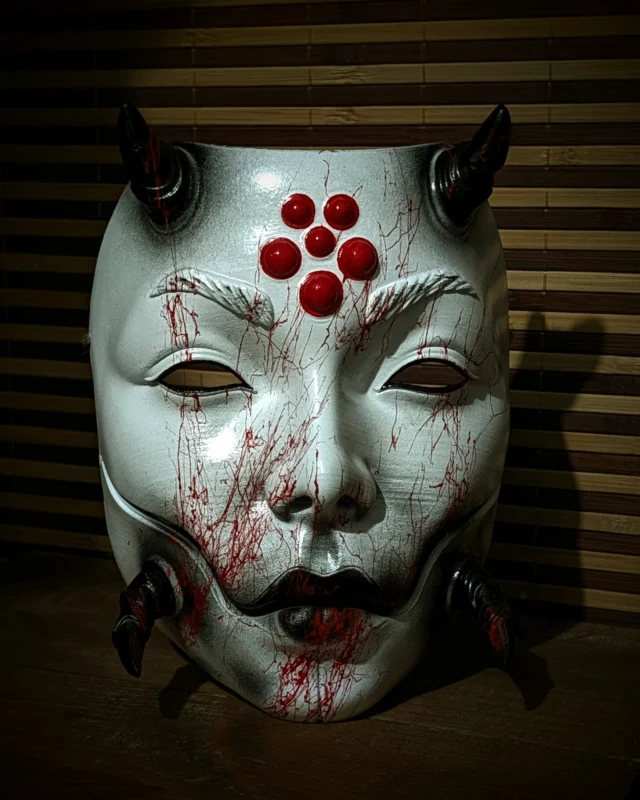
The Kuchisake half mask shown here draws on the slit-mouth motif. This is an interpretation for design and costume, not a reproduction of an old object. The Kuchisake-onna guide follows the rumour’s spread.
Jorōgumo: the shape-shifting spider of Edo tales
Jorōgumo names a spider associated in stories with transformation. It can take human form to deceive someone before revealing its nature. This is not one woman with an official biography, but a literary motif with several versions.
The National Diet Library presents Toriyama Sekien’s illustrated collections, which spread images of many yōkai from 1776 onwards. Jorōgumo appears in this Edo-period visual culture. That representation does not cover every variant of the spider-woman motif.
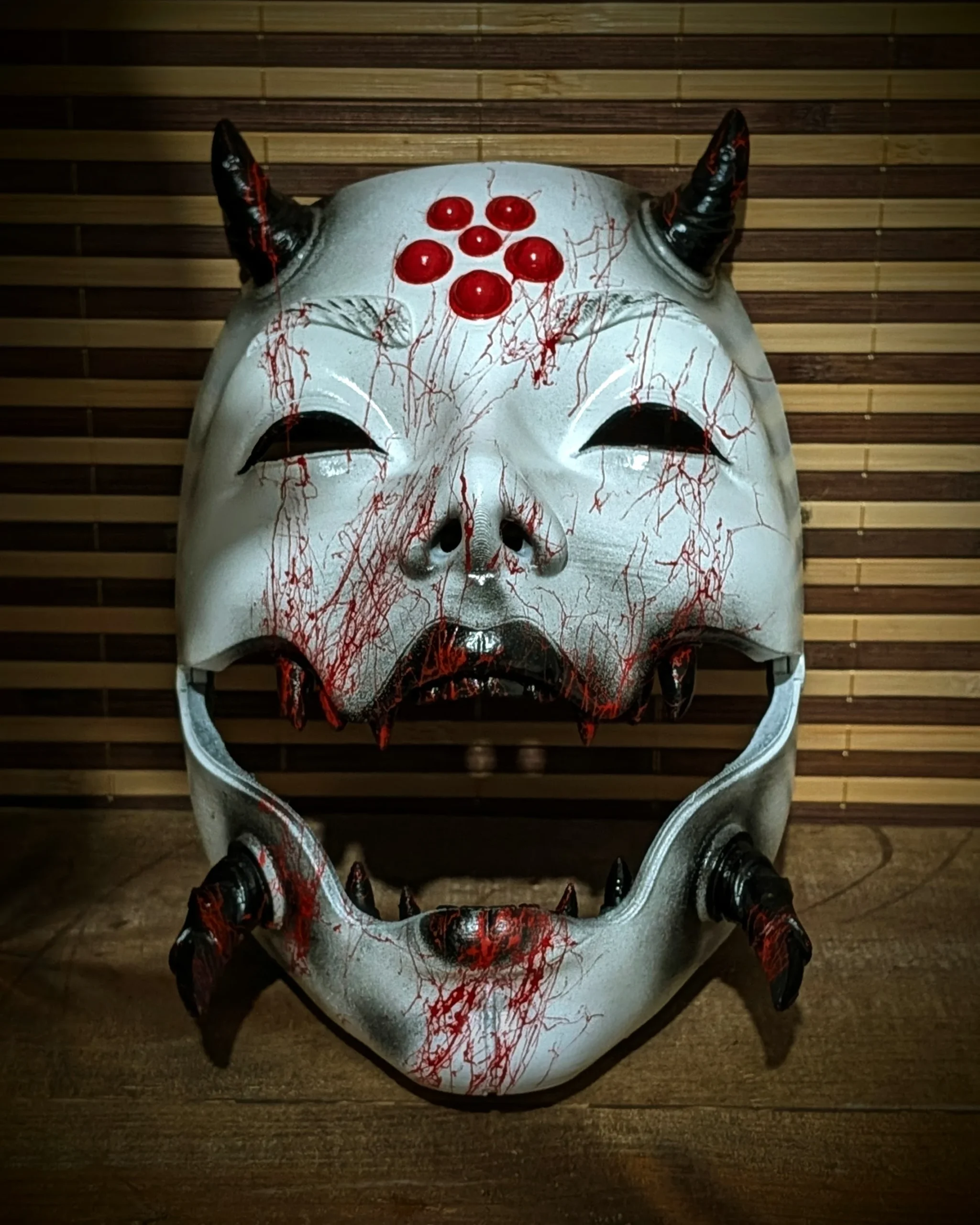
The mask above is a contemporary Jorōgumo-inspired creation with a moving jaw. It is not a historical representation. For stories and tattoo interpretations, read Jorōgumo, the spider woman of Japanese folklore.
What connects them, and what separates them?
All four play with a human appearance that does not reveal everything. A mask, pale face, beauty or female body may hide transformation, danger or a supernatural nature. This shared feature explains why they work together in illustration, tattooing, costume and contemporary masks.
It does not justify one message about “fear of women”. Hannya belongs to a specific theatre tradition. Yuki-onna carries the dangers and stories of snowy regions. Kuchisake-onna emerges through modern rumour. Jorōgumo belongs to animal transformation and supernatural literature.
Period, medium and function differ. Comparing them should reveal those differences rather than impose a shared psychology.
Do not confuse geisha, supernatural women and yōkai
A geisha is a professional performer, not a spirit or monster. White faces, hairstyles and kimono used in contemporary horror may recall that appearance without making a character a historical geisha.
Likewise, a female ghost is not always a yōkai, and a Hannya mask does not represent every Japanese female figure. Accurate terms avoid mixing a profession, theatre, local belief, urban legend and modern creation.
How these figures inspire contemporary masks
- Hannya: horns, open mouth, metallic eyes and facial tension.
- Yuki-onna: cold palette, pale skin, cracks and a frozen appearance.
- Kuchisake-onna: slit mouth, moving jaw and revelation of the face.
- Jorōgumo: legs, webs, spider motifs and a human-animal contrast.
Dai Yokai reworks these references in pieces for display, collections, photography or light cosplay. The PETG bases are made in Brittany. Raw versions are supplied for the buyer to prepare and finish; finished versions are prepared, painted and finished by hand. The available finish is specified on each product page. Small differences in tone and finish are part of this process.
These are contemporary interpretations, not ritual objects, old Nō masks or museum reproductions.
Masks connected with these subjects
The selection combines Hannya, a Yuki-onna interpretation, a Kuchisake half mask, Geisha Horror and the articulated Jorōgumo mask. The latter is a contemporary spider-woman interpretation with a moving jaw.
In summary
“Female yōkai” brings these figures together but should not erase their differences. Hannya comes from Nō, Yuki-onna from snow traditions, Kuchisake-onna from modern rumour and Jorōgumo from shape-shifting spider tales. A sound comparison starts with period and type of story before symbols or appearance.
Frequently asked questions
Are all four figures yōkai?
Not in precisely the same sense. Yuki-onna and Jorōgumo are commonly classified as yōkai. Hannya primarily names a Nō mask and demonic role. Kuchisake-onna is first a modern urban legend, although now often included in yōkai encyclopaedias and visual culture.
Is Hannya a woman or a mask?
Hannya primarily names a Nō mask representing a demonic female figure dominated by jealousy and rage in certain plays. It is not a historical woman’s name or a fixed biography of one yōkai. Meaning depends on role, play and staging.
Is Yuki-onna always malicious?
No. Stories vary by place and period. Some kill or mislead travellers; others spare a witness, become a wife or disappear when a promise is broken. Hearn’s famous 1904 version does not cover every snow-woman tradition.
Does Kuchisake-onna come from ancient Japan?
The familiar version spread as an urban legend in the late 1970s. Older tales are sometimes proposed as precedents, but failed surgery, jealous husbands and escape methods vary. They should not be treated as a certain historical origin.
What is a Jorōgumo?
A shape-shifting spider figure in Edo-period literature and tales. It may take human form to deceive someone before revealing its spider nature. It is a motif with several variants, not one character with one story.
Which of the four is oldest?
The comparison is difficult because the sources differ: Nō history, regional traditions later recorded in texts and premodern shape-shifting spider tales. Kuchisake-onna in her current form is clearly the most recent, spreading nationally in the late 1970s.
Why are there so many supernatural female figures?
No single explanation covers theatre, literature, local traditions and modern rumours. Stories may concern cold, promises, transformation, anger or urban fears. Reducing all of them to fear of femininity erases their different periods and functions.
Are Dai Yokai masks traditional Japanese objects?
No. They are contemporary creations inspired by Japanese folklore, theatre and horror. The PETG bases are made in Brittany. Raw versions are supplied for the buyer to prepare and finish; finished versions are prepared, painted and finished by hand. The available finish is specified on each product page. They are not authentic Nō masks, ritual objects or historical Japanese pieces.