Japanese guardians do not form a single family within Japan's traditions. The term brings together figures that protect a place, ward off evil or embody a formidable power. Komainu are explicitly shrine guardians. Oni, Tengu and Ryū dragons take protective roles only in particular stories, religious traditions or uses.
This distinction avoids turning all Japanese folklore into a list of “protective demons”. Here is what Komainu, Oni, Tengu, dragons and Onigawara actually guard, and how they differ from Foo Dogs and Niō.
At a glance
- Komainu: shrine guardians, often paired to ward off evil.
- Foo Dog: a Western name for Chinese guardian lions, related to Komainu but not an exact synonym.
- Oni: an ambiguous ogre or demon, sometimes protective in a local ritual, but not inherently a guardian.
- Tengu: a complex mountain spirit, feared, martial and sometimes protective.
- Ryū dragon: a power associated with water, clouds and rain, protective according to context.
“Japanese guardian”: a role, not a species
In modern searches, “Japanese guardian” might mean a statue outside a shrine, a threatening figure on a roof or a motif chosen to symbolise protection. Within Japanese traditions, however, these beings do not belong to one shared category. A Komainu is not an Oni, a Tengu is not a dragon, and they are not all yōkai.
Their common thread is the threshold. This may be physical, such as a shrine entrance or roof ridge. It may also be symbolic: between the human world and the mountains, order and disorder, or a natural force and those who must respect it.
A fierce appearance therefore does not automatically mean evil. In religious art and architecture, a threatening face can represent a power capable of driving away another threat. The reverse is also true: a dangerous creature does not become protective simply because it looks impressive.
Japanese guardians compared
| Figure | Nature | Protective role | Associated place or element | Key distinction |
|---|---|---|---|---|
| Komainu | Mythical lion-dog | Wards off evil at an entrance | Shinto shrine, sometimes a temple | The most explicitly guardian figure in this selection |
| Foo Dog | Western name for a Chinese guardian lion | Guards an entrance or building | Chinese architecture and international adaptations | Related to Komainu, but not identical |
| Oni | Ogre or demon from folklore | Protective in some rites and local traditions | Stories, festivals, hells and architecture | Often threatening, not a guardian by default |
| Tengu | Mountain spirit taking various forms | Sometimes protects a place, temple or person | Mountains, forests and ascetic practices | Can also mislead, abduct or punish |
| Ryū dragon | Mythical East Asian creature | Context-dependent protection and beneficial power | Water, rain, clouds and sky | Its connection with water is more consistent than a guardian role |
Komainu: shrine guardians in the strict sense
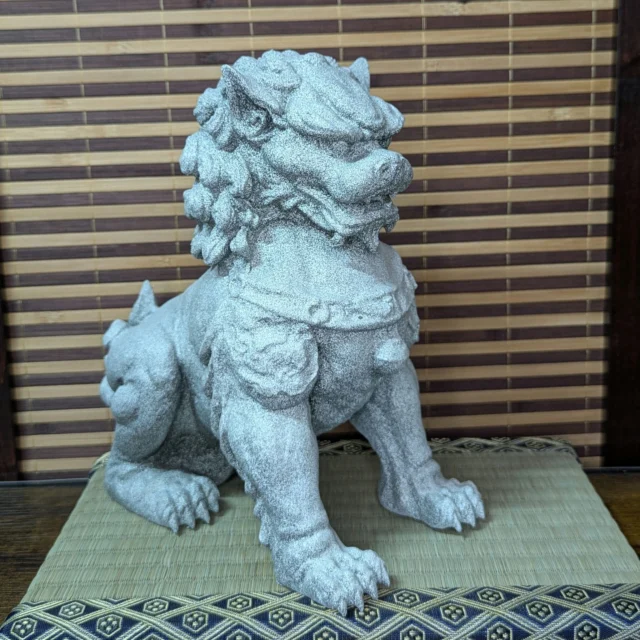
Komainu offer the most direct answer to “which animal guards Japanese shrines?” These lion-headed, dog-like creatures are traditionally placed outside Shinto shrine entrances to ward off evil. They often appear in pairs, one on each side of the passage.
One usually opens its mouth while the other keeps it closed. This contrast is often read as a and un, the beginning and end of sounds. It also appears in other pairs of religious guardians. It is not an unchanging rule, however: forms, attributes and even guardian animals vary between periods and shrines.
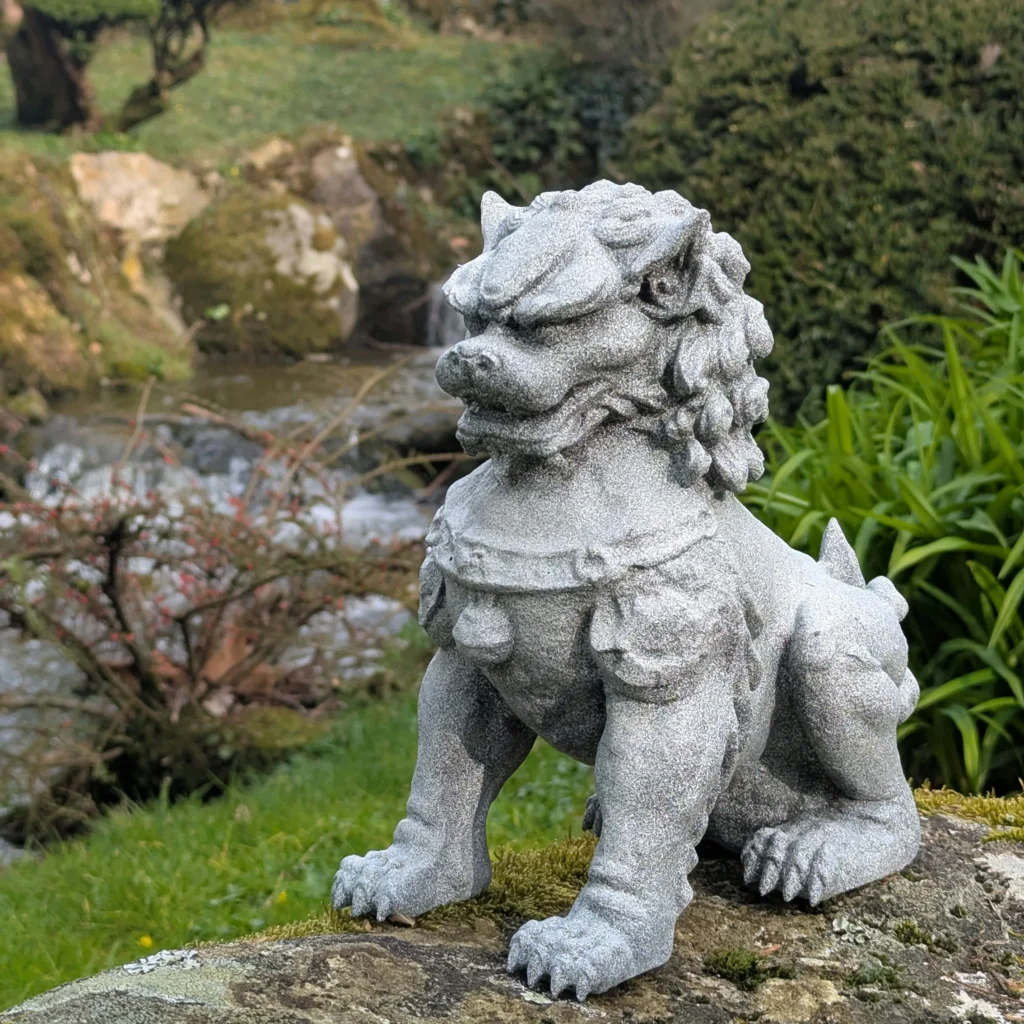
Komainu guard a consecrated space and its threshold rather than an isolated individual. That position explains their watchful posture, fixed gaze and imposing mouths. For their history, variations and Okinawan shīsā, see the guide to Komainu, Foo Dogs and shīsā.
Komainu and Foo Dogs: why they are not quite the same
“Foo Dog” or “Fu Dog” is a Western term for Chinese guardian lions. “Dog” refers to their sometimes canine appearance, not a dog breed. These lion forms travelled through religious and artistic exchanges linking India, China, Korea and Japan. Japanese Komainu belong to this long movement of forms.
The figures are related through their visual ancestry and guarding function, but treating them as interchangeable erases their contexts. For a Japanese shrine statue, “Komainu” is the precise term. “Foo Dog” primarily refers to the Chinese guardian lion, although shops and popular culture often use the names together.
Oni: an ambiguous force that is not always protective
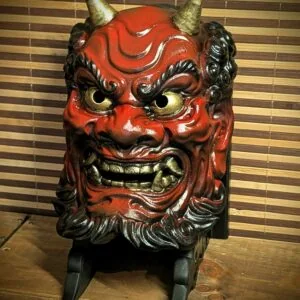
An Oni is generally an ogre or demon, with a powerful body, horns, fangs and sometimes a club. In Buddhist stories, Oni may torment the dead. At Setsubun, they represent the misfortune driven from the home by throwing beans and calling for Oni to leave and good fortune to enter. This is why saying every Oni protects would be wrong.
There are nevertheless contexts in which Oni become beneficial. On the Kunisaki Peninsula, some traditions honour Oni associated with ascetic practices as benevolent beings. On Sado Island, Ondeko features Oni figures visiting homes to the rhythm of drums as part of the village's purification and protection.
A protective Oni is therefore not a contradiction, but a local or ritual role. Outside that context, it is better described as a figure of power, transgression or fear. The Oni mask guide explores this ambiguity, colours and uses in Japanese art.
Tengu: mountain spirits and occasional guardians
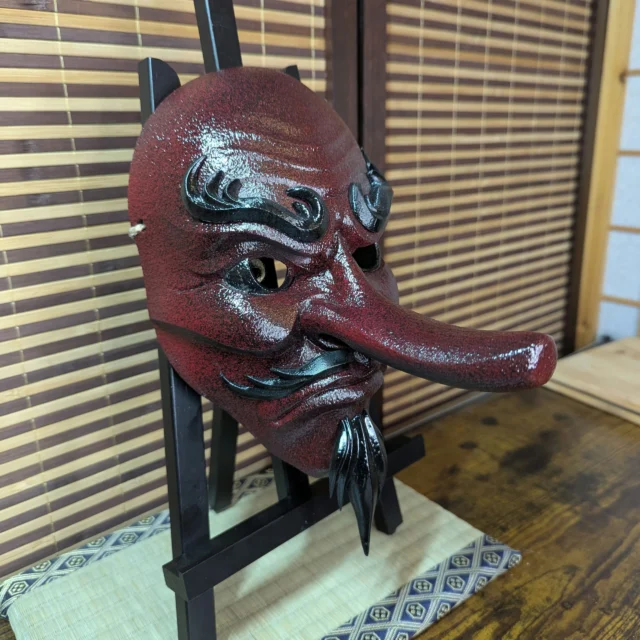
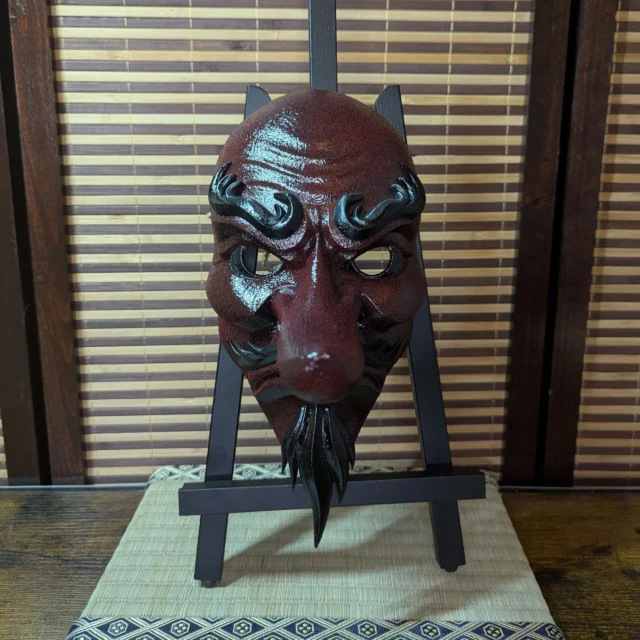
Tengu are associated with mountains, forests and places of ascetic practice. Their images have evolved: Karasu Tengu retain a bird's head or beak, while Daitengu have a red human face with a very long nose. Both forms may have wings and a feather fan.
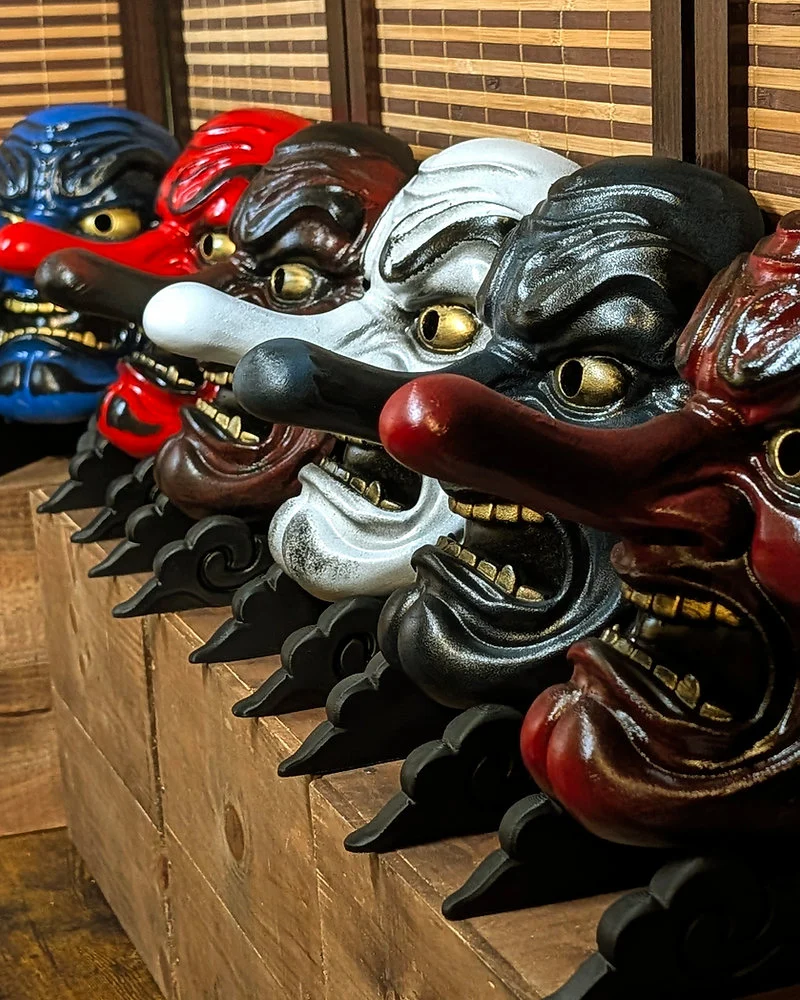
Folklore attributes strength, flight, transformation, possession and great skill with weapons to Tengu. They may punish pride, mislead travellers or oppose religious practitioners. Some traditions also make them protectors of a person, temple or territory. Calling them “guardians of all mountains” is too simple.
Their role is better understood as a territorial power that demands respect. A Tengu may defend its domain or threaten someone who violates it. This tension helps explain its presence in martial imagery. Read more in Tengu: history, symbols and Japanese masks.
Ryū dragons: water, rain and natural power
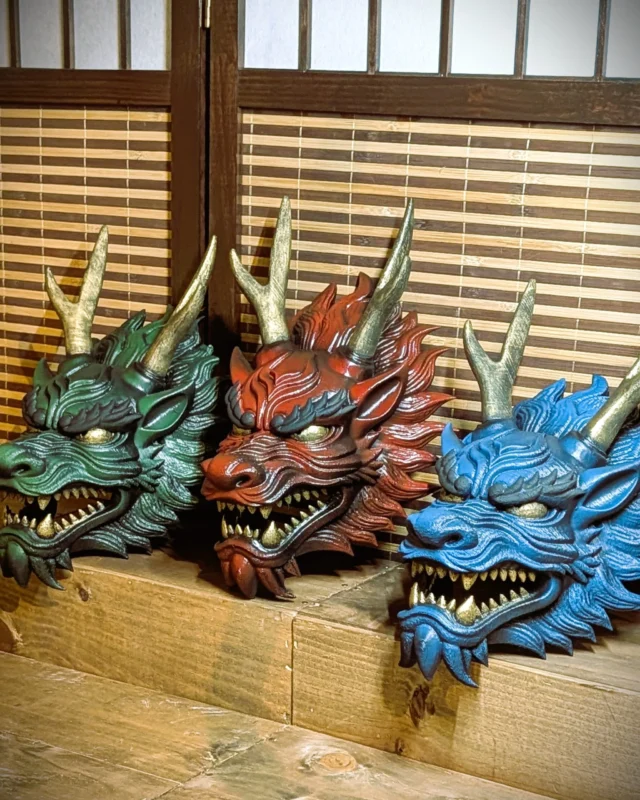
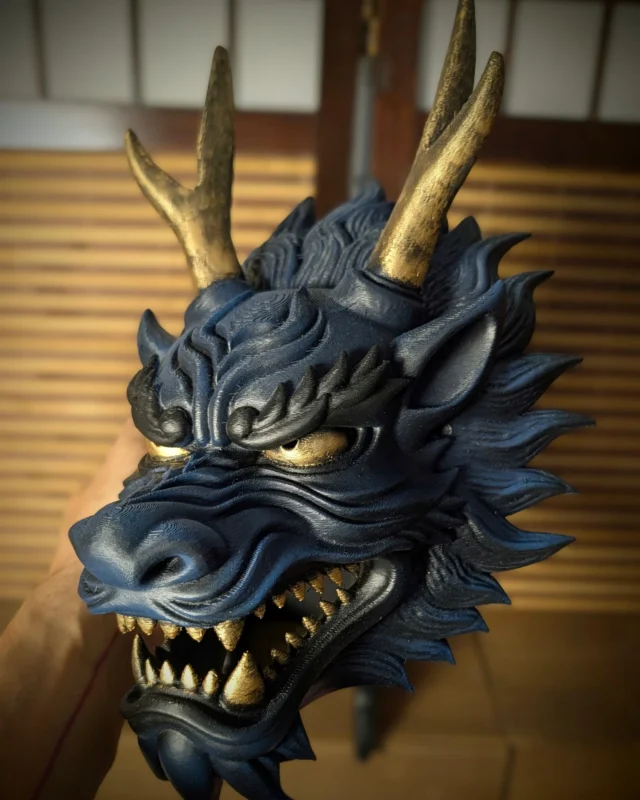
East Asian dragons are closely associated with water. In Japanese art, they appear among clouds, mist or waves and can evoke rain, storms and moving natural forces. That connection is more reliable than the idea that dragons are always wise, peaceful or benevolent.
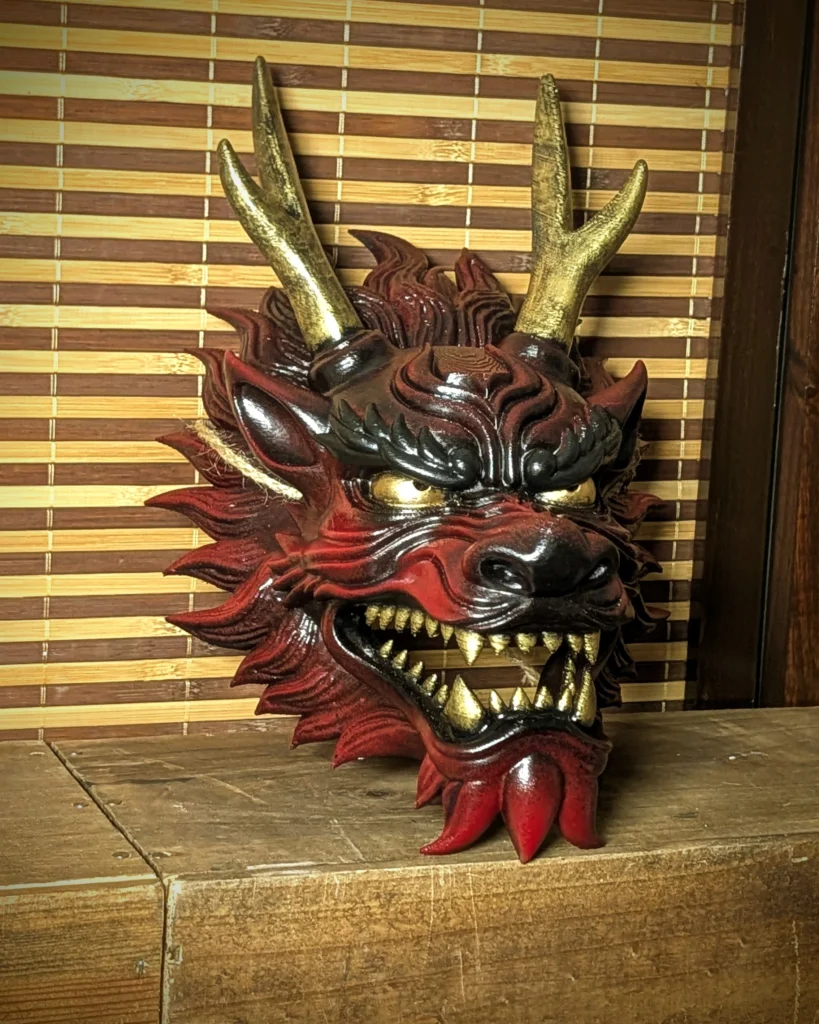
Depending on the story, a dragon may be a deity, ruler of a body of water, beneficial being or dangerous power. It becomes a guardian when a story, place of worship or artistic composition assigns it that role. Its image is often chosen to express mastery, energy and protection, but that symbolism cannot replace historical context.
Nor is the Japanese dragon simply the opposite of a Western dragon. European and Japanese traditions are both diverse. For Ryū, Ryūjin, sea-related dragons and their artistic representations, see the Japanese Ryū dragon guide.
Onigawara and Niō: guardians closely tied to architecture
Two other figures help complete the comparison. An Onigawara is a roof-ridge tile decorated with an ogre face or protective motif. High above the building, it combines a tile's practical function with an apotropaic presence, intended to turn away misfortune. The Onigawara guide explains why this Oni-like face should not be confused with every Oni in folklore.
Niō are the muscular paired guardians at the gates of many Buddhist temples. One has an open mouth, the other a closed mouth. For a search specifically about “Japanese temple guardians”, they are often a more accurate answer than Tengu or dragons. Komainu remain primarily associated with Shinto shrines, although the histories of particular places and practices allow exceptions.
Which Japanese guardian should you choose as a symbol or decoration?
The choice depends on the idea you want to express, not a ranking of power:
- To mark an entrance: Komainu are the most appropriate motif. A pair reflects their traditional role better than a single statue, although one piece can still be a contemporary decoration.
- For direct, ambiguous power: an Oni fits, provided it is not automatically assigned a sacred role.
- For mountains, discipline and controlled pride: Tengu offer rich symbolism, both martial and spiritual.
- For water, movement and natural power: a Ryū dragon is the clearest motif.
- For a roof or symbolically protective wall decoration: Onigawara retain a direct connection to architecture.
A modern tattoo, mask or decoration can freely combine these motifs. The distinction is between artistic inspiration and an authentic religious use. A contemporary piece can evoke protection without claiming to reproduce a ritual object from a shrine or temple.
Japanese guardians in the Dai Yokai workshop
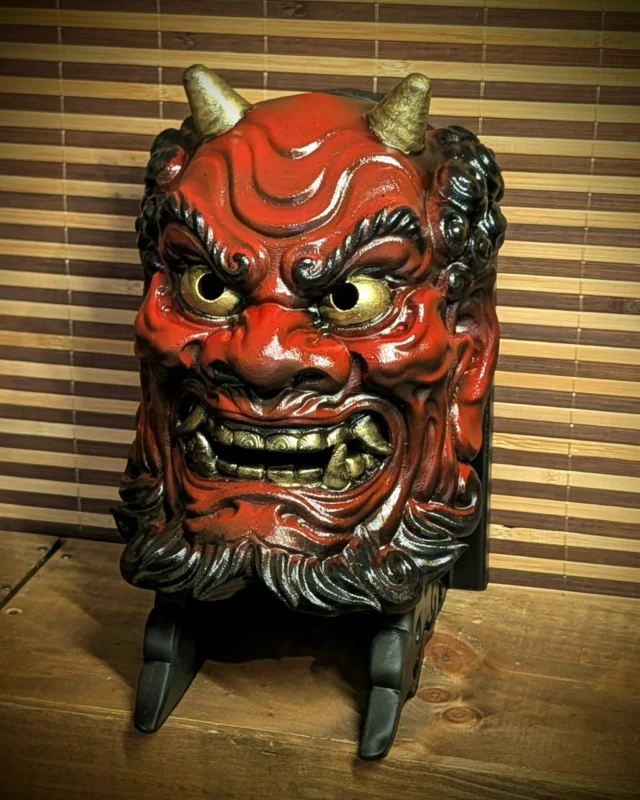
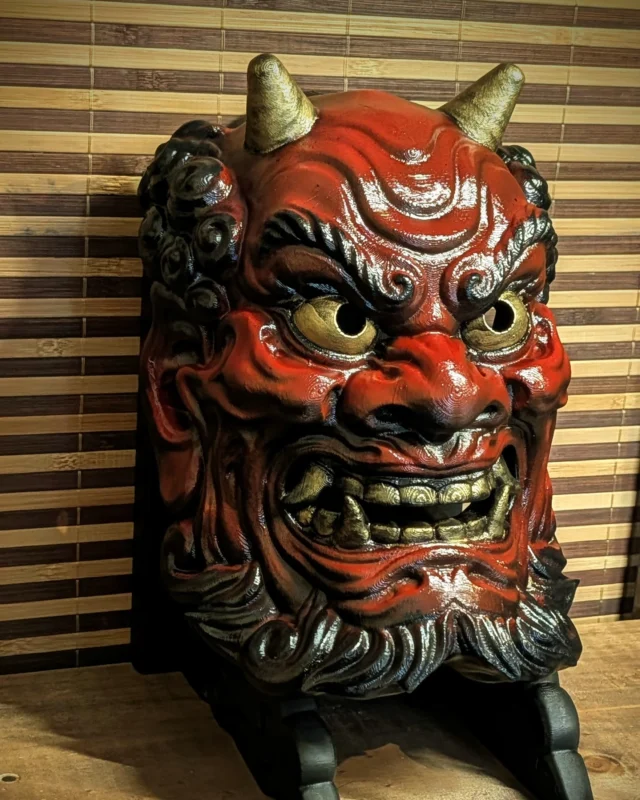
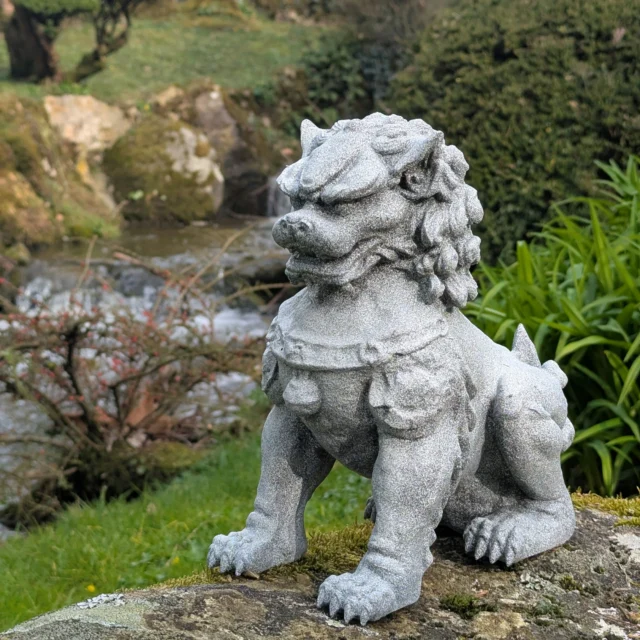
I work with these figures as contemporary creations inspired by Japan. Oni, Tengu, Ryū dragon and Oni-Gawara masks are made from PETG, sanded, assembled where needed and painted by hand in my Brittany workshop. The Komainu statue draws on the guardian lion-dog's forms in a decorative piece.
These are not Japanese ritual artefacts. Their role is aesthetic and symbolic: giving presence to an entrance, wall, stand or collection. Work on shape, colour and finish aims to respect the features that identify each figure, without claiming to replace its history.
Pieces inspired by Japanese guardians
Cultural sources
- The Metropolitan Museum of Art, pair of Komainu guardians
- The Metropolitan Museum of Art, Tengu armour mask
- Japan National Tourism Organization, Tengu guardians at Yakuō-in Temple
- Kyoto National Museum, pair of Niō guardians
- The Metropolitan Museum of Art, Japanese dragon associated with water and rain
- Japan Heritage, the benevolent Oni of Kunisaki
- Government of Japan, Setsubun and driving out Oni
FAQ: Japanese guardians
Which Japanese guardians are best known?
Komainu and Niō are explicit guardians of religious places. Onigawara symbolically protect roofs. Oni, Tengu and dragons can also have protective roles, depending on the story, religious tradition or use.
Are Komainu and Foo Dogs the same?
No. Komainu are Japanese guardian lion-dogs. Foo Dog is a Western name for Chinese guardian lions. The traditions are related, but their contexts and names are not interchangeable.
Do Komainu always come in pairs?
They are very often paired, one mouth open and the other closed. Historical and local variations exist, and some shrines have different guardian animals.
Are Oni protective or evil?
Both interpretations exist. Oni are often threatening ogres or figures of misfortune, notably at Setsubun. In some local traditions, such as Kunisaki or Sado's Ondeko, they take benevolent or protective roles.
Are Tengu guardians of the mountains?
They are deeply connected to mountains and can protect a territory, temple or person in some stories. They can also mislead, punish or attack. “Mountain guardian” is a shorthand, not a complete definition.
Do Japanese dragons protect water?
Japanese dragons are strongly associated with water, clouds and rain. They may become protective or divine according to story and place, but not every dragon is automatically a guardian.
What is the difference between Komainu and Niō?
Komainu are lion-dogs, mainly found at Shinto shrines. Niō are paired muscular, human-shaped guardians installed at Buddhist temple gates.
Which Japanese guardian should I choose for decoration?
Komainu suit an entrance, Oni a strong presence, Tengu mountain and discipline imagery, Ryū dragons water and movement, and Onigawara wall or architectural decoration.