A Japanese mask’s colour has no universal meaning. It depends on the figure, theatrical or religious context and the artist’s work. For a contemporary piece, also consider contrast, finish and display setting. Red draws attention, black deepens forms, white reveals them and gold highlights details.
This guide separates cultural meanings in specific contexts from the practical effect of colour on a mask for display, a collection, studio or convention.
Summary
- Red: strong contrast, immediate presence and warmth.
- Black: a denser silhouette with clear red or gold details.
- White: readable relief, brightness and contrast against a dark wall.
- Gold: a light-catching metallic accent, often more effective on raised details than flat areas.
- Main principle: the figure and context matter more than a general colour dictionary.
Do Japanese mask colours have fixed meanings?
No. Red, black, white and gold do not retain exactly the same meaning across Oni, Hannya, Kitsune, theatre masks and modern decorative creations. Japanese traditions use different colour systems. A kabuki interpretation cannot automatically be applied to a Nō mask or contemporary object.
Kabuki kumadori is a useful example: it is stage makeup, not a mask category. The Japan Arts Council associates red lines with courageous, just and strong roles, indigo with major antagonists, and brown with unsettling beings such as demons or spirits. Those conventions belong to kumadori roles. They do not prove that every red mask means courage.
Ask which figure is depicted, in which tradition or creation, and alongside which signs. Horns, fangs, eyebrows, patterns, posture and the work’s title can matter more than its main colour.
Red, black, white or gold: a quick comparison
| Colour | Visual effect | Context to check | Works for | Watch out for |
|---|---|---|---|---|
| Red | Warm, direct, energetic | Oni, Hannya, Tengu, kumadori | Focal pieces, neutral walls, stands | Symbolism changes with the figure |
| Black | Dense, graphic, contrasting | Matt or gloss finish, accompanying patterns | Dark interiors, tattoo studios, gold details | Gloss black reflects substantial light |
| White | Bright, clearly defined relief | Specific mask, character and tradition | Dark walls, low light, red contrast | Highlights may lose detail in photos |
| Gold | Changing reflections, metallic accents | Ornament, lacquer, horns, teeth, lines | Emphasising volume and details | Frontal light can create harsh reflections |
Red masks: impact, warmth and contrast
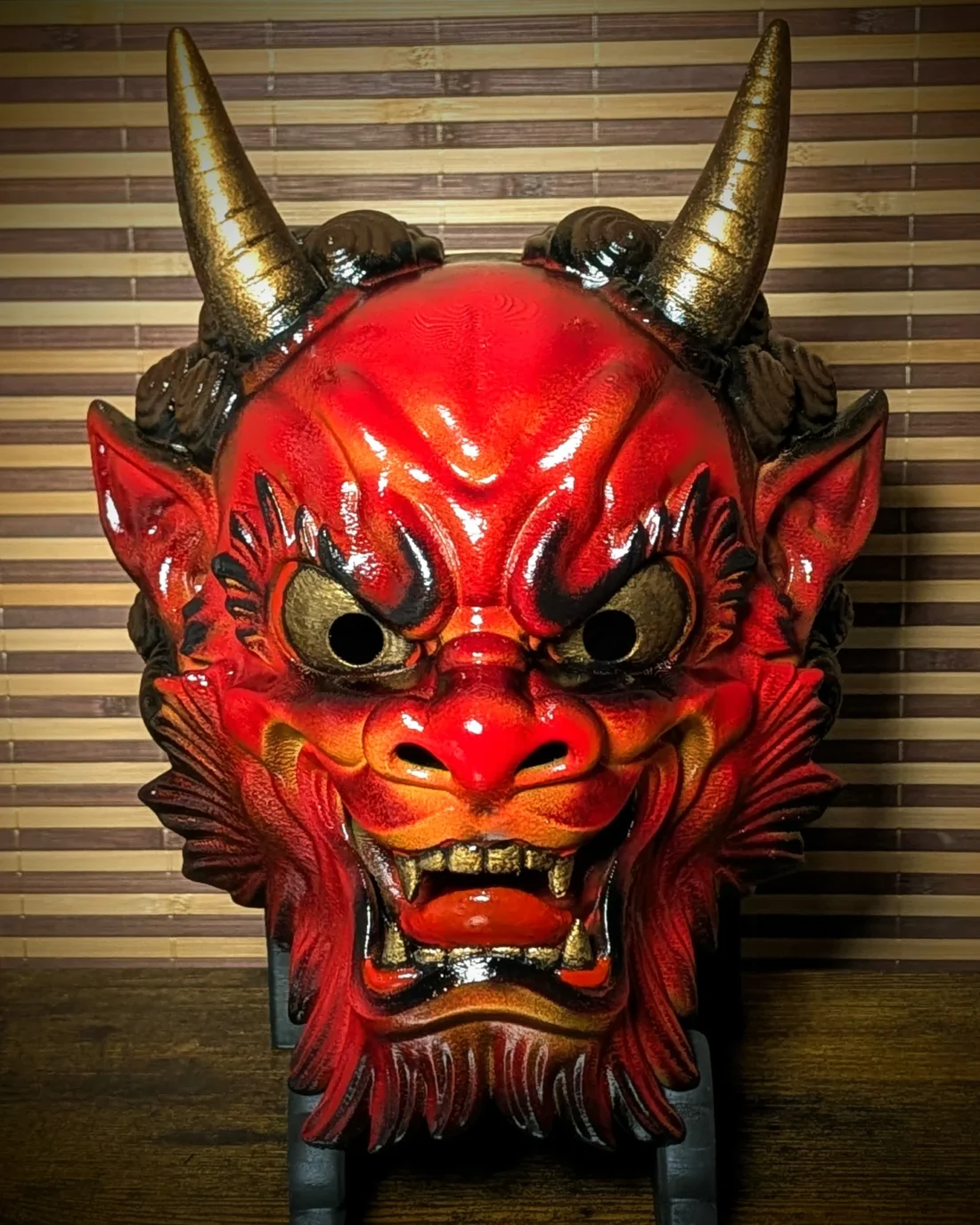
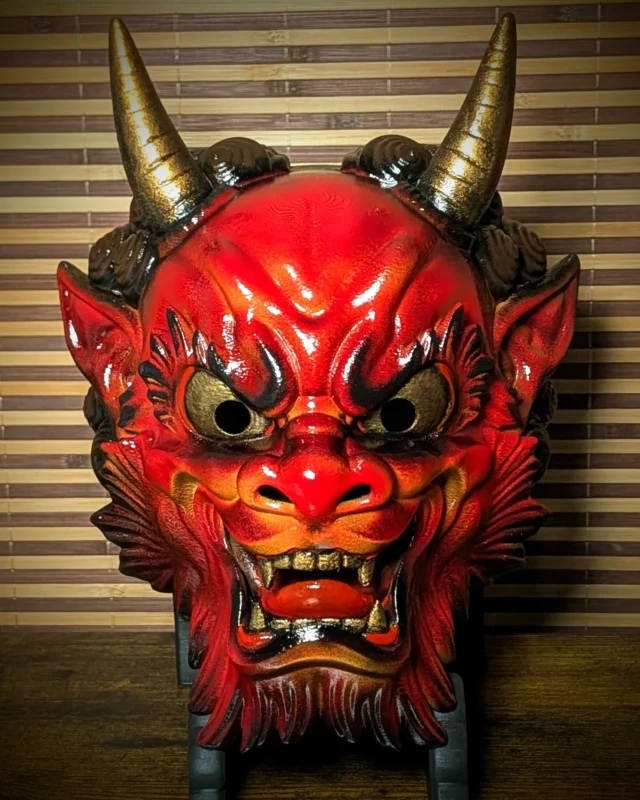
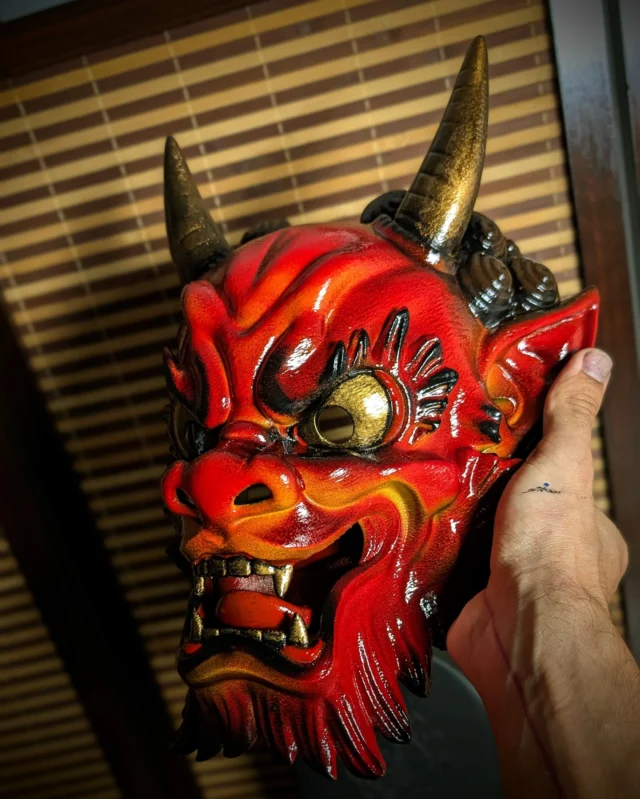
Red is visible from a distance and suits a focal point on a wall, in a cabinet or on a stand. Black adds depth; gold makes it more theatrical. A red or busy background can weaken its silhouette.
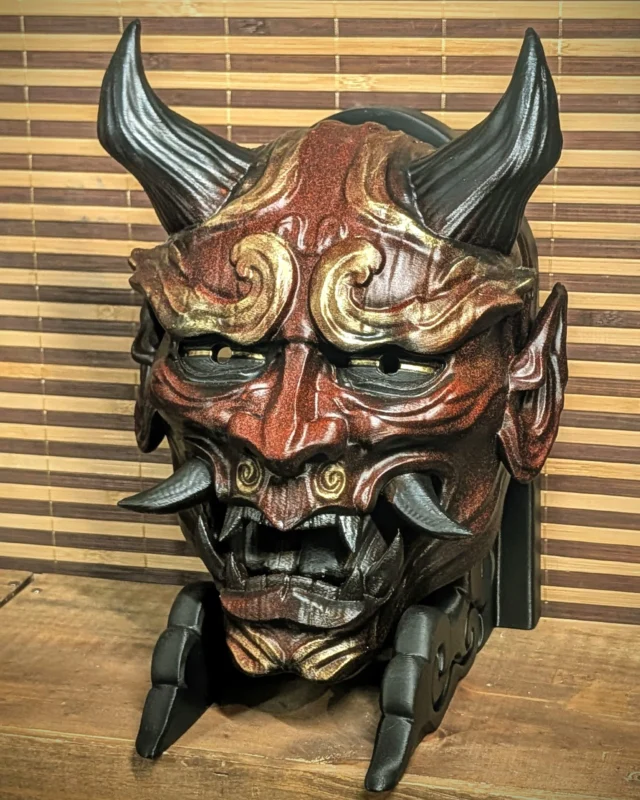
On a contemporary Oni, red can strengthen impressions of power, tension and energy. That does not give every red Oni the same function: stories and uses vary. Aka-Oni, the red demon explores one context; the Oni mask guide places colours within the wider figure.
Red works with grey, black, wood or off-white walls. In photographs, overly warm lighting can erase differences between bright red, burgundy and brown shadows.
Black masks: silhouette, mystery and finish
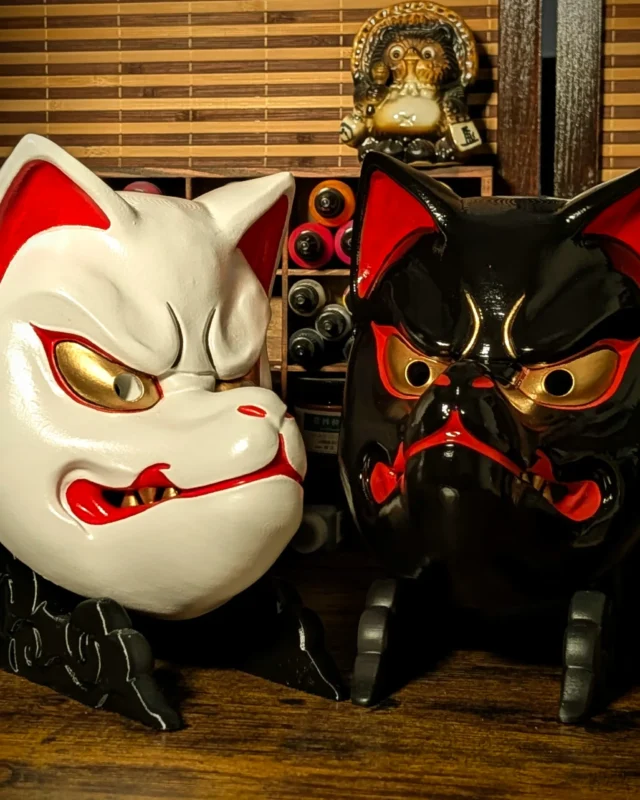
Black creates a graphic reading and brings forward eyes, teeth, horns and red or gold patterns. Finish changes the effect. Matt black absorbs much light and emphasises mass. Gloss black produces clear reflections that reveal curves but can complicate photography.
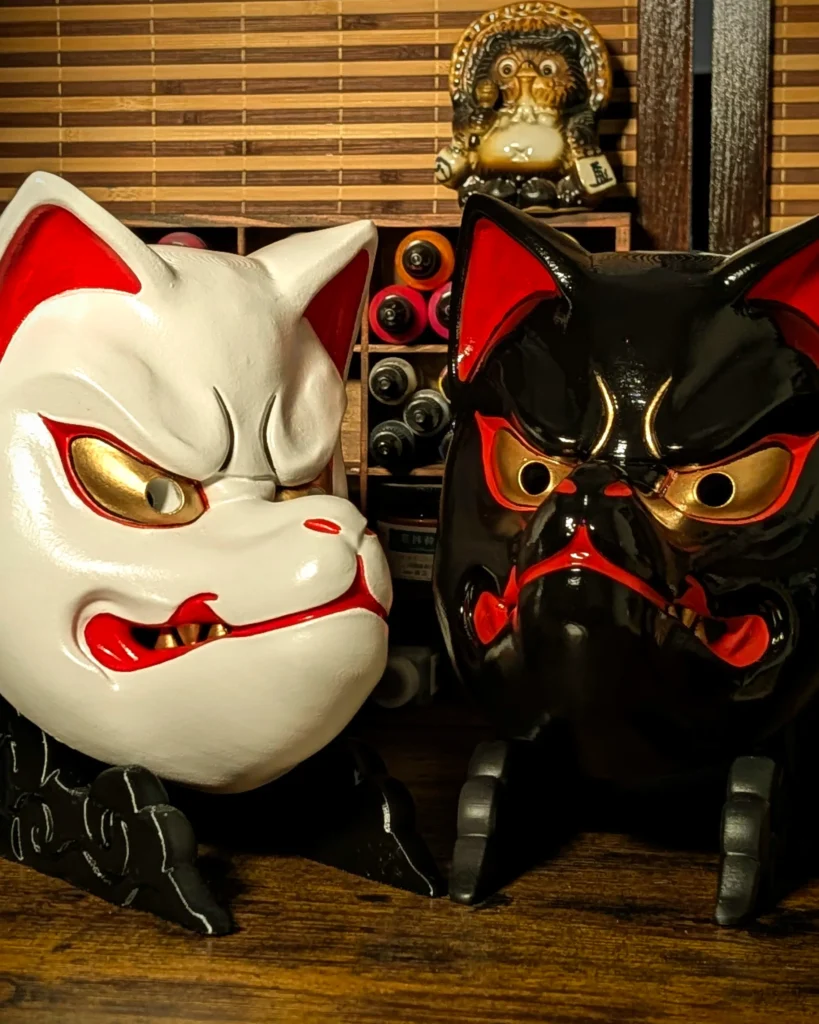
Black is not automatically “evil”. In a contemporary creation it may serve elegance, contrast or a night-time atmosphere. For a specific figure, return to its story. Kuro-Oni concerns the black Oni, while the black Kitsune has different imagery. Sharing a colour does not give them one definition.
A black mask in a dark room or tattoo studio needs some side light to stay readable. Against a light wall, the silhouette may suffice. On black walls, look for red, white or gold outlines, or dedicated lighting.
White masks: relief, light and contrast
White reveals form. Shadows show recesses while red, black and gold lines stand out. It can brighten a dark collection or separate a mask from wood, burgundy, deep green or black.
Avoid shortcuts such as “white equals purity”. In kabuki makeup documented by the Japan Arts Council, a white base can indicate a good or high-ranking character. That theatrical convention does not define every white Japanese mask.
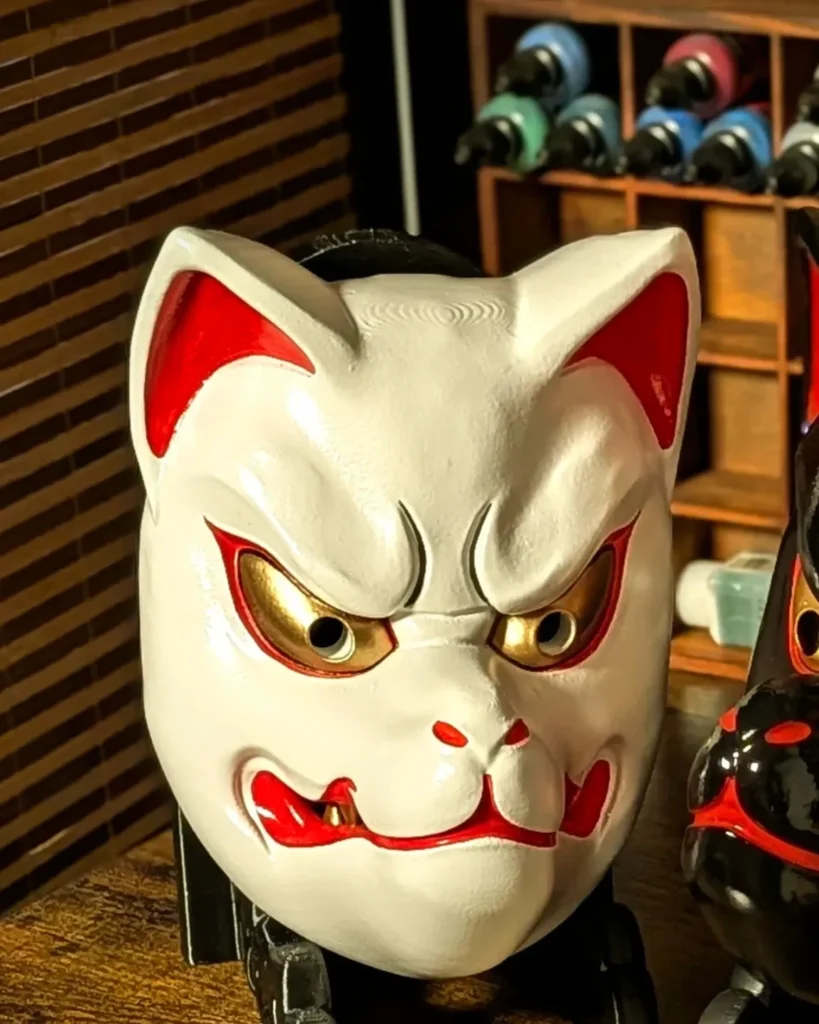
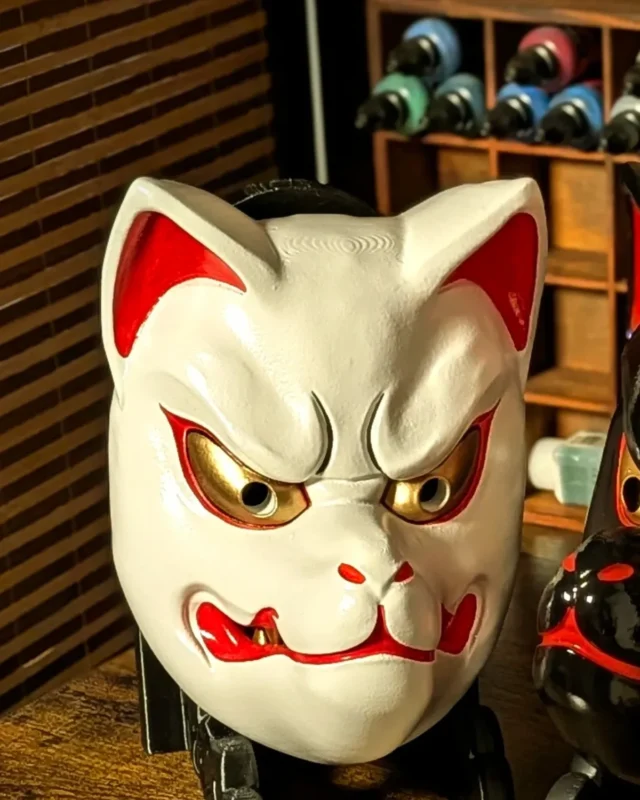
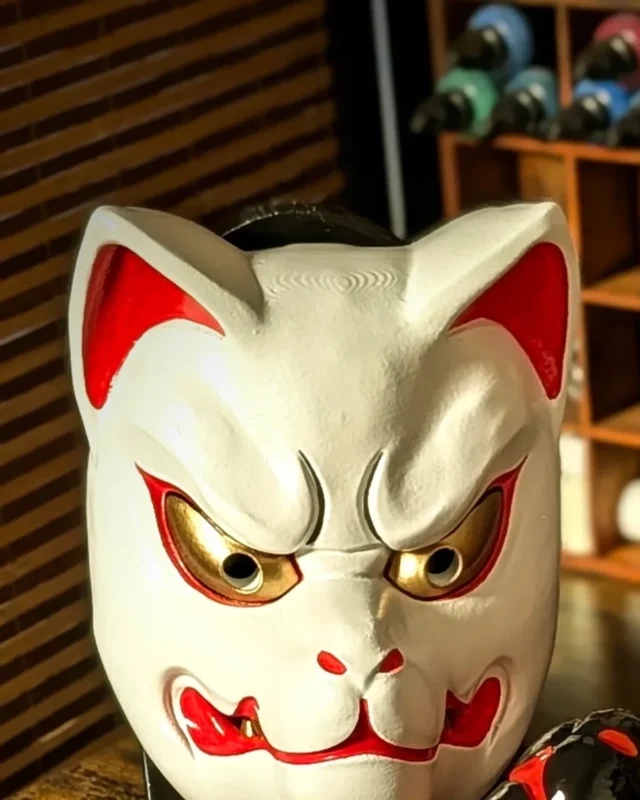
On contemporary Kitsune, white recalls widespread fox-mask imagery and lets red or gold patterns dominate. The white Kitsune article explores that figure. Avoid strong frontal light in photographs: it can erase relief and flatten the surface.
What does a white Oni mask mean?
A white Oni mask has no single meaning established by its colour. Identify the character and the setting before reading purity, mourning or protection into the finish. A pale Hannya is also a different subject: its Nō role should not be renamed “white Oni” simply because it has horns.
A named example comes from Shimane. The Shimane Museum of Ancient Izumo exhibition list records white and red demon masks for Jinrin (塵輪), alongside Emperor Chūai's mask. The objects belong to the Ino Kagura troupe in Hamada. Entries 11-13 on the first page establish a white demon mask within that performance; they do not supply a meaning for every white mask.
For a contemporary object, check what the photograph shows: an unfinished base, a preparation layer or a finished white palette. Those are material and production distinctions. Then compare the brow, fangs, shadows and contrasting details. The Oni guide explains the figure's wider contexts; the maker's description explains the particular finish.
Gold masks: an accent before an explanation
Gold catches light. On horns, teeth, eyes, outlines or cracks, it directs attention to important volumes. It works with red, black and white; on larger areas, texture and lighting determine the result.
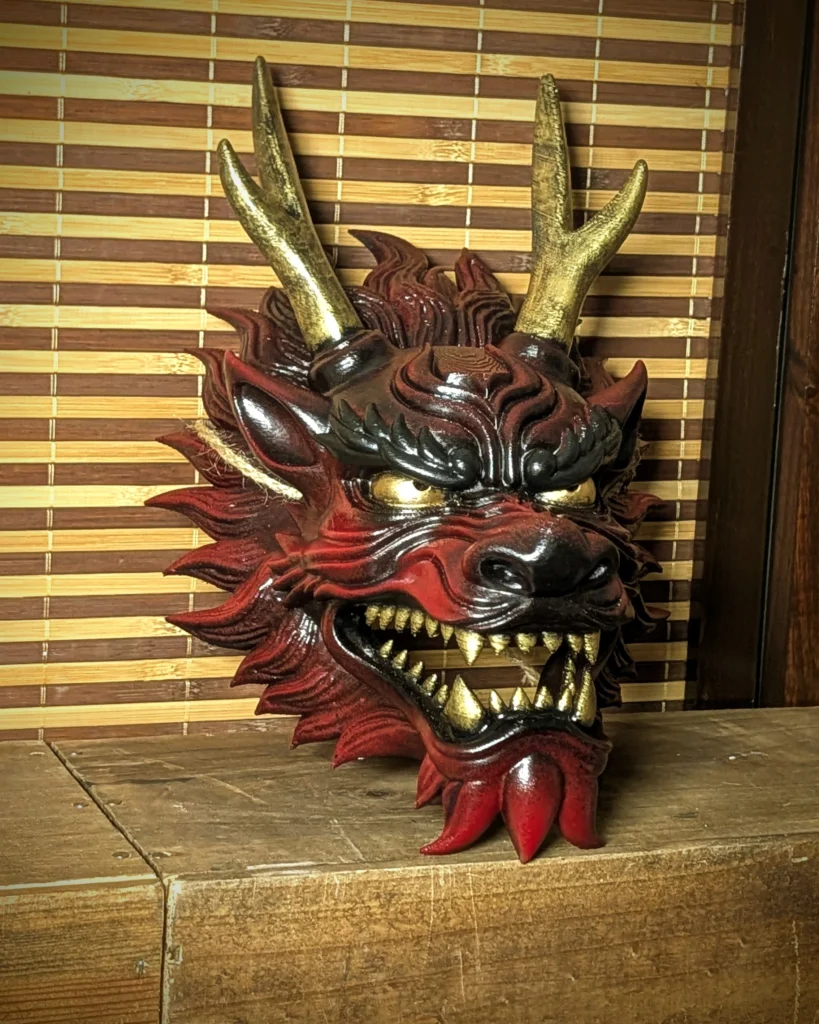
Gold does not automatically mean wealth, divinity or power. It can be ornamental, technical or stylistic. A Hannya held by the British Museum has gold horns and teeth: that describes a particular work, not a rule for every Hannya.
Japanese decorative arts also include maki-e, applying metallic powder to lacquer. This helps explain the strong visual association of black and gold. A contemporary painted interpretation of that effect is not thereby traditional lacquerware.
The figure matters more than the colour
Red Oni or black Oni
Red generally gives immediate impact, black a denser, quieter presence. For the character, examine its name, associated story and attributes. Aka-Oni, Ao-Oni and Kuro-Oni articles offer more cultural nuance than a general chart.
Red, pale or dark Hannya
Hannya belongs first to Nō and stories of transformation through jealousy and rage. Historical masks are painted, lacquered and sometimes gilded. Contemporary versions may amplify red, black, white or cracks for decoration. Do not infer a precise psychological stage from colour without identifying the mask and source.
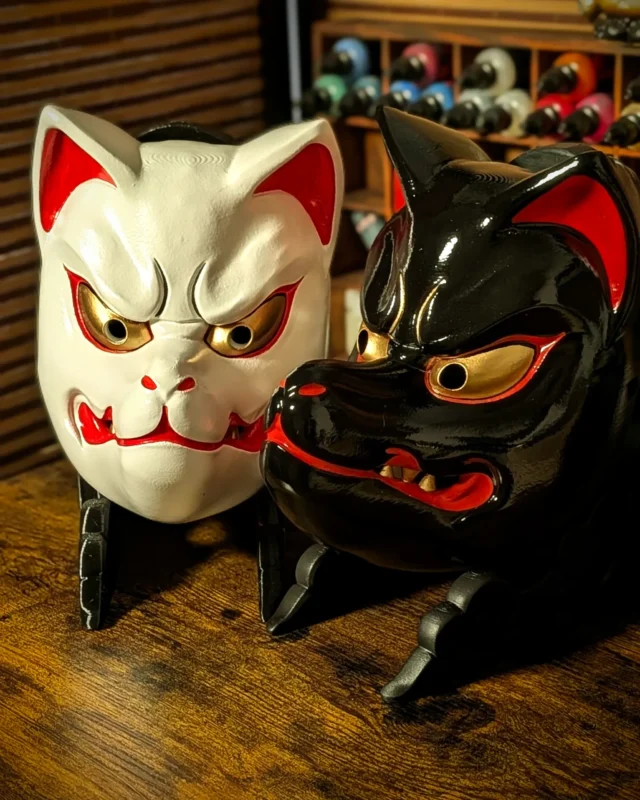
White or black Kitsune
The pair creates strong contrast. Modern creations can use them for opposing moods without claiming a religious rule. If a page connects a Kitsune with Inari, a story or a particular name, read that context rather than colour alone.
Red Tengu
A red face and long nose make Daitengu recognisable. Colour contributes, but other Tengu forms exist, including bird-headed Karasu Tengu. Start with the Tengu guide before choosing a palette.
Choosing for the room and lighting
A mask is always seen in a setting. Consider its future surroundings:
- Light wall: black, deep red and saturated colours give a clear silhouette.
- Dark wall: white, bright red and gold details keep it visible.
- Warm wood: black and white contrast; red and gold look more theatrical.
- Low light: consider a light base or well-placed metallic accents.
- Direct light: glossy varnish and gold can create bright spots.
- Colourful collection: white or black can calm the whole and separate pieces.
At a distance, main colour and silhouette dominate. Close up, gradients, shadows, cracks and metallic details take over. Online, inspect several photographs. Light temperature and screen settings can change a colour’s appearance.
Colour for photos, cosplay or conventions
For photo and video, prioritise contrast with costume and background. Black on black needs backlighting or light accents. White is readable but can lose relief under a strong frontal light. Red stays visible in many settings if warm lighting is controlled.
At conventions, clear colours read better from afar. For wearing, remember field of vision, fastening, weight, breathing and wearing time. The cosplay mask FAQ covers these points.
Colour in the Dai Yokai workshop
Dai Yokai pieces are contemporary creations inspired by Japan, not authentic ritual objects. After PETG production, a mask is prepared, primed, painted, detailed and varnished. Depth comes from the relationship between main colour, shadows, relief and finish, not one flat coat.
Gold on eyes differs from gold on horns. Gloss varnish changes black or red with the viewing angle. Two masks of the same colour can therefore have very different presences.
Confirm special requests for the chosen model. Moving areas, fine relief and design readability may limit combinations. Specify model, desired palette, areas to change and intended use, then contact the workshop before ordering.
Masks in different palettes
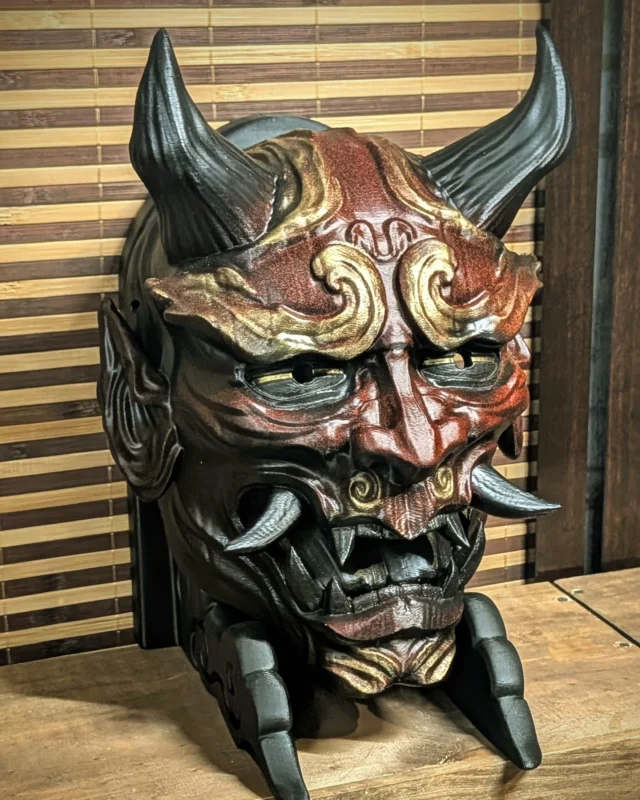
Cultural sources
- Japan Arts Council: colours and roles in kabuki kumadori
- Japan Arts Council: functions of kabuki makeup and colour
- British Museum: painted Hannya Nō mask with gold horns and teeth
- Government of Japan: maki-e, black lacquer and metallic powders
Japanese mask colour FAQ
Which Japanese mask colour should I choose?
Choose for the figure, setting and visual effect. Red attracts attention, black adds density, white reveals relief and gold highlights details. Then check the figure’s history: these effects are not a universal cultural code.
Do Japanese mask colours have universal meanings?
No. Meanings depend on theatre, character, story, period and artist. Kabuki kumadori has its own makeup conventions, which cannot automatically be applied to Oni, Hannya, Kitsune or decorative creations.
What does a red Japanese mask mean?
Red first creates a warm, energetic presence. In kabuki kumadori it can indicate courageous, just and strong roles. On Oni or Hannya, interpretation depends on figure and story, not colour alone.
What does a black Japanese mask mean?
There is no single definition. Black strengthens silhouette and brings out red, white or gold. Matt finishes absorb light; glossy varnish reveals curves through reflections. Character context remains essential.
Does a white mask always symbolise purity?
No. Some kabuki makeup uses white for good or high-ranking characters, but this does not define all white masks. In contemporary pieces, white also reveals volume and contrasts with dark surroundings.
What does gold mean on a mask?
It can highlight horns, teeth, eyes or patterns and catch light. It does not automatically mean wealth or divinity. Distinguish contemporary ornament from historical lacquer and metallic-powder techniques.
Which colour works on a dark wall?
White, bright red or gold details remain more readable. Black can work with contrasting edges or side lighting that reveals volume. Avoid placing highly glossy pieces opposite a direct light source.
Can I request a custom Dai Yokai colour?
A request can be considered for the chosen model. Feasibility depends on relief, moving parts and palette readability. Confirm before ordering rather than assuming every combination suits every mask.