Here are three yokai books from my collection, each with a different approach: Shigeru Mizuki’s dictionary, Matthew Meyer’s illustrated bestiary and a book about Japanese prints. All three copies shown are in French. The choice depends on what you want to explore: creatures, their stories or the ways supernatural figures appear in images.
Which book fits your interests?
A dictionary of creatures and a book of prints serve different purposes. Before choosing, it helps to understand what yokai means and the different kinds of figures it covers. The word encompasses varied beings and phenomena, rather than a fixed list of monsters.
| Book | Approach | Edition language shown |
|---|---|---|
| Dictionnaire des yōkai, Shigeru Mizuki | A dictionary introducing creatures through Mizuki’s work | French |
| Le livre du Hakutaku, Matthew Meyer | An illustrated bestiary of monsters and their stories | French |
| Yōkai dans les chefs-d’œuvre de l’ukiyo-e | Supernatural figures in Japanese prints | French |
These are three starting points, rather than a ranking. If you would like to meet a few figures first, the guide to ten Japanese yokai and folklore figures offers an introduction and links to their stories.
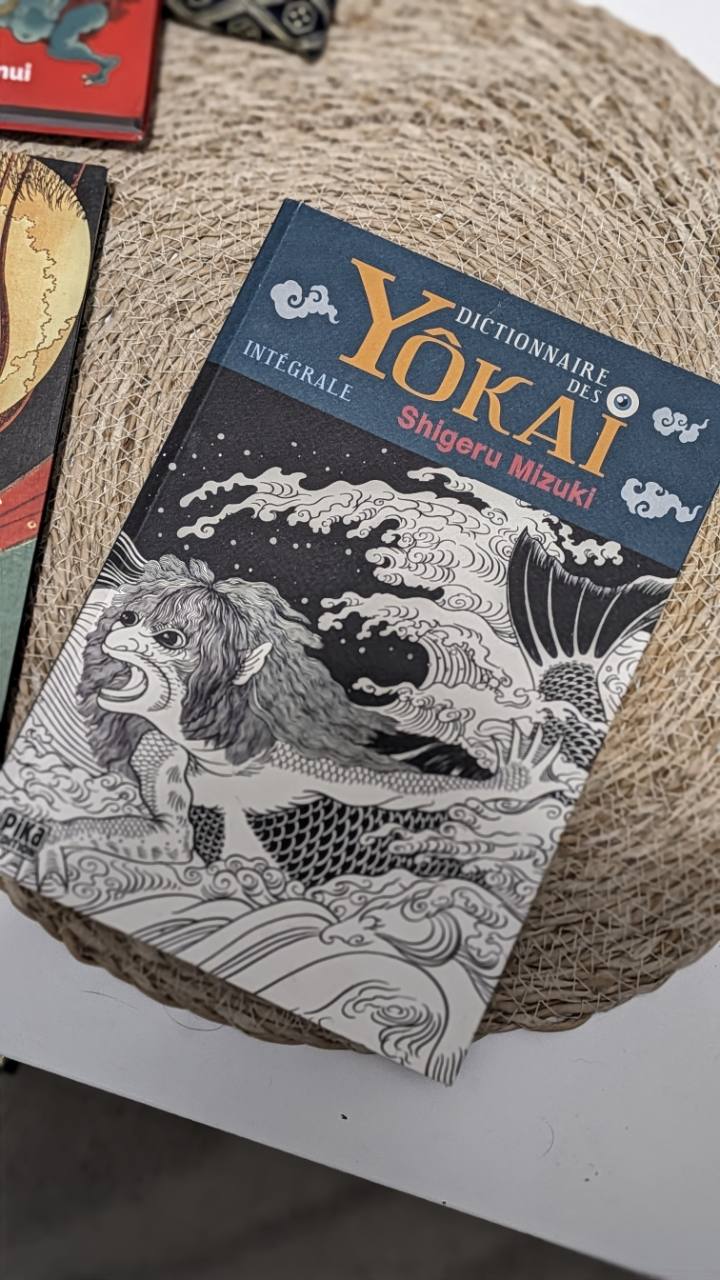
Shigeru Mizuki’s Dictionnaire des yōkai
Dictionnaire des yōkai brings together Shigeru Mizuki’s work on creatures from Japanese folklore. The copy shown is the complete French edition published by Pika. It is the title to consider if your interest starts with a creature and you want to continue exploring through an illustrated dictionary.
This approach introduces yokai through the perspective and drawings of a named author. That also defines its limits: a representation by Mizuki does not encompass every story or image associated with a creature. For a specific historical detail, comparing sources remains useful.
Matthew Meyer’s Le livre du Hakutaku
Le livre du Hakutaku. Histoires de monstres japonais is by Matthew Meyer. The copy shown here is the French NuiNui edition. On his website, Meyer describes the original project as an illustrated bestiary drawing on Japanese folklore, literature and visual representations.
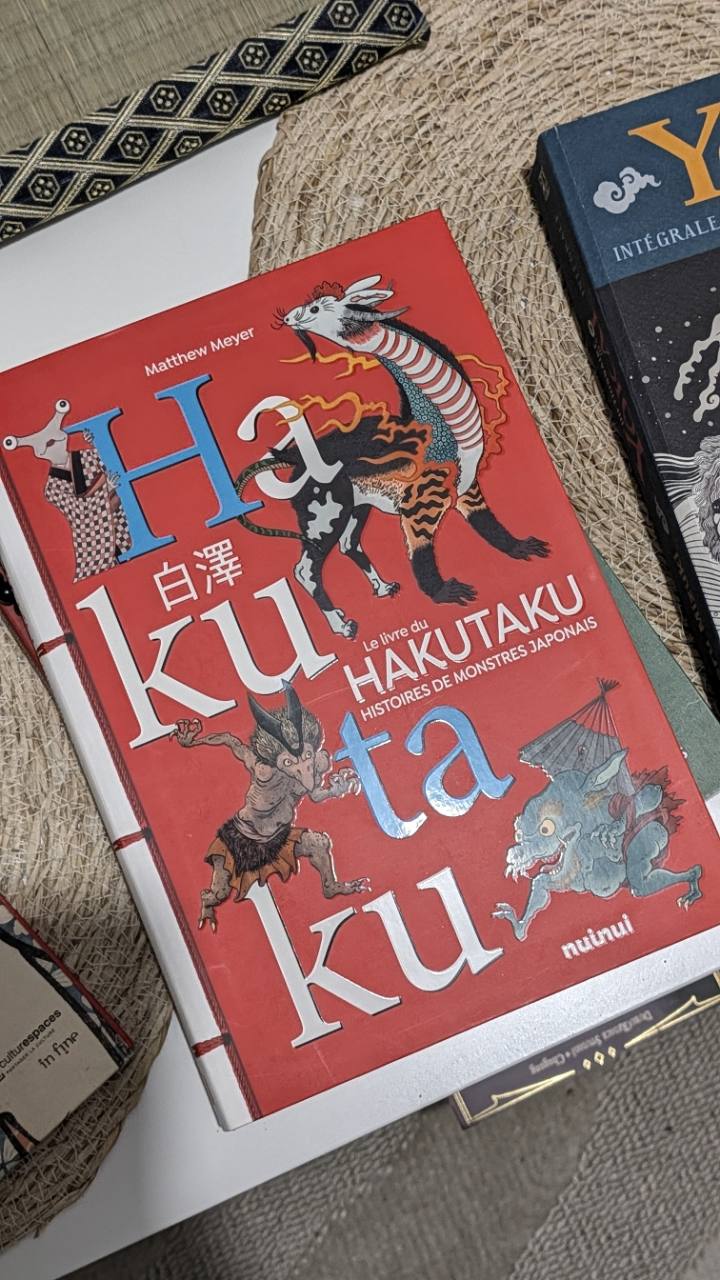
This is an approach for readers interested in monsters and their stories. It also prompts a useful question: where does the story attached to an image come from? The book remains an author’s interpretation. An older tradition, a variant account and the way a figure is described today need to be distinguished.
Yokai in the masterpieces of ukiyo-e
Yōkai dans les chefs-d’œuvre de l’ukiyo-e, shown here in NuiNui’s French edition, approaches monsters, ghosts and demons through Japanese master prints. Edited under the direction of Ei Nakau, it focuses on works of art and their representations, taking a different route from a dictionary of creatures.
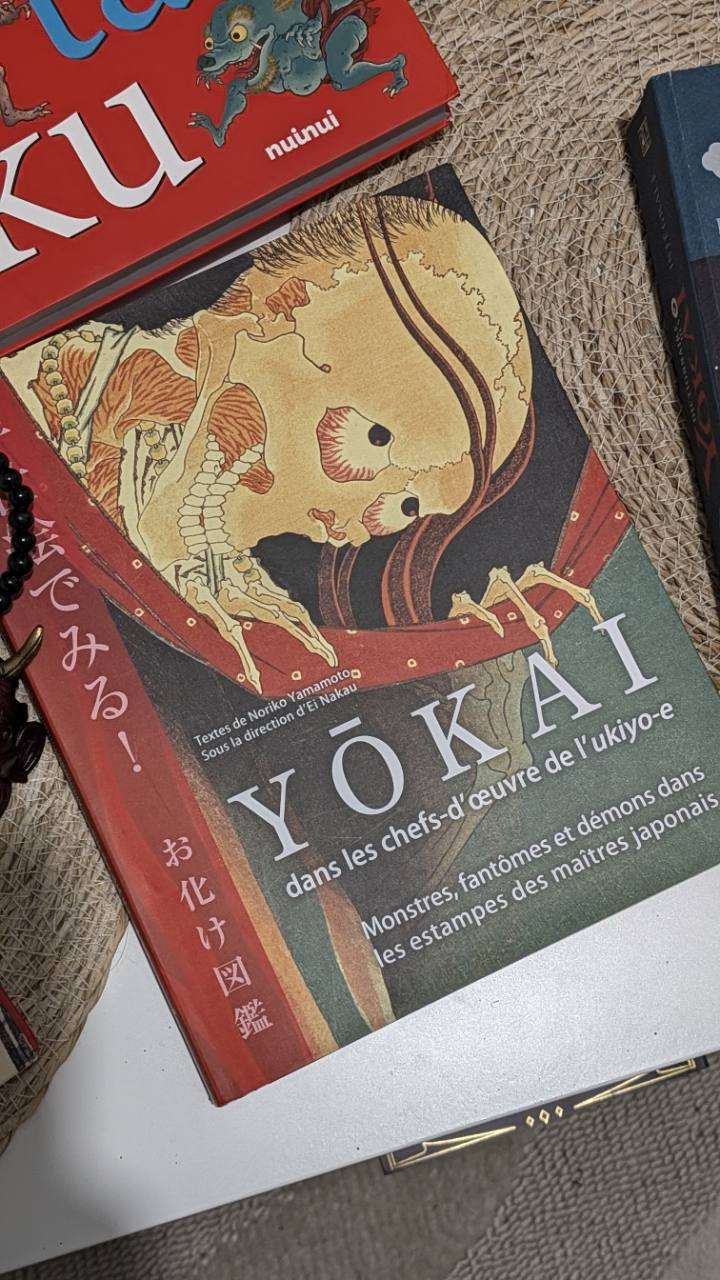
This is the direction to explore when your question concerns a silhouette, a face or a figure’s place within an image. Its limits follow its scope: prints do not represent every folklore tradition. Nor is every ghost interchangeable with any other kind of yokai, as the guide to Japanese yurei explains.
A wider Japanese art reference
My collection also includes Hokusai, Hiroshige, Utamaro. Les grands maîtres du Japon, devoted to the Georges Leskowicz collection. This French exhibition catalogue from 2019, co-published by In Fine, broadens the view to landscapes, stories, actors and other subjects in Japanese prints. It offers wider visual context; it is not a fourth specialist yokai guide.
From books to the forms of masks
These books offer different ways to explore figures and images in more depth. To connect them with objects, the guide to Japanese mask types distinguishes their uses and contexts. Dai Yokai pieces are contemporary creations inspired by this world.
For another approach to faces and volume, explore the Dai Yokai Japanese masks, prepared, painted and finished by hand in Brittany.
Publisher and library sources
- Pika, Dictionnaire des yōkai (French).
- Matthew Meyer, his books, and Villa Arson, June 2021 acquisitions (French).
- BnF, Yōkai dans les chefs-d’œuvre de l’ukiyo-e (French).
- In Fine, the Leskowicz collection catalogue (French).
Books in this selection
All three editions presented in this article are in French.
I may earn a commission from these links.
- Dictionnaire des Yôkai
Shigeru Mizuki’s illustrated dictionary. French omnibus edition, Pika, 2015.
Find this edition on Amazon.fr - Le livre du Hakutaku. Histoires de monstres japonais
Matthew Meyer’s illustrated bestiary. French edition, NuiNui, 2020.
Find this edition on Amazon.fr - Yōkai dans les chefs-d’œuvre de l’ukiyo-e
Monsters and ghosts in Japanese prints. Edited by Ei Nakau. French edition, NuiNui, 2021.
Find this edition on Amazon.fr
Affiliate links to Amazon.fr (France). As an Amazon Associate I earn from qualifying purchases. Selection method and affiliate links